

By The Hazli Family — Peter & Louise · Reviewed June 2026
Quick answer: A foam mattress is a polyurethane-based sleeping surface that molds to your body, distributes weight evenly, and stabilizes its firmness through the night. For camping, the three main types are closed-cell foam (rugged, insulating), memory foam (contouring pressure relief), and high-density polyurethane (balanced support) — chosen by weight, R-value insulation, packability, and durability.
Waking up sore and tired halfway through a multi-day adventure is a common frustration among American campers. Comfort and durability matter when you spend nights outdoors, especially across varying terrains and unpredictable weather. Recent scientific studies have confirmed that memory foam mattresses can significantly improve sleep quality by reducing nighttime awakenings and enhancing overall rest in both home and outdoor settings. This guide offers clear insight into foam mattresses, helping you find the best options for lasting comfort and reliable support on your next camping trip.
Table of Contents
- Foam Mattress Defined for Outdoor Sleep
- Types of Foam Mattresses for Camping
- How Foam Mattresses Improve Camp Comfort
- Key Benefits and Potential Drawbacks
- Foam Versus Air and Other Options
Key Takeaways
| Point | Details |
|---|---|
| Foam Mattress Advantages | Foam mattresses offer superior comfort and support, significantly enhancing sleep quality for outdoor enthusiasts by reducing pressure points and adapting to body contours. |
| Types of Foam Mattresses | Key types include Closed-cell foam for rugged terrains, Memory foam for personalized comfort, and High-density polyurethane for balanced support, allowing for tailored choices based on camping needs. |
| Selection Factors | Prioritize weight, insulation value, packability, and durability when choosing a camping mattress to ensure optimal performance in various outdoor conditions. |
| Foam vs. Alternative Options | Foam mattresses provide consistent support and durability, while air mattresses offer adjustable firmness but can be less reliable due to potential punctures and deflation. |
Foam Mattress Defined for Outdoor Sleep
A foam mattress represents a revolutionary sleep solution designed to provide superior comfort and support, especially in challenging outdoor environments. These specialized mattresses utilize advanced materials engineered to adapt to body contours and temperature, creating a personalized sleeping surface that transforms camping and outdoor recreation experiences.
Foam mattresses are constructed using sophisticated polyurethane-based materials that offer unique performance characteristics. Mattress design studies confirm that these mattresses stabilize firmness after initial compression, maintaining consistent support throughout overnight use. Key characteristics include:
- Exceptional body contouring capabilities
- Temperature-responsive materials
- Lightweight and portable design
- Ability to distribute body weight evenly
- Resistance to moisture and environmental fluctuations
The scientific research behind foam mattresses reveals profound benefits for sleep quality. Sleep studies demonstrate that memory foam enhances overall comfort, reduces nighttime awakenings, and improves sleep efficiency - critical factors for outdoor enthusiasts who require restorative rest during multi-day adventures.
Understanding foam mattress composition means recognizing its multilayered structure. Most outdoor-focused foam mattresses integrate multiple density layers, with firmer base support and softer top comfort zones. This strategic design ensures both stability and pressure relief, accommodating the unique challenges of sleeping in varied terrain and environmental conditions.
Pro tip: When selecting a foam mattress for outdoor use, prioritize models with moisture-resistant covers and compact folding capabilities to maximize portability and durability.
Types of Foam Mattresses for Camping
Camping foam mattresses represent a diverse category of outdoor sleeping solutions, each designed to address specific comfort and performance needs for adventurers. Camping mattress classifications reveal multiple distinct foam types that cater to different outdoor sleeping requirements, ensuring campers can find the perfect match for their adventures.
The primary foam mattress types for outdoor use include:
-
Closed-cell foam mattresses
- Extremely lightweight
- Superior moisture resistance
- Excellent insulation properties
- Highly durable and puncture-resistant
-
Memory foam mattresses
- Exceptional body contouring
- Temperature-responsive design
- Pressure point relief
- Adapts to uneven terrain
-
High-density polyurethane foam mattresses
- Enhanced durability
- Consistent support
- Moderate weight
- Good thermal regulation
Foam mattress varieties offer unique benefits depending on specific outdoor conditions. Closed-cell foam provides maximum durability and insulation, making it ideal for rugged terrain and cold environments. Memory foam excels in providing personalized comfort by adapting to individual body shapes and sleeping positions, while high-density polyurethane offers a balanced approach with reliable support and moderate weight.
Understanding thickness and density becomes crucial when selecting the right foam mattress. Thicker mattresses provide more cushioning and comfort, while density determines the mattress’s ability to withstand repeated use and maintain structural integrity in challenging outdoor conditions.
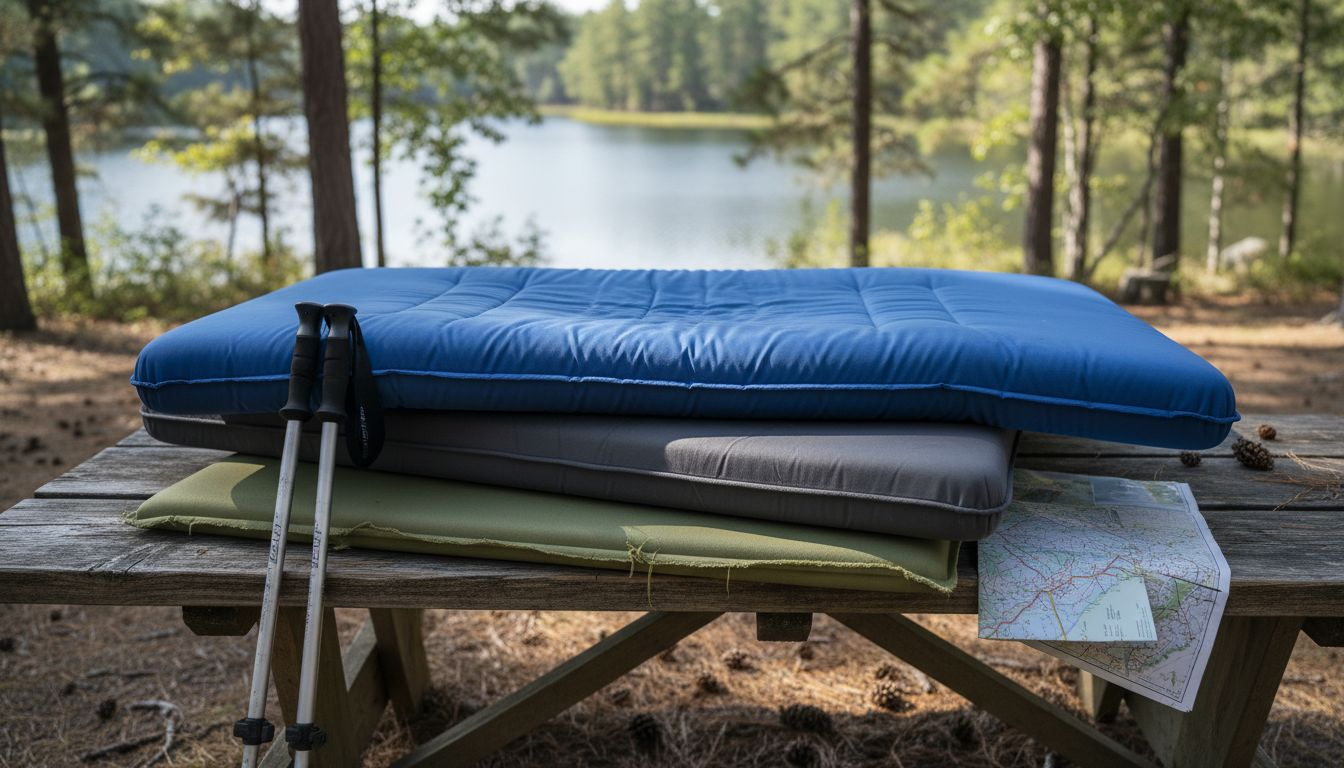
Here’s a quick overview of foam mattress types and their ideal camping scenarios:
| Foam Type | Best For | Not Ideal For |
|---|---|---|
| Closed-cell | Cold, rugged terrain camping | Plush comfort seekers |
| Memory foam | Personalized comfort outdoors | Very cold environments |
| High-density polyurethane | Long-term base camps | Ultralight backpacking trips |
Pro tip: When choosing a camping foam mattress, consider your specific outdoor environment, expected temperature range, and planned activities to select the most appropriate foam type and thickness.
The following table summarizes factors to consider when picking a camping mattress:
| Selection Factor | High Priority For | Why It Matters |
|---|---|---|
| Weight | Backpackers | Eases trail carrying load |
| Insulation Value | Winter campers | Prevents heat loss |
| Packability | Adventure travel | Saves space in gear |
| Durability | Frequent users | Ensures long-term value |
How Foam Mattresses Improve Camp Comfort
Camping comfort hinges on quality sleep, and foam mattresses have revolutionized outdoor rest by addressing multiple challenges faced by adventurers. Sleep quality research demonstrates that specialized foam mattresses significantly reduce nighttime awakenings and improve overall sleep restoration, making them a game-changer for outdoor enthusiasts.
Key comfort improvements provided by foam mattresses include:
-
Pressure Point Reduction
- Distributes body weight evenly
- Minimizes muscle tension
- Reduces joint stress
- Prevents uncomfortable pressure areas
-
Temperature Regulation
- Adapts to body heat
- Maintains consistent sleeping temperature
- Prevents overheating or excessive cooling
- Supports comfortable sleep across diverse environments
-
Terrain Adaptation
- Conforms to uneven ground surfaces
- Provides stable sleeping platform
- Absorbs ground irregularities
- Creates consistent support layer
Thermal comfort investigations reveal that advanced foam mattresses with integrated temperature-regulating materials can dramatically enhance outdoor sleeping experiences. These innovative designs help campers maintain optimal body temperature, reducing sleep disruptions caused by environmental fluctuations.
Moreover, foam mattresses offer psychological comfort by creating a familiar, supportive sleep environment even in challenging outdoor conditions. The ability to provide consistent support and pressure relief transforms camping from a potentially uncomfortable experience to a restful adventure, allowing outdoor enthusiasts to wake up refreshed and ready for their next day’s activities.
Pro tip: Select a foam mattress with moderate density and temperature-adaptive properties to ensure maximum comfort across different camping environments and seasonal conditions.
Key Benefits and Potential Drawbacks
Memory foam mattresses offer a complex landscape of advantages and challenges for outdoor enthusiasts, requiring careful consideration before investment. Scientific sleep research reveals nuanced insights into the performance of these innovative sleeping solutions.
Benefits of foam mattresses include:
-
Performance Advantages
- Superior pressure point relief
- Enhanced sleep quality
- Consistent body support
- Adaptable to various sleeping positions
- Lightweight and portable design
-
Potential Drawbacks
- Initial off-gassing odors
- Potential heat retention
- Higher cost compared to traditional options
- Reduced insulation in extremely cold environments
- Potential longer break-in period
The most significant benefits emerge from foam’s unique material properties. Adaptive materials conform precisely to body contours, distributing weight evenly and reducing pressure points that typically disrupt outdoor sleep. This structural advantage translates into more restful nights and increased energy for daytime adventures.
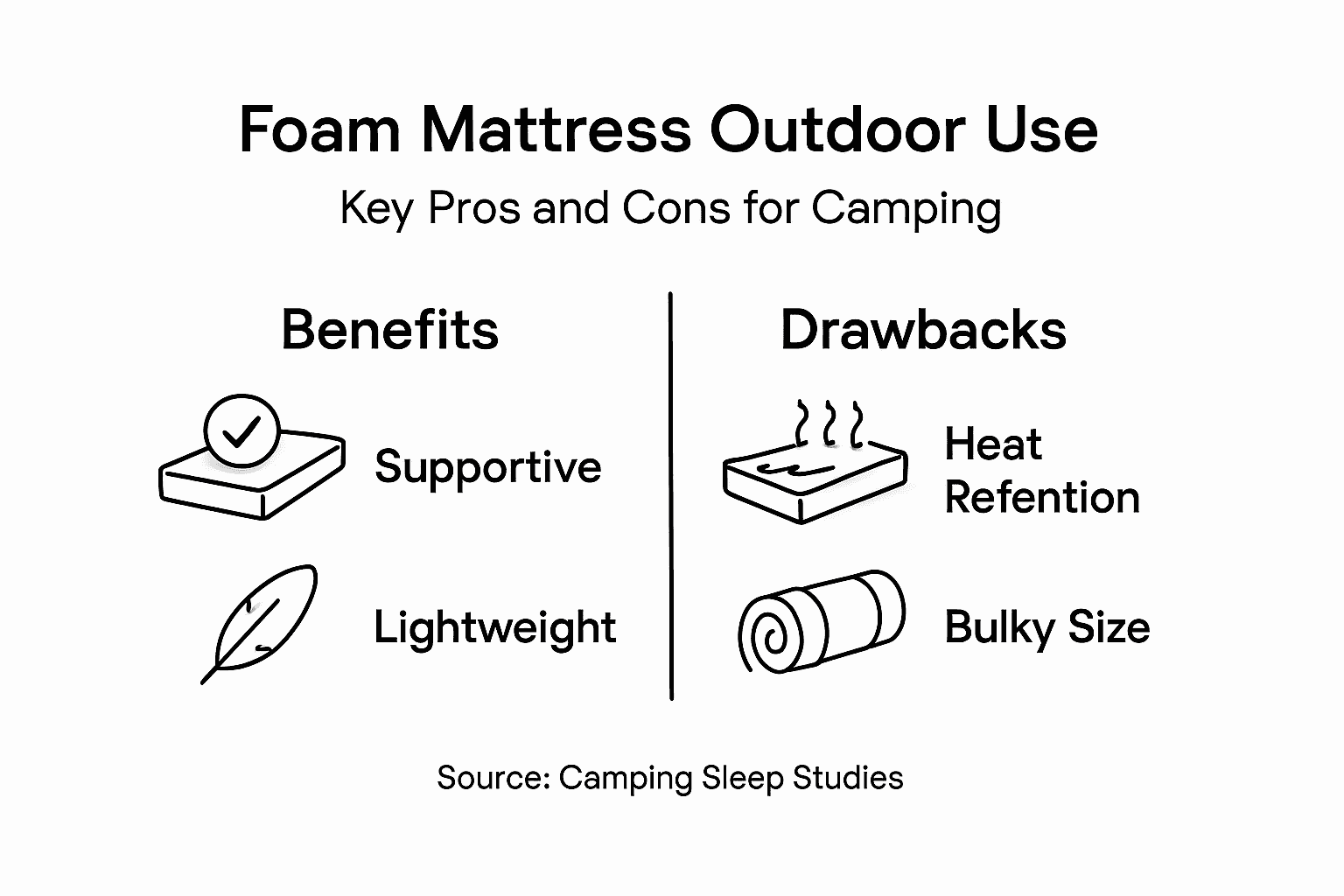
However, potential limitations cannot be overlooked. Some foam mattresses struggle with temperature regulation, potentially causing discomfort in extreme weather conditions. Campers must carefully select models with advanced cooling technologies to mitigate these challenges and ensure consistent comfort across diverse outdoor environments.
Pro tip: Test your foam mattress in controlled environments before extended camping trips to understand its specific performance characteristics and potential temperature-related limitations.
Foam Versus Air and Other Options
Camping mattress selection involves understanding the unique strengths and limitations of different sleeping surface technologies. Comparative mattress analysis reveals nuanced differences between foam, air, and alternative camping mattress options that can significantly impact outdoor sleep quality.
Key comparison points for camping mattresses include:
-
Foam Mattresses
- Consistent support
- Lightweight design
- Low maintenance
- Excellent pressure distribution
- Durable in varied conditions
-
Air Mattresses
- Adjustable firmness
- Compact when deflated
- Potentially less stable
- Vulnerable to punctures
- Requires inflation equipment
-
Hybrid Options
- Combines multiple material technologies
- Potentially more complex
- Higher cost
- Increased versatility
- Advanced comfort features
Foam mattresses excel in providing predictable, consistent support across different terrains. Their solid construction means no risk of unexpected deflation, making them more reliable for serious outdoor enthusiasts who demand dependable sleeping surfaces. Air mattresses offer flexibility in firmness but introduce complexity and potential failure points that can compromise comfort during critical outdoor experiences.
The choice between foam and alternative mattress types ultimately depends on specific camping conditions, personal comfort preferences, and planned outdoor activities. Weight, packability, durability, and ease of setup become crucial considerations for adventurers seeking the optimal sleeping solution.
Pro tip: Consider testing different mattress types in controlled environments before committing to a long-term outdoor sleeping solution.
Elevate Your Outdoor Sleep with Hazli Collection’s Memory Foam Mattresses
Outdoor sleep comfort is often challenged by uneven terrain, moisture, and temperature fluctuations. This article highlights how foam mattresses, especially memory foam, provide essential pressure point relief, temperature regulation, and consistent support to transform rough nights into restful sleep. If you seek a durable, lightweight solution tailored to outdoor adventures, understanding these benefits is key to upgrading your camping setup.
Discover a premium selection of memory foam mattresses and camping gear at Hazli Collection designed specifically for outdoor enthusiasts like you. Benefit from advanced temperature-adaptive materials and moisture-resistant designs that mirror the article’s insights on foam mattress technology. Shop now to experience comfort and durability on every trail and basecamp with seamless checkout options and customizable products that fit your unique needs. Take the first step toward better sleep outdoors—visit Hazli Collection today and gear up for your next adventure.
Frequently Asked Questions
What are the benefits of using a foam mattress for outdoor sleep?
Foam mattresses provide superior pressure point relief, enhance sleep quality, and ensure consistent body support, making them ideal for outdoor enthusiasts looking for a restful night’s sleep.
How do foam mattresses adapt to different sleeping conditions outdoors?
Foam mattresses conform to body contours, distribute weight evenly, and can adapt to temperature changes, providing a stable and comfortable sleeping platform regardless of the uneven terrains typically found in outdoor settings.
What is the difference between closed-cell foam and memory foam mattresses for camping?
Closed-cell foam mattresses are lightweight, moisture-resistant, and offer excellent insulation, making them suitable for rugged terrain. Memory foam mattresses excel in body contouring and pressure relief, offering personalized comfort but may not be as effective in extreme cold environments.
Are there any drawbacks to using foam mattresses while camping?
Potential drawbacks of foam mattresses include initial off-gassing odors, possible heat retention, and they may not provide adequate insulation in extremely cold conditions. It’s essential to choose a model with advanced cooling features and test it in controlled settings before extended outdoor use.