

Quick answer: The best mattress for a tent depends on how you get the tent there. If you drive, a memory foam roll-up or a thick self-inflating pad is the most comfortable and the easiest to set up. If you carry the tent, an inflatable air pad or a closed-cell foam pad is the only sensible choice. For cold ground, look for a published R-value or add a foam pad underneath. Our own memory foam camping mattress is the roll-up option here, and it is for car camping, not backpacking. For the wider foam picture, see our memory foam camping mattress guide.
A tent floor is thin nylon over whatever the ground happens to be: roots, gravel, a slope you did not notice at noon. What you put between you and that floor can decide how well you sleep. This guide compares the four main types of tent mattress and pad, then matches them to common tent setups so you can pick without guessing.
Table of Contents
- Quick comparison
- 1. Memory foam roll-up mattresses
- 2. Self-inflating pads
- 3. Air pads and air mattresses
- 4. Closed-cell foam pads
- Match the mattress to your tent
- Will it fit? Sizing for tents
- Where our mattress fits
Quick comparison
| Type | Comfort | Setup | Packed size and weight | Cold ground | Best for |
|---|---|---|---|---|---|
| Memory foam roll-up | Bed-like, no bounce | Unroll; no pump | Large and heavy | Varies; often no published rating, so layer a foam pad under it | Car-camping tents, SUV sleeping |
| Self-inflating pad | Good; adjustable firmness | Open valve, wait, top up | Medium | Usually rated; thicker is warmer | Mixed car camping and short walk-ins |
| Air pad / air mattress | Soft; bouncy with two people | Pump or breath; check for leaks | Smallest when deflated | Insulated versions are rated; uninsulated ones feel cold | Backpacking (air pads), big cabin tents (air beds) |
| Closed-cell foam pad | Basic and firm | Unfold | Light but bulky | Reliable for its thickness | Backpacking, backup layer, cold ground |
1. Memory foam roll-up mattresses
A solid foam mattress, usually 3 to 4 inches thick, inside a removable cover. It rolls up with straps for the drive and expands once unrolled in the tent. There is no air inside and no pump.
Pros
- Most bed-like feel of the four types; foam contours to hips and shoulders.
- Nothing to leak, which matters on a rocky tent floor.
- Quiet when you turn over.
- Washable cover on most models.
- Stable: less bounce when two people share one mattress.
Trade-offs
- Heavy and bulky: you carry it from the car to the tent and no farther.
- Takes trunk space on the way there.
- Needs time to expand after unrolling.
- Cold-weather insulation is not always rated. Many foam mattresses, ours included, have no published R-value, so plan on a foam pad underneath for cold ground.
2. Self-inflating pads
Open-cell foam sealed in an airtight shell. Open the valve and the foam pulls air in by itself; a few breaths finish the job. Available from about 1 inch thick for backpacking to 4 inches for car camping.
Pros
- Balanced comfort: softer than closed-cell foam, more supportive than a pure air pad.
- Packs down because the air comes out.
- Adjustable firmness by letting air in or out.
- Usually carries an R-value, which makes cold-weather planning easier.
Trade-offs
- Can puncture; a slow leak in a thick pad is hard to find at night.
- Thick models are heavy and cost more.
- Re-rolling it small enough for the sack takes effort every morning.
3. Air pads and air mattresses
Two different products share this category. A backpacking air pad is a light, narrow bladder you inflate by breath or a small pump sack; the insulated versions have baffles or fill inside. A car-camping air mattress is a big vinyl bed you fill with an electric pump.
Pros
- Smallest packed size of any option, which is why backpackers use air pads.
- Thick for the weight, so side sleepers can get 3 inches of cushion in a pack-friendly size.
- Air mattresses give a lot of surface for the money, including queen sizes for cabin tents.
Trade-offs
- Leaks: the most common failure, and a tent floor full of pine needles does not help.
- Uninsulated air feels cold because it moves heat away from your body. Look for an insulated pad or add a foam layer underneath.
- Noise and bounce: many air pads crinkle, and a shared air mattress transfers movement.
- Pump dependency for the big mattresses.
4. Closed-cell foam pads
Dense, thin foam that folds like an accordion or rolls up. It cannot leak, weighs very little, and is the cheapest option.
Pros
- Simple: no valves, no seams.
- Light and inexpensive.
- Good insulation for the thickness, so it is the usual "extra layer" on cold ground.
- Protects other pads from sharp things when placed underneath.
Trade-offs
- Thin and firm: most adults feel the ground.
- Bulky on the outside of a pack.
- Narrow, so restless sleepers roll off.
Match the mattress to your tent
Car-camping dome or cabin tent
Weight does not matter, so choose on comfort: a memory foam roll-up or a 3 to 4 inch self-inflating pad. If you want a queen for two, a foam mattress stays stable when one person moves; an air mattress is cheaper but bouncier and colder.
Backpacking tent
Only air pads and closed-cell foam make sense here. A memory foam mattress is simply too heavy to carry. Many hikers pair a light air pad with a thin foam pad underneath for puncture protection and extra warmth.
Rooftop tent or SUV sleeping
Rooftop tents usually include a thin foam mattress; a 2 to 3 inch memory foam topper or self-inflating pad on top can help if the stock one is too firm. In an SUV with the seats folded, a roll-up foam mattress sized to the cargo floor is the simplest option because there is nothing to inflate in a confined space.
Cold-weather or shoulder-season tent
The ground can pull away a lot of body heat. Sleeping pads are often rated with an R-value, and a higher number means more resistance to that heat loss. Use a rated pad, or stack a closed-cell foam pad under whatever you sleep on. We have not published an R-value test for our mattress, so we do not quote one.
Will it fit? Sizing for tents
Measure your tent floor at the ground, not at the advertised peak, and leave room for bags and a walkway. Tent "person" ratings assume narrow pads shoulder to shoulder, so a "4-person" tent often fits one queen and one single, not two queens. Common mattress footprints to compare against your floor:
- Kid or short pad: about 62 x 26 in
- Single / cot width: 72 to 75 x 26 to 30 in
- Twin: about 75 x 36 in
- Twin XL: about 80 x 40 in
- Queen: about 80 x 60 in
If the tent has a bathtub floor with steep sides, subtract a few inches on each edge; a mattress that rides up the wall will tilt.
Where our mattress fits
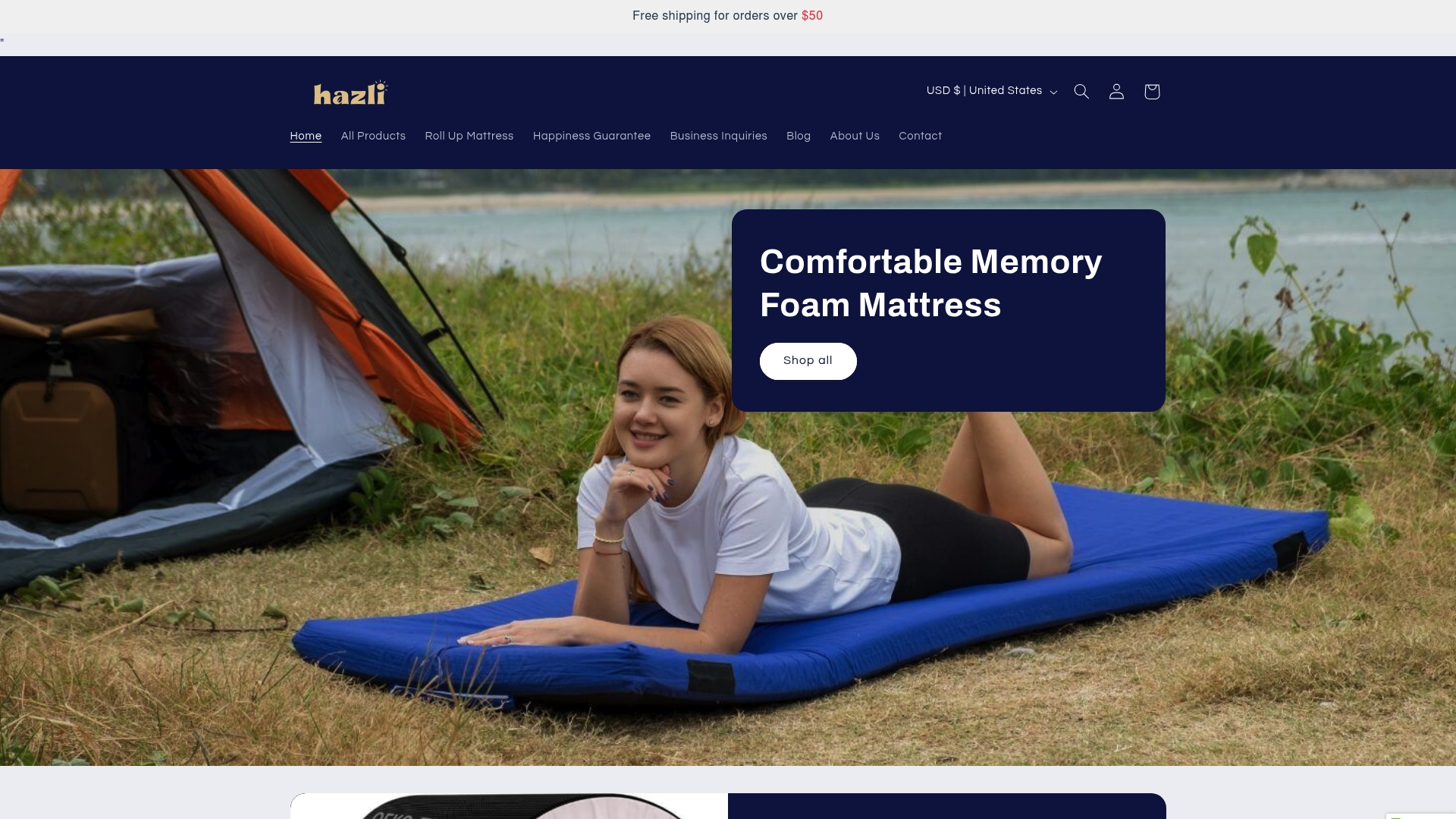
Our memory foam camping mattress is the roll-up type above. It is 3 inches thick in Kids, Cot, Single and Twin, and 4 inches thick in Twin XL and Queen, with a removable, washable, waterproof cover and roll-up straps. No pump, nothing to leak. Every size is CertiPUR-US and OEKO-TEX certified, and the mattress has earned a Best of Best Review award.
Honest trade-offs: it is for tents you drive to, SUV sleeping, road trips and guest beds, not for carrying. It is heavier and bulkier than any pad on this page, it needs time to expand after unrolling, and we have not published an R-value test, so for cold ground we suggest a foam pad underneath.
Sizes and current pricing are on the product page; the whole range is in our Hazli memory foam camping mattresses. Our free camping checklist generator can build a packing list for your next tent trip.
Frequently Asked Questions
What features should I look for in outdoor mattresses for tents?
Match the type to how you reach the tent (drive or carry), then look at thickness for comfort, an R-value or a plan for insulation if nights are cold, and a cover you can wash. Check the footprint against your tent floor before buying.
How do I clean and maintain my outdoor mattress?
Wash the cover when needed, air the mattress or pad after a damp trip, and store it dry. Inflatable pads last longer stored unrolled with the valve open. Follow the maker's instructions.
Can I use an outdoor mattress for indoor camping or guests?
Yes. Memory foam roll-ups and thick self-inflating pads work well as floor beds for guests or kids' sleepovers, which helps justify the storage space between trips.
How do I determine the right size outdoor mattress for my tent?
Measure the floor at ground level, subtract space for gear and a path to the door, and compare with the mattress footprints listed above. When in doubt, go one size smaller rather than forcing a mattress up the tent wall.
How do I choose between a memory foam mattress and other types for camping?
Choose memory foam if you drive to camp and want the most bed-like, no-pump option; choose a self-inflating or air pad if you need to carry it or save trunk space; choose closed-cell foam as a cheap, tough base layer or for ultralight trips.