

By The Hazli Family — Peter & Louise · Reviewed June 2026
Quick answer: Make a camping bed more comfortable by building from a level, stable foundation (cot frame, platform, or ground pad), layering memory foam — pad, mattress, then optional topper for a 4–6 inch stack — and adding soft pillows, fitted sheets, and breathable blankets. Test the setup for 10 minutes and adjust one element at a time.
Every parent faces that moment when the excitement of camping turns into a restless night on uneven ground. For American families who want outdoor adventures without sacrificing comfort, the secret lies in creating a cozy, stable sleep setup. Experts highlight the importance of a level, stable, and durable foundation for your bed, ensuring restful sleep in any environment. Discover practical memory foam strategies that give your family a supportive, plush place to recharge after a busy day exploring nature.
Table of Contents
- Step 1: Choose the Best Foundation for Your Bed
- Step 2: Layer Memory Foam Mattresses and Pads
- Step 3: Add Soft Bedding and Cozy Accessories
- Step 4: Test and Adjust Your Sleep Setup
Quick Summary
| Essential Takeaway | Explanation |
|---|---|
| 1. Choose a strong foundation | A solid base prevents mattress sagging and improves sleep comfort on uneven terrain, ensuring stability while camping. |
| 2. Layer memory foam effectively | Stack memory foam components to create a personalized sleeping surface that molds to your body and alleviates pressure points. |
| 3. Add quality bedding accessories | Use soft pillows and blankets to enhance comfort and help your family relax, mimicking a home-like sleep environment. |
| 4. Test your sleep setup | Experiment with your setup the first night, making small adjustments to improve comfort and address any pressure points. |
| 5. Document your ideal configuration | Keep track of successful adjustments for future trips, ensuring you can recreate the perfect sleeping arrangement next time. |
Step 1: Choose the Best Foundation for Your Bed
Your camping mattress needs a solid foundation to deliver the comfort your family deserves. A strong base prevents sagging, improves durability, and keeps your bed level on uneven ground. Think of it as the anchor for your entire sleep setup.
The ground itself matters more than most campers realize. Soft dirt, sand, or grass can shift throughout the night, causing your mattress to sink unevenly and rob you of proper support. A strong, level base is critical to maintaining comfort and stability on any terrain.
Here are the best foundation options for camping beds:
- Air mattress pads - Inflatable ground layers that cushion and level uneven surfaces
- Wooden pallets or platforms - Create a flat, elevated surface that keeps moisture away from your mattress
- Camping cot frames - Sturdy metal or aluminum frames that keep your bed above ground
- Foam ground pads - Lightweight insulation that provides cushioning and reduces surface irregularities
- Concrete blocks or stones - Quick, portable supports for a platform bed setup
When selecting a foundation, consider the campground’s terrain. Rocky areas need extra cushioning. Wet ground requires elevation to prevent moisture absorption. Soft sand requires firmer support structures to prevent sinking.
Here’s a quick comparison of camping bed foundation options and their ideal terrain placements:
| Foundation Type | Best Terrain | Moisture Protection | Portability |
|---|---|---|---|
| Air mattress pad | Uneven, soft dirt | Moderate | High |
| Wooden platform | Wet or muddy | Excellent | Moderate |
| Camping cot frame | Rocky, uneven ground | Good | High |
| Foam ground pad | Flat, grassy, mild | Limited | Excellent |
| Concrete blocks/stones | Sandy, firm areas | Excellent | Low |
Your foundation should be level, stable, and durable. Spend a few minutes before bedtime adjusting rocks, leveling sand, or securing your frame properly. This small effort transforms your sleep quality. When paired with a high-quality memory foam mattress, a solid foundation ensures your family wakes up refreshed instead of achy.
A properly chosen foundation prevents 90% of camping sleep discomfort, making it the most important decision before your trip.
You can also explore how choosing the right camping mattress complements a solid foundation for maximum comfort.
Pro tip: Scout your exact sleeping location during daylight hours, clear debris and rocks, and test your foundation setup before darkness falls to catch any issues early.
Step 2: Layer Memory Foam Mattresses and Pads
Layering is where camping comfort truly comes together. By stacking memory foam components, you create a personalized sleep surface that molds to your body and eliminates pressure points. This approach transforms an uncomfortable camping bed into a cozy retreat.
Start with your foundation layer, typically a memory foam pad that sits directly on your base. This bottom layer provides insulation from cold ground and cushions against bumps and irregularities. A 1 to 2-inch thickness works well for most campers.
Next, add your main mattress on top. The benefits of memory foam mattresses include superior conformance to your body shape, which reduces pressure points where your shoulders and hips bear weight. This middle layer delivers the bulk of your comfort.
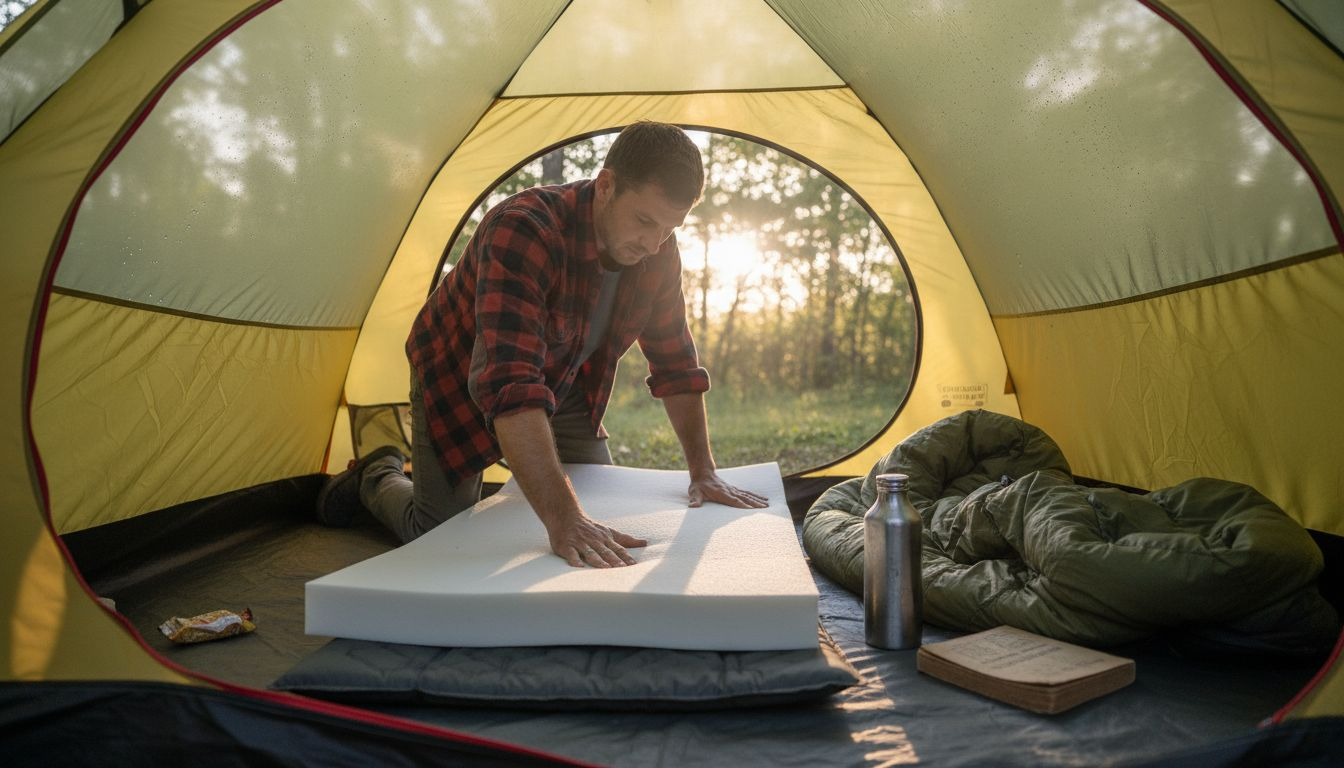
Finally, consider a memory foam topper as your third layer. These additions offer extra plush cushioning and can transform a firmer mattress into a cloud-like sleep surface.
Here’s how to layer effectively:
- Bottom layer - Ground pad for insulation and surface leveling
- Middle layer - Your primary camping mattress with adequate thickness
- Top layer - Optional topper for additional softness and pressure relief
- Secure everything - Use non-slip pads or straps between layers to prevent shifting
The total stack height matters for your family’s comfort and safety. Too thin and you’ll feel the ground. Too thick and children might need help climbing in and out. Most families find 4 to 6 inches total height ideal.
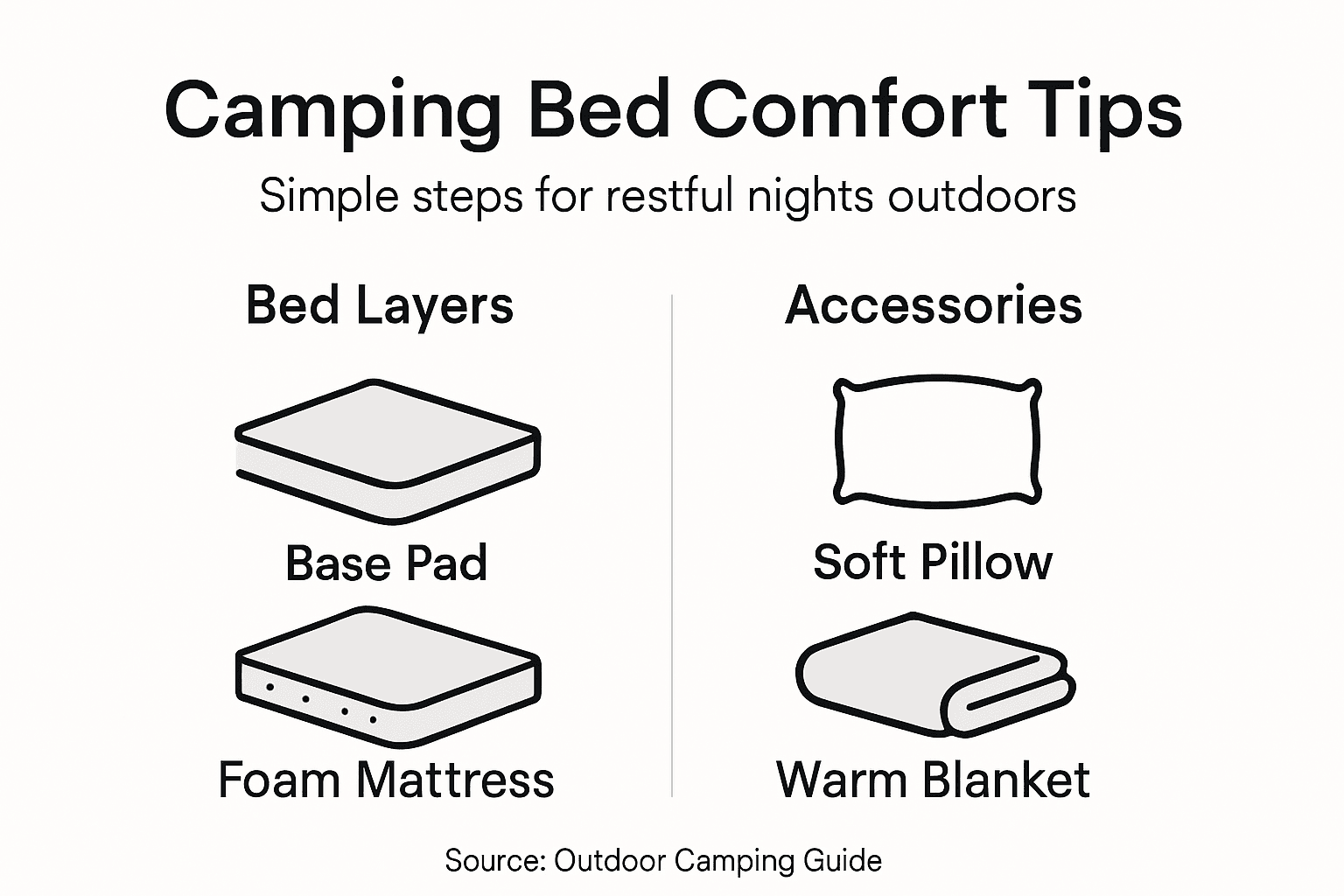
For quick reference, see how layering impacts camping comfort, safety, and sleep quality:
| Layer Position | Benefit | Impact on Sleep | Safety Concern |
|---|---|---|---|
| Bottom (Pad) | Insulates, levels base | Reduces cold, bumps | None |
| Middle (Mattress) | Main comfort, support | Less pressure points | Height adds risk |
| Top (Topper) | Extra softness | Plush feel | None |
Proper layering distributes your body weight across multiple foam densities, creating support without the uncomfortable feeling of sleeping on a firm surface.
Each layer works together to absorb movement, reduce heat retention, and provide personalized support. Your kids stay asleep even when siblings shift positions nearby.
Pro tip: Bring an extra 2-inch memory foam pad to position under shoulders and hips specifically, creating targeted support zones that prevent the aching that ruins the next day’s hiking adventures.
Step 3: Add Soft Bedding and Cozy Accessories
Soft bedding transforms your camping bed from functional to inviting. Quality pillows, blankets, and sheets create a home-like sleep environment that helps your family relax after outdoor adventures. This step bridges the gap between a basic mattress and genuine comfort.
Start with pillows that suit your sleeping position. Memory foam pillows conform to neck and head shape, reducing strain. Standard pillows work too, but bring extras since camping pillows compress more than home pillows. One per person plus one backup prevents neck discomfort from derailing your trip.
Next, layer soft blankets for warmth and texture. Selecting high-quality blankets based on softness and weight helps regulate body temperature throughout the night. Lightweight blankets work for summer camping, while heavier options prevent the chill that wakes you at 3 AM.
Consider these essential accessories:
- Pillows - Memory foam or standard, one per person plus backup
- Top blanket - Soft, breathable layer for temperature control
- Fitted sheet - Keeps mattress clean and adds comfort texture
- Sleeping pillowcases - Protect pillows and feel luxurious against skin
- Extra throw blanket - Perfect for cool evenings around the campfire
Quality matters more than quantity. One soft, well-made blanket beats three scratchy ones. Touch everything before buying. Your family will spend 8 hours wrapped in these materials, so prioritize softness and durability.
The right bedding creates psychological comfort that helps your brain relax and prepare for sleep, making it just as important as the mattress itself.
Layered bedding also adapts to temperature changes throughout the night. Kids can kick off a blanket and stay comfortable instead of overheating. Adults can add layers without feeling trapped.
Pro tip: Pack bedding in vacuum seal bags to save space, then fluff items in the sun when you arrive at camp to restore their natural softness and eliminate any staleness from storage.
Step 4: Test and Adjust Your Sleep Setup
Your first night camping reveals what works and what doesn’t. Testing your complete sleep system before committing to it prevents discomfort that ruins the entire trip. Small adjustments on night one make nights two and three dramatically better.
Start by lying down in your setup before sunset. Notice pressure points on your shoulders, hips, and lower back. Feel whether the mattress feels too firm or too soft. Check if your pillow height works for your neck. These early observations guide your adjustments.
Next, make adjustments to sleeping position and surface firmness to find your comfort zone. Add an extra blanket if you’re cold. Remove a layer if you’re overheating. Shift your pillow if your neck feels strained. Small tweaks compound into genuine comfort.
Here’s how to test systematically:
- Lie down in your setup - Spend at least 10 minutes before sleep testing your bed fully
- Identify discomfort spots - Notice exactly where your body feels pressure or strain
- Make one adjustment - Change only one element at a time so you know what helped
- Sleep on it - Experience the full night before making additional changes
- Evaluate in the morning - Rate your sleep quality and pain level
Cold spots, hot spots, and pressure points are all fixable. Add padding under your hips if they sink too deep. Place a blanket under your shoulders for extra cushioning. Swap pillows if neck strain persists.
Your body needs 1 to 2 nights to fully adjust to a new sleep surface, so avoid major changes after the first night unless something is genuinely painful.
Document what works. If you find the perfect combination on night two, write it down or take photos of your setup. Recreate it on future trips instead of starting from scratch.
Pro tip: Keep a lightweight notebook in your tent to jot down adjustments each morning while they’re fresh, then use those notes to perfect your setup before your next camping adventure.
Elevate Your Camping Sleep Comfort with Hazli Collection
The key to overcoming common camping bed challenges like uneven foundations and uncomfortable mattresses is choosing gear designed specifically for outdoor adventures. This article highlights how a solid base and layered memory foam can transform restless nights into refreshing sleep. Hazli Collection specializes in durable, high-quality memory foam solutions that eliminate pressure points and add cozy softness so your family can wake up energized.

Discover our Memory Foam Waterproof Camping Mattresses | HazliCollection.com that combine insulation and comfort in one easy-to-transport product. Complement your setup with smart picks from our Camping and Travel Products – Hazli Collection category to build the perfect layered sleep system. Start upgrading your outdoor sleep experience today by visiting Hazli Collection and giving your family the restful nights they deserve on your next camping trip.
Frequently Asked Questions
What is the best foundation for a comfortable camping bed?
A solid foundation is essential for a comfortable camping bed. Choose from options like air mattress pads or camping cot frames to provide a stable, level base and prevent sagging on uneven terrain.
How can I layer my sleeping setup for better comfort?
Layering your memory foam mattress and pads can significantly improve comfort while camping. Start with a ground pad for insulation, add a primary mattress for support, and consider a topper for extra soft cushioning to optimize your sleeping experience.
What type of bedding should I use to enhance comfort during camping?
Selecting soft bedding, including memory foam pillows and breathable blankets, creates a cozy atmosphere for sleep. Make sure to pack quality pillows—one per person plus an extra—to ensure everyone sleeps comfortably without strain on their necks.
How can I adjust my sleeping setup after the first night?
Testing and adjusting your sleeping setup is key to achieving comfort. Spend at least 10 minutes lying down to identify pressure points, then make one adjustment at a time to improve your comfort level throughout the night.
How do I know if my camping mattress provides enough support?
To check if your camping mattress offers adequate support, lie down and feel for pressure points on your shoulders and hips. If you notice discomfort, consider adding an extra layer or using a thicker mattress to improve support and comfort.
What should I do if my camping bed feels cold during the night?
If your camping bed feels cold, ensure you have a proper insulation layer, like a memory foam pad, and add a warm blanket on top. Adjust these layers to retain heat and create a more inviting sleeping environment.
Recommended
- How to Make My Camp Bed More Comfortable? 7 Smart Tips for Better Outd – Hazli Collection
- Top Ways to Maximize Campsite Comfort for Better Sleep – Hazli Collection
- How to Improve Camp Sleep Naturally for Outdoor Comfort – Hazli Collection
- Outdoor Sleep Comfort Tips for Cozy Camping Nights – Hazli Collection