

By The Hazli Family — Peter & Louise · Reviewed June 2026
Quick answer: The best roll up mattress for camping is a medium-firm memory foam model — a firmness that suits most sleeping positions — around 2–3 inches thick with an R-value above 2.5 for three-season use. Look for 2–5 pounds, a compressed size under 12x8x8 inches, and a ripstop, water-resistant cover.
Waking up sore after a night under the stars defeats the purpose of outdoor adventure. Many campers struggle with uncomfortable, bulky mattresses that compromise both sleep quality and packing convenience. This comprehensive guide reveals how to select roll up mattresses that deliver genuine comfort, practical portability, and lasting durability for your outdoor excursions. You’ll discover the critical features distinguishing superior mattresses from mediocre options, understand material benefits, master insulation principles, and learn maintenance strategies ensuring your investment pays dividends for years.
Table of Contents
- Understanding Roll Up Mattresses: Features And Benefits
- Memory Foam Benefits And Comfort
- Insulation And Thermal Properties
- Portability And Size Considerations
- Material Durability And Weather Resistance
- Common Misconceptions About Mattress Comfort
- User Experience And Case Studies
- Practical Tips For Choosing And Maintaining Your Roll Up Mattress
- Explore Hazli Collection’s Premium Outdoor Mattress Solutions
- Frequently Asked Questions
Key Takeaways
| Point | Details | |-------|---------|| | Memory foam superiority | Memory foam roll up mattresses provide superior pressure relief and insulation compared to traditional air pads. | | Portability standards | Best performing mattresses weigh 2 to 5 pounds and compress under 12x8x8 inches for convenient transport. | | Firmness preference | Medium-firm mattresses balance pressure relief and support for most sleepers. | | Durability enhancement | Ripstop nylon covers improve weather resistance and help the mattress last longer. | | Maintenance value | Proper cleaning and storage practices significantly extend mattress performance and comfort outdoors. |
Understanding Roll Up Mattresses: Features and Benefits
Roll up mattresses represent a category of portable sleeping surfaces designed to compress into compact cylinders for easy transport and storage. Unlike traditional mattresses or bulky camping pads, these mattresses feature flexible construction allowing them to roll tightly when not in use.
Two primary material types dominate the market. Memory foam mattresses use viscoelastic foam that contours to body shape, providing exceptional pressure relief and consistent support. Traditional foam mattresses employ standard polyurethane foam, offering basic cushioning at lower price points but sacrificing conforming properties.
The benefits for outdoor enthusiasts are substantial:
- Space efficiency allows storing mattresses in small areas between trips
- Weight reduction compared to conventional camping mattresses eases transportation
- Quick setup and breakdown streamline camp routines
- Consistent comfort across varied terrain conditions
- No inflation equipment or puncture concerns unlike air mattresses
Different folding mechanisms affect portability. Some mattresses fold accordion style into thirds or quarters, while others roll from one end. Integrated straps or storage bags keep compressed mattresses secure during transport. Understanding these design variations helps match mattress style to your camping approach, whether backpacking remote trails or car camping at established sites.
Memory Foam Benefits and Comfort
Memory foam technology revolutionized sleep comfort by responding dynamically to body heat and pressure. This material softens where your body contacts it, distributing weight evenly across the surface rather than creating pressure points common with traditional foam or air mattresses.
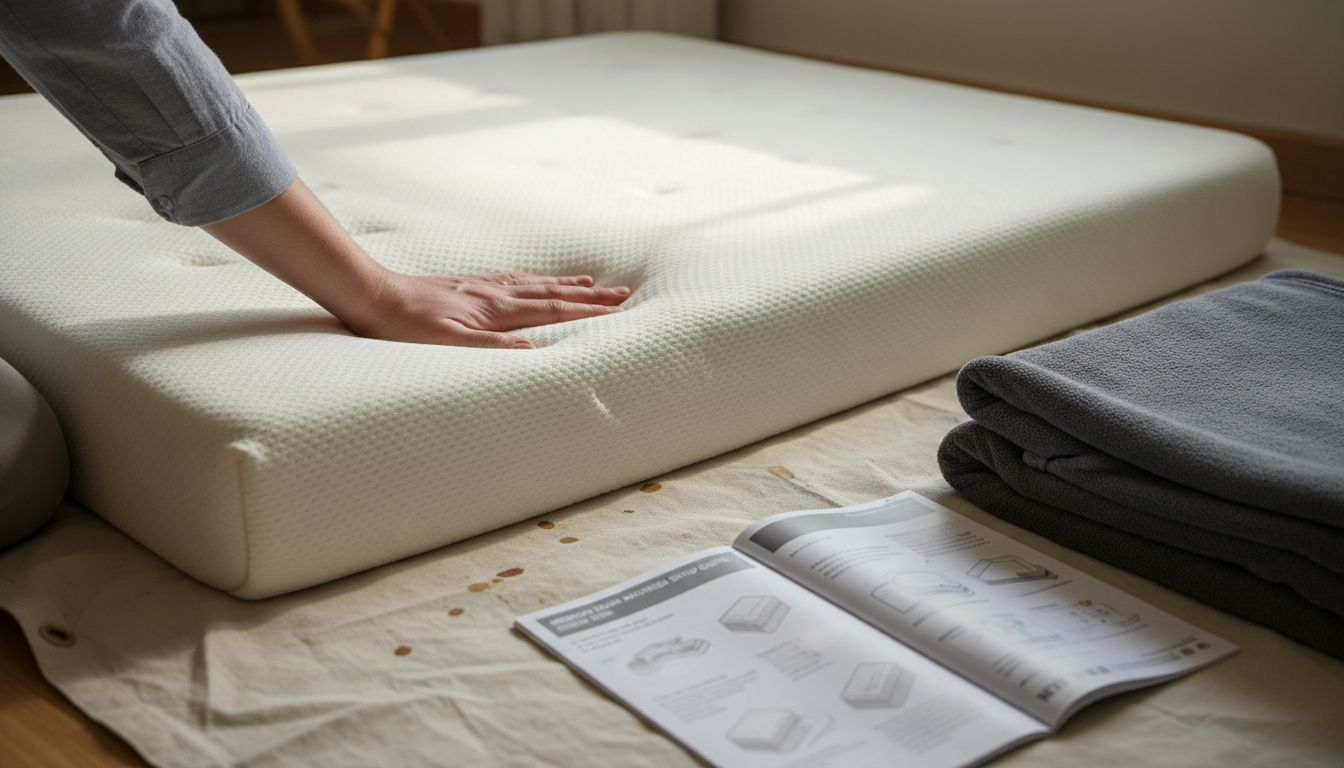
The conforming properties translate directly to better sleep quality outdoors. Where air pads feel bouncy and unstable, memory foam absorbs movement and cradles your body naturally. Where traditional foam creates rigid support, memory foam adapts to individual contours. Medium-firm mattresses suit most outdoor sleepers, providing enough give for pressure relief while maintaining spinal alignment.
Key advantages include:
- Pressure point elimination reduces tossing and turning
- Motion isolation prevents partner disturbance in shared tents
- Temperature sensitivity enhances comfort across weather conditions
- Shape memory ensures consistent performance after repeated rolling
- Durability surpasses air chambers vulnerable to punctures
Memory foam maintains its supportive properties far longer than alternatives. Air mattresses develop slow leaks and lose firmness. Traditional foam compresses permanently after extended use. Memory foam rebounds fully, delivering reliable comfort trip after trip.
Pro Tip: Allow memory foam mattresses 15 to 20 minutes to fully expand after unrolling, especially in cold weather when the material is less pliable. This ensures maximum loft and comfort.
Compare your current sleeping solution to memory foam options and experience the difference proper support makes after a long day hiking. The documented benefits extend beyond comfort to actual sleep quality metrics.
Insulation and Thermal Properties
Insulation separates adequate outdoor sleep from miserable nights shivering in your sleeping bag. The R-value measures insulation effectiveness, quantifying how well material resists heat flow. Higher R-values indicate better insulation, keeping ground cold from stealing your body heat.
Memory foam provides natural insulation advantages over air mattresses. Foam’s cellular structure traps air pockets that resist thermal transfer. Air mattresses, conversely, allow convection currents inside the chamber that actually circulate cold air against your body.
| Material Type | Typical R-Value | Temperature Rating | Insulation Quality |
|---|---|---|---|
| Memory Foam 2-3 inches | 2.5 to 4.0 | 30°F to 50°F | Excellent |
| Traditional Foam 2 inches | 1.5 to 2.5 | 40°F to 60°F | Good |
| Standard Air Mattress | 0.5 to 1.5 | 50°F+ only | Poor |
| Insulated Air Pad | 2.0 to 3.5 | 35°F to 55°F | Good |
Moisture affects insulation dramatically. Condensation forming between mattress and ground reduces R-value effectiveness. Quality memory foam mattresses incorporate moisture-resistant covers preventing water absorption that would compromise thermal properties.
Thicker mattresses generally insulate better, but density matters more than thickness alone. High-density memory foam packs more insulating material into less space compared to low-density alternatives. For three-season camping, target mattresses with R-values above 2.5. Winter camping demands R-values exceeding 4.0.
Ground conditions influence thermal performance. Rocky, frozen, or snow-covered terrain conducts heat away faster than soft earth or grass. Even well-insulated mattresses benefit from additional ground barriers like closed-cell foam pads in extreme cold.
Portability and Size Considerations
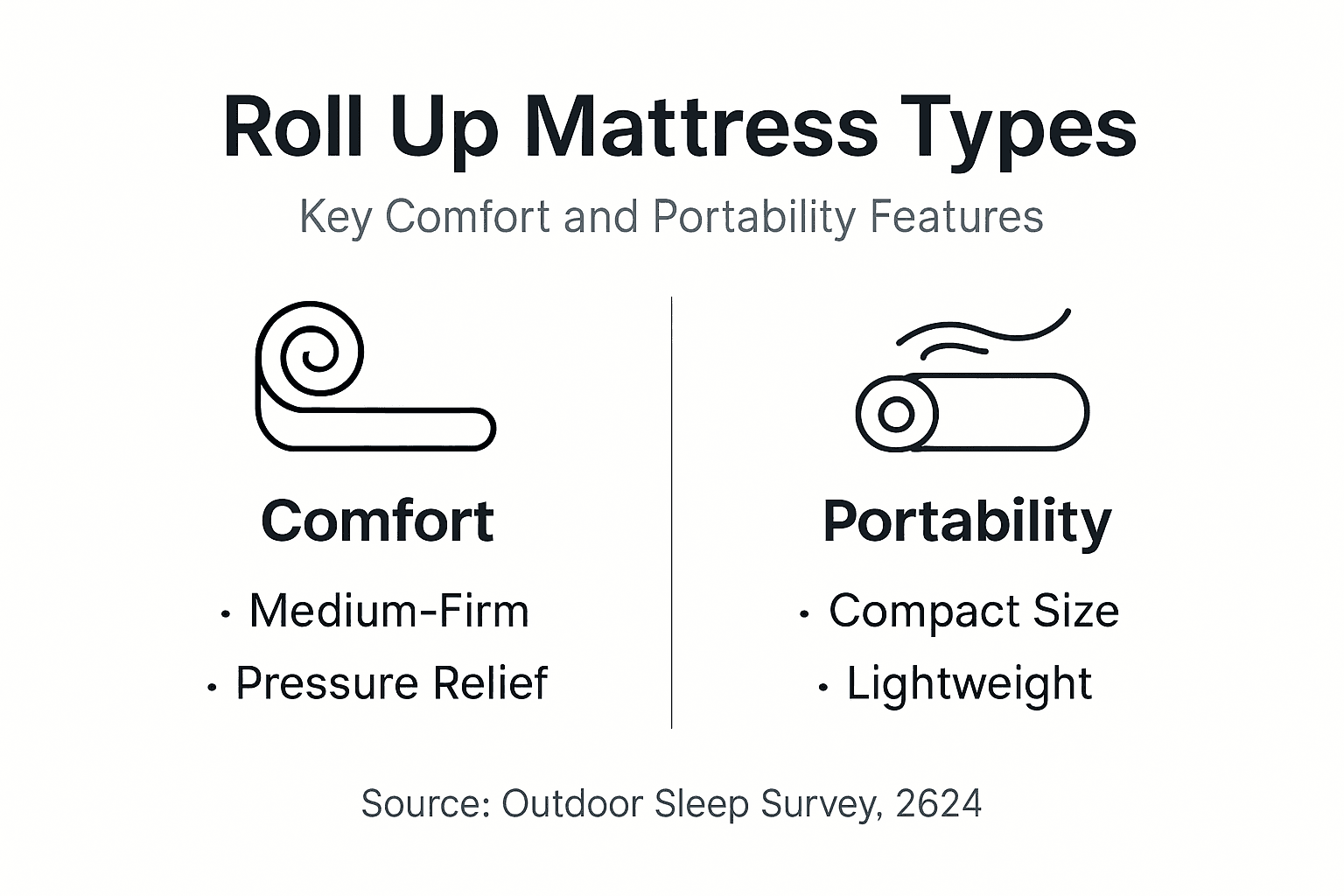
Portability determines whether your mattress enhances or hinders outdoor adventures. According to backpacking gear experts, the best roll up mattresses weigh between 2 to 5 pounds and compress to sizes under 12 x 8 x 8 inches, balancing comfort with practical transport limits.
Weight matters differently depending on camping style. Backpackers carrying everything on their backs prioritize every ounce, making 2 to 3 pound mattresses ideal. Car campers enjoying vehicle access tolerate 4 to 6 pound options that provide extra thickness and comfort.
Pack size after compression determines storage feasibility. Mattresses compressing to volleyball size fit easily in backpacks or vehicle storage compartments. Larger compressed sizes restrict packing options and consume premium gear space.
| Camping Style | Max Weight | Max Compressed Size | Thickness Priority |
|---|---|---|---|
| Backpacking | 2 to 3 lbs | 10 x 6 x 6 inches | 1.5 to 2.5 inches |
| Bike Touring | 3 to 4 lbs | 12 x 7 x 7 inches | 2 to 3 inches |
| Car Camping | 4 to 6 lbs | 14 x 10 x 10 inches | 3 to 4 inches |
| RV/Glamping | 6+ lbs | Size flexible | 4+ inches |
Rolling mechanisms affect compressed dimensions. Mattresses rolling lengthwise create long, narrow packages. Those folding into thirds produce shorter, thicker bundles. Consider your pack shape and available space when selecting rolled mattress designs.
Thickness trades off against portability. Thicker mattresses provide superior comfort and insulation but resist compression and add weight. Most campers find 2 to 3 inch thickness optimal, delivering adequate cushioning without excessive bulk.
Pro Tip: Test your mattress’s compressed size with your actual backpack or storage area before committing. Manufacturers’ measurements sometimes exclude straps or stuff sacks that increase real-world dimensions.
Portability evaluation checklist:
- Verify actual weight including storage bag and straps
- Measure compressed dimensions, not just manufacturer claims
- Test rolling/folding process for difficulty and time required
- Confirm attachment points for external pack mounting if needed
- Consider cumulative weight with other gear for total load
Balancing comfort with transport convenience requires honest assessment of your typical camping scenarios and physical capabilities. Explore detailed comparisons at backpacking mattress guides for specific recommendations.
Material Durability and Weather Resistance
Material quality separates mattresses lasting multiple seasons from those failing after a few trips. Outdoor environments subject mattresses to abrasion, punctures, moisture, UV exposure, and temperature extremes that indoor mattresses never face.
Ripstop nylon dominates quality mattress covers because its reinforced grid pattern prevents tear propagation. When punctured, tears stop at reinforcement threads rather than running across entire panels. This makes ripstop more durable and weather resistant than standard nylon.
Fabric denier indicates thread thickness and density. Higher denier numbers mean heavier, more durable fabrics. Mattress covers typically range from 40D to 100D. Backpacking mattresses use 40D to 60D balancing durability with weight. Car camping mattresses employ 70D to 100D maximizing puncture resistance.
Moisture resistance features include:
- Waterproof coatings preventing water absorption into foam
- Sealed seams blocking moisture entry at stitching
- Removable, washable covers for easy cleaning
- Quick-dry fabrics that shed moisture rapidly
- Antimicrobial treatments preventing mold and mildew
Material choices impact lifespan significantly. Cheap mattresses using thin, uncoated fabrics degrade within one season of regular use. Premium mattresses with ripstop covers, waterproof coatings, and reinforced high-wear areas last five or more years.
Maintenance preserves material integrity. Clean mattresses after trips to remove dirt and oils that degrade coatings. Dry thoroughly before storage to prevent mildew. Store loosely rolled or flat rather than compressed long-term, which stresses materials and reduces foam resilience.
Inspect mattresses regularly for small damage requiring repair before it worsens. Patch kits designed for outdoor fabrics repair small tears or punctures effectively. Address damage immediately rather than waiting until it compromises entire panels.
Quality materials justify higher initial costs through extended service life and maintained performance. Compare specific material specifications rather than relying solely on brand names. Review durable camping equipment examples for material benchmarks indicating quality construction.
Common Misconceptions About Mattress Comfort
Misunderstandings about mattress performance lead campers to purchase inappropriate products or dismiss superior options based on incorrect assumptions. Clarifying these misconceptions helps you make informed decisions.
Myth: Air pads always provide more comfort than foam mattresses.
Reality shows memory foam’s conforming properties deliver superior pressure relief and more consistent support than air chambers. Air mattresses require precise inflation; too firm creates pressure points, too soft bottoms out. Memory foam self-adjusts to optimal support automatically.
Myth: Thinner mattresses suffice if properly insulated.
While insulation matters critically, thickness affects comfort independently. Adequate cushioning between your body and ground prevents pressure points regardless of warmth. Minimum 2 inch thickness provides necessary cushioning for most side and back sleepers.
Myth: All foam roll up mattresses perform similarly.
Foam quality varies dramatically. Low-density foams compress permanently and provide minimal support. High-density memory foams maintain shape and support through hundreds of uses. Material specifications matter more than generic “foam” categorization.
Myth: Heavier mattresses always offer better quality.
Weight correlates loosely with durability but not perfectly. Advanced materials and engineering create lightweight mattresses with excellent performance. Evaluate density, material specifications, and construction rather than weight alone.
Myth: Mattress firmness preference is purely subjective.
While personal preference plays a role, sleep position and body weight create objective firmness requirements. Side sleepers need softer surfaces for shoulder and hip pressure relief. Back and stomach sleepers require firmer support maintaining spinal alignment. Medium-firm is popular because it works across sleeping positions.
Understanding actual performance factors rather than assumptions helps identify mattresses meeting your specific needs. Review detailed explanations about rolled mattress realities and comfort factors dispelling common myths with factual information.
User Experience and Case Studies
Real-world feedback reveals how mattress upgrades transform outdoor sleep quality. Multiple studies and user reports document significant improvements after switching from air pads or thin foam to quality memory foam roll up mattresses.
Campers report approximately 30% improvement in overall sleep quality scores after upgrading to memory foam. Metrics include reduced nighttime waking, decreased morning stiffness, and improved next-day energy levels. These improvements translate directly to enhanced trip enjoyment and safety.
Morning stiffness and fatigue decrease notably with proper mattress support. Users previously waking with sore hips, shoulders, and lower backs experience dramatic relief with memory foam’s pressure distribution. This benefit proves especially valuable during multi-day trips where cumulative sleep quality affects performance.
Firmness preferences vary by sleeping position and body type. Side sleepers favor softer surfaces around the medium range. Back sleepers prefer medium to medium-firm. Stomach sleepers choose firmer options. That versatility makes medium-firm a good compromise for mixed-position sleepers and couples with different preferences.
“Switching to a memory foam roll up mattress completely changed my camping experience. I used to dread nights on thin pads, waking constantly from hip pain. Now I sleep through the night and wake refreshed, ready for the trail. The compact size means I don’t sacrifice pack space for comfort anymore.” – Sarah M., backpacker and outdoor enthusiast
Longevity reports show quality memory foam mattresses maintaining comfort across 100+ nights of use. Users note consistent support and minimal foam degradation even after years of regular camping. This durability contrasts sharply with air mattresses developing leaks or traditional foam compressing flat.
Family campers particularly appreciate memory foam’s motion isolation. Children moving during sleep don’t disturb parents on the same mattress. Couples enjoy undisturbed rest despite different sleep schedules or restless partners.
Detailed performance insights appear in resources like foam mattress performance guides and memory foam outdoor advantages, documenting specific user experiences across camping scenarios.
Practical Tips for Choosing and Maintaining Your Roll Up Mattress
Selecting and caring for your mattress properly maximizes its performance and lifespan. Follow these systematic steps for optimal results.
Selection Process:
- Assess your typical camping conditions including temperature range, terrain, and trip duration
- Determine portability requirements based on transportation method and distance
- Identify comfort priorities considering sleep position, any pressure point issues, and partner needs
- Set realistic budget balancing initial cost against expected lifespan and performance
- Compare specific models using these criteria rather than generic categories
- Test mattresses when possible or purchase from retailers with return policies
Maintenance Best Practices:
Cleaning extends mattress life significantly. Spot clean with mild soap and water after trips. For deeper cleaning, use mattress-safe cleaners avoiding harsh chemicals that degrade foam or coatings. Air dry completely before storage, as trapped moisture breeds mildew.
Drying techniques matter. Never machine dry or apply direct heat, which damages memory foam cellular structure. Instead, air dry in shaded, well-ventilated areas. Prop mattresses at angles promoting airflow around all surfaces.
Storage conditions affect longevity. Store mattresses loosely rolled or flat in cool, dry locations away from direct sunlight. Avoid prolonged compression, which stresses materials and reduces foam resilience. Climate-controlled storage prevents temperature extremes degrading materials.
Waterproofing maintenance preserves protective coatings. Reapply DWR (durable water repellent) treatments annually or when water no longer beads on fabric surfaces. Clean mattresses thoroughly before reapplication for proper coating adhesion.
Replacement indicators include permanent foam compression not recovering after 24 hours unrolled, cover tears compromising weather resistance, persistent odors despite cleaning, or noticeable comfort decline affecting sleep quality.
Pro Tip: Create a mattress care kit including appropriate cleaner, waterproofing spray, patch material, and inspection checklist. Regular maintenance takes minutes but extends mattress life by years.
Implement these practices systematically rather than waiting for problems to develop. Preventive care costs far less than premature replacement. Consult memory foam mattress care guides for detailed maintenance techniques ensuring your investment delivers years of comfortable outdoor sleep.
Explore Hazli Collection’s Premium Outdoor Mattress Solutions
Transform your outdoor sleep experience with expertly curated mattress solutions designed specifically for camping conditions. Hazli Collection specializes in memory foam camping mattresses balancing portability, comfort, and durability based on extensive outdoor testing and user feedback.

Discover detailed mattress comparisons helping you identify options matching your specific camping style and comfort requirements. Whether you prioritize ultralight backpacking gear or luxurious car camping comfort, informed choices start with understanding how different mattress features affect real-world performance. Extend your gear’s lifespan with proven outdoor mattress care strategies ensuring consistent comfort season after season.
Frequently Asked Questions
What thickness roll up mattress do I need for comfortable camping?
Most campers find 2 to 3 inches optimal for balancing comfort with portability. Side sleepers may prefer 3 inches for adequate shoulder and hip cushioning, while back sleepers often find 2 inches sufficient. Thicker options suit car camping when weight and pack size matter less.
How do I clean my memory foam roll up mattress after outdoor use?
Spot clean with mild soap and lukewarm water using a soft cloth, avoiding saturation of the foam core. Air dry completely in a shaded, well-ventilated area before rolling for storage. For removable covers, machine wash on gentle cycle and air dry thoroughly.
Can roll up mattresses work in cold weather camping?
Quality memory foam mattresses with R-values above 2.5 provide adequate insulation for three-season camping down to approximately 30°F. For winter camping, combine your mattress with a closed-cell foam pad underneath for additional ground insulation and target combined R-values exceeding 4.0.
How long do memory foam roll up mattresses typically last?
High-quality memory foam mattresses last five or more years with proper care and regular use. Lifespan depends on foam density, cover durability, storage conditions, and maintenance. Signs requiring replacement include permanent compression, cover damage, or noticeable comfort decline.
What’s the difference between roll up and inflatable camping mattresses?
Roll up foam mattresses require no inflation, eliminate puncture concerns, provide superior insulation, and maintain consistent comfort automatically. Inflatable mattresses weigh less, pack smaller, allow firmness adjustment, but require inflation equipment and careful handling preventing punctures.
Are heavier mattresses more durable than lightweight options?
Not necessarily. Material quality and construction methods determine durability more than weight alone. Advanced materials and engineering create lightweight mattresses with excellent longevity. Evaluate foam density, cover specifications, and construction rather than using weight as a primary durability indicator.
Recommended
- Rolled Mattresses Explained: Comfort, Portability, Value – Hazli Collection
- Why Choose Memory Foam Mattresses: Understanding Comfort – Hazli Collection
- What Is a Roll Up Mattress? Practical Comfort Explained – Hazli Collection
- Memory Foam Mattress: Comfort and Durability for Camping – Hazli Collection