

By The Hazli Family — Peter & Louise · Reviewed June 2026
Quick answer: Choose a backpacking mattress because it delivers three things a bedroll can't: lightweight packability, thermal insulation from cold ground (measured by R-value), and cushioning on rough terrain. The three main types — inflatable air, self-inflating foam, and closed-cell foam — let you trade weight, comfort, and durability to match your trip.
Finding a backpacking mattress that checks every box can feel daunting for american families and outdoor enthusiasts craving restful nights under the stars. Choosing the wrong mattress can mean sore backs, shivers, or gear that adds unnecessary weight to your pack. With more than 60 million American campers venturing into the wilderness annually, the need for comfortable, durable, and packable sleep solutions has never been greater. Discover how to select a backpacking mattress designed to handle rugged trails, unpredictable weather, and the demands of real adventure.
Table of Contents
- What Makes A Backpacking Mattress Unique
- Types Of Backpacking Mattresses Explained
- Key Features: Comfort, Warmth, And Weight
- Comparing Alternatives: Pads And Cots
- Cost, Durability, And Common Mistakes
Key Takeaways
| Point | Details |
|---|---|
| Backpacking Mattress Features | Essential features include lightweight construction, thermal insulation, and compressibility, making them ideal for outdoor use. |
| Types of Mattresses | There are three main types: Inflatable Air Mattresses, Self-Inflating Foam Mattresses, and Closed-Cell Foam Mattresses, each catering to different needs. |
| Comfort and Warmth | The balance between comfort and warmth is crucial for recovery and performance, with R-value indicating the thermal efficiency of the mattress. |
| Cost and Durability Considerations | Assess total value by considering materials, expected lifespan, and durability when selecting a mattress to avoid common purchasing mistakes. |
What Makes a Backpacking Mattress Unique
Backpacking mattresses represent a specialized category of outdoor sleeping gear designed with unique engineering considerations that set them apart from traditional home bedding. Unlike standard camping mattresses, these compact sleep solutions are meticulously crafted to meet the demanding requirements of wilderness travelers who must balance comfort, weight, and portability in challenging environments. Wilderness backpacking experts emphasize that the core purpose of these mattresses is to provide reliable rest while maintaining minimal pack weight.
The defining characteristics of a backpacking mattress include exceptional lightweight construction, superior thermal insulation, and remarkable compressibility. These mattresses are engineered to protect campers from cold ground temperatures while offering critical cushioning across uneven terrain. Modern backpacking mattresses typically utilize advanced materials like high-density foam, air-filled chambers, and synthetic insulating layers that can compress into incredibly small packages - often no larger than a water bottle when packed.
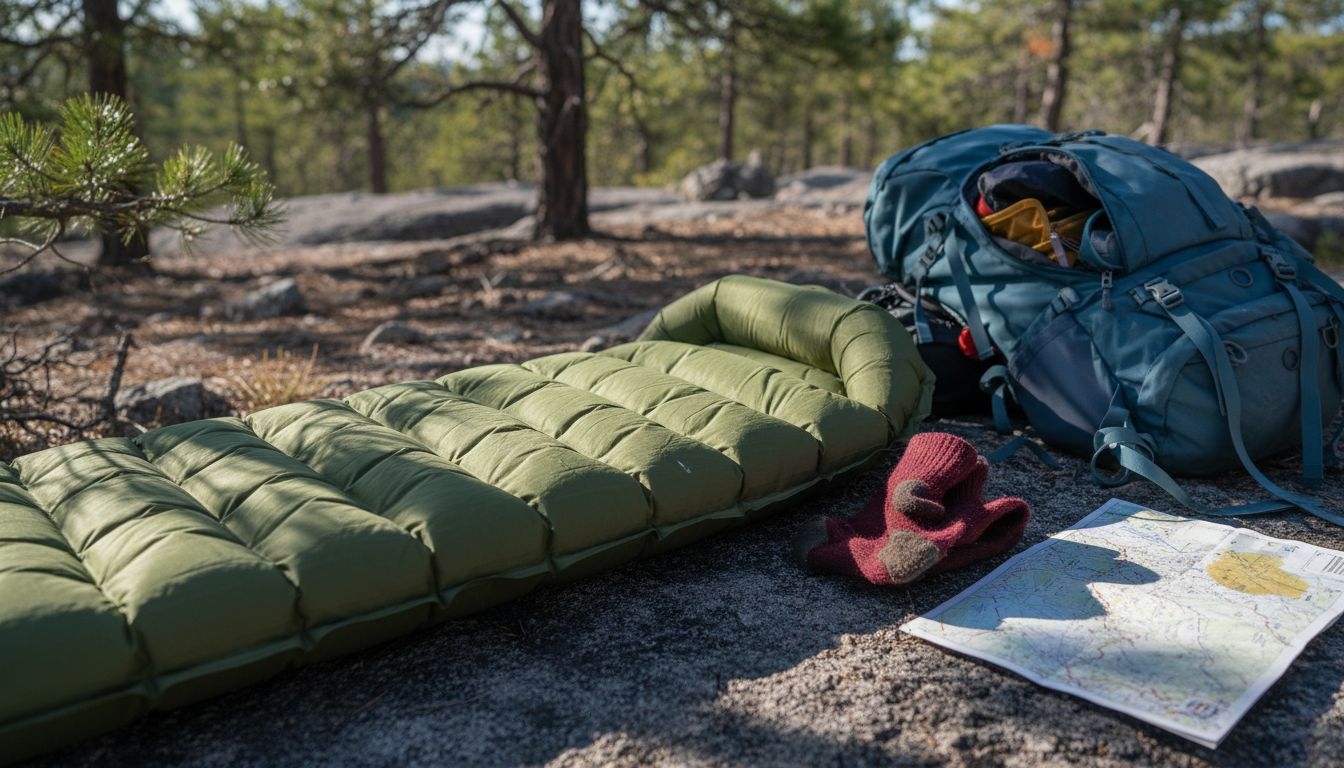
Backpacking mattresses distinguish themselves through innovative design features tailored for outdoor survival. They must withstand temperature fluctuations, resist moisture, provide adequate cushioning on rocky surfaces, and remain durable enough to endure multiple expeditions. The best models integrate strategic padding zones, reflective heat-trapping technologies, and puncture-resistant exterior materials that can handle rough wilderness conditions. These mattresses are not just sleeping surfaces but critical pieces of survival equipment that directly impact a backpacker’s comfort, recovery, and overall expedition performance.
Pro Tip for Backpackers: Always test your mattress at home before a trip to understand its inflation method, comfort level, and potential fit inside your tent, ensuring you make necessary adjustments before hitting the trail.
Types of Backpacking Mattresses Explained
Backpacking mattresses come in three primary categories, each designed to address specific outdoor sleeping needs while balancing weight, comfort, and packability. Comparing different mattress types reveals unique advantages that can significantly impact a backpacker’s trail experience and overall comfort.
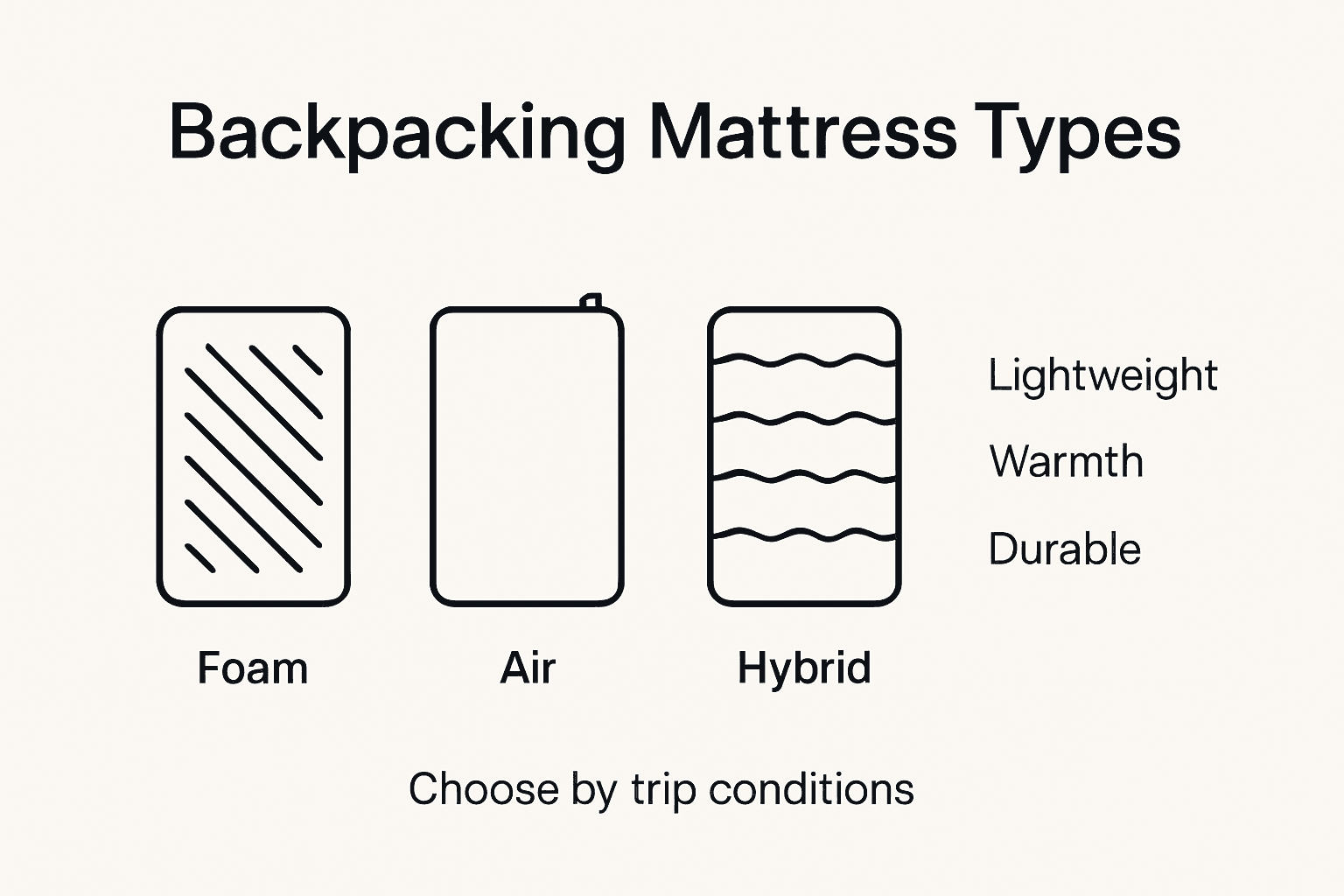
The first type is Inflatable Air Mattresses, which are ultralight and highly compressible. These mattresses use air chambers that can be manually or mechanically inflated, providing adjustable cushioning and thickness. Advanced models feature insulated cores, reflective materials, and specialized fabrics that prevent punctures while maintaining minimal pack weight. Typically weighing between 12 to 20 ounces, they represent an excellent choice for weight-conscious backpackers seeking maximum portability.
The second category includes Self-Inflating Foam Mattresses, which combine open-cell foam technology with air-filled chambers. These mattresses automatically expand when their valve is opened, offering a perfect blend of cushioning and insulation. They provide superior thermal protection against cold ground, making them ideal for alpine or high-elevation camping scenarios. Their robust construction allows them to maintain shape and provide consistent comfort across varied terrain, with most models weighing between 1 to 2 pounds.
The third type encompasses Closed-Cell Foam Mattresses, which are the most basic and durable option. Made from dense foam with tiny sealed air pockets, these mattresses offer excellent insulation and near-indestructible performance. While they provide less cushioning compared to inflatable options, they are extremely lightweight, puncture-proof, and can double as emergency sitting pads or protective layers. They typically weigh less than a pound and remain a favorite among ultralight backpackers and minimalist adventurers.
Pro Tip for Mattress Selection: Always consider your specific trip conditions, expected temperatures, and pack weight limitations when choosing a backpacking mattress to ensure optimal comfort and performance.
Here’s a side-by-side look at the three main backpacking mattress types:
| Mattress Type | Main Strength | Weight Range | Ideal For |
|---|---|---|---|
| Inflatable Air Mattresses | Maximum packability | 12 to 20 ounces | Weight-focused backpackers |
| Self-Inflating Foam | Excellent insulation | 1 to 2 pounds | Cold-weather camping |
| Closed-Cell Foam | Superior durability | Less than 1 pound | Ultralight minimalist trips |
Key Features: Comfort, Warmth, and Weight
Backpacking mattresses represent a complex engineering challenge, where sleeping system design requires precise balance between three critical performance metrics: comfort, warmth, and weight. These interconnected features determine not just a backpacker’s sleeping experience, but potentially their overall trip success and physical recovery.
The comfort dimension focuses on creating a supportive surface that mitigates ground irregularities while minimizing physical strain. Advanced mattresses incorporate strategically placed cushioning zones, variable density foam layers, and contoured designs that adapt to uneven terrain. These features distribute body weight evenly, reducing pressure points and preventing muscle tension that can develop during extended outdoor activities. Sophisticated models use graduated foam densities and air chamber configurations to provide targeted support for different body regions, ensuring travelers wake up refreshed rather than sore.
Thermal management represents another crucial aspect of backpacking mattress design. Warmth preservation depends on a mattress’s R-value, which measures its insulative capacity against cold ground transfer. High-performance mattresses integrate specialized materials like reflective metallic layers, closed-cell foam structures, and trapped air chambers that create effective thermal barriers. These innovations prevent heat loss, protecting backpackers from hypothermia risks in challenging environmental conditions. Mattress designers carefully engineer these thermal properties to provide maximum warmth without adding unnecessary bulk or weight.
Weight considerations remain paramount for backpackers, who must meticulously balance gear functionality against portability. Ultralight construction techniques involve using advanced synthetic materials, precision engineering, and minimalist design philosophies to create mattresses that weigh mere ounces while maintaining structural integrity. Modern manufacturing processes allow manufacturers to develop mattresses under two pounds that provide remarkable comfort and insulation, representing a significant technological achievement in outdoor sleeping equipment.
Pro Tip for Gear Selection: Always test your backpacking mattress at home before your trip, simulating potential terrain conditions to understand its true comfort and performance characteristics.
Comparing Alternatives: Pads and Cots
Backpackers face a critical decision when selecting sleeping solutions, with sleeping pad technologies offering distinct advantages over traditional camping cots. Each option presents unique benefits and limitations that directly impact comfort, weight, and overall outdoor experience.
Sleeping pads represent the ultralight solution for wilderness travelers. These compact alternatives typically weigh between 10 to 24 ounces and compress into remarkably small packages, making them ideal for backpackers prioritizing mobility. Pads come in three primary configurations: closed-cell foam, self-inflating, and air-filled designs. Closed-cell foam pads provide maximum durability and minimal weight, while air-filled options offer superior comfort with adjustable thickness. Self-inflating models blend these characteristics, automatically expanding when unpacked and providing a balanced sleeping surface that adapts to various terrains.
In contrast, camping cots provide elevated sleeping platforms that lift users completely off the ground. While offering substantial advantages for car camping and base camp scenarios, cots become impractical for backcountry expeditions due to their significant weight and bulky profile. Most cots weigh between 5 to 20 pounds and require substantial pack space, making them unsuitable for hikers and long-distance travelers. They excel in stationary camping environments where weight and volume are less critical, providing consistent support and keeping sleepers away from cold, uneven ground surfaces.
Ultimately, the choice between pads and cots depends on specific trip requirements, physical demands, and personal preferences. Backpackers will overwhelmingly benefit from sleeping pads, which offer an optimal combination of lightweight design, thermal protection, and compact storage. Car campers and those with vehicle access might find cots more suitable for creating a home-like sleeping experience in outdoor settings.
Pro Tip for Gear Selection: Always test your sleeping solution at home before your trip, simulating potential terrain conditions to understand its true comfort and performance characteristics.
Cost, Durability, and Common Mistakes
Backpacking mattresses represent a significant investment where understanding long-term durability factors becomes critical for making informed purchasing decisions. The interplay between cost, performance, and expected lifespan requires careful consideration beyond simple price comparisons.
Cost considerations extend far beyond the initial purchase price. Budget-conscious backpackers should evaluate mattresses through a total value lens, analyzing material quality, expected usage duration, and performance characteristics. Entry-level mattresses typically range from $50 to $100, mid-tier options between $100 to $200, and premium models from $200 to $350. While higher-priced mattresses often incorporate advanced materials like ripstop nylon, specialized foam technologies, and enhanced thermal barriers, not every expensive model guarantees superior performance. Intelligent selection involves matching the mattress’s technical specifications to specific trip requirements and personal sleeping preferences.
The following table summarizes key cost and durability factors to consider when choosing a backpacking mattress:
| Price Range | Material Focus | Durability Risk |
|---|---|---|
| $50–$100 | Basic foam or air materials | May lack puncture resistance |
| $100–$200 | Enhanced synthetics | Improved seams, insulation |
| $200–$350 | Advanced tech (e.g., ripstop) | Longest lifespan, best warranty |
Durability represents another crucial evaluation metric for backpacking mattresses. Modern designs incorporate reinforced materials and sophisticated construction techniques to maximize longevity. Factors influencing durability include fabric denier rating, seam quality, valve robustness, and core material resilience. Puncture resistance, moisture repellency, and ability to maintain structural integrity across temperature variations determine a mattress’s long-term performance. Backpackers should inspect potential purchases for reinforced stress points, quality of air chambers or foam cores, and manufacturer warranties that indicate confidence in product longevity.
Common purchasing mistakes can significantly compromise outdoor sleeping experiences. Poor mattress selection often stems from overlooking critical performance indicators, such as thermal efficiency, weight distribution, and adaptability to diverse terrain. Backpackers frequently err by prioritizing price over functionality, selecting mattresses that fail to provide adequate insulation or comfort. Additional mistakes include neglecting to consider personal sleep styles, underestimating temperature rating requirements, and failing to test mattress compatibility with existing sleeping bags and tent configurations.
Pro Tip for Smart Shopping: Always request product demonstrations, read verified user reviews, and if possible, borrow or rent different mattress types before making a significant investment in your backcountry sleeping system.
Discover Ultimate Comfort with Backpacking Mattresses from Hazli Collection
The article highlights the challenge every backpacker faces balancing comfort, warmth, and weight while sleeping outdoors. If you struggle with finding a mattress that offers reliable insulation, cushions against uneven terrain, and stays lightweight for your pack the solution is here. Hazli Collection specializes in high-quality memory foam mattresses and outdoor gear designed with these exact pain points in mind. Our products blend durability with advanced materials to ensure your backcountry rest supports full recovery after every adventure.
Take the next step toward better sleep on the trail by exploring the Hazli Collection today. Experience mattresses crafted for comfort, warmth, and ease of packing that reflect real backpackers’ needs. Don’t wait until the next trip to realize you need better gear. Shop our memory foam camping mattress now to find your perfect match. Elevate your outdoor rest with gear that truly performs.
Frequently Asked Questions
What are the key benefits of using a backpacking mattress?
Backpacking mattresses are designed to provide crucial comfort, warmth, and insulation while being lightweight and compact for easy portability. They help mitigate ground irregularities and ensure better sleep quality during outdoor adventures.
How do inflatable air mattresses compare to self-inflating foam mattresses?
Inflatable air mattresses are ultralight and highly compressible, allowing for adjustable cushioning and packability, while self-inflating foam mattresses offer a blend of cushioning and insulation that expands automatically, providing better thermal protection in cold conditions.
What should I consider when choosing a backpacking mattress?
When selecting a backpacking mattress, consider factors such as trip conditions, expected temperatures, your personal comfort preferences, and the balance between weight and insulation needs to ensure optimal performance during your trip.
How does the weight of a backpacking mattress affect my hiking experience?
The weight of a backpacking mattress is critical for hikers, as lighter mattresses improve packability and reduce overall load. Ultralight designs are essential for long-distance hikes, allowing for greater mobility without sacrificing comfort or insulation.
Recommended
- 7 Essential Examples of Outdoor Sleeping Gear for Comfort – Hazli Collection
- 8 Must-Know RV Camping Essentials for Outdoor Comfort – Hazli Collection
- 7 Outdoor Sleeping Arrangement Ideas for Ultimate Comfort – Hazli Collection
- Memory Foam vs Air Mattress Camping – Expert Comparison 2025 – Hazli Collection