

By The Hazli Family — Peter & Louise · Reviewed June 2026
Quick answer: The best memory foam bed for camping in 2026 is the HEST Foamy, with an R-value of 8.8 and two-layer memory foam that insulates and cushions on cold, uneven ground. The Therm-a-Rest MondoKing 3D and Nemo Roamer (both R-7.0) are strong alternatives for three-season comfort camping.
Camping doesn’t have to mean sacrificing sleep quality. While many outdoor enthusiasts accept aching backs and restless nights as part of the experience, modern memory foam mattress camping benefits have transformed how we rest under the stars. The right memory foam bed delivers home-like comfort in the wilderness, turning your tent into a genuine retreat. This guide reveals the top memory foam camping beds in 2026, explaining what separates exceptional models from mediocre options and how to choose the perfect mattress for your outdoor adventures.
Table of Contents
- Why Memory Foam Beds Are The Best Choice For Camping Comfort
- Top Memory Foam Camping Beds In 2026: Features, Pros, And Cons
- Choosing The Right Memory Foam Mattress For Your Camping Style
- Care, Maintenance, And Maximizing Lifespan Of Your Memory Foam Camping Bed
- Find Your Perfect Memory Foam Camping Mattress Today
- Frequently Asked Questions
Key takeaways
| Point | Details |
|---|---|
| Memory foam offers superior camping comfort | These mattresses conform to your body, reducing pressure points and improving sleep quality outdoors. |
| R-value determines warmth retention | Higher R-values provide better insulation from cold ground, essential for comfortable camping in varied conditions. |
| Top models balance support and portability | Leading options like HEST Foamy and Therm-a-Rest MondoKing 3D combine plush comfort with practical features. |
| Proper care extends mattress lifespan | Regular cleaning, dry storage, and protective covers maximize your investment’s durability and performance. |
| Match mattress to camping style | Car campers can choose thicker options while backpackers need lightweight, compact designs. |
Why memory foam beds are the best choice for camping comfort
Memory foam mattresses revolutionize outdoor sleep by conforming precisely to your body’s contours. This adaptive quality eliminates pressure points that cause tossing and turning, allowing your spine to maintain natural alignment even on uneven terrain. You wake refreshed instead of stiff and sore.
Unlike thin air pads that bottom out on rocks or basic foam slabs that offer minimal cushioning, memory foam creates a supportive barrier between you and the ground. The material’s density absorbs impact from roots and stones, transforming rough campsites into comfortable sleeping surfaces. The HEST Foamy provides nearly unrivaled support and a body-cradling feel thanks to its two-layer memory foam construction.
Memory foam’s insulating properties trap body heat, creating a warm sleeping environment crucial for cold weather camping. The material’s cellular structure minimizes heat transfer to the ground, keeping you comfortable when temperatures drop. This thermal efficiency means you can camp comfortably in conditions that would leave you shivering on standard pads.
Durability sets quality memory foam apart from alternatives. These mattresses resist punctures and tears better than air-filled options, reducing anxiety about sharp objects damaging your sleep system. The foam recovers its shape after compression, maintaining consistent support across hundreds of camping trips.
Weight and bulk concerns are valid, but modern designs address portability intelligently. Manufacturers now create compressed packaging and integrated carrying systems that make transport manageable, especially for car camping where a few extra pounds matter less than sleep quality.
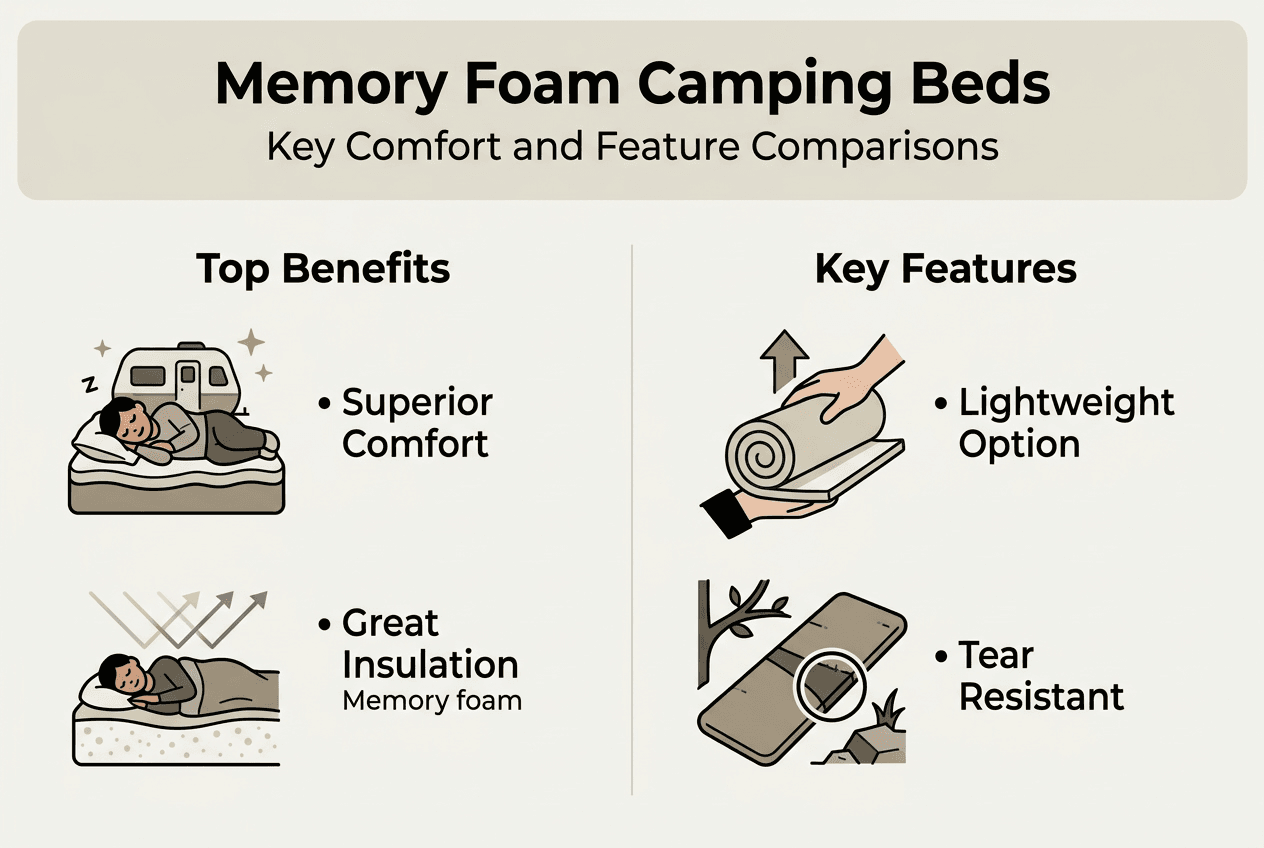
Pro Tip: Multi-layer foam constructions combine different densities for optimal support and comfort, with firmer base layers preventing bottoming out and softer top layers cushioning your body.
Key advantages of memory foam camping beds:
- Conforms to body shape for personalized support
- Insulates effectively against cold ground
- Resists punctures and maintains shape over time
- Reduces motion transfer for couples sharing a tent
- Provides cushioning on rocky or uneven surfaces
Top memory foam camping beds in 2026: features, pros, and cons
Selecting the right memory foam camping mattress requires understanding how leading models compare. The HEST Foamy is the top pick for comfort, warmth, and ease of use, setting the standard other manufacturers chase. Its R-value of 8.8 delivers exceptional insulation, while two layers of enhanced memory foam create a sleeping surface that rivals home mattresses.
The Foamy’s construction uses a firmer base layer for structural support topped with plush memory foam that contours to your body. This combination prevents the sinking feeling some memory foam creates while maintaining pressure point relief. Available in Short, Standard, and Wide sizes, it accommodates different body types and sleeping preferences.
The Therm-a-Rest MondoKing 3D is the most comfortable self-inflating mat tested because of its 4.25-inch thickness and soft stretch-knit fabric. Its R-value of 7.0 provides solid insulation for three-season camping. The self-inflating feature combines convenience with comfort, as the foam core expands when you open the valve, requiring minimal manual pumping.
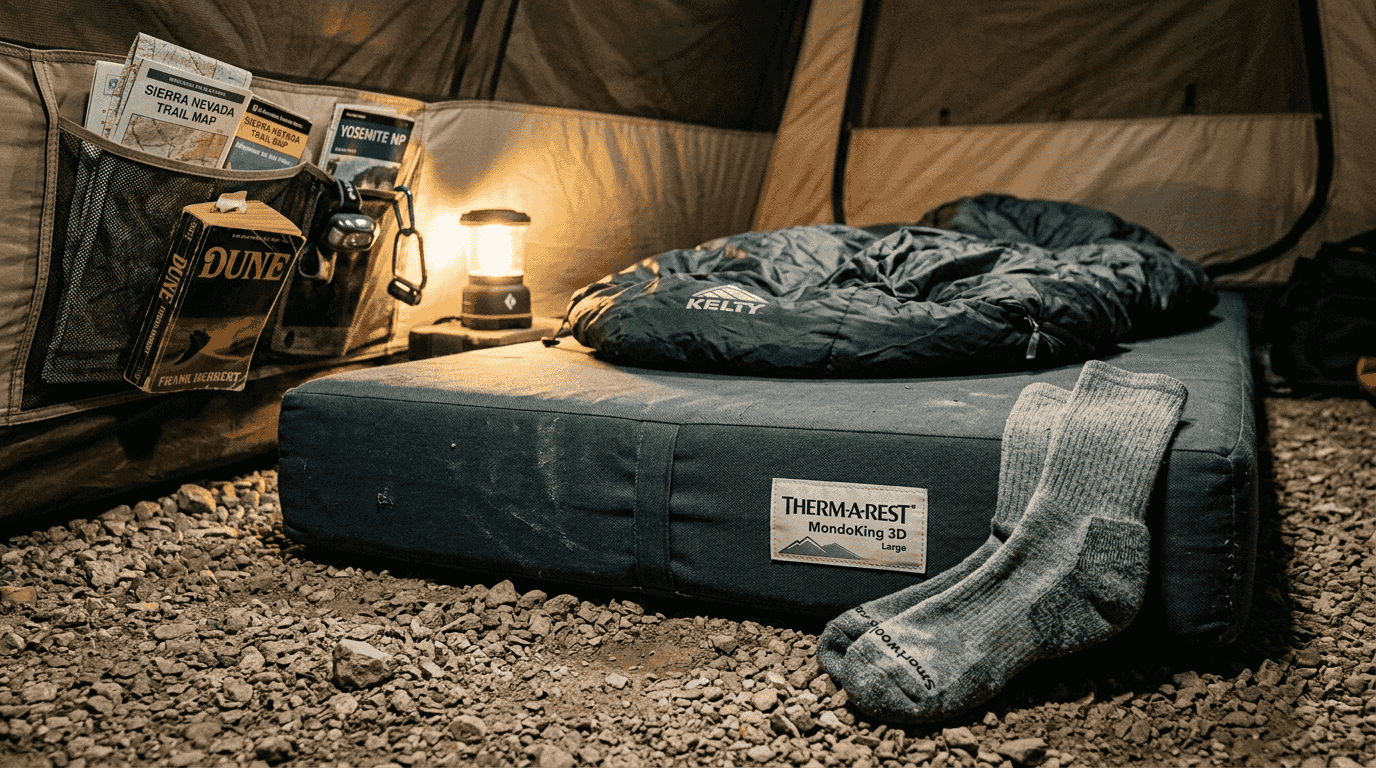
The MondoKing’s horizontal baffles create a stable sleeping platform that prevents rolling off edges. Its packed size, while larger than backpacking pads, remains manageable for car camping. The stretch-knit top feels luxurious against skin and sleeping bags alike.
The Nemo Roamer camping mattress is designed for comfort, with a 4-inch thickness earning a 4.5 out of 5 comfort rating. Its R-value of 7.0 matches the MondoKing for insulation, but the Roamer distinguishes itself with exceptionally quiet fabric that won’t wake tent mates when you shift positions. The plush build balances firmness and softness, creating a sleeping surface that supports without feeling rigid.
| Model | Dimensions | R-Value | Weight | Key Features | Best For |
|---|---|---|---|---|---|
| HEST Foamy | 77 x 25 inches | 8.8 | 6.5 lbs | Two-layer memory foam, superior warmth | Cold weather car camping |
| Therm-a-Rest MondoKing 3D | 77 x 25 inches | 7.0 | 4.75 lbs | Self-inflating, stretch-knit fabric | Three-season comfort camping |
| Nemo Roamer | 76 x 25 inches | 7.0 | 5.2 lbs | Quiet fabric, plush build | Couples and light sleepers |
Pro Tip: Match your mattress’s R-value to your coldest expected camping temperature, with values above 7.0 recommended for winter camping and 4.0 to 6.0 suitable for summer and fall adventures.
Explore detailed best memory foam camp beds comparison analysis and find HEST Foamy product details for specifications and purchasing options.
Choosing the right memory foam mattress for your camping style
Your camping approach determines which memory foam mattress serves you best. Car campers enjoy the luxury of prioritizing comfort over weight, making thicker, heavier mattresses practical choices. Car camping prioritizes comfort, with camp mattresses offering a significant upgrade over minimal sleeping pads. You can select 4-inch thick models that approach home mattress comfort without worrying about carrying weight on your back.
Backpackers face different constraints. Every ounce matters when you’re hiking miles to your campsite. While memory foam traditionally skews heavier than ultralight air pads, compact models now exist for weight-conscious adventurers willing to sacrifice some thickness for portability. These streamlined options typically measure 2 to 3 inches thick and pack smaller than car camping versions.
Climate considerations shape your R-value requirements. Higher R-values become essential as temperatures drop, with values above 7.0 recommended for camping below freezing. Summer camping in warm regions allows lower R-values around 4.0, reducing weight and bulk. Consider your typical camping seasons and destinations when evaluating insulation needs.
Mattress dimensions must align with your sleeping bag and tent size. A wide mattress offers luxurious space but may not fit in compact tents. Measure your tent’s floor dimensions before purchasing, leaving room for gear storage. Couples sharing a tent might choose two standard-width mattresses over one oversized option for better packability.
Portability factors extend beyond weight to include packed size and setup ease. Look for mattresses with integrated compression straps that cinch the rolled mattress into a manageable bundle. Self-inflating models save time and effort at camp, though they typically weigh slightly more than manual inflation designs.
Follow these steps to select your ideal good memory foam mattress camping option:
- Identify your primary camping style and typical environments
- Set priorities balancing comfort against portability constraints
- Examine mattress features including R-value, thickness, and packed dimensions
- Read trusted reviews from outdoor gear experts and verified users
- Decide on size and additional features like self-inflation or integrated pumps
Avoid these common selection pitfalls:
- Ignoring insulation needs and choosing based solely on thickness
- Selecting mattresses too heavy for backpacking trips
- Neglecting to verify mattress dimensions fit your tent
- Overlooking packed size when storage space is limited
- Choosing the cheapest option without considering durability
Pro Tip: Test your mattress at home before your first camping trip to identify any comfort issues while you can still exchange or return it, and to practice the inflation and deflation process.
Care, maintenance, and maximizing lifespan of your memory foam camping bed
Proper maintenance extends your memory foam camping mattress’s functional life and preserves its comfort. Store your mattress rolled loosely or laid flat in a dry, ventilated space between trips. Tight compression for extended periods can damage foam cell structure, reducing the material’s ability to recover its shape. Avoid damp basements or hot attics where temperature extremes and moisture accelerate deterioration.
Clean mattress covers regularly following manufacturer guidelines. Most removable covers accept machine washing on gentle cycles with mild detergent. Air dry completely before reinstalling to prevent mold growth. For integrated covers, spot clean with damp cloths and allow thorough drying before storage.
Sunlight degrades memory foam over time, causing the material to become brittle and lose its supportive properties. Limit sun exposure during camping by storing your mattress in the tent or vehicle when not in use. The UV radiation also fades colors and weakens fabric covers.
Water-resistant covers or separate protectors shield against moisture, dirt, and accidental spills in camping environments. These barriers are especially valuable in humid climates or when camping near water sources. They also simplify cleaning, as you can wash the protector instead of the entire mattress cover.
Air out your mattress after each camping trip. Unroll it in a well-ventilated indoor space for 24 hours to dissipate odors and release trapped moisture. This simple practice prevents musty smells and discourages mold formation inside the foam layers.
Essential care practices for memory foam camping mattresses:
- Store loosely rolled in dry, temperature-stable locations
- Clean covers promptly after trips using appropriate methods
- Minimize direct sunlight exposure during use and storage
- Use protective covers to guard against moisture and dirt
- Air dry thoroughly before packing away
- Inspect regularly for damage or wear requiring repair
- Avoid folding, which creates permanent creases in foam
- Keep away from sharp objects during transport and setup
Proper care delivers multiple benefits beyond longevity. Clean, well-maintained mattresses provide more hygienic sleeping surfaces, reducing exposure to allergens and bacteria. Consistent support and comfort persist across seasons when you protect your investment. The better value proposition of a mattress lasting five years instead of two justifies the minimal effort required for basic maintenance. Learn more foam mattress camping basics to optimize your outdoor sleep system.
Find your perfect memory foam camping mattress today
Upgrading your camping sleep setup transforms outdoor experiences from endurance tests into genuine relaxation. Hazli Collection specializes in high-quality memory foam mattresses engineered specifically for camping comfort and durability. Our curated selection features the leading models discussed in this guide, backed by expert comparisons and detailed benefit analyses.
Explore our comprehensive memory foam camp beds comparison to identify which mattress aligns with your camping style and climate needs. Discover why memory foam outperforms traditional options through our memory foam mattress camping benefits guide. Each product in our collection meets rigorous standards for comfort, insulation, and outdoor durability, ensuring your investment delivers years of restful camping nights.
Pro Tip: Use our detailed buyer guides to match your specific camping conditions and preferences with the ideal mattress model, considering factors like typical temperatures, transport methods, and comfort priorities for personalized recommendations.
Frequently asked questions
What makes the HEST Foamy the best memory foam camping bed?
The HEST Foamy combines an exceptional R-value of 8.8 with two-layer memory foam construction, delivering superior warmth and body-conforming comfort. Its design balances support and cushioning better than single-layer alternatives, making it ideal for cold weather camping where insulation and comfort both matter.
How thick should a memory foam camping mattress be?
Most quality camping memory foam mattresses range from 3 to 4.25 inches thick. Thicker options like the 4.25-inch Therm-a-Rest MondoKing 3D provide maximum comfort for car camping, while 3-inch models offer adequate cushioning with better portability for backpacking.
Can memory foam camping mattresses work in freezing temperatures?
Yes, memory foam mattresses with R-values above 7.0 perform well in freezing conditions. The HEST Foamy’s R-value of 8.8 provides excellent insulation for winter camping, preventing heat loss to frozen ground and maintaining comfortable sleeping temperatures.
Are self-inflating memory foam mattresses worth the extra weight?
Self-inflating models like the Therm-a-Rest MondoKing 3D offer significant convenience, expanding automatically when you open the valve. The slight weight increase over manual inflation designs is worthwhile for car campers who value setup ease, though backpackers might prefer lighter manual options.
How do I pack a memory foam camping mattress efficiently?
Roll your mattress tightly from the opposite end of the valve, forcing air out as you go. Secure with integrated straps or separate compression straps. Store the rolled mattress vertically or horizontally in your vehicle, avoiding sharp objects that could damage the material during transport.
What R-value do I need for summer camping?
Summer camping in warm climates requires R-values between 4.0 and 6.0 for adequate comfort. Higher values provide unnecessary insulation in hot weather, though they offer versatility if you camp across multiple seasons or elevations where temperatures vary significantly.