

By The Hazli Family — Peter & Louise · Reviewed October 2026
Quick answer: For most family car camping, a memory foam kids camping mattress with a waterproof, washable cover tends to be the easiest type to live with: nothing to inflate, nothing to puncture, and a cover you can throw in the wash. Self-inflating pads, air mattresses, closed-cell foam pads, and cot setups each have a place too, and this guide compares all five types so you can match one to how your family camps. For more on how foam works for sleeping outdoors, see our memory foam camping mattress guide. Our own option is the Hazli memory foam camping mattress (see the current price on the product page).
Finding the right kids camping mattress can make or break a trip. Whether you want something cozy for a tent in cool weather, something light for a short hike-in site, or something easy to clean after a muddy weekend, the choice is less about brand names and more about the type of mattress. Each type trades off comfort, packed size, insulation, and upkeep differently. Below we compare the five main types, explain who each one tends to suit, and share what we have learned sleeping our own kids outdoors.
Table of Contents
- Memory foam camping mattress
- Self-inflating foam pad
- Air mattress or inflatable pad
- Closed-cell foam pad
- Camping cot with a pad
- Comparison table
- Our pick for kids
Memory foam camping mattress
At a Glance
A memory foam camping mattress is a solid slab of foam, usually three or four inches thick, that rolls up into a carry bag. There is no valve and no pump. You unroll it, give it time to expand, and it is ready. For kids, this is the type that behaves most like the bed they sleep in at home, which can make the first few nights in a tent easier.
Core Features
Dense foam that contours to the body, a waterproof outer cover on better models, and a removable cover that goes in the washing machine. Kid-sized versions exist alongside single, twin, and queen sizes, so one family can run the same type in several sizes. Because the foam is solid, there is nothing to leak or deflate overnight.
Pros
- No inflation and no puncture risk, which matters when a child is bouncing on it.
- Cushions hips and shoulders for side sleepers, so many kids settle faster.
- Washable covers make cleanup after spills, sand, or a damp night simple.
- Works just as well on a cot, in the back of a car, or as a sleepover bed at home.
Cons
- Bulkier and heavier than inflatables; it suits car camping more than backpacking.
- Needs time to expand after unrolling, especially when it has been stored rolled up for a while.
- Foam alone may not be enough on frozen ground; adding an insulated pad underneath can help.
Who It’s For
Families who drive to camp, parents who want one less thing to set up at dusk, and kids who struggle to sleep on thin pads. If you want a mattress the whole family can use at home between trips, this type usually makes the most sense.
Real World Use Case
Picture a three-night tent trip with two kids. You unroll a kids-size foam mattress for each child while you pitch the tent, so the foam has expanded by bedtime. A juice spill on night two means unzipping a cover, not drying out a whole mattress. On the drive home the mattresses roll back into their bags and double as sleepover beds the following weekend.
Self-inflating foam pad
At a Glance
A self-inflating pad wraps open-cell foam inside an airtight shell. Open the valve and the foam draws air in on its own; a few breaths top it off. It is the middle ground between solid foam and a pure air pad.
Core Features
Thickness typically runs one to three inches. The foam adds some insulation and keeps the pad usable even if it slowly loses air. Most roll or fold into a stuff sack that is smaller than a solid foam mattress but larger than an air pad.
Pros
- Easier setup than a pure air pad, with less lung work for a parent doing several beds.
- Still offers some cushioning if the valve is left open or a slow leak develops.
- Packs smaller than solid foam, which helps when the car is full.
Cons
- Thinner models can feel firm for kids who sleep on their side.
- Can be punctured and needs a patch kit on hand.
- The foam can hold moisture if it gets wet inside, and it is slow to dry.
Who It’s For
Families who mix car camping with the occasional short walk-in site, and parents who want a quicker setup than an air mattress without the bulk of solid foam.
Real World Use Case
A family hikes a short trail to a lakeside site. Each child carries a rolled self-inflating pad on a small pack. At camp the pads inflate themselves while dinner cooks, and a few breaths at bedtime firm them up.
Air mattress or inflatable pad
At a Glance
Air mattresses and inflatable pads rely entirely on air for cushioning. They pack the smallest and can be the thickest, but they depend on a pump and on staying airtight.
Core Features
Options range from tall double-height mattresses with built-in electric pumps to lightweight backpacking pads inflated by breath or a pump sack. Some add internal insulation; many do not. Firmness is adjustable by letting air out.
Pros
- Smallest packed size of any type, which frees up car or pack space.
- Adjustable firmness, so a child can have it softer than a parent.
- Tall models are easy for small kids to climb onto and feel like a real bed.
Cons
- Punctures and slow leaks are common with kids, pets, and gravel.
- Uninsulated air can feel cold underneath on cool nights.
- Needs a pump or a lot of breath, and some pumps need power.
Who It’s For
Summer campers with limited storage space, families who camp at powered sites, and anyone who needs the smallest possible pack. Less ideal for cool-weather trips or for kids who treat the mattress as a trampoline.
Real World Use Case
A warm-weather weekend at a campground with power: a double-height air mattress inflates in a couple of minutes, two kids share it happily, and it deflates to the size of a sleeping bag for the trip home. On a cooler night, a blanket or foam pad goes underneath to cut the chill from the air.
Closed-cell foam pad
At a Glance
The classic accordion or roll pad made from dense closed-cell foam. It is thin, light, nearly indestructible, and inexpensive. It is more of a floor than a bed, but it has real uses with kids.
Core Features
Usually under an inch thick, with a textured or egg-crate surface. It does not absorb water, is very hard to damage, and folds or rolls in seconds. It is often used as an extra insulating layer under another mattress.
Pros
- Nothing to break, leak, or wash; just shake it out.
- Light enough for a child to carry their own.
- Adds ground insulation under a foam or air mattress on cold nights.
Cons
- Very firm, so most kids will feel the ground through it on its own.
- Bulky to pack for how little cushioning it gives.
Who It’s For
Backyard campouts, a sit pad around the fire, a kid’s first hike-in night, or as a base layer under a better mattress. Rarely the main bed for a child on a multi-night trip.
Real World Use Case
A spring trip with cold ground: each child’s foam mattress gets a closed-cell pad underneath to block the chill, and the same pads become sit mats at the picnic table in the morning.
Camping cot with a pad
At a Glance
A cot lifts the sleeper off the ground on a fabric deck and metal frame. On its own it is firm and lets air circulate underneath, so most families pair it with a foam mattress or pad.
Core Features
Kid-sized and full-sized cots fold flat or into a bag. The raised deck keeps a child off damp ground, creates storage space underneath, and can make getting in and out easier for little legs.
Pros
- Keeps kids off cold, wet, or uneven ground.
- Feels like a real bed, which some children find reassuring.
- Under-cot space keeps shoes and bags organized in a crowded tent.
Cons
- Heavy and bulky; needs a large tent and a car to get there.
- Air moving under the deck can feel cool without a pad on top.
- Frames can snag tent floors if the feet are not padded.
Who It’s For
Families with roomy tents who camp at the same site for several nights, and parents of kids who dislike sleeping at ground level.
Real World Use Case
A week at a lakeside campground: a cot-size foam mattress (around 72 by 26 inches) sits on each child’s cot, bags slide underneath, and after a rainy night the floor is damp but the beds are dry.
Kids Camping Mattress Comparison
This table summarizes how the five types compare on the things that matter most with children: setup, comfort, durability, cleanup, and how they pack.
| Type | Setup | Comfort for kids | Durability | Cleanup | Packed size |
|---|---|---|---|---|---|
| Memory foam camping mattress | Unroll and let it expand | Closest to a home bed | No punctures or valves | Washable cover | Large roll |
| Self-inflating foam pad | Open valve, top off by mouth | Good; thin models feel firm | Can puncture | Wipe down | Medium roll |
| Air mattress or inflatable pad | Pump or breath | Adjustable; can feel cold | Puncture and leak prone | Wipe down | Smallest |
| Closed-cell foam pad | Unfold | Firm; best as a base layer | Nearly indestructible | Shake out | Bulky for its thickness |
| Camping cot with a pad | Unfold frame, add a pad | Off the ground, needs a pad | Sturdy frame | Wipe deck, wash pad cover | Largest |
Our Pick for Kids: the Hazli Memory Foam Camping Mattress
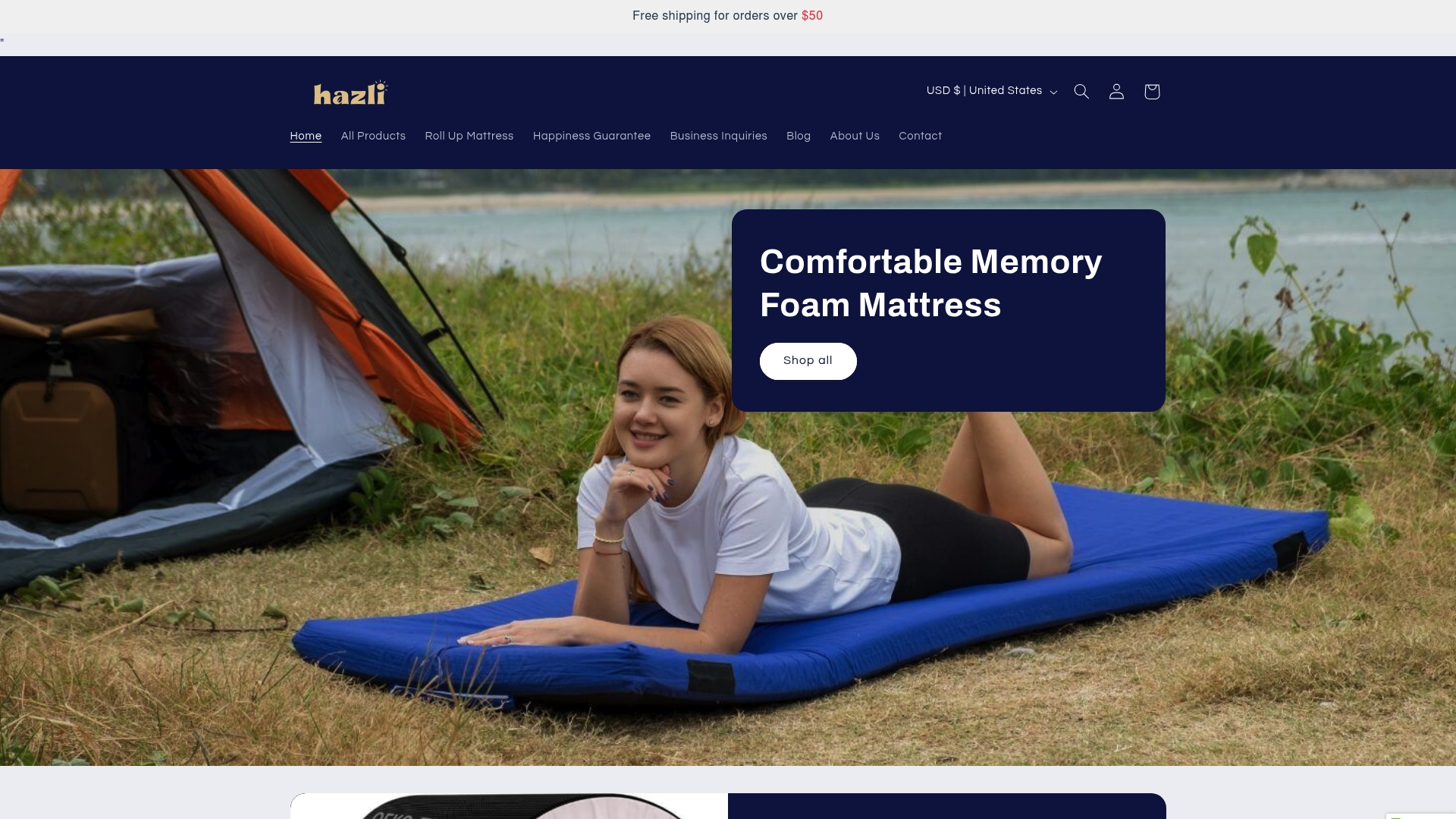
This is our own product, so read this section as a product description rather than an independent review. The Hazli Matrix Air-Cell memory foam camping mattress is a roll-up foam mattress with a waterproof, removable, washable cover. It comes in a Kids size (62 x 26 x 3 inches) that fits most children, a Cot size (72 x 26 x 3 inches) for cot sleepers, and larger Single, Twin, Twin XL, and Queen sizes for parents, so a family can use one type of mattress across the whole tent. It is built for car camping, cots, and sleepovers rather than backpacking, and like any foam mattress it needs time to expand after unrolling. We have not published an insulation (R-value) test for it, so we do not quote one; on cold ground, adding an insulated pad underneath can help. See the Hazli foam camping mattresses collection for all sizes, and the current price on the product page.
Comfort for Your Kids on Every Camping Trip
Choosing a camping mattress for a child is more than picking something soft. The practical questions are whether it will still be comfortable on night three, whether it survives a bouncing kid and a spilled drink, and whether you can clean it before the next trip. For families who drive to camp, a memory foam camping mattress with a washable cover tends to answer all three. For summer trips where space is tight, an air mattress can work with a pad underneath. For cold ground, a closed-cell pad under whatever you choose can improve warmth.
Explore Car Camping Essentials – Hazli Collection for mattresses and accessories built around family car camping, or visit Hazli Collection to see the full range.
Frequently Asked Questions
What features should I look for in a camping mattress for kids?
Look for enough cushioning that a side-sleeping child does not feel the ground, a cover you can remove and wash, and a construction that will not leak or puncture. For cool-weather trips, plan on an insulating layer underneath whatever type you choose.
How do I choose the right size camping mattress for my child?
Measure your child and add a few inches of growing room. A kids-size mattress around 62 inches long and 26 inches wide fits most children, and a cot-size mattress around 72 by 26 inches suits a standard camping cot. Older kids may be happier on a single.
How can I maintain my child’s camping mattress?
Wash or wipe the cover after each trip, let the mattress dry fully before rolling it, and store it in a cool, dry place. Follow the maker’s care instructions; our outdoor mattress care guide covers the basics.
What is the ideal thickness for a camping mattress for kids?
Two to four inches is the usual range. Lighter kids can be comfortable on the thinner end; side sleepers and older children tend to prefer three inches or more.
Can I use a camping mattress indoors as well as outdoors?
Yes. Foam camping mattresses in particular double as sleepover and guest beds at home, which can make the purchase easier to justify.
How do I keep my child warm on a camping mattress?
Ground cold matters as much as air temperature. If the maker publishes an insulation rating, use it as a guide; if not, a closed-cell foam pad or blanket under the mattress and a sleeping bag suited to the forecast can improve warmth.