

Campers using 3-inch, 4 lb/ft³ memory foam toppers report a 40% improvement in sleep quality compared to standard pads. Poor sleep on rough outdoor ground undermines performance and recovery, making your adventures less enjoyable. Memory foam toppers transform camping sleep by cushioning uneven terrain and supporting your body through the night. This guide covers key features, common myths, and practical tips to help you select and maintain toppers optimized for outdoor comfort and durability.
Table of Contents
- Understanding Memory Foam: Material Basics And Performance
- Key Features Of A Good Memory Foam Mattress Topper For Camping
- Common Misconceptions About Memory Foam Mattress Toppers In Outdoor Use
- Practical Application: Choosing, Maintaining, And Using Your Memory Foam Topper Outdoors
- Comparative Overview: Memory Foam Toppers Vs. Alternatives For Outdoor Sleep
- Explore Hazli Collection For Durable Outdoor Sleep Solutions
- Frequently Asked Questions
Key Takeaways
| Point | Details |
|---|---|
| Optimal thickness | Choose 2-3 inch toppers to balance comfort and portability without excess weight. |
| Density matters | Foam density around 4-5 lbs/ft³ provides the best mix of support and durability outdoors. |
| Temperature control | Gel-infused or open-cell foam reduces heat buildup and improves breathability in tents. |
| Protection essentials | Waterproof, antimicrobial covers shield foam from moisture and maintain hygiene on trails. |
| Maintenance extends life | Regular airing and gentle cleaning prevent odors and mold in outdoor conditions. |
Understanding Memory Foam: Material Basics and Performance
Memory foam’s unique properties directly affect how well you sleep outdoors. Understanding these characteristics helps you choose toppers suited to camping demands.
Memory foam density influences support, durability, and recovery speed. Higher density memory foam (4+ lbs/ft³) recovers shape within 5-10 seconds providing better support and durability. Lower density foam compresses faster under body weight and may not bounce back quickly enough for side sleepers who shift positions during the night.
The viscoelastic nature of memory foam allows it to contour precisely to your body. This conforming property becomes especially valuable on uneven ground where rocks and roots create pressure points. The foam distributes your weight evenly, reducing discomfort that would normally wake you up.
Faster recovery rates prevent foam sagging and maintain sleep stability. When you roll over or adjust position, quality memory foam returns to its original shape quickly. This prevents creating permanent body impressions that reduce support over multiple camping trips.
Key density and performance factors:
- 3-4 lbs/ft³ density suits occasional campers seeking lightweight options
- 4-5 lbs/ft³ density recommended for frequent outdoor use and durability
- Recovery time under 10 seconds ensures consistent support through the night
- Temperature sensitivity affects how quickly foam responds to body heat
Pro Tip: Test recovery rate by pressing your hand into the foam for 10 seconds. Quality outdoor toppers should return to shape within 5-10 seconds after you remove pressure.
Understanding memory foam advantages outdoors helps you evaluate specifications beyond marketing claims. The memory foam durability for camping depends heavily on these material properties. Modern advanced foam technology outdoors combines optimal density with breathable designs for year-round comfort.
Key Features of a Good Memory Foam Mattress Topper for Camping
Specific product features determine whether a topper performs well in outdoor environments. Evaluating these characteristics helps you match gear to your camping style.
Optimal topper thickness ranges 2-3 inches, balancing cushioning and portability. Thinner toppers save weight but provide less pressure relief on rocky ground. Thicker options add comfort but increase pack size and heat retention.
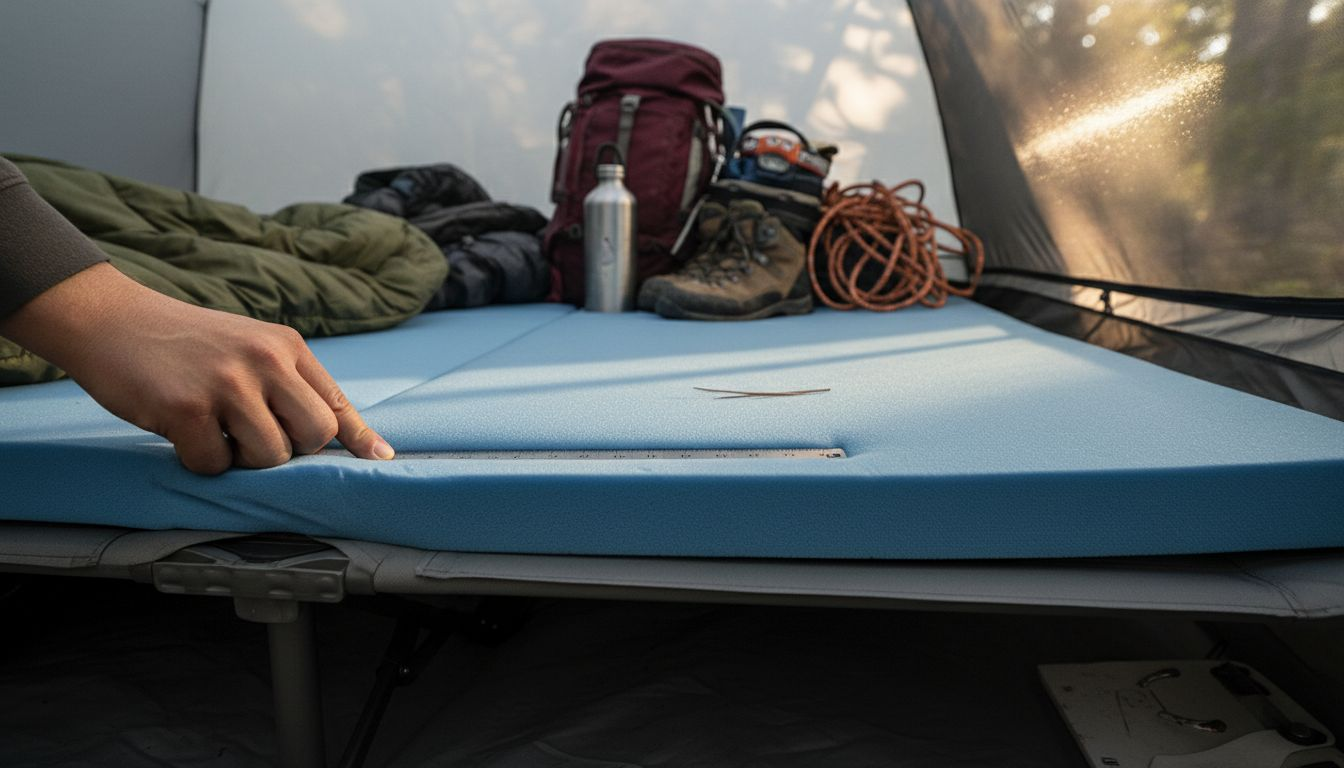
Gel-infused or open-cell foam technologies can reduce surface temperature by 3-5°F, improving outdoor sleep breathability. These innovations address the primary complaint about traditional memory foam: sleeping hot. Gel beads disperse heat while open-cell structures allow better air circulation.
Waterproof and antimicrobial covers can reduce microbial growth by up to 50%, crucial for hygiene in outdoor use. Morning condensation and unexpected rain can saturate unprotected foam. Quality covers with waterproof backing prevent moisture penetration while remaining breathable enough to avoid trapping sweat.
Essential features for outdoor toppers:
- Removable, washable covers for easy cleaning between trips
- Corner straps or elastic bands to secure topper to sleeping pad
- Compression straps or stuff sack for efficient packing
- Odor-resistant treatments to prevent musty smells in humid conditions
Pro Tip: Choose toppers with removable covers that you can wash separately. This makes maintenance much easier after muddy or dusty camping trips.
Lightweight designs with high-density foam sustain support without excessive bulk. The good memory foam mattress features you prioritize depend on whether you backpack or car camp. Selecting optimal mattress thickness requires honest assessment of how you camp and what discomfort you’re trying to solve. Understanding memory foam toppers benefits helps you weigh features against your specific outdoor sleep challenges.
Common Misconceptions About Memory Foam Mattress Toppers in Outdoor Use
Several persistent myths mislead campers about memory foam toppers. Clearing up these misunderstandings helps you make better purchasing decisions.
Thicker toppers over 3 inches add weight and trap more heat, reducing outdoor comfort and portability. Many assume more thickness always means better sleep. In reality, excessive thickness creates a heat pocket between your body and the surrounding air, making you uncomfortably warm on summer nights.
Modern memory foam toppers with gel infusion or open-cell design effectively mitigate heat trapping concerns. The old reputation of memory foam sleeping hot stems from early solid foam designs. Current outdoor-optimized toppers incorporate cooling technologies that perform well even in warm weather camping.
Portability varies widely based on design and intended use. Backpackers need slim, light toppers that compress into small stuff sacks. Car campers can accommodate heavier, plusher options that prioritize comfort over pack size. One size definitely doesn’t fit all camping styles.
Myths debunked:
- Myth: All memory foam sleeps hot outdoors
- Reality: Gel-infused and open-cell designs regulate temperature effectively
- Myth: Memory foam toppers are too heavy for backpacking
- Reality: 2-inch high-density toppers weigh 2-4 lbs, comparable to premium inflatable pads
- Myth: Memory foam loses support in cold weather
- Reality: Quality foam maintains flexibility in temperatures above 40°F
Not all memory foam toppers suit outdoor use equally. Outdoor suitability depends on density, protective covers, and cooling technologies. Indoor toppers often lack waterproof backing and antimicrobial treatments essential for camping. Understanding memory foam myths and care prevents costly mistakes. Recognizing genuine memory foam benefits for camping helps you filter marketing hype from actual performance advantages.
Practical Application: Choosing, Maintaining, and Using Your Memory Foam Topper Outdoors
Selecting and caring for your topper properly maximizes comfort and extends its useful life in demanding outdoor conditions.
Step 1: Match topper specifications to your camping style. Backpackers should prioritize 2-inch toppers under 3 lbs with compression stuff sacks. Car campers can opt for 3-inch toppers up to 6 lbs that offer superior cushioning. Weekend warriors balance these extremes based on how far they hike from the vehicle.
Step 2: Select foam density between 4-5 lbs/ft³ for optimal durability. This range provides enough resistance to support your body weight without bottoming out on hard ground. It also recovers shape quickly enough to accommodate position changes during sleep.
Step 3: Choose breathable designs with protective covers. Prioritize gel-infused or open-cell foam if you camp in warm climates or sleep hot. Ensure covers have waterproof backing and antimicrobial treatment. Removable covers simplify cleaning after trips.
Step 4: Maintain your topper through regular care routines. Air out your topper in direct sunlight for 2-3 hours after each camping trip. Sunlight naturally kills odor-causing bacteria and helps evaporate trapped moisture. Spot clean stains immediately with mild soap and water, avoiding harsh chemicals that degrade foam.
Campers using 3" 4 lb/ft³ toppers report 40% higher sleep quality on rough terrain, emphasizing how proper selection and maintenance matter. Regular airing and cleaning prevent mold and odors, extending outdoor usable life of memory foam toppers.
Pro Tip: Store your topper loosely rolled or flat in a cool, dry place between trips. Keeping it compressed in a stuff sack for months can create permanent compression spots that reduce comfort.
Balancing comfort and portability requires honest assessment of your priorities. Review guides on cleaning memory foam toppers before your first trip. Proper caring for memory foam mattress outdoors practices double or triple your topper’s lifespan compared to neglectful storage.
Comparative Overview: Memory Foam Toppers vs. Alternatives for Outdoor Sleep
Comparing memory foam toppers to popular alternatives clarifies which option best matches your camping priorities.
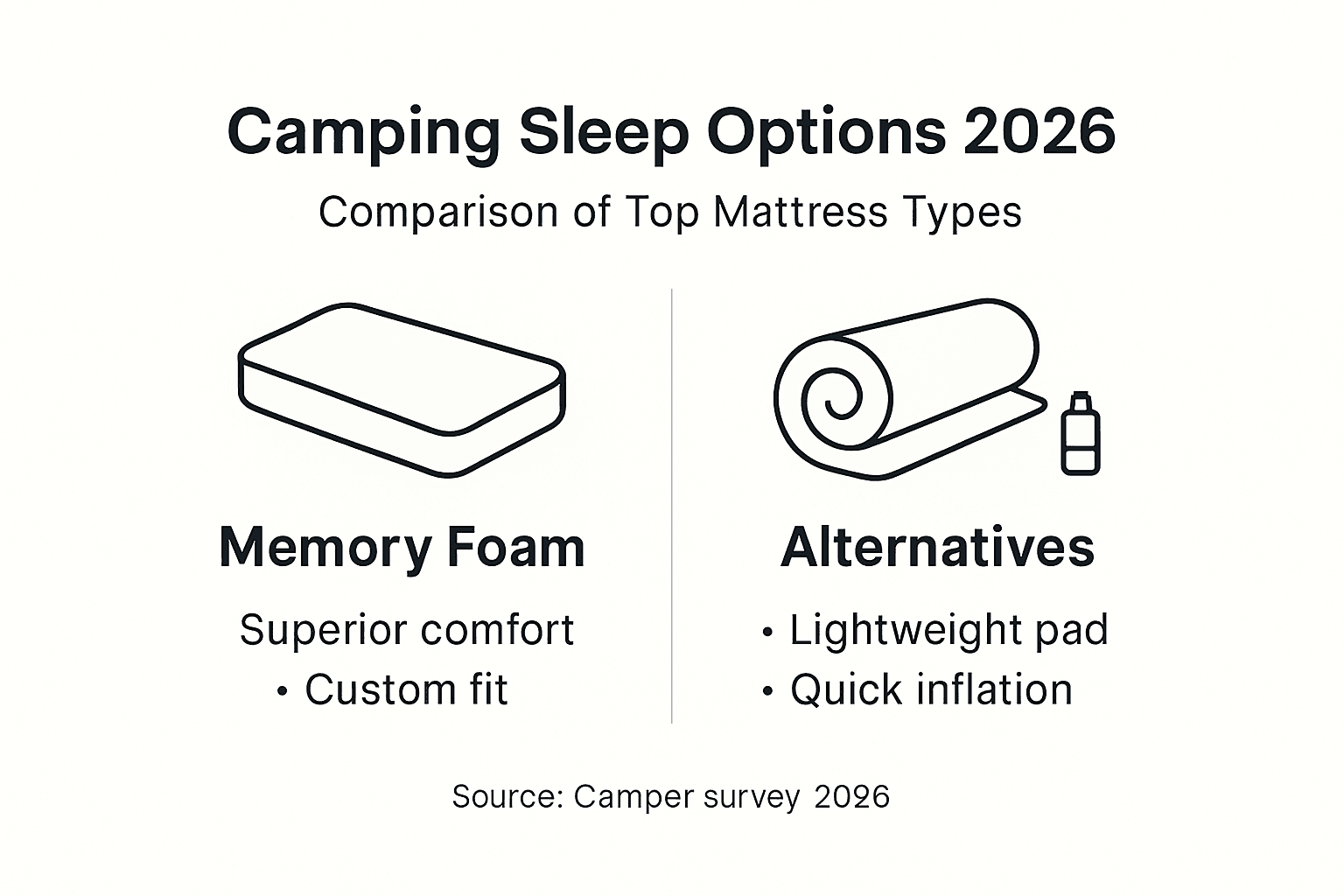
| Feature | Memory Foam Topper | Inflatable Pad | Closed-Cell Foam Pad |
|---|---|---|---|
| Comfort & Contouring | Excellent pressure relief, molds to body | Good when fully inflated, less consistent | Minimal contouring, firm surface |
| Durability | High with proper care, resists compression | Prone to punctures, valve failures | Extremely durable, nearly indestructible |
| Weight (for similar comfort) | 2-4 lbs for 2" topper | 1-2.5 lbs depending on R-value | 0.5-1.5 lbs but requires thicker for comfort |
| Packability | Compresses moderately, 8-12" stuff sack | Excellent, rolls very small | Bulky, typically strapped to pack exterior |
| Temperature Regulation | Can sleep warm without cooling tech | Good with insulated models | Excellent moisture resistance, cooler |
| Setup Time | Instant, just unroll | 2-3 minutes inflation | Instant, just unroll |
| Price Range | $40-120 | $50-200 | $15-40 |
Memory foam toppers offer superior contouring and pressure relief but risk heat retention without modern cooling technologies. The conforming property that makes them comfortable also traps body heat between you and the foam. Gel-infused versions largely solve this issue.
Inflatable pads pack smallest and weigh least but may puncture on sharp rocks or thorns. They also require inflation time and can develop slow leaks that leave you on the ground by morning. Comfort depends heavily on proper inflation, which changes with temperature and altitude.
Closed-cell foam pads excel in durability and moisture resistance but lack conforming comfort. They’re bulletproof and never fail, making them popular for winter camping and extended wilderness trips. However, the firm surface provides minimal cushioning on uneven ground.
When to choose each option:
- Memory foam: Car camping, base camping, or when comfort is top priority
- Inflatable: Ultralight backpacking where every ounce matters
- Closed-cell: Winter camping, rocky terrain, or as backup/insurance layer
Many experienced campers combine solutions, using a thin closed-cell pad as puncture protection under an inflatable or memory foam topper. This hybrid approach balances durability, comfort, and weight. Comparing memory foam vs air mattress options reveals how your camping style should drive your decision.
Explore Hazli Collection for Durable Outdoor Sleep Solutions
Upgrading your outdoor sleep doesn’t require guesswork. Hazli Collection offers premium camping mattress toppers engineered specifically for durability and comfort in demanding outdoor conditions.
Our product guides help you select toppers matched to your camping style and climate. Whether you’re weekend car camping or embarking on extended backcountry adventures, we provide expert recommendations tailored to your needs.
Discover comprehensive resources on waterproof camping gear tips that protect your investment. Learn proven strategies through our outdoor mattress care guide that extend gear lifespan. Compare options with our best camping mattress options overview to find your perfect match. Quality outdoor sleep gear transforms your camping experience from endurance test to genuine rest and recovery.
Frequently Asked Questions
How do I choose memory foam topper thickness for my camping style?
Backpackers should choose 2-inch toppers to minimize weight and pack size while still gaining pressure relief. Car campers can opt for 3-inch toppers that provide maximum cushioning without portability concerns.
What maintenance prevents mold and odors in outdoor memory foam toppers?
Air your topper in direct sunlight for 2-3 hours after each trip to kill bacteria and evaporate moisture. Store it loosely rolled in a dry location rather than compressed in a stuff sack for months.
Can I pack memory foam toppers efficiently for backpacking trips?
Yes, roll the topper tightly and secure with compression straps or place in a stuff sack. Quality 2-inch toppers compress to about the size of a sleeping bag and weigh 2-4 lbs.
What foam density range balances durability and outdoor comfort best?
Choose 4-5 lbs/ft³ density for outdoor use. This range provides adequate support on uneven ground while recovering shape quickly after compression, lasting through many camping seasons.
Do memory foam toppers work year-round in different climates?
Gel-infused or open-cell toppers regulate temperature well in warm weather, while standard foam performs better in cool conditions. Pair with appropriate sleeping bags and use waterproof covers to adapt across seasons. Following memory foam topper care tips ensures consistent performance regardless of climate.