

More than 33 million American adults rely on memory foam for restful sleep or outdoor adventures every year. This popular material offers comfort and pressure relief that can make any trip more enjoyable, yet few people realize how environmental factors can quickly affect its performance and lifespan. Learn how understanding the true science behind memory foam and its care can make all the difference for American outdoor enthusiasts and campers looking for lasting comfort.
Table of Contents
- What Memory Foam Really Is
- Memory Foam’s Outdoor Wear Factors
- Cleaning Without Damaging Foam
- Managing Odors & Off‑Gassing
- Preventing Heat Damage Outdoors
- Rotating & Supporting For Longevity
Key Takeaways
| Point | Details |
|---|---|
| Memory Foam Origins | Originally developed by NASA for aerospace applications, memory foam is designed to provide personalized comfort and pressure relief. |
| Outdoor Performance Factors | Memory foam is susceptible to temperature changes, moisture, and UV exposure, which can affect its durability and performance outdoors. |
| Cleaning and Maintenance | Proper cleaning techniques using mild detergents and minimal moisture are crucial to maintain the foam’s integrity and prevent mold growth. |
| Preventive Measures | Using protective covers and monitoring environmental conditions can significantly extend the lifespan and comfort of outdoor memory foam products. |
What Memory Foam Really Is
Memory foam represents a remarkable material engineered to transform how humans experience comfort across various environments. Originally developed by NASA for spacecraft cushioning, this viscoelastic polyurethane foam has revolutionized sleep and outdoor comfort technologies.
At its core, memory foam functions through an extraordinary ability to respond dynamically to body heat and pressure. When you rest on memory foam, the material gradually molds itself precisely to your body’s unique contours, creating a personalized support system that distributes weight evenly. This adaptive quality means the foam literally “remembers” your shape, returning to its original form once pressure is removed - hence the name “memory” foam.
The material’s scientific origin is fascinating. NASA researchers initially developed memory foam to improve seat cushioning and crash protection for test pilots and astronauts, focusing on reducing impact forces and providing superior pressure distribution. Since then, memory foam has transitioned from high-tech aerospace applications to become a staple in mattresses, pillows, and outdoor sleeping solutions. Its key characteristics include:
- Exceptional pressure relief
- Temperature-responsive properties
- Ability to minimize motion transfer
- Durability and long-lasting support
Understanding memory foam means appreciating its unique molecular structure. Unlike traditional foams that immediately bounce back, memory foam’s viscoelastic properties allow it to slowly conform and then gradually return to its original shape. This makes it an ideal material for outdoor enthusiasts seeking consistent, personalized comfort in challenging environments.
Memory Foam’s Outdoor Wear Factors
Environmental exposure represents the most significant challenge for memory foam used in outdoor settings. Unlike indoor mattresses, outdoor memory foam must withstand dramatic temperature fluctuations, moisture variations, and direct sunlight that can rapidly degrade its structural integrity. Understanding outdoor sleeping arrangements becomes crucial for preserving your memory foam’s performance and longevity.
Memory foam’s vulnerability stems from its unique molecular composition. When exposed to extreme heat, the foam’s viscoelastic properties can break down, causing permanent deformation and reducing its ability to bounce back to its original shape. Conversely, cold temperatures can make the foam unnaturally stiff, compromising its pressure-relieving capabilities. Ultraviolet rays pose another significant threat, potentially causing material degradation and color fading over time.
Several key wear factors directly impact memory foam’s outdoor performance:
- Temperature Range Tolerance: Most memory foams function optimally between 60-80 degrees Fahrenheit
- Moisture Resistance: Prolonged humidity can lead to mold and mildew growth
- Compression Resilience: Repeated compression without proper recovery can permanently flatten the foam
- Material Density: Higher density foams typically demonstrate greater durability in challenging environments
Protective strategies become essential for outdoor memory foam users. Selecting the right outdoor mattress setup can significantly extend your foam’s lifespan, ensuring consistent comfort during camping, beach trips, and other outdoor adventures. Smart campers invest in protective covers, store foam properly when not in use, and avoid exposing the material to direct sunlight for extended periods.
Cleaning Without Damaging Foam
Cleaning memory foam requires a delicate approach that preserves its unique structural integrity. Comprehensive camp mattress cleaning techniques help outdoor enthusiasts maintain their foam’s performance without compromising its sensitive material composition. The key is understanding that memory foam responds differently to cleaning methods compared to traditional mattress materials.
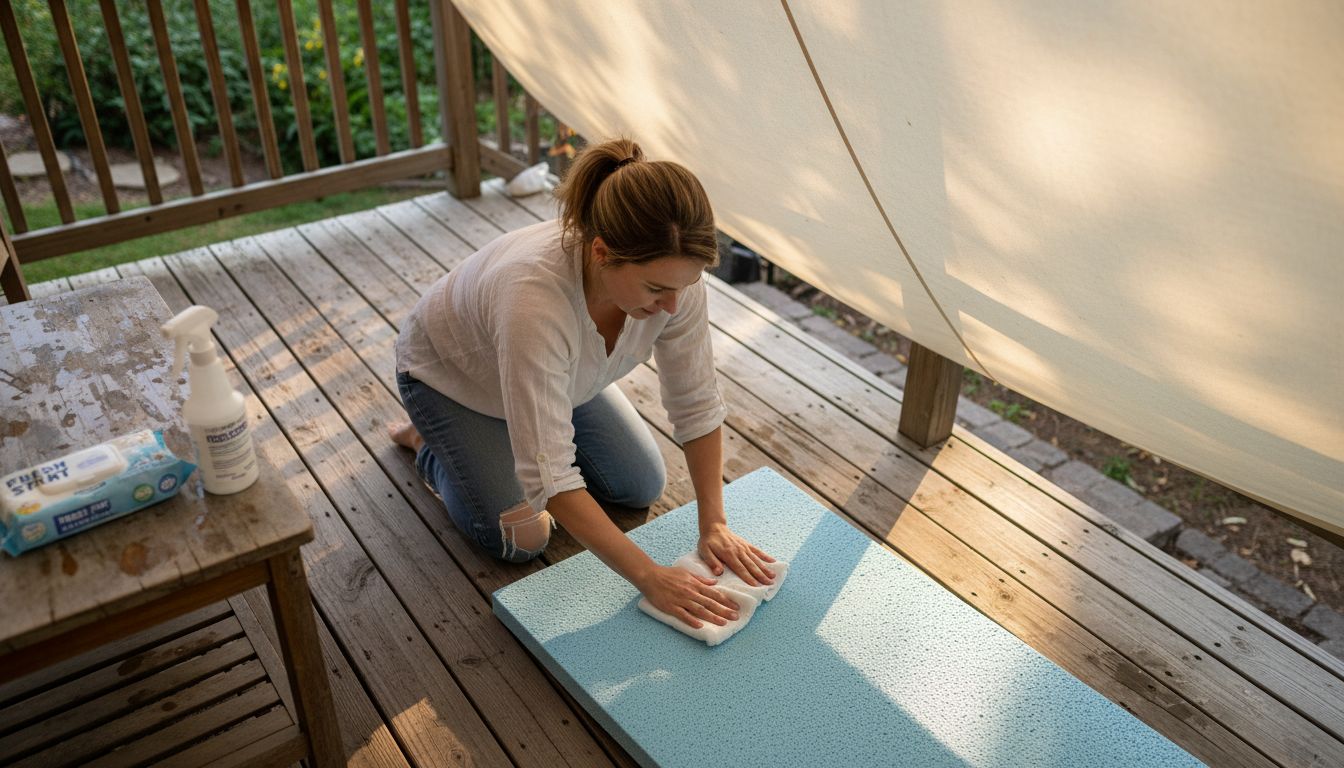
Traditional cleaning methods can devastate memory foam’s complex molecular structure. Harsh chemicals, excessive moisture, and aggressive scrubbing will rapidly break down the foam’s viscoelastic properties. When addressing stains or dirt, opt for minimal liquid application and gentle dabbing motions. Spot cleaning becomes the preferred method, using a mixture of mild detergent and water applied sparingly with a soft white cloth. Always avoid saturating the foam, as trapped moisture can lead to mold growth and permanent material damage.
Effective cleaning strategies for memory foam demand precision and careful technique:
- Use only mild, enzyme-free detergents
- Apply cleaning solution with a soft, white cloth
- Dab - never rub or scrub - stained areas
- Allow complete air drying before restoring foam to use
- Keep cleaning solutions to absolute minimum quantity
- Test any cleaning solution on small, inconspicuous area first
Prevention ultimately trumps intensive cleaning for memory foam maintenance. Essential outdoor mattress care instructions recommend using protective covers, avoiding direct ground contact, and storing foam in cool, dry environments between uses. Smart outdoor enthusiasts understand that protecting memory foam from dirt and moisture is far easier than attempting to restore it after significant contamination.
Managing Odors & Off‑Gassing
Off-gassing represents a natural phenomenon unique to memory foam products that can create significant discomfort for outdoor enthusiasts. When new memory foam is manufactured, volatile organic compounds (VOCs) slowly release from the material, producing a distinct chemical-like smell that can persist for days or even weeks. Outdoor sleeping arrangement strategies can help mitigate these unwanted odors and ensure a more pleasant camping experience.
The chemical smell originates from polyurethane and other synthetic materials used in memory foam production. These compounds gradually break down and release gases at room temperature, creating what many describe as a strong, somewhat unpleasant chemical odor. Outdoor environments can actually accelerate off-gassing processes, especially when memory foam is exposed to direct sunlight and higher temperatures. Individuals with sensitive respiratory systems might experience mild irritation or headaches during initial exposure to these emissions.
Effective strategies for managing memory foam odors include:
- Air out foam thoroughly before first use
- Expose foam to open air and sunlight for several hours
- Use natural ventilation techniques
- Store in well-ventilated areas
- Consider using activated charcoal near foam for odor absorption
- Avoid storing foam in enclosed spaces
Essential outdoor mattress care instructions recommend proactive approaches to minimize off-gassing impact. Experienced campers often develop personal techniques like placing foam in direct sunlight, using breathable storage bags, and allowing multiple hours of ventilation before actual use. Understanding these management techniques transforms a potentially unpleasant experience into a comfortable outdoor sleeping solution.
Preventing Heat Damage Outdoors
Heat exposure poses one of the most significant threats to memory foam’s structural integrity during outdoor adventures. Understanding outdoor sleeping arrangement techniques becomes critical in protecting your foam’s performance and longevity. Memory foam’s unique molecular structure makes it particularly vulnerable to temperature-related degradation, especially when exposed to direct sunlight and extreme heat conditions.
Mechanical performance studies of foam materials reveal that prolonged thermal stress can dramatically alter memory foam’s fundamental properties. High temperatures cause the foam’s viscoelastic compounds to break down, leading to permanent deformation, reduced compression resilience, and compromised comfort. Temperatures above 85 degrees Fahrenheit can accelerate molecular breakdown, causing the foam to lose its critical pressure-distributing capabilities.
Critical strategies for preventing heat damage include:
- Utilize reflective protective covers
- Store foam in shaded areas during peak sunlight hours
- Use light-colored covers that reflect solar radiation
- Avoid placing foam directly on hot surfaces
- Create air circulation underneath the foam
- Transport and store foam in temperature-controlled environments
Proactive protection makes all the difference. Essential outdoor mattress care instructions emphasize the importance of monitoring environmental conditions and implementing preventative measures. Experienced outdoor enthusiasts recognize that maintaining optimal temperature ranges preserves memory foam’s performance, ensuring consistent comfort and support throughout countless adventures.
Rotating & Supporting for Longevity
Memory foam maintenance requires strategic attention to prevent uneven wear and structural breakdown during outdoor adventures. Understanding outdoor sleeping arrangement techniques plays a crucial role in preserving your foam’s performance and extending its functional lifespan. Outdoor environments present unique challenges that demand proactive care and intelligent support strategies.
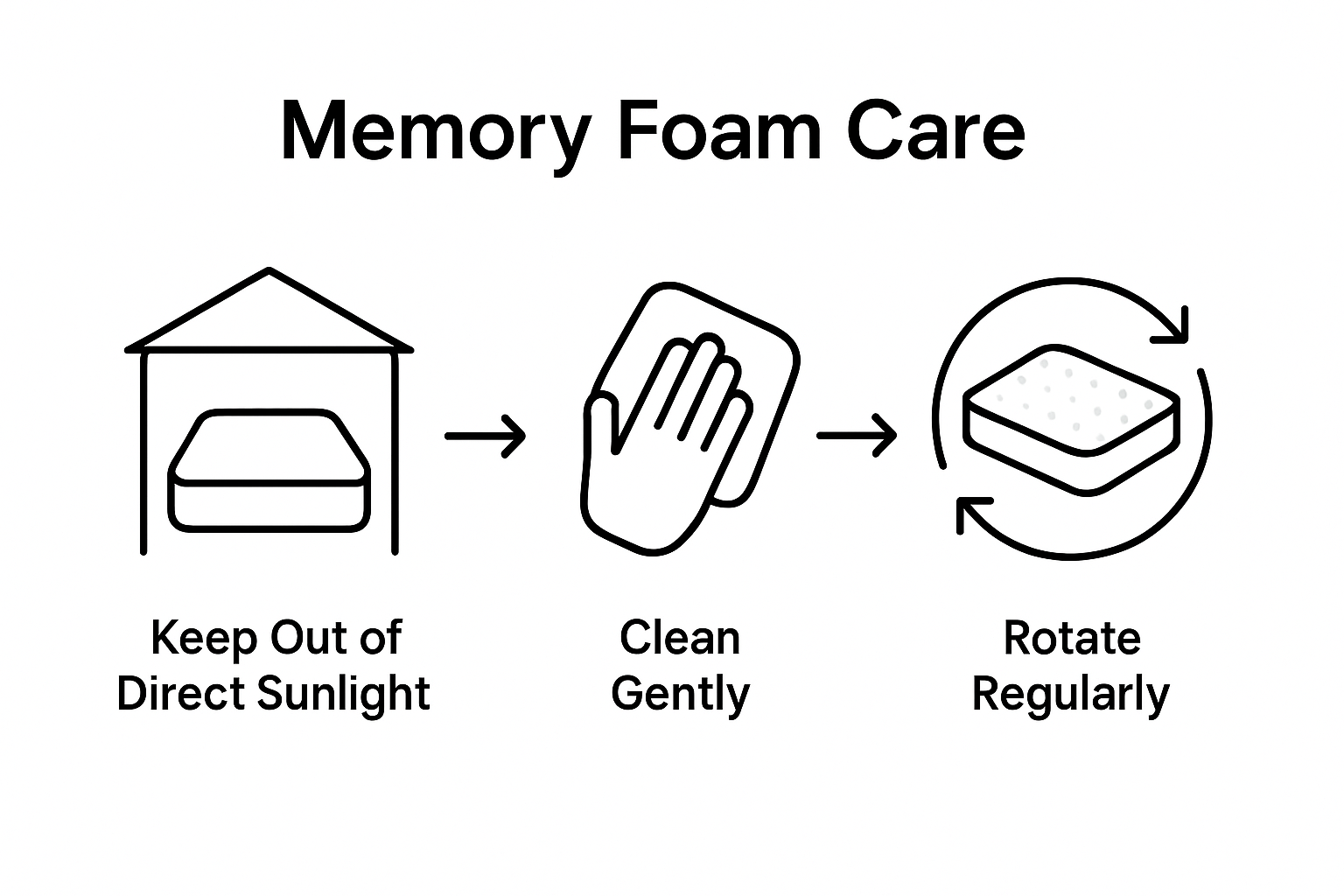
Mattress support fundamentals reveal that consistent rotation prevents localized compression and maintains the foam’s responsive characteristics. Memory foam naturally responds to repeated pressure points, which can cause permanent indentations if not managed properly. Regular rotation redistributes body weight impact, ensuring more uniform compression and preventing premature material degradation.
Critical techniques for maintaining memory foam’s structural integrity include:
- Rotate foam 180 degrees every 3-4 months
- Use flat, supportive surfaces during storage
- Avoid folding or extreme bending
- Distribute weight evenly during use
- Inspect foam regularly for compression signs
- Store on breathable, firm platforms
Proactive protection transforms outdoor sleeping experiences. Essential outdoor mattress care instructions emphasize that thoughtful maintenance prevents performance decline. Experienced campers understand that memory foam’s longevity depends not just on careful use, but on consistent, intelligent care that anticipates environmental challenges.
Protect Your Outdoor Comfort with Hazli Collection Memory Foam Solutions
The challenges of maintaining memory foam outdoors are real. From temperature extremes and moisture exposure to the need for proper cleaning and rotation, your comfort depends on smart choices. If you want a memory foam mattress that resists wear and delivers lasting support during every outdoor adventure, you need gear designed to handle these exact issues. Hazli Collection specializes in high-quality memory foam mattresses engineered with durability and comfort in mind, perfect for campers and outdoor lovers who refuse to compromise.

Discover our expertly crafted products that include protective covers and innovative designs addressing heat damage, moisture resistance, and off-gassing concerns. Act now to elevate your outdoor sleep experience with reliable memory foam solutions made for the elements. Explore our full range of outdoor mattresses and accessories at Hazli Collection and learn more about optimizing your setup in our outdoor mattress care instructions. Don’t wait for wear to take over your comfort invest in trusted performance today.
Frequently Asked Questions
What is memory foam and how does it work?
Memory foam is a viscoelastic polyurethane foam engineered to conform to your body’s contours, providing personalized support and pressure relief. It responds to heat and pressure, allowing it to mold to your shape and return to its original form once pressure is removed.
How can I protect memory foam when using it outdoors?
To protect memory foam outdoors, use reflective protective covers, store it in shaded areas during peak sunlight, avoid direct ground contact, and ensure adequate air circulation underneath the foam to prevent heat damage and moisture buildup.
What cleaning methods are safe for memory foam?
For cleaning memory foam, use a mild, enzyme-free detergent applied sparingly with a soft, white cloth. Opt for spot cleaning rather than saturating the foam, and let it air dry completely before use to prevent mold and damage.
How can I manage odors and off-gassing from memory foam?
To manage odors and off-gassing from memory foam, air it out in a well-ventilated space and under sunlight for several hours before use. Consider using activated charcoal for odor absorption, and ensure proper storage in well-ventilated areas.
Recommended
- Understanding the Role of Memory Foam Outdoors – Hazli Collection
- Essential Memory Foam Mattress Setup for Outdoor Comfort – Hazli Collection
- 7 Outdoor Sleeping Arrangement Ideas for Ultimate Comfort – Hazli Collection
- Essential Outdoor Mattress Care Instructions for Comfort – Hazli Collection
- What Is Upholstery Foam? Complete Guide for 2025 - fabric fabric