

By The Hazli Family — Peter & Louise · Reviewed June 2026
Quick answer: Mattress thickness outdoors determines comfort, insulation, and portability: 2–4 inches suits most campers, cushioning hips and shoulders from hard ground while trapping warmth (check the R-value for cold trips). Ultralight backpackers can drop to 1–2 inches to save weight, while car campers can enjoy plush 3–4 inch designs.
More than 60 percent of American campers say uncomfortable sleeping is the top reason their trips become stressful. When a thin mattress separates you from rocky soil and overnight chills, even a stunning mountain view can lose its appeal. Choosing the right mattress thickness can make all the difference outdoors, helping you wake up refreshed and ready to explore rather than sore and tired. Discover how simple adjustments in cushioning can completely change your next camping experience.
Table of Contents
- Why Thickness Matters Outdoors
- Thickness and Thermal Insulation
- Thickness Versus Portability
- Thickness by Camping Style
- Thickness Impact on Comfort
- Choosing Ideal Thickness
Key Takeaways
| Point | Details |
|---|---|
| Importance of Thickness | The thickness of a camping mattress is essential for comfort, providing support against uneven ground and insulation against temperature variations. |
| Balancing Thickness and Portability | Campers must find a compromise between mattress thickness for comfort and its weight for portability, depending on their specific camping style. |
| Thermal Insulation Role | A thicker mattress plays a crucial role in thermal insulation, helping to maintain core body warmth and prevent heat loss in colder environments. |
| Personalized Selection | Choosing the right mattress thickness depends on individual factors such as body weight, sleeping position, and the intended camping environment. |
Why Thickness Matters Outdoors
Camping mattress thickness plays a critical role in transforming outdoor sleeping experiences from uncomfortable to genuinely restful. The right mattress depth provides essential protection against uneven ground, temperature variations, and potential pressure points that can disrupt sleep quality. When selecting an outdoor mattress, thickness becomes more than just a measurement - it’s a fundamental factor in ensuring comfort and recovery during outdoor adventures.
In analyzing mattress performance, experts recognize that optimal thickness directly impacts body support and insulation. Four inches of air and foam design can effectively cradle your body and protect vulnerable areas like hips and shoulders from ground contact. This strategic layering prevents direct ground pressure, which can cause discomfort and interrupt sleep cycles during camping trips.
Outdoor sleeping surfaces present unique challenges that standard home mattresses do not encounter. Uneven terrain, rocky ground, and temperature fluctuations demand a mattress with sufficient thickness to create a stable, comfortable sleeping platform. A well-designed camping mattress typically ranges between 2-4 inches, providing enough cushioning to neutralize ground irregularities while remaining lightweight and portable. Exploring creative outdoor sleeping arrangements can further enhance your comfort strategy.
Key considerations for mattress thickness include body weight, sleeping position, and intended camping environment. Heavier individuals or side sleepers might require thicker mattresses to prevent bottoming out, while ultralight backpackers may prioritize minimal weight over maximum cushioning. Understanding these nuanced requirements helps campers select the perfect mattress thickness for their specific outdoor sleeping needs.
Thickness and Thermal Insulation
Thermal insulation represents a critical yet often overlooked component of outdoor mattress performance, directly impacting sleep comfort and body temperature regulation during camping adventures. The thickness of a camping mattress plays a fundamental role in creating an effective barrier between your body and the cold ground, preventing heat loss and maintaining core body warmth in challenging outdoor environments.
Thermal resistance is scientifically measured through an R-value standard, which quantifies a mattress’s ability to resist heat transfer. Specialized camping mattresses with an aluminum-coated layer can achieve thermal insulation ratings suitable for temperate environments above 5°C, meeting the ASTM F3340-18 standard with an R-value of 2.2. This technical measurement helps campers understand how effectively a mattress will protect them from ground-based temperature variations.
Different camping environments demand varying levels of thermal protection. Thicker mattresses with multi-layer construction provide superior insulation by creating air pockets that trap warmth and prevent direct contact with cold surfaces. Backpackers and mountain campers particularly benefit from mattresses with enhanced thermal properties, as even a few inches of additional thickness can significantly reduce heat loss during overnight stays in cooler regions.
Campers should consider multiple factors when evaluating mattress thermal performance. Body weight, sleeping position, ground surface, and anticipated temperature range all influence the required insulation level. Ultralight travelers might opt for thinner mattresses with advanced thermal technologies, while car campers can choose more substantial options that prioritize comprehensive warmth and comfort. Understanding these nuanced thermal dynamics ensures a more comfortable and restful outdoor sleeping experience.
Thickness Versus Portability
Choosing the right camping mattress requires a delicate balance between thickness and portability, two seemingly competing priorities that can make or break an outdoor sleeping experience. Campers must carefully weigh the trade-offs between comfort and the practical constraints of carrying additional weight during their adventures. The ideal mattress represents a strategic compromise that maximizes comfort while maintaining manageable pack weight and size.

Compact design becomes crucial for backpackers and hikers who must carefully manage every ounce of gear. Innovative mattress technologies now offer lightweight, compressible options that provide exceptional travel convenience while maintaining comfort. Modern camping mattresses leverage advanced materials and construction techniques to deliver substantial cushioning without overwhelming pack volume.
Different camping styles demand unique portability considerations. Ultralight backpackers might prioritize minimal weight and packability, selecting thin mattresses that compress to the size of a water bottle. Car campers and base camp travelers, by contrast, can afford more substantial mattresses with greater thickness and additional comfort features. The key is matching mattress characteristics to specific travel requirements, understanding that no single solution works perfectly for every outdoor scenario.
Key factors in evaluating the thickness-portability balance include total trip duration, transportation method, body weight, and personal comfort preferences. Lightweight travelers might accept a 1-2 inch mattress for short trips, while extended expeditions might warrant more substantial 3-4 inch options. Understanding these nuanced trade-offs helps outdoor enthusiasts select mattresses that provide optimal comfort without becoming a burdensome addition to their gear load.
Thickness by Camping Style
Camping mattress thickness is not a one-size-fits-all solution, but rather a strategic choice that varies dramatically based on specific outdoor activities and travel styles. Each camping approach demands a unique approach to mattress selection, with thickness playing a crucial role in comfort, practicality, and overall sleeping experience.
Car camping scenarios allow for significantly more generous mattress thickness, as transportation constraints are minimal. Enthusiasts can opt for plush, squishy mattresses that provide maximum comfort without worrying about weight or pack size. Some car camping mattresses, like the Sea to Summit Comfort Deluxe, offer exceptional cushioning that ensures quality sleep regardless of terrain. These mattresses typically range from 3-4 inches thick, prioritizing comfort over portability.
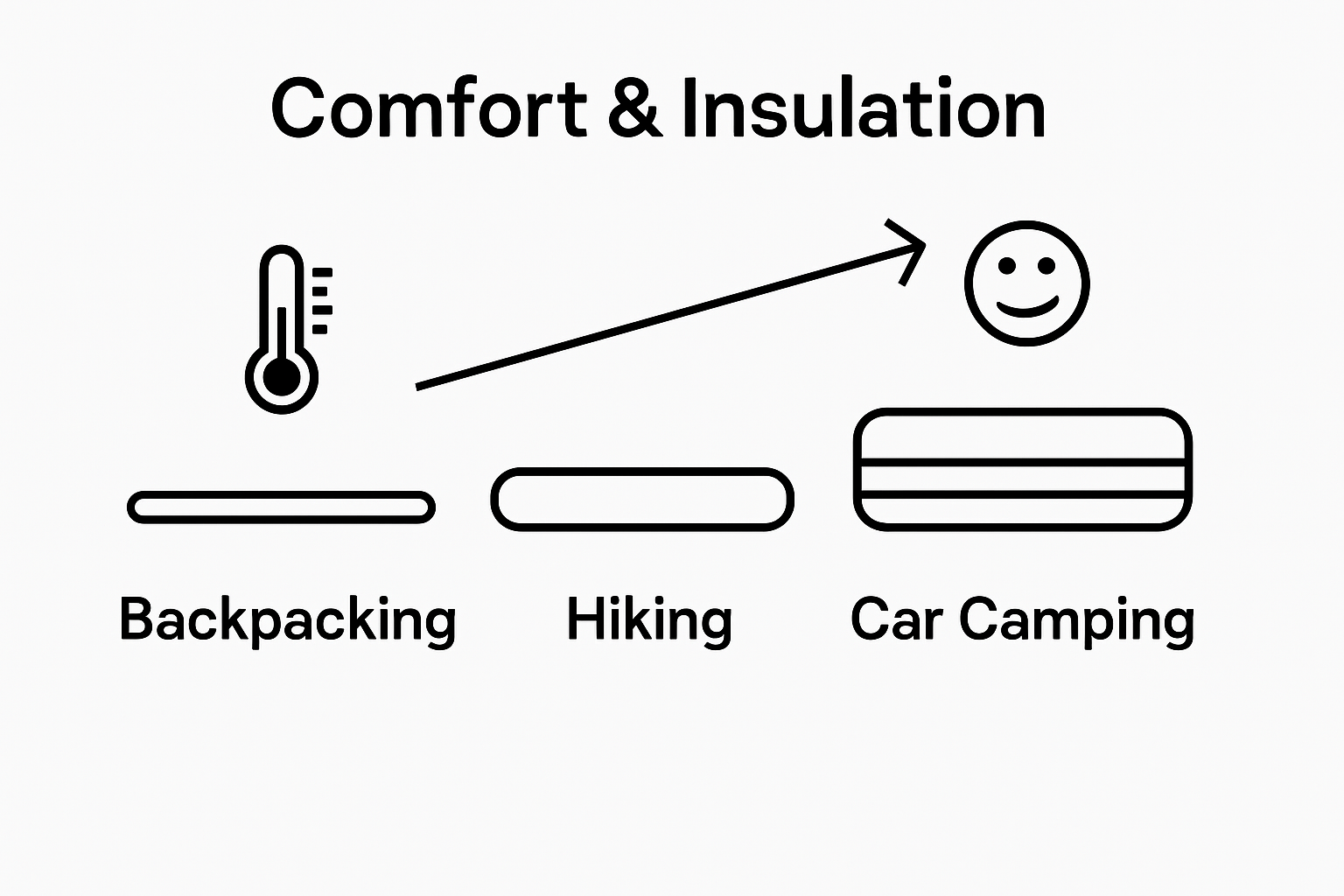
Exploring different camping bedding strategies reveals distinct thickness requirements for various outdoor adventures. Backpackers and ultralight hikers must compromise, selecting mattresses around 1-2 inches thick that compress easily and add minimal weight to their pack. Mountain climbers and wilderness explorers need mattresses that balance insulation, comfort, and minimal bulk, often choosing specialized designs that provide maximum performance with minimal thickness.
Ultimately, mattress thickness becomes a personal calculation involving several critical factors. Body weight, sleeping style, trip duration, transportation method, and anticipated terrain all influence the ideal mattress selection. Lightweight travelers might accept minimal padding for short trips, while extended expeditions demand more substantial cushioning. The key is understanding your specific camping style and selecting a mattress that transforms your outdoor sleeping experience from basic survival to genuine comfort.
Thickness Impact on Comfort
Outdoor sleeping comfort is a complex equation where mattress thickness serves as a critical variable, directly influencing the quality of rest and overall camping experience. The relationship between mattress depth and comfort goes far beyond simple cushioning, encompassing physical support, pressure distribution, and psychological well-being during outdoor adventures.
Mattress depth significantly impacts sleep quality, with thinner models often lacking sufficient cushioning and potentially leading to discomfort and back pain. Different body types and sleeping positions require unique thickness considerations to prevent pressure point formation and ensure proper spinal alignment. Side sleepers, for instance, typically need thicker mattresses to accommodate hip and shoulder width, while back sleepers might find moderate thickness more comfortable.
Understanding the nuanced role of memory foam can enhance outdoor sleeping strategies, especially when considering mattress thickness. The ideal outdoor mattress should provide a delicate balance between support and comfort, adapting to uneven terrain while maintaining consistent pressure distribution. Thickness between 2-4 inches typically offers the most versatile performance, allowing campers to experience a supportive yet comfortable sleeping surface across various outdoor environments.
Ultimately, mattress comfort is a deeply personal experience influenced by individual physiology, camping environment, and personal preferences. Factors such as body weight, sleeping style, ground surface, and trip duration all play crucial roles in determining the optimal mattress thickness. Experienced outdoor enthusiasts understand that investing time in selecting the right mattress depth can transform a potentially uncomfortable night into a rejuvenating wilderness experience.
Choosing Ideal Thickness
Selecting the perfect mattress thickness for outdoor adventures requires a strategic approach that balances multiple personal and environmental factors. Campers must consider their unique physical needs, anticipated terrain, and specific camping style to make an informed decision that ensures comfortable and restorative sleep in the wilderness.
While traditional mattress recommendations suggest an average depth between 25cm and 30cm for optimal comfort and cost-effectiveness, outdoor mattresses operate under different parameters. Camping mattresses typically range from 1-4 inches thick, with each thickness level serving distinct purposes. Ultralight backpackers might prefer minimal 1-2 inch options, while car campers can accommodate more luxurious 3-4 inch mattresses that provide superior cushioning.
Essential considerations for memory foam mattress setup can further refine your outdoor comfort strategy. Body weight plays a crucial role in thickness selection, with heavier individuals requiring more substantial mattresses to prevent bottoming out. Side sleepers generally need thicker mattresses to accommodate hip and shoulder width, whereas back and stomach sleepers might find medium thickness more suitable.
Ultimately, the ideal mattress thickness is a personal calculation involving body mechanics, camping environment, and individual comfort preferences. Experimenting with different mattress depths during shorter trips can help campers discover their perfect outdoor sleeping solution. The goal is not just finding a mattress, but creating a portable sleep sanctuary that transforms wilderness nights from merely survivable to genuinely rejuvenating.
Upgrade Your Outdoor Sleep with the Perfect Mattress Thickness
Choosing the right mattress thickness is essential for achieving true comfort and warmth outdoors. Whether you struggle with uneven terrain, chilly nights, or packing the right gear, Hazli Collection understands these challenges. We specialize in high-quality memory foam mattresses designed to provide the right balance of cushioning and thermal insulation, ensuring your body stays supported and protected during every adventure.

Explore our carefully crafted selection at Hazli Collection to find your ideal camping mattress thickness. From ultralight designs to plush options, every mattress is built for durability and comfort. Don’t wait until your next trip to discover what proper thickness can do for your sleep outdoors. Visit us now to transform your camping nights into truly restorative experiences.
Frequently Asked Questions
How does mattress thickness affect comfort while camping?
The thickness of a camping mattress significantly impacts overall comfort by providing necessary cushioning, support, and pressure distribution, which helps prevent discomfort and pain during sleep.
What is the optimal thickness for a camping mattress?
The ideal camping mattress thickness typically ranges from 2 to 4 inches, balancing comfort and portability based on individual preferences and camping styles.
How does thickness relate to thermal insulation in camping mattresses?
Thicker camping mattresses generally offer better thermal insulation by creating air pockets that trap warmth, preventing heat loss to the cold ground during camping in cooler environments.
Should heavier individuals choose thicker mattresses for camping?
Yes, heavier individuals or side sleepers may need thicker mattresses to prevent bottoming out and to ensure proper cushioning for vulnerable areas like hips and shoulders.
Recommended
- Essential Memory Foam Mattress Setup for Outdoor Comfort – Hazli Collection
- 7 Outdoor Sleeping Arrangement Ideas for Ultimate Comfort – Hazli Collection
- 7 Essential Camping Comfort Tips for a Restful Outdoor Stay – Hazli Collection
- 7 Essential Examples of Outdoor Sleeping Gear for Comfort – Hazli Collection