

By The Hazli Family — Peter & Louise · Reviewed June 2026
Quick answer: A modular sleeping pad is a camping sleep surface built from sections that connect, stack, or expand, letting you customize size, insulation, and firmness for solo, couple, or family setups. Damaged sections can be replaced individually, and layers can be added for colder ground — flexibility a single-piece foam or inflatable pad can't match.
Most campers have stood in a gear shop staring at a wall of sleeping pads, completely lost. Inflatable, self-inflating, foam, double-wide — the labels blur together fast. Modular sleeping pads sit in a category that confuses even experienced outdoor enthusiasts, often getting lumped in with standard inflatables or basic foam rolls. But they work differently, and that difference matters a lot when you’re trying to sleep well on uneven ground at 11 PM. This article breaks down exactly what modular sleeping pads are, how they compare to other options, and when they’re the right call for your next trip.
Table of Contents
- What is a modular sleeping pad?
- Types of modular sleeping pads
- How modular pads impact your comfort and sleep quality
- When and why to choose a modular sleeping pad
- Caring for and maintaining modular sleeping pads
- Find your next sleeping solution
- Frequently asked questions
Key Takeaways
| Point | Details |
|---|---|
| Modular pads offer flexibility | You can customize sleeping arrangements for solo, couple, or group camping with modular systems. |
| Comfort improves sleep quality | Modular pads help prevent cold spots and provide a cushioned, supportive surface outdoors. |
| Easy repair and maintenance | If one section is damaged, modular pads allow simple fixes or replacements compared to traditional models. |
| Multiple types fit different needs | Connectable, double-wide, and stackable pads cover every camping scenario from backpacking to family trips. |
What is a modular sleeping pad?
A modular sleeping pad is a sleep system built from multiple sections that connect, stack, or expand to form a customized sleeping surface. Unlike a single-piece inflatable or a basic foam roll, modular pads are designed with flexibility in mind. You can add sections, swap out damaged pieces, or connect two pads together for a wider surface.
The appeal is real. Understanding foam sleeping pad benefits helps explain why modularity works so well: foam sections can be layered for extra insulation, replaced individually when worn, and configured to fit your exact sleeping space. That kind of adaptability is hard to find in a single-piece pad.
Here’s what sets modular pads apart from standard options:
- Interlocking or connectable edges that create a seamless sleeping surface
- Replaceable sections so you don’t trash the whole pad over one damaged piece
- Expandable configurations for solo, couple, or group setups
- Mixed materials combining foam cores with inflatable chambers for comfort and insulation
- Packability options ranging from roll-up foam to foldable panel systems
Modular sleeping pads give you a system, not just a product. You build your sleep setup around your trip, not the other way around.
For couples, connectable pads like the Big Agnes Rapide SL Insulated (R-value 4.8, 2 lb 11 oz) or systems like OCTO offer a shared sleeping surface without the awkward gap between two separate pads. That’s a game-changer for anyone who’s ever woken up wedged between two pads at 3 AM. Improving outdoor sleep quality often starts with choosing the right pad system, and modular designs give you more tools to do that.
Types of modular sleeping pads
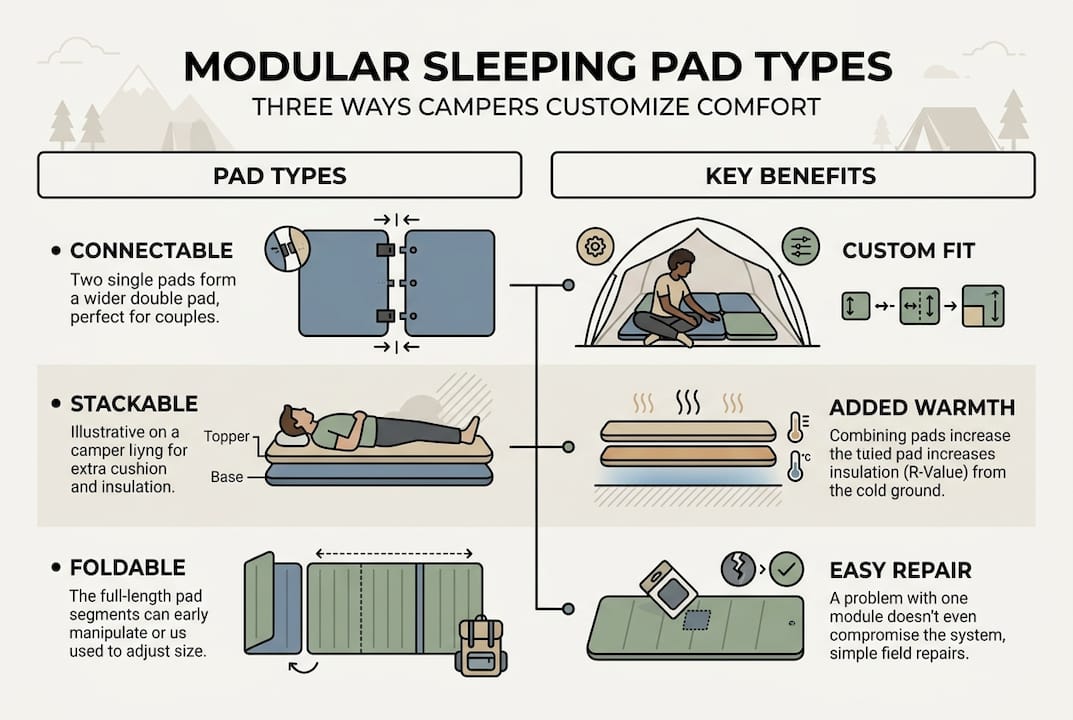
Not all modular pads work the same way. There are three main types, each built for different situations.
| Type | Best for | Key benefit | Typical weight |
|---|---|---|---|
| Connectable singles | Couples, small groups | Join two pads seamlessly | Varies by model |
| Double-wide pads | Couples, car camping | One large surface, no gap | ~2 lb 11 oz (Rapide SL) |
| Stackable/expandable foam | All-terrain, group camping | Redundancy, easy repair | Lightweight per section |
Connectable singles are individual pads with attachment points along the edges. You sleep on yours, your partner sleeps on theirs, and the connection keeps them from drifting apart. Double-wide pads like the Big Agnes Rapide SL Insulated are built as one wide unit from the start, offering a cleaner surface but less flexibility in configuration.
Stackable foam modules are the most versatile for rough terrain. You can add a section under your hips for extra cushioning or remove one to save weight on a lighter day hike. If you’re camping with kids, check out family sleeping bag options that pair well with expandable pad systems for a complete sleep setup.
Pro Tip: For unpredictable terrain like rocky ground or uneven forest floors, stackable foam modules give you redundancy. If one section gets damaged, the rest of your sleep system stays intact.
For campers who want a middle ground between foam and inflatable, tri-fold sleeping pads offer a compact, modular-adjacent option worth considering.
How modular pads impact your comfort and sleep quality
Here’s the honest truth: most camping sleep problems come down to two things — cold spots and uneven ground. Modular sleeping pads are specifically built to address both.
Cold spots happen when insulation is inconsistent across the pad surface. A modular system lets you layer sections or choose higher R-value modules for the areas that matter most, like under your torso and hips. The R-value measures how well a pad resists heat loss. A higher number means better insulation. The Rapide SL Double, for example, carries an R-value of 4.8, which handles three-season camping comfortably.
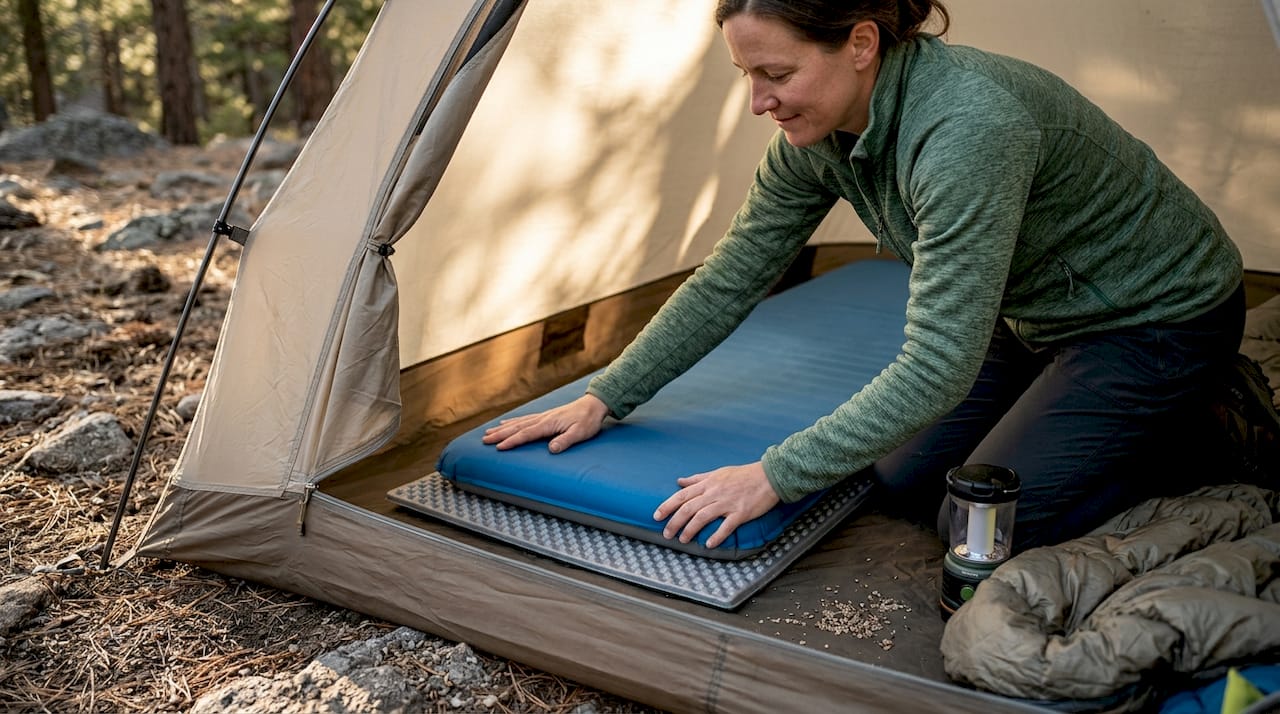
For couples, the “pad gap” is a real problem. Two separate pads always drift apart, leaving a cold, uncomfortable seam right in the middle. Connectable modular systems eliminate that entirely. Car camping often favors self-inflating or plush modular pads for maximum comfort, and it’s easy to see why when you’re not counting every ounce.
Here’s what modular pads solve that standard pads can’t:
- Uneven pressure distribution across different body zones
- Cold ground transfer through targeted insulation layering
- Couple compatibility by eliminating the gap between two pads
- Size mismatches by adding or removing sections to fit your tent floor
- Single-point failure since one damaged section doesn’t ruin the whole pad
For a deeper look at how comfort and durability outdoors connect to pad choice, foam-based modular systems consistently outperform single-piece inflatables in long-term reliability. And if you’re still narrowing down your options, reviewing the best foam sleeping pad picks gives you a solid baseline for comparison.
When and why to choose a modular sleeping pad
Modular pads aren’t the right call for every trip. But for the right situations, nothing else comes close.
Here’s a simple decision checklist to figure out if a modular system fits your needs:
- Group size: Are you camping with a partner, family, or group? Modular pads scale up easily.
- Trip type: Car camping and base camping benefit most. Ultralight backpackers may prefer a single-piece foam pad.
- Insulation needs: Variable weather or cold nights? Layerable modules let you adjust R-value on the fly.
- Repairability: Will you be far from a gear shop? Modular sections are far easier to fix or replace in the field.
- Pack size: Do you have room in your vehicle or pack? Double-wide pads pack bulkier but offer unmatched comfort.
Punctures are less of an issue with foam or hybrid modular pads, which is a major advantage for rough terrain or trips with kids who aren’t gentle with gear.
Pro Tip: Hybrid modular pads, which combine a foam base with an inflatable top layer, minimize puncture risk while maximizing comfort. They’re the best choice for car camping trips where weight isn’t a concern but a good night’s sleep absolutely is.
For edge cases, ultralight hikers should look at sleeping pad alternatives before committing to a modular system. Winter campers, on the other hand, benefit enormously from stackable foam modules that can be layered for extreme cold without the puncture risk of inflatable-only systems.
Caring for and maintaining modular sleeping pads
A modular pad is an investment. Treat it right and it’ll last for years of hard use.
Cleaning and drying are the two most important habits. Foam sections should be wiped down with a damp cloth and mild soap, then air-dried completely before storage. Never store a damp pad — mildew sets in fast and ruins the material from the inside out.
Here’s a quick care comparison by pad type:
| Pad type | Cleaning method | Common issues | Repair ease |
|---|---|---|---|
| Foam modules | Wipe with damp cloth | Compression over time | Very easy, replace section |
| Hybrid (foam + inflatable) | Wipe and air-dry fully | Seam separation | Moderate, patch kit needed |
| Inflatable modules | Rinse, dry valve open | Punctures, leaks | Easy with patch kit |
Modular pads allow easy section replacement for repairs, unlike most standard sleeping pads where a single failure means replacing the whole unit. That’s a significant cost and convenience advantage over time.
For storage, keep pads loosely rolled or flat in a cool, dry space. Avoid compressing foam modules for extended periods — it breaks down the cell structure and reduces cushioning. The closed-cell foam benefits that make foam modules so durable are preserved best when stored uncompressed.
For long-term foam sleeping pad care, avoid leaving pads in direct sunlight for extended periods. UV exposure degrades foam faster than almost anything else.
- Clean after every trip, not just when visibly dirty
- Dry completely before rolling or folding for storage
- Inspect connectors and edges for wear before each use
- Store flat or loosely rolled to preserve foam integrity
- Keep a patch kit in your camp bag for inflatable module repairs
Find your next sleeping solution
You now know what separates a modular sleeping pad from everything else on the market, how to pick the right type for your trip, and how to keep it performing for years. The next step is finding the right pad for your specific setup.

At Hazli Collection, we carry sleeping solutions built for real outdoor use — comfortable, durable, and adaptable to the way you actually camp. Whether you’re outfitting a family base camp, upgrading a couples setup, or just tired of waking up sore on hard ground, our range covers the comfort and reliability you need. Browse our memory foam camping mattress and find the pad that fits your next adventure, because a great night’s sleep in the outdoors starts with the right foundation under you.
Frequently asked questions
Can modular sleeping pads be used in all weather conditions?
Yes, many modular pads are designed for all-season use. Double-wide and connectable pads offer insulation suitable for varied climates, and you can layer foam modules for added warmth in colder conditions.
Are modular sleeping pads heavier than regular pads?
Some modular systems are slightly heavier, but many balance comfort and portability well. The Rapide SL Double weighs just 2 lb 11 oz with an R-value of 4.8 and 3.5-inch thickness, which is competitive with many standard pads.
How do modular sleeping pads connect together?
Most modular pads use interlocking edges, snaps, or hook-and-loop fasteners to form a stable, gap-free surface. The connection method varies by brand and model.
What makes a modular sleeping pad a good choice for families?
Families benefit from the ability to configure multiple pads into one large sleeping area. Connectable options like OCTO let you join pads for groups, making it easy to create a custom sleep setup that fits your tent and your crew.