

By The Hazli Family — Peter & Louise · Reviewed June 2026
Quick answer: Closed-cell foam is a dense material whose sealed, non-interconnecting cells block water absorption and trap heat. For campers, that means a sleeping pad that insulates even when wet, resists punctures and compression, and stays lightweight. Check the R-value rating to match the pad's insulation to your expected nighttime temperatures.
Finding a comfortable night’s sleep outdoors is a top concern for many American families and frequent campers. Traditional sleeping pads often fall short in durability and insulation, especially on rough or wet ground. Closed-cell foam technology changes the game, offering reliable protection and warmth wherever your campsite takes you. With its moisture resistance and firm structure, closed-cell foam provides a solution trusted by hikers and adventurers, proving its worth on thousands of wilderness trips each year.
Table of Contents
- Closed-cell Foam Explained For Campers
- Major Types And Key Differences
- Core Features And Functional Benefits
- Practical Uses For Outdoor Sleeping
- Comparing Closed-cell To Open-cell Foam
- Common Pitfalls And Buying Tips
Key Takeaways
| Point | Details |
|---|---|
| Closed-Cell Foam Benefits | Closed-cell foam provides superior insulation, moisture resistance, and durability, making it ideal for outdoor sleeping solutions. |
| Performance Comparison | Closed-cell foam outperforms open-cell foam in wet conditions, offering better stability and thermal protection in rugged terrains. |
| Selecting the Right Foam | Choose closed-cell foam pads with high R-value ratings for cold-weather camping to ensure optimal thermal insulation. |
| Multi-Functional Usage | These foam pads can serve multiple purposes, such as ground cover or emergency insulation, making them versatile for various outdoor activities. |
Closed-cell foam explained for campers
Campers seeking reliable outdoor sleeping solutions rely on closed-cell foam for its exceptional performance in challenging environments. These specialized foam materials are engineered to provide insulation, protection, and durability where traditional materials might fail. Lightweight and moisture-resistant foam pads represent a critical advancement in outdoor gear technology, designed specifically to meet the demanding requirements of wilderness adventures.
Unlike other foam types, closed-cell foam features a unique cellular structure where individual cells are completely sealed and do not interconnect. This design creates remarkable properties that make it ideal for outdoor use. The sealed cells prevent water absorption, which means the foam maintains its insulating capabilities even in wet conditions. Furthermore, its firm and dense composition provides excellent resistance against punctures and compression, ensuring campers have a stable and protective sleeping surface in rugged terrains.
The practical benefits of closed-cell foam extend beyond basic protection. Its remarkable thermal insulation helps retain body heat, creating a critical barrier between campers and cold ground surfaces. Hikers and outdoor enthusiasts appreciate its ultralight weight, compact design, and ability to withstand repeated use without significant degradation. Whether used as a sleeping pad, ground cover, or emergency insulation, closed-cell foam delivers consistent performance across diverse outdoor scenarios.
Pro tip: When selecting a closed-cell foam pad, look for options with a high R-value rating to ensure maximum thermal insulation during cold-weather camping trips.
Major types and key differences
Closed-cell and open-cell foam represent two distinct foam technologies with critical differences that impact their performance in outdoor environments. Structural variations between these foam types fundamentally determine their suitability for specific applications, especially in camping and outdoor gear contexts.
Closed-cell foam features completely sealed cellular structures where individual cells are discrete and do not interconnect. This unique design creates remarkable properties that make it superior for outdoor use. Closed-cell foam is characterized by its dense, rigid composition that provides excellent water resistance, thermal insulation, and durability. In contrast, open-cell foam has interconnected cellular structures that make it more breathable and softer, but significantly less resistant to moisture and environmental challenges.
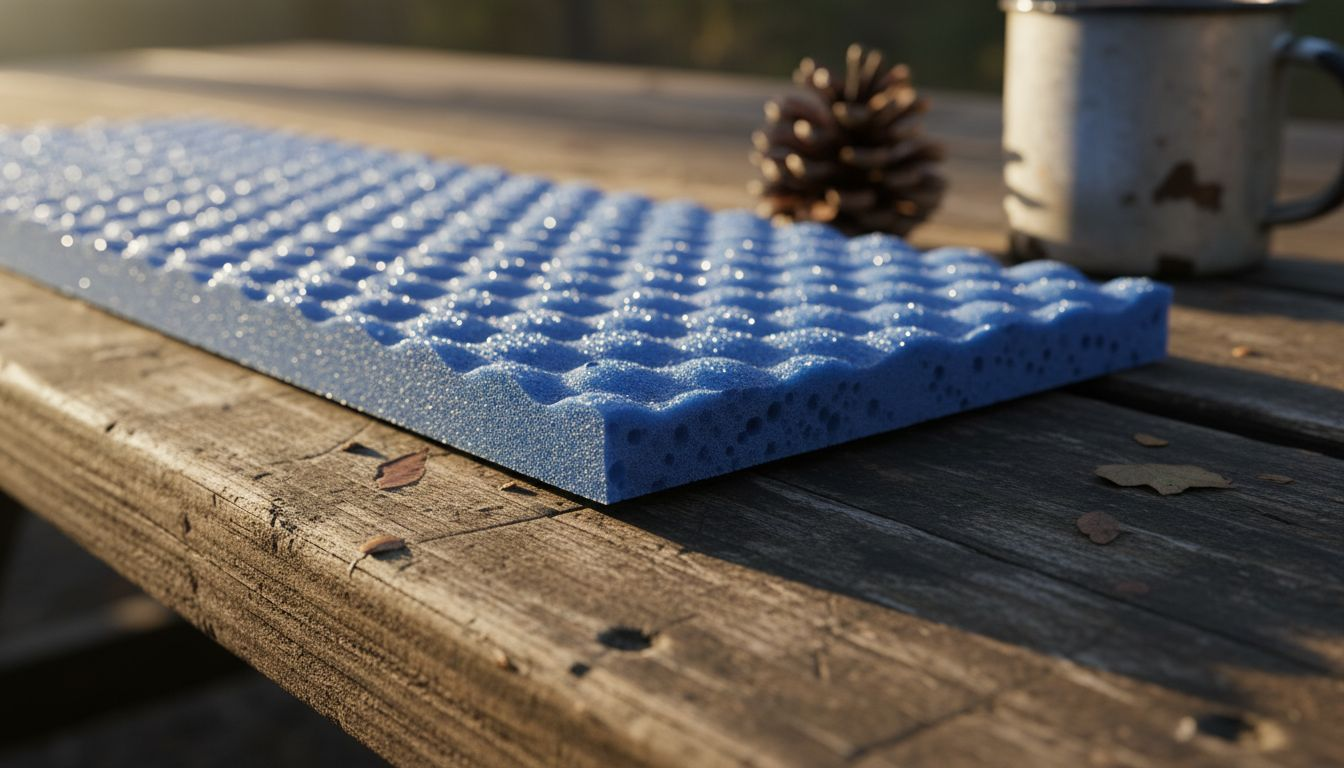
The performance differences between these foam types are substantial. Cellular structure directly impacts material characteristics, with closed-cell foam offering superior advantages for outdoor applications. Its sealed structure traps gas, prevents water absorption, and provides exceptional insulation and structural strength. Open-cell foam, while more comfortable and lightweight, becomes quickly compromised in wet conditions, making it less reliable for rugged outdoor environments.
Here’s a quick comparison of closed-cell and open-cell foam for outdoor use:
| Attribute | Closed-Cell Foam | Open-Cell Foam |
|---|---|---|
| Water Resistance | Highly resistant | Poor, absorbs moisture |
| Durability | Very durable in rough terrain | Less durable, compresses easily |
| Insulation Value | Excellent, retains heat | Lower, loses insulation when wet |
| Weight | Lightweight, packs thin | Slightly heavier for comfort |
| Best Usage | Wet, rugged environments | Dry climates, basecamp comfort |
Pro tip: When selecting foam for outdoor gear, prioritize closed-cell foam for situations requiring moisture resistance, thermal protection, and long-term durability.
Core features and functional benefits
Closed-cell foam offers a remarkable suite of functional characteristics that make it an exceptional material for outdoor equipment and camping gear. Its unique cellular structure provides extraordinary performance capabilities that address multiple critical needs for adventurers and outdoor enthusiasts.
The core features of closed-cell foam are defined by its distinctive engineering. Its fully enclosed cellular structure delivers exceptional thermal insulation, creating a powerful barrier against cold ground and environmental temperature variations. The foam’s low density combined with high strength means users get robust protection without significant added weight. These properties make it particularly valuable for sleeping pads, ground covers, and protective equipment where lightweight durability is paramount.
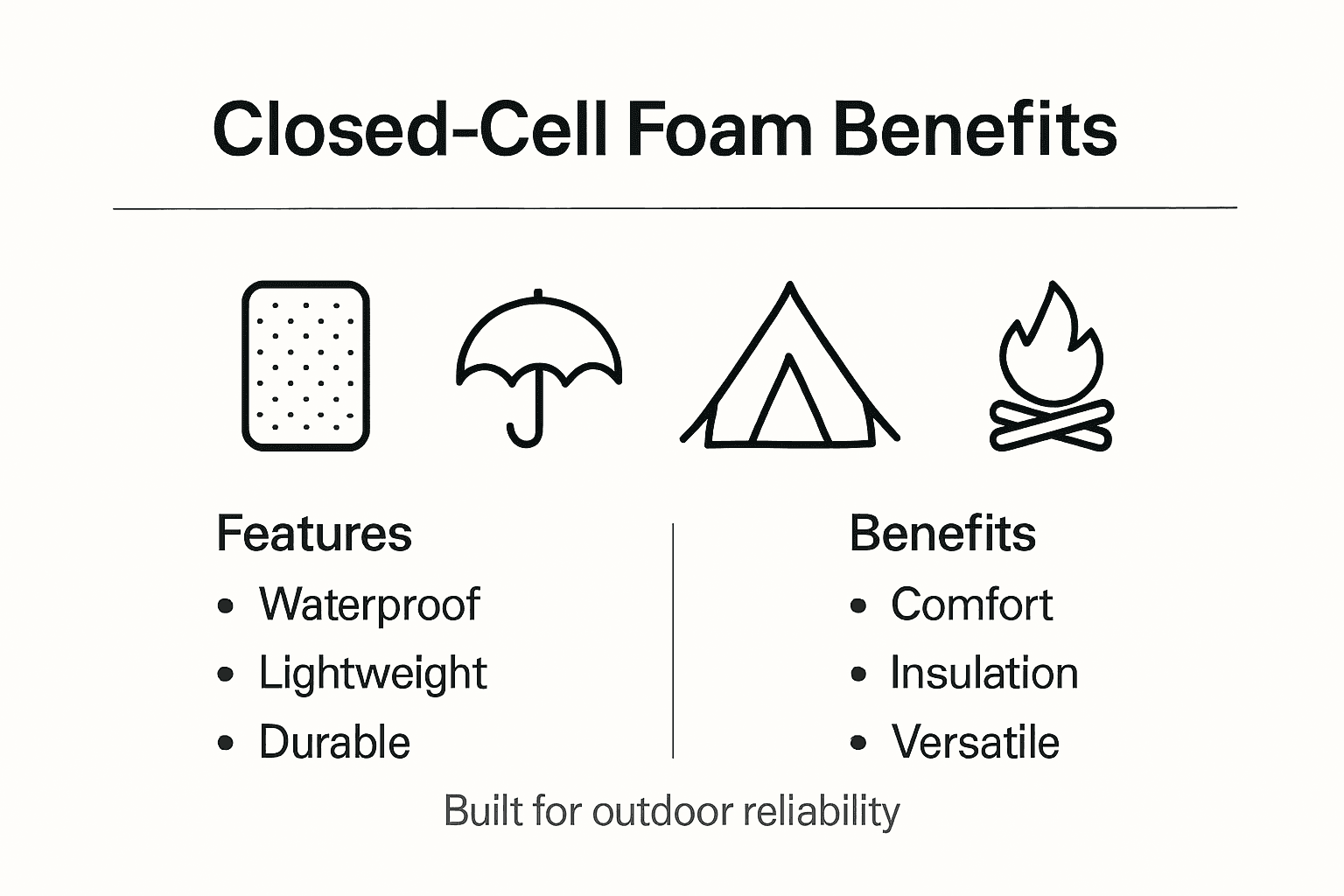
Closed-cell foam pads excel in multiple performance dimensions that outdoor users demand. The material offers remarkable water resistance, preventing moisture absorption and maintaining structural integrity in wet conditions. Its puncture-resistant composition ensures long-lasting use, while the easy-to-clean surface makes maintenance simple. Campers and hikers appreciate how these foam pads provide consistent cushioning, energy absorption, and thermal protection across diverse terrains and environmental conditions.
Pro tip: Always inspect your closed-cell foam gear for any signs of wear or compression, and replace it proactively to maintain optimal insulation and protection during outdoor adventures.
Practical uses for outdoor sleeping
Closed-cell foam mattresses and pads represent a versatile solution for outdoor sleeping challenges, offering campers and adventurers a reliable way to create comfortable rest environments in diverse wilderness settings. These specialized sleeping surfaces transform challenging outdoor terrain into manageable, protective sleeping spaces that prioritize both comfort and thermal regulation.
Backpackers and hikers particularly benefit from closed-cell foam’s extraordinary adaptability. The material can serve multiple functions beyond traditional sleeping pad applications, including emergency ground cover, improvised seat cushions, equipment padding, and even temporary first aid splinting. Its remarkable durability means adventurers can use the foam in rough mountain environments, rocky desert landscapes, and wet forest floors without compromising structural integrity or insulation properties.
The versatility of closed-cell foam extends to various outdoor sleeping scenarios. Outdoor sleeping arrangement ideas demonstrate how these foam solutions can be layered, folded, or configured to meet specific environmental challenges. Ultralight backpackers appreciate the minimal weight, while winter campers rely on its superior thermal barrier capabilities. The foam’s ability to resist moisture, prevent heat loss, and provide consistent cushioning makes it an essential component of any serious outdoor sleeping system.
Pro tip: When selecting a closed-cell foam sleeping pad, choose a thickness and density appropriate for your specific outdoor environment and expected temperature range.
Comparing closed-cell to open-cell foam
The fundamental differences between closed-cell and open-cell foam create distinct performance characteristics that significantly impact their effectiveness in outdoor environments. Understanding these variations helps outdoor enthusiasts select the most appropriate material for their specific camping and adventure needs.
Closed-cell foam distinguishes itself through its completely sealed cellular structure, which provides exceptional moisture resistance and thermal insulation. Structural variations between these foam types dramatically influence their performance in challenging outdoor conditions. While closed-cell foam remains rigid, water-repellent, and maintains consistent insulation properties, open-cell foam offers greater flexibility but becomes quickly compromised when exposed to moisture. The sealed nature of closed-cell foam prevents water absorption, making it superior for environments where staying dry is critical.
The practical implications of these differences are profound for outdoor enthusiasts. Closed-cell foam excels in scenarios requiring durability and protection, such as winter camping, backpacking through wet terrain, or creating emergency insulation layers. Open-cell foam, by contrast, performs better in controlled, dry environments where breathability and soft texture are prioritized. Hikers and campers must carefully consider their specific environmental challenges when selecting between these two foam technologies, recognizing that each material offers unique advantages depending on the specific outdoor context.
Pro tip: Always match your foam selection to your specific outdoor environment, prioritizing moisture resistance and thermal performance over pure comfort.
Common pitfalls and buying tips
Selecting the right closed-cell foam sleeping mat requires careful consideration of multiple performance factors beyond simple price or appearance. Outdoor enthusiasts must understand the nuanced characteristics that distinguish high-quality foam sleeping solutions from mediocre alternatives, ensuring their investment provides reliable comfort and protection in challenging environments.
One of the most critical buying considerations is the foam’s insulation value, commonly referred to as the R-value. Thinner mats might seem attractive due to their lightweight design, but they often compromise critical thermal protection. Campers should prioritize mats with appropriate thickness that balance packability with substantial insulation, particularly for environments with extreme temperature variations. Pay close attention to the mat’s weight, durability ratings, and intended use context, recognizing that a slightly heavier pad might offer significantly better long-term performance and protection.
Most buyers make fundamental mistakes when purchasing closed-cell foam sleeping gear by overlooking essential performance metrics. They frequently choose based on aesthetics or price rather than understanding the specific environmental challenges they’ll encounter. Ultralight backpackers might prioritize minimal weight, while winter campers require maximum thermal barrier properties. The key is matching the foam’s specific characteristics to your unique outdoor sleeping requirements, considering factors like terrain type, expected temperature range, moisture conditions, and personal comfort preferences.
Use this summary to match closed-cell foam pad features with your outdoor activity:
| Feature Prioritized | Ideal Activity | Recommended Choice |
|---|---|---|
| Maximum insulation | Winter camping | Thick, high R-value mat |
| Ultralight weight | Thru-hiking | Thin, compact foam pad |
| Multi-use adaptability | Emergency prepping | Foldable, dense pad |
| Comfort on rough ground | Car camping | Medium-thick resilient pad |
Pro tip: Always inspect your closed-cell foam mat’s edge stitching and surface integrity before purchasing, checking for potential weak points that could compromise its long-term durability.
Elevate Your Outdoor Comfort with Hazli Collection
Campers understand the challenge of finding the perfect balance between comfort, durability, and moisture resistance in outdoor sleeping gear. This article highlights the unmatched benefits of closed-cell foam including its superior insulation and rugged durability which keeps you warm and protected no matter the terrain. If you are seeking a reliable sleeping solution that delivers on these critical needs, Hazli Collection offers high-quality memory foam mattresses and camping gear designed to enhance every outdoor adventure.
Discover gear built for real outdoor conditions at Hazli Collection. Whether you need a lightweight, moisture-resistant foam pad for backpacking or a thick, durable mattress for cold weather camping, our products promise comfort without compromise. Explore our selection to experience exceptional outdoor rest solutions created to withstand nature’s toughest challenges. Start your journey to better sleep outdoors today by visiting Hazli Collection and feel the difference that quality and thoughtful design can make.
Frequently Asked Questions
What is closed-cell foam and how is it useful for camping?
Closed-cell foam is a specialized material with a cellular structure where individual cells are sealed and do not interconnect. This unique design prevents water absorption, providing excellent insulation and durability, making it ideal for challenging outdoor conditions and camping.
How does closed-cell foam compare to open-cell foam for outdoor use?
Closed-cell foam is more moisture-resistant, durable, and offers superior thermal insulation compared to open-cell foam, which is softer but tends to absorb water and lose insulation properties in wet conditions, making closed-cell foam the better choice for rugged environments.
What features should I look for when choosing a closed-cell foam sleeping pad?
Prioritize a high R-value rating for thermal insulation, appropriate thickness for your expected outdoor conditions, and durability for repeated use. Additionally, consider weight and packability to match your specific camping needs.
Can closed-cell foam be used for purposes other than sleeping pads?
Yes, closed-cell foam can serve multiple purposes in outdoor settings, including emergency ground cover, improvised seat cushions, equipment padding, and even temporary first aid splinting due to its durability and protective properties.