

By The Hazli Family — Peter & Louise · Reviewed June 2026
Quick answer: The best foam sleeping pad for most campers is a closed-cell foam pad at least 1.25 inches thick with an R-value of 2–3 for three-season trips (4+ for cold weather). Closed-cell foam resists punctures, never deflates, won’t absorb water, and needs no maintenance — the most reliable insulation for weekend camping.
Cold nights camping in the backcountry can turn into sleepless hours unless your gear delivers reliable warmth and support. Every American outdoor enthusiast knows that comfort and durability are not optional for weekend getaways. Foam sleeping pads stand out for their closed-cell construction, offering both puncture resistance and thermal insulation that prevents body heat loss to the ground. This article breaks down what makes foam pads essential and helps you choose the right one for a restful sleep under the stars.
Table of Contents
- Defining Foam Sleeping Pads And Key Benefits
- Types Of Foam Sleeping Pads Explained
- Essential Features For Outdoor Use
- Foam Versus Inflatable Pads: A Comparison
- Buying, Maintenance, And Common Mistakes
Key Takeaways
| Point | Details |
|---|---|
| Importance of Foam Sleeping Pads | Foam sleeping pads serve as essential insulation and cushioning, preventing heat loss and enhancing comfort while camping. |
| Types of Foam Pads | Pure closed-cell foam is durable and reliable, while self-inflating and air pads offer more comfort but require maintenance. |
| Key Features to Consider | Look for thickness, R-value, weight, and size when selecting a foam pad to ensure it meets your camping needs. |
| Maintenance for Longevity | Proper care, including drying and avoiding moisture, will extend the life of your foam sleeping pad significantly. |
Defining Foam Sleeping Pads and Key Benefits
A foam sleeping pad is a lightweight camping accessory designed to sit between you and the cold ground. It’s not just a cushion—it’s a thermal barrier that keeps your body heat from escaping into the earth below. Think of it as a insulating blanket you sleep on, trapping warmth while your tent does the same above.
Foam pads use closed-cell foam construction, a material made from polymers that creates tiny air pockets throughout its structure. These air pockets are the magic ingredient. They resist heat transfer and provide both cushioning for your body and protection from the cold ground.
How Foam Sleeping Pads Work
When you lie on your sleeping pad, your body heat naturally radiates downward. Without a pad, that warmth disappears into the cold ground, leaving you shivering despite a quality sleeping bag. Foam sleeping pads prevent heat loss by trapping air in a sealed cell structure that acts as an insulator.
The foam’s shock absorption also matters. It softens the ground’s hard spots and distributes your body weight evenly, reducing pressure points that disrupt sleep quality. You’re cushioned and warm—the ideal combination for restful nights in the backcountry.
Key Benefits for Weekend Campers
Here’s what makes foam pads popular with frequent outdoor enthusiasts:
- Durability and reliability: Closed-cell foam doesn’t absorb water and resists punctures better than inflatable alternatives
- Lightweight and packable: Foam pads compress into compact bundles you can strap to your backpack without significant weight penalty
- No maintenance required: Unlike air pads, foam won’t deflate overnight or need repair kits
- Consistent performance: Temperature doesn’t affect foam’s insulating properties like it does with air-filled options
- Affordability: Foam pads typically cost less than high-end inflatable models
Flexible polyurethane foam offers cushioning, durability, and insulation that directly translates to better sleep quality. You’re investing in both comfort and thermal protection.
A foam sleeping pad isn’t optional gear—it’s the foundation of staying warm and rested on overnight camping trips.
The thermal insulation benefit deserves emphasis. On cool nights when ground temperatures drop into the 40s or 50s Fahrenheit, the difference between sleeping on bare earth and a foam pad is the difference between shivering all night and actually sleeping. Your sleeping bag alone cannot overcome ground heat loss.
Frequent campers quickly learn that the best tent and sleeping bag combination fails without proper insulation underneath. This is where foam pads deliver measurable results.
Pro tip: Place your foam pad with the densest side down against the ground for maximum insulation and the softer side up for comfort.
Types of Foam Sleeping Pads Explained
Not all foam sleeping pads are created equal. The foam market offers several distinct types, each with different cushioning, durability, and insulation characteristics. Understanding these differences helps you pick the right pad for your camping style and budget.
Pure Closed-Cell Foam Pads
Closed-cell foam is the simplest and most reliable option for weekend campers. This dense foam doesn’t absorb water and resists punctures from rocks, twigs, and rough ground. It’s affordable, requires zero maintenance, and performs consistently whether you’re camping in spring or fall.
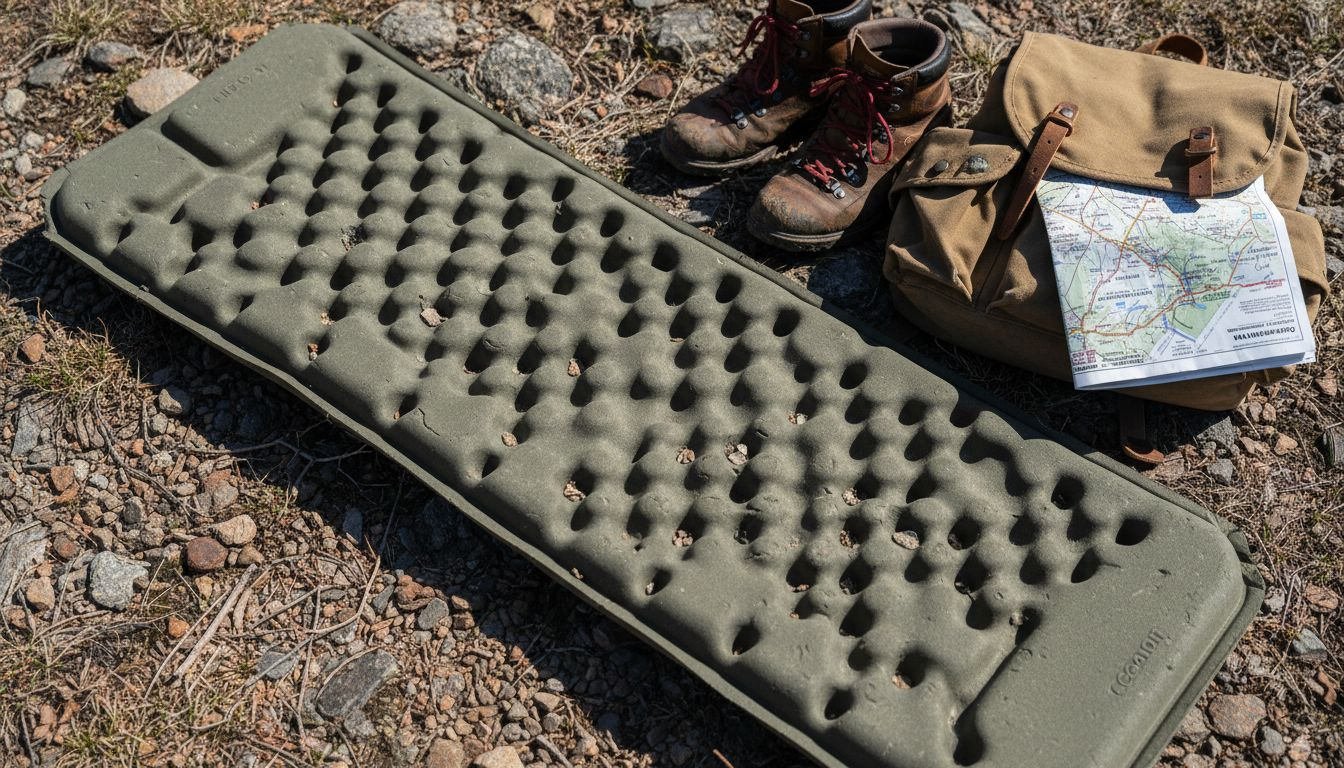
The trade-off is thickness and weight. Closed-cell pads typically need to be thicker to match the comfort of other types, making them slightly bulkier in your pack. But if you value durability and simplicity, this is your best choice.
Self-Inflating Pads
Self-inflating pads combine open-cell foam with air chambers that expand automatically when you open a valve. You get more cushioning than pure foam with less bulk, making them popular with backpackers who want comfort without sacrificing pack space.
The downside is complexity. These pads can develop slow leaks, require maintenance, and cost significantly more. They’re heavier than closed-cell foam options and won’t last as long in rugged conditions.
Manually Inflated Air Pads
Inflatable pads offer maximum packability—they compress into bundles smaller than a water bottle. They’re exceptionally lightweight, ideal if you’re counting every ounce on a multiday trek.
However, they demand the most care. Manual inflation takes time, durability depends on material quality, and a single puncture leaves you sleeping on hard ground. They’re best suited for experienced backpackers, not casual weekend campers.
Understanding Foam Density and Types
Flexible polyurethane foam comes in conventional, high-resilience, and viscoelastic varieties, each offering different benefits for outdoor sleeping.
- Conventional foam: Affordable, adequate cushioning, suitable for budget-conscious campers
- High-resilience foam: Superior support and durability, better for side sleepers and heavier users
- Viscoelastic (memory) foam: Conforms slowly to your body shape, excellent pressure relief for sensitive joints
Closed-cell foam pads deliver the best balance of durability, affordability, and low maintenance for typical camping trips.
Memory foam pads offer enhanced comfort but come at premium prices. They’re thicker, heavier, and less packable than standard foam options. For weekend camping, conventional or high-resilience foam typically provides better value.
Your choice depends on your priorities. Need durability and simplicity? Closed-cell foam wins. Want lightweight packability for long backpacking trips? Self-inflating or air pads work better. Seeking maximum comfort for car camping? Memory foam or high-resilience options shine.
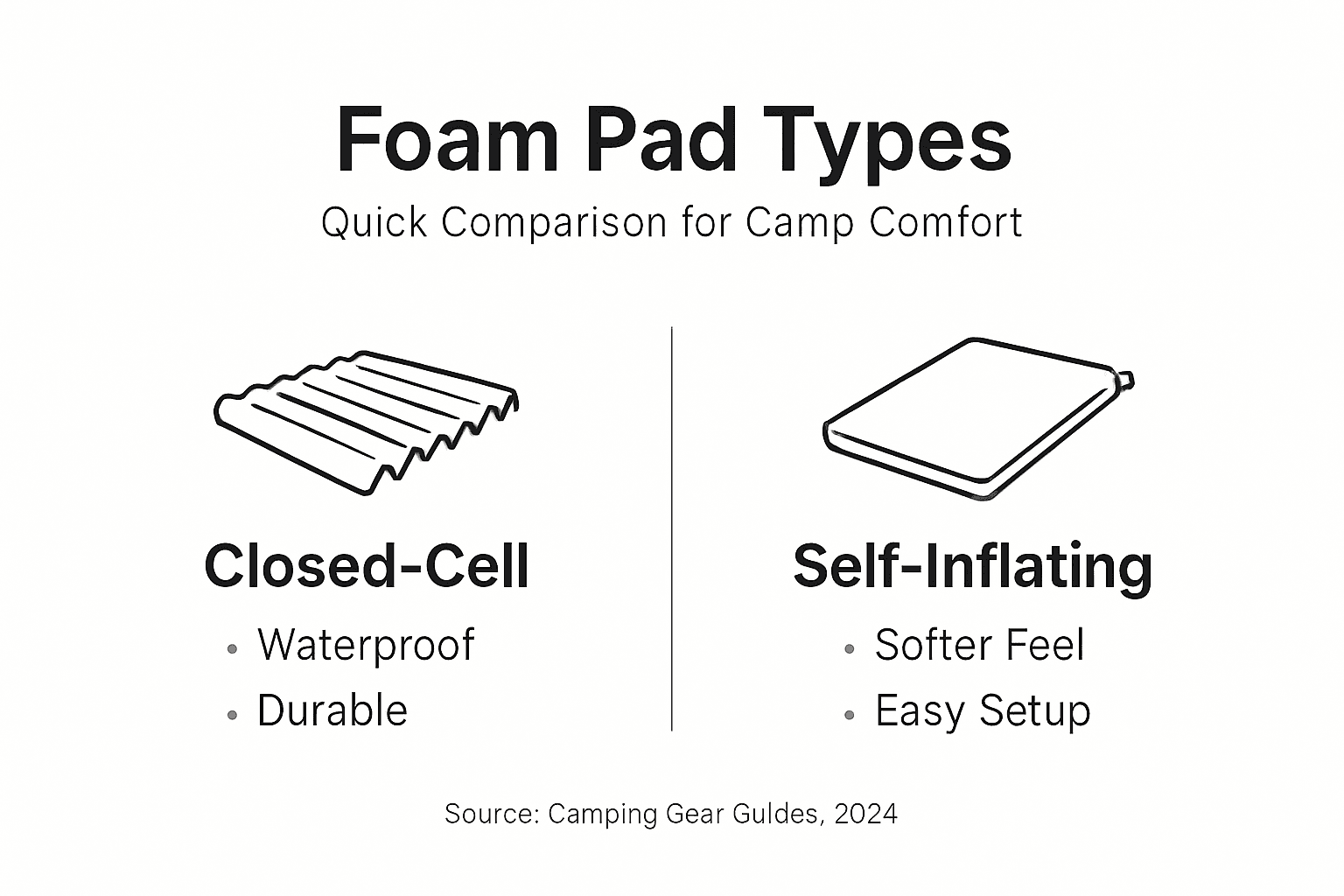
Here’s a quick overview of foam sleeping pad types and their ideal use cases:
| Pad Type | Best For | Main Advantage | Typical Drawback |
|---|---|---|---|
| Closed-cell foam | Weekend campers, rough terrain | Reliable insulation and durability | Bulkier, less cushioning |
| Self-inflating | Backpackers, mild climates | Comfort with moderate pack size | Requires maintenance, heavier |
| Air pad | Ultralight trekking, small packs | Minimal weight and size | Vulnerable to punctures |
| Memory foam | Car camping, sensitive sleepers | Superior pressure relief | Heavy, less packable |
Pro tip: Test a foam pad in your backyard before committing to multiday trips—how it feels in your sleeping bag matters more than specifications on paper.
Essential Features for Outdoor Use
A foam sleeping pad that works in your backyard won’t necessarily survive a week in the mountains. Outdoor conditions demand specific performance characteristics that separate reliable gear from stuff that fails when you need it most. Here’s what separates truly functional camping pads from mediocre ones.
Insulation Quality
Insulation is non-negotiable for outdoor sleeping comfort. Ground temperature pulls heat from your body relentlessly, and your sleeping bag alone can’t stop it. A quality foam pad creates a thermal barrier that prevents this heat loss, keeping you warm through cool nights.
Thicker foam generally provides better insulation. A pad under 1 inch thick leaves you cold; aim for 1.25 inches minimum on most foam pads. In cold season camping, doubling up two pads or using thicker foam is common among experienced campers.
Puncture Resistance and Durability
Closed-cell foam resists punctures from rocks, sticks, and gear straps that would shred inflatable pads instantly. This durability matters on rocky campsites, alpine terrain, and rough forest floors where sharp objects are unavoidable.
Durability also means the pad maintains its properties over years of use. Low-quality foam compresses permanently, losing insulation and cushioning. Better foam resists compression fatigue and maintains support through hundreds of camping trips.
Weight and Packability
Your pad adds weight to your pack, and every ounce counts on multiday treks. Closed-cell foam typically weighs 1 to 2 pounds depending on thickness and size. Compare this to self-inflating pads at 2 to 4 pounds and you understand the trade-off between comfort and weight.
Packability matters too. Foam pads roll or fold into compact bundles that strap to pack exteriors. Air pads compress smaller, but foam pads pack more efficiently than you’d expect given their bulk.
Foam Density and Performance
Higher foam density correlates with better durability and support in outdoor conditions. Dense foam resists compression, lasts longer, and handles temperature extremes better than low-density foam.
Key outdoor pad features include thickness, moisture resistance, and compression resistance. These characteristics directly impact how well your pad performs on wet ground, rocky terrain, and temperature swings.
- Adequate thickness: 1.25 inches minimum for comfort and insulation
- Moisture resistance: Closed-cell foam won’t absorb water from damp ground
- Temperature stability: Quality foam performs consistently in hot and cold conditions
- Surface texture: Slightly textured surfaces prevent sliding around in your sleeping bag
A sleeping pad is where your comfort investment pays the highest return—cheap pads mean sleepless nights and sore hips.
Size and Coverage
Standard pads cover from your head to mid-thigh. Full-length pads extend to your feet, offering more insulation but adding weight. Many campers use shorter pads paired with a sleeping bag stuffed under their legs for cost savings.
Width matters if you’re a restless sleeper or share a tent. Standard widths run 20 to 25 inches—adequate for most people but potentially cramped for larger frames.
To simplify your buying decision, here’s how key foam pad features impact outdoor performance:
| Feature | Outdoor Benefit | Recommended Minimum |
|---|---|---|
| Thickness | Better insulation, comfort | 1.25 inches |
| R-value | Heat retention | 2 for 3-season, 4+ for cold |
| Density | Enhanced support, durability | Medium to high |
| Width | Stable sleeping surface | 20–25 inches |
Pro tip: Lay your pad out the evening before your trip so you can test fit it in your sleeping bag—discovered incompatibilities before heading into the field save frustration at camp.
Foam Versus Inflatable Pads: A Comparison
Choosing between foam and inflatable sleeping pads comes down to your priorities and camping style. Both solve the problem of ground insulation, but they take different approaches. Understanding the trade-offs helps you pick the right pad for your needs.
Foam Pads: Durability and Simplicity
Foam pads are bulletproof. They survive rocky terrain, sharp gear, and years of abuse without complaint. You won’t wake up deflated because a pine needle punctured your pad—closed-cell foam simply doesn’t care about sharp objects.
Cost matters too. Foam pads typically cost 30 to 50 percent less than quality inflatable options. For budget-conscious campers taking weekend trips, foam delivers reliability without breaking your gear budget.
The trade-off is bulk. Foam pads take up more pack space, especially thicker ones needed for adequate insulation. They’re not heavy, but they’re not compact either.
Inflatable Pads: Comfort and Packability
Inflatable pads offer superior comfort through thickness and cushioning that foam struggles to match at reasonable weight. They compress into bundles smaller than a water bottle, making them ideal for ultralight backpacking or multiday treks where pack size matters.
However, they demand respect and maintenance. A single puncture from a sharp rock ends your comfort for the night. Self-sealing technology helps, but leaks still happen. You’ll need a repair kit, pump, and vigilance.
They also cost significantly more and won’t last as many years as foam before air seals degrade.
Direct Comparison
Foam pads are generally cheaper, more rugged, and offer reliable insulation while inflatable pads provide better comfort and pack down smaller but require more care. Here’s how they stack up:
| Factor | Foam | Inflatable |
|---|---|---|
| Durability | Excellent | Good |
| Packability | Moderate | Excellent |
| Comfort | Good | Excellent |
| Cost | Low | High |
| Maintenance | None | Moderate |
| Weight | Light | Very light |
| Repair complexity | N/A | Moderate |
The Hybrid Approach
Some outdoor enthusiasts use both types together, using foam for insulation and inflatable pads for comfort, especially in cold conditions. Layering a thin foam pad under an inflatable provides maximum warmth while maintaining reasonable weight and packability.
This method costs more upfront but extends the lifespan of your inflatable pad by protecting it from ground punctures. It’s the setup serious backpackers often prefer for variable weather conditions.
Foam pads work. Inflatable pads feel better. Pick based on where you camp and what matters most to you.
Making Your Decision
Ask yourself these questions: Are you car camping or backpacking? Do you value weight or comfort? How often will you camp? How much can you spend?
Weekend car campers near established campgrounds: foam wins for reliability and value. Ultralight backpackers on multiday treks: inflatable pads shine. Cold-weather expeditions or variable terrain: consider the hybrid approach.
Pro tip: Borrow or rent different pad types on short trips before committing to purchase—what feels comfortable in theory might disappoint under your sleeping bag.
Buying, Maintenance, and Common Mistakes
Investing in a quality foam sleeping pad is just the start. Smart buying decisions and proper care determine whether your pad lasts three seasons or ten. Here’s what separates campers who get years of reliable use from those who watch their gear deteriorate prematurely.
What to Look for When Buying
R-value matters more than you think. This insulation rating tells you how much the pad resists heat loss. Cold-weather camping needs R-values above 4; three-season camping typically requires 2 to 3. Buying a pad with insufficient R-value for your climate means cold, sleepless nights.
When buying foam sleeping pads, consider thickness, R-value, weight, and size to match your sleeping habits and campsite conditions. A pad that feels perfect in a store might disappoint when you’re shivering at 45 degrees Fahrenheit.
Thickness directly impacts both comfort and insulation. Under 1 inch feels thin and provides minimal cushioning. Aim for 1.25 to 2 inches depending on your climate and body sensitivity. Weight matters if you’re backpacking, but don’t sacrifice insulation for ounces.
Common Buying Mistakes
Most campers learn these lessons through uncomfortable nights rather than reading ahead. Here are the pitfalls:
- Choosing pads too thin for your climate, compromising warmth and comfort
- Ignoring insulation needs, assuming sleeping bags handle all temperature regulation
- Buying based on price alone, ending up with inadequate gear you replace annually
- Selecting wrong dimensions, struggling with pads that don’t fit your tent or body length
- Not considering durability, purchasing low-quality foam that compresses within one season
Maintenance and Storage
Keep your pad dry. Moisture creates mold, deteriorates foam, and destroys insulation properties. After camping in wet conditions, fully dry your pad before storing. Use sunlight or a well-ventilated space—never seal a damp pad into storage.
Regular cleaning with vacuuming removes dirt and debris, while spot cleaning stains with mild detergent solutions maintains appearance. Avoid excessive moisture during cleaning and ensure complete drying before use.
Store pads loosely in a cool, dry location. Rolling them tightly for months can compress the foam permanently. A storage bag protects from dust, but don’t vacuum-seal foam pads.
Repairing Tears and Damage
Small foam tears won’t end your pad’s life. Clean the damaged area, apply adhesive foam repair patches or waterproof tape, and let cure fully before use. Most repairs hold for years if done promptly.
Larger damage or delamination suggests replacement time. Attempting major repairs often fails and wastes effort.
A foam pad maintained properly outlasts most other camping gear—neglect it and three seasons might be all you get.
Long-Term Care Strategy
Inspect your pad annually for compression, cracks, or deterioration. A healthy pad bounces back after compression; a failing one stays flattened. Replace pads that no longer return to original thickness.
If camping seasonally, rotate between pads if you own multiple. This extends individual pad lifespan by distributing wear.
Pro tip: Designate a dedicated storage spot away from basement moisture and attic heat—consistent, moderate temperatures preserve foam integrity for a decade or more.
Transform Your Outdoor Sleep Experience with Hazli Collection
If you struggle with restless nights on thin or unreliable foam sleeping pads, it is time to upgrade to smarter sleep solutions designed for true comfort and durability. Many campers know the frustration of shivering from ground heat loss or waking with sore pressure points. Hazli Collection offers premium options that prioritize thermal insulation, pressure relief, and long-lasting durability — exactly what every outdoor adventurer needs for a good night outdoors.

Explore our Memory Foam Waterproof Camping Mattresses | HazliCollection.com to experience how advanced foam density and waterproofing bring next-level comfort to your camping setup. Whether you prefer rugged reliability or cozy cushioning, our Car Camping Essentials include expertly selected pads and gear to make your trips warmer and more restful. Visit Hazli Collection now and find your perfect foam sleeping pad solution that blends practicality with premium comfort. Start sleeping better on every outdoor adventure today.
Frequently Asked Questions
What are foam sleeping pads and how do they work?
Foam sleeping pads are lightweight camping accessories designed to provide insulation and cushioning between your body and the ground. They prevent body heat loss by trapping air in their closed-cell structure, creating a thermal barrier that keeps you warm during sleep.
What are the main types of foam sleeping pads?
The main types of foam sleeping pads include pure closed-cell foam pads, self-inflating pads, manually inflated air pads, and memory foam pads. Each type offers different levels of comfort, durability, and insulation characteristics to suit different camping styles and budgets.
How do I choose the right thickness for a foam sleeping pad?
A thickness of at least 1.25 inches is recommended for adequate insulation and comfort. Thicker pads provide better cushioning and thermal protection, especially in colder temperatures. The right thickness also depends on your sleeping habits and the types of conditions you will encounter while camping.
What factors should I consider to ensure my foam sleeping pad lasts?
When selecting a foam sleeping pad, consider factors such as insulation quality (measured by R-value), puncture resistance, weight, and packability. Proper care, including keeping your pad dry and storing it loosely, also extends its lifespan.