

By The Hazli Family — Peter & Louise · Reviewed June 2026
Quick answer: R-value is a standardized number (roughly 1–8+) that measures how well a sleeping pad resists heat loss to the ground — higher means warmer. Use R 1–3 for summer, 3–5 for three-season trips, and 5+ for winter camping. R-values are additive, so stacking two pads combines their insulation.
Waking up stiff and cold on a camping trip in Yellowstone or the Colorado Rockies can ruin even the best-planned adventure. For American campers who value comfort and reliable rest on multi-day outings, understanding the science behind your sleeping pad is crucial. R-value is the standardized number that measures a pad’s ability to resist heat loss, making it the most important metric for separating cozy nights from sleepless shivers. This guide breaks down how R-value affects warmth, which pad types truly deliver, and exactly how to match your setup to your adventure’s demands.
Table of Contents
- R-Value In Sleeping Pads Demystified
- Types Of Sleeping Pads And Their R-Values
- How R-Value Affects Warmth And Comfort
- Choosing The Right R-Value For Camping
- Common R-Value Mistakes To Avoid
Key Takeaways
| Point | Details |
|---|---|
| Understanding R-Value | R-value measures a sleeping pad’s ability to resist heat loss; higher values indicate better insulation to stay warm. |
| Choosing the Right Insulation | Select pads based on expected weather conditions; summer camping requires lower R-values (1-3), while winter demands higher values (5-8+). |
| Avoiding Common Mistakes | Don’t confuse R-value with temperature thresholds; R-value indicates insulation quality, not the lowest safe sleeping temperature. |
| Maximizing Comfort | Combine pads to enhance insulation and comfort, accounting for personal factors like body weight and cold sensitivity to adjust R-values accordingly. |
R-Value in Sleeping Pads Demystified
R-value is a standardized measurement that tells you how well your sleeping pad resists heat loss. Think of it as a thermal defense system between your body and the cold ground beneath you. The higher the R-value, the more effectively the pad keeps warmth from escaping into the earth, allowing you to stay comfortable even when temperatures drop significantly.
R-values typically range from about 1 to 8 or higher, depending on the pad’s insulation quality and design. A rating of 1 works fine for warm summer nights when ground temperature isn’t much of a concern. But when you’re camping in mountain regions or during shoulder seasons, you’ll want something closer to 3 to 5. For winter trips or high-altitude adventures, you’re looking at 5 and above.
Here’s what makes R-value matter for your specific camping style. A pad with insufficient insulation leaves you sleeping directly over cold ground that pulls heat from your body all night. You wake up shivering despite wearing quality gear. Conversely, over-insulating adds unnecessary weight and bulk to your pack, making multi-day trips harder than they need to be. Getting this right means the difference between restorative sleep and a miserable night that ruins your entire trip.
The genius of R-value is that it removes the guesswork. Instead of wondering whether a random foam pad will keep you warm enough, you can match the number to actual conditions. Spring backpacking in Tennessee? An R-value of 2 to 3 covers you. Winter camping in Colorado? You need 5 to 6. This one metric gives you clarity without needing to be a gear engineer.
When comparing pads, R-value becomes your baseline decision tool. Two different brands might feel similar in your hand, but their R-values tell the real story about performance in cold conditions. Understanding camping sleep system workflow helps you see how R-value fits within your broader comfort strategy, working alongside your sleeping bag and clothing layers.
Pro tip: Stack your R-values by combining a foam pad under an inflatable one—the ground layer captures ground heat while the top pad adds compressibility, giving you both insulation and comfort without excessive weight.
Types of Sleeping Pads and Their R-Values
Sleeping pads break down into three main categories, and each type handles insulation differently. Understanding these categories helps you match the right pad to your camping conditions and comfort preferences.
Closed-Cell Foam Pads
Closed-cell foam pads are the simplest option. They’re just solid foam you roll out and sleep on. These pads tend to have lower R-values, usually ranging from 1 to 2.5. But don’t write them off for summer trips or warm-weather camping. Foam pads are durable, puncture-resistant, and lightweight. They won’t fail you if a stick pokes them. The trade-off is that they don’t compress as much as other options, which means less cushioning for comfort.
Self-Inflating Pads
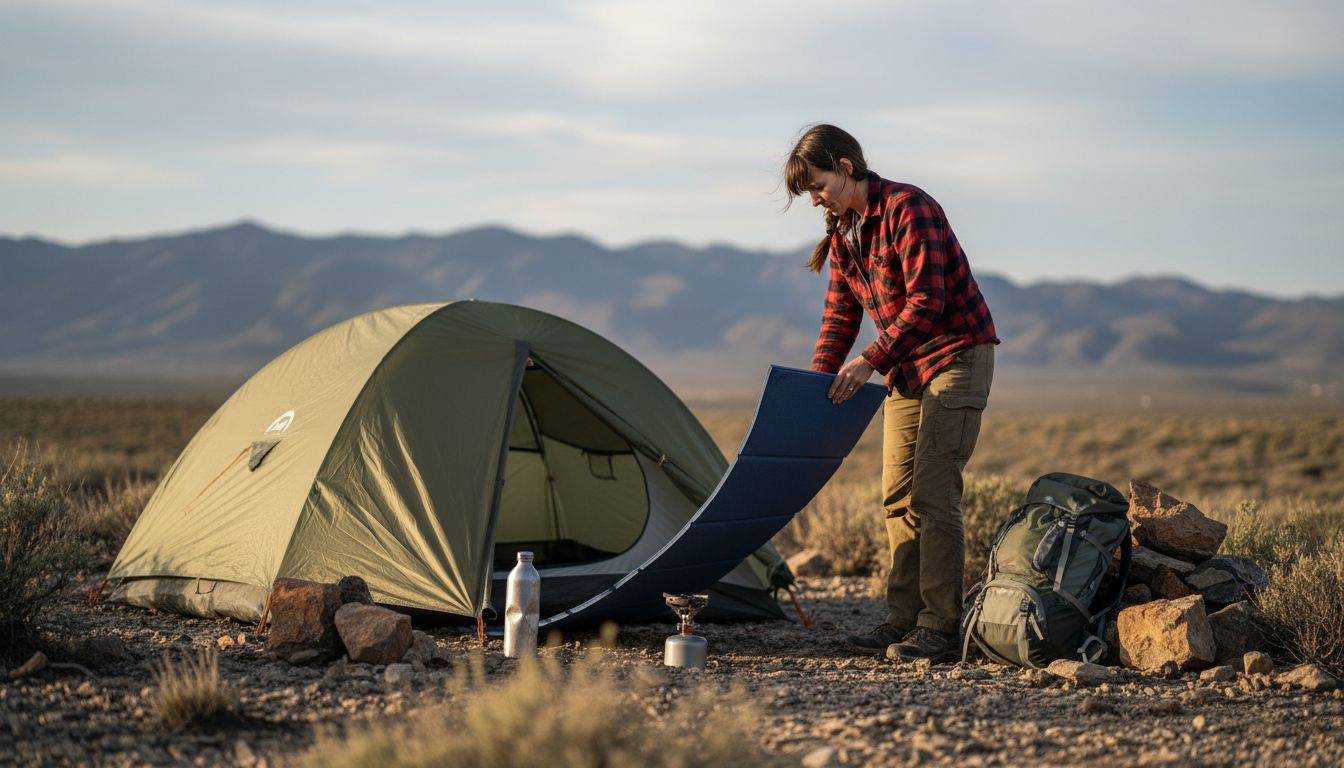
Self-inflating pads combine the best of both worlds by mixing foam with air chambers. You unroll them and they partially inflate on their own thanks to open-cell foam inside. The three broad categories of sleeping pads differ significantly in insulation properties, with self-inflators typically offering medium to high R-values between 3 and 5. These pads give you cushioning comparable to air mattresses while maintaining decent warmth retention. You can also manually inflate them further for extra loft and comfort.
Air Pads and Inflatable Mattresses
Air pads use compressed air for cushioning and vary widely in R-value depending on their construction. Some have reflective layers or insulating materials inside the air chamber to boost warmth retention. Quality air pads can achieve R-values between 2 and 5 or higher. They’re typically the most comfortable for side sleepers since you can adjust firmness. The downside is they require inflation and are more vulnerable to punctures than foam alternatives.
Here’s a quick comparison of sleeping pad types and their typical strengths:
| Pad Type | Typical R-Value Range | Durability | Packability |
|---|---|---|---|
| Closed-Cell Foam | 1–2.5 | Very high | Bulky, not compressible |
| Self-Inflating | 3–5 | Moderate | Compresses moderately |
| Air Pad/Inflatable | 2–5+ | Moderate to low | Highly packable |
Comparing Performance Standards
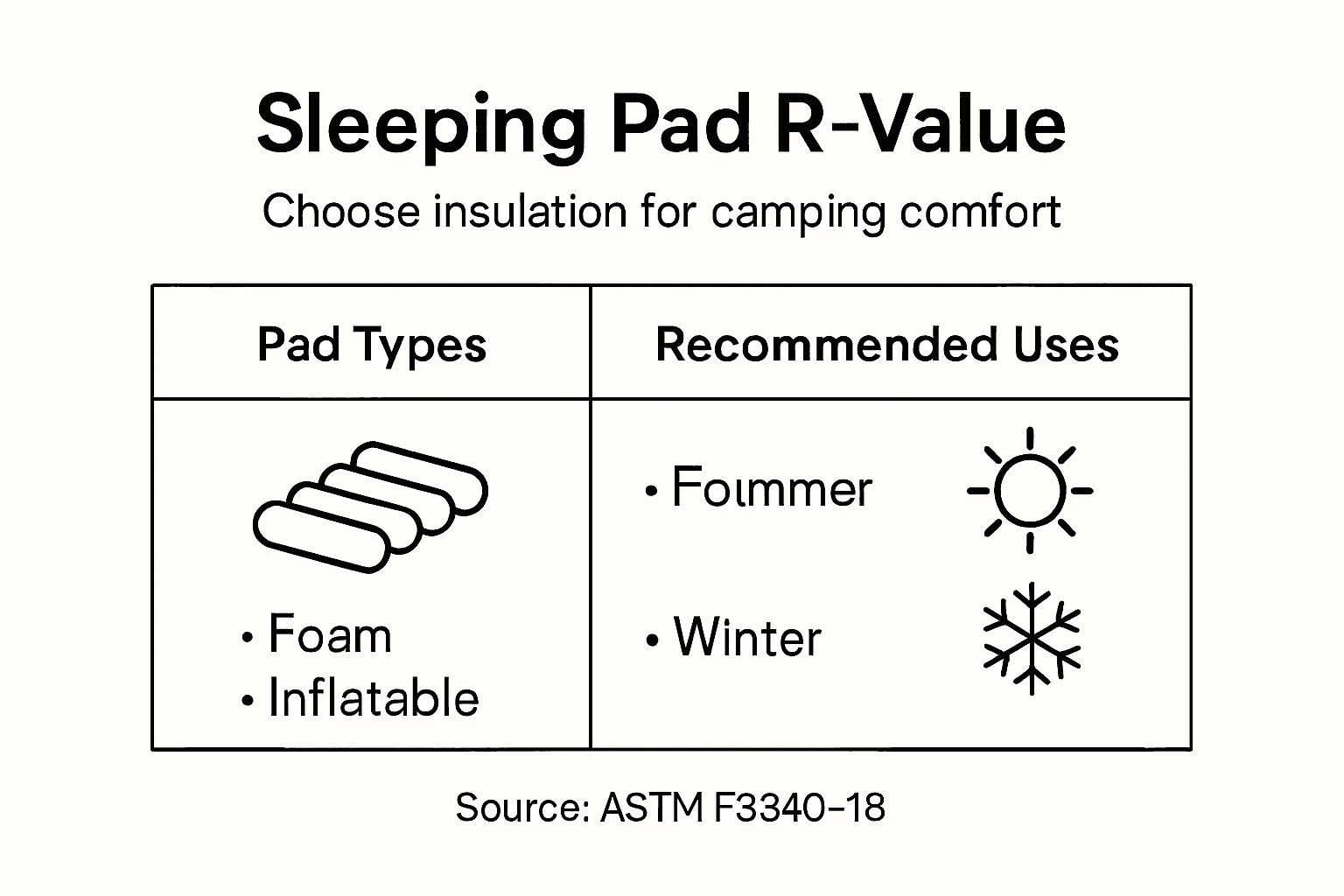
When shopping, you’ll notice that ASTM F3340-18 provides consistent R-value ratings across different brands and types. This standardized testing method means you can trust R-value numbers regardless of manufacturer. If one brand claims an R-value of 4, and another does too, they’ve been tested using the same methodology. This removes confusion and helps you make apples-to-apples comparisons. Why choose backpacking mattresses matters when matching R-value to your intended season and temperature range.
Pro tip: For three-season camping, pair a closed-cell foam pad underneath with a self-inflating pad on top to maximize insulation without excessive weight, hitting an effective combined R-value that handles most conditions.
How R-Value Affects Warmth and Comfort
Your sleeping pad’s R-value directly determines how warm you’ll be at night. Ground cold is relentless and pulls heat from your body constantly. A pad with insufficient R-value lets that heat escape, leaving you shivering no matter how good your sleeping bag is. The connection between R-value and actual comfort is straightforward: higher R-value means your body heat stays trapped where it belongs.
Think of R-value as your defense against ground temperature. The R-value indicates the level of thermal resistance a sleeping pad provides, which is essential for warmth on cold ground. This isn’t marketing language or vague promises. It’s a measurable property that reveals exactly how well a pad insulates. A pad rated R-4 will keep you warmer than an R-2 pad in identical conditions, period.
Don’t fall for the thickness trap. A thick foam pad might feel substantial in your hands, but higher R-values insulate better, reducing heat loss and allowing for comfortable sleep in cold weather regardless of bulk. Some thick pads have surprisingly low R-values because their material doesn’t resist heat loss effectively. Conversely, thin high-tech pads can have excellent R-values through superior insulation design. Numbers matter more than what you see.
Here’s where comfort becomes complicated. More insulation means more warmth, but it also means less cushioning in many cases. A minimal foam pad with R-1 compresses almost nothing under your body weight, creating pressure points. An air pad with R-4 cushions better but requires inflation effort. This is why matching your R-value to actual conditions prevents overshooting and carrying unnecessary weight.
Your sleeping bag adds its own R-value too. The system works together, so an R-3 pad with an R-10 bag handles cold better than an R-5 pad with an R-5 bag. You need balance. Get the R-value right for ground temperature, and your comfort layer works as designed.
Pro tip: Check weather forecasts for minimum nighttime temperature, then add 10 degrees to your target R-value calculation as a safety margin—this small adjustment prevents the shock of unexpectedly cold nights.
Choosing the Right R-Value for Camping
Picking the correct R-value starts with knowing when and where you’ll camp. Temperature range dictates everything. Summer camping in July doesn’t demand the same insulation as October backpacking in the mountains. Your location and season determine the baseline, then you adjust for personal factors.
Summer Camping
Warm-weather trips need minimal insulation. An R-value between 1 and 3 handles summer nights when ground temperatures stay mild. A basic foam pad or lightweight air pad keeps you comfortable without extra weight. This is where you save ounces on your pack, which matters when you’re doing multiple days with significant mileage.
Three-Season Camping
Spring through fall camping typically requires more protection. R-values 3-5 cover three-season camping effectively, handling temperature swings and unpredictable weather patterns. A self-inflating pad or quality air pad in this range keeps you warm when nights dip into the 40s or 50s. Most American campers spending time outdoors beyond summer fall into this category.
Winter and Cold Conditions
Winter camping needs 5-6 or higher R-values depending on extreme cold. If you’re pushing into subzero territory or mountaineering above 10,000 feet, you want 7 to 8 or higher. These conditions are unforgiving. A pad rated too low means dangerous heat loss and a miserable night that threatens your safety.
Personal Factors Matter
Women and naturally cold sleepers should bump up one full point on the R-value scale. Cold sensitivity varies. If you’ve noticed yourself shivering in conditions others find comfortable, account for that. Your actual safety depends on honest self-assessment, not pride.
Stacking Pads for Extra Warmth
R-values are additive, so combining two pads increases total insulation. Layering a closed-cell foam pad (R-2) under a self-inflating pad (R-4) gives you roughly R-6 total. This approach lets you build flexibility into your outdoor bedding selection without overspending on winter-only gear.
Pro tip: Before buying, check actual minimum nighttime temperatures from weather forecasts, pick your target R-value based on season, then add a half-point safety margin to handle unexpected cold snaps.
Below is a seasonal guide relating common camping scenarios to recommended R-values:
| Season or Scenario | Min R-Value Needed | Notes on Comfort and Safety |
|---|---|---|
| Summer (mild nights) | 1–3 | Focus on low weight for multi-day trips |
| Spring/Fall (3-season) | 3–5 | Handles unpredictable cooler nights |
| Winter or subzero trips | 5–8+ | Critical for safety in extreme cold |
| Cold sleepers/women | +1 above standard | Compensates for higher cold sensitivity |
Common R-Value Mistakes to Avoid
Getting R-value wrong costs you comfort and money. The most common pitfall is treating R-value as a direct temperature rating. An R-5 pad does not mean you can sleep safely at 5 degrees Fahrenheit. R-value measures insulation resistance, not a temperature threshold. This confusion leads campers to either underestimate their needs or overspend on unnecessary insulation.
Another widespread mistake is ignoring how your body weight compresses foam pads. Common mistakes with sleeping pad R-value include misunderstanding that R-value corresponds directly to temperature ratings and overlooking pad compression effects that reduce actual insulation. When you lie on a foam pad, your weight squeezes the material thinner, reducing its insulating ability. A pad rated R-4 might actually perform closer to R-3 under real body pressure. This gap between advertised and actual performance catches many campers off guard.
Buying Excessive Insulation
Overbuying R-value for mild conditions wastes money and adds pack weight. A summer camper spending $300 on an R-7 mountaineering pad is throwing away resources. Match the R-value to your actual use, not to worst-case scenarios. Flexibility comes from owning multiple pads for different seasons, not one oversized pad.
Forgetting Pad Layering
Many campers don’t realize the additive nature of R-values when combining pads creates flexibility. You can stack pads strategically instead of replacing your entire sleep system for shoulder season camping. This approach stretches your gear investment further.
Overlooking Pad Type and Material
R-value tells only part of the story. A closed-cell foam pad and self-inflating pad with identical R-values feel completely different in comfort. Your body type, sleeping position, and personal warmth preference matter alongside the numbers. Don’t let R-value alone drive your decision. Test pads when possible or read detailed reviews from similar body types and sleeping styles.
Not Accounting for Age and Health
As you age, your body generates less heat naturally. Metabolism also affects warmth perception. Account for this when selecting R-values rather than defaulting to base recommendations.
Pro tip: Track actual nighttime temperatures from past trips using your phone’s weather app, then reference those data points when choosing future pads instead of guessing based on season alone.
Optimize Your Outdoor Comfort with the Perfect Sleeping Pad
Understanding the importance of R-value helps you choose the right sleeping pad that keeps you warm and comfortable during your outdoor adventures. If you have struggled with chilly nights or carrying bulky gear, you are not alone. The challenge is to find a sleeping pad that offers the ideal insulation without extra weight or lost comfort. At Hazli Collection, we specialize in high-quality memory foam mattresses and camping gear designed to meet your exact needs—from casual summer camping to extreme winter conditions—providing durable and practical solutions.

Experience the difference that smart gear choices make by shopping our selection at Hazli Collection. Combine expert knowledge of R-value with our premium outdoor bedding options to stay warm and rested no matter where your adventures take you. Start your journey to comfortable nights now and explore how our memory foam camping mattress can enhance your camping experience by visiting our online store today.
Frequently Asked Questions
What is R-value in a sleeping pad?
R-value is a standardized measurement that indicates how well a sleeping pad resists heat loss. A higher R-value means better insulation, keeping body heat from escaping into the cold ground.
Why does the R-value of a sleeping pad matter?
The R-value is crucial because it determines how warm you will sleep at night. A pad with insufficient insulation can lead to heat loss, resulting in a cold and uncomfortable night’s sleep.
How do I choose the right R-value for my sleeping pad?
Choose an R-value based on the temperature and conditions you expect during your camping trip. For summer nights, an R-value of 1 to 3 is usually sufficient, while winter camping may require an R-value of 5 to 8 or more.
Can I stack sleeping pads to increase R-value?
Yes, you can combine sleeping pads to increase the total R-value. Layering a closed-cell foam pad under a self-inflating pad, for example, allows you to achieve better insulation without excessive weight, maximizing your comfort and warmth.
Recommended
- 7 Essential Items for Your Backpacking Sleep Gear List – Hazli Collection
- 7 Outdoor Sleeping Arrangement Ideas for Ultimate Comfort – Hazli Collection
- Memory Foam vs Air Mattress Camping – Expert Comparison 2025 – Hazli Collection
- Outdoor Bedding Selection – Comfort That Lasts Outdoors – Hazli Collection