

By The Hazli Family — Peter & Louise · Reviewed June 2026
Quick answer: Clean and completely dry every item, make small repairs, then sort gear by type and frequency of use. Store it in labeled plastic bins, breathable fabric bags, and shelving in a cool, dry space, keeping sleeping bags uncompressed. Inspect everything twice a year to catch moisture, pests, and wear early.
After an amazing camping trip, the last thing you want is to toss your gear into the garage in a messy pile. Poor storage habits lead to mildew, broken equipment, and wasted space. Proper camping equipment storage maximizes your available space, extends gear lifespan, and ensures everything is ready for your next adventure. This guide walks you through practical, actionable strategies to organize your camping equipment efficiently while protecting your investment for years to come.
Want a ready-made list? Build a personalized packing list in under a minute with our free camping checklist generator.
Table of Contents
- Key takeaways
- Preparing your camping equipment for storage
- Choosing the right storage solutions for your camping equipment
- Organizing and storing camping equipment effectively at home
- Maintaining and inspecting stored camping gear for longevity
- Discover smart camping storage solutions at Hazli Collection
- Frequently asked questions
Key Takeaways
| Point | Details |
|---|---|
| Clean and dry gear | Thoroughly clean each item, dry it completely, and perform minor repairs to prevent future damage. |
| Sort by type and use | Group similar items together and separate frequently used gear from seasonal pieces to simplify retrieval. |
| Create a gear inventory | Create a simple inventory list on your phone noting item conditions and when replacements may be needed. |
| Use protective storage containers | Use plastic bins with secure lids to protect against moisture and pests, choose clear or opaque options as appropriate, and stack containers to maximize space. |
Preparing your camping equipment for storage
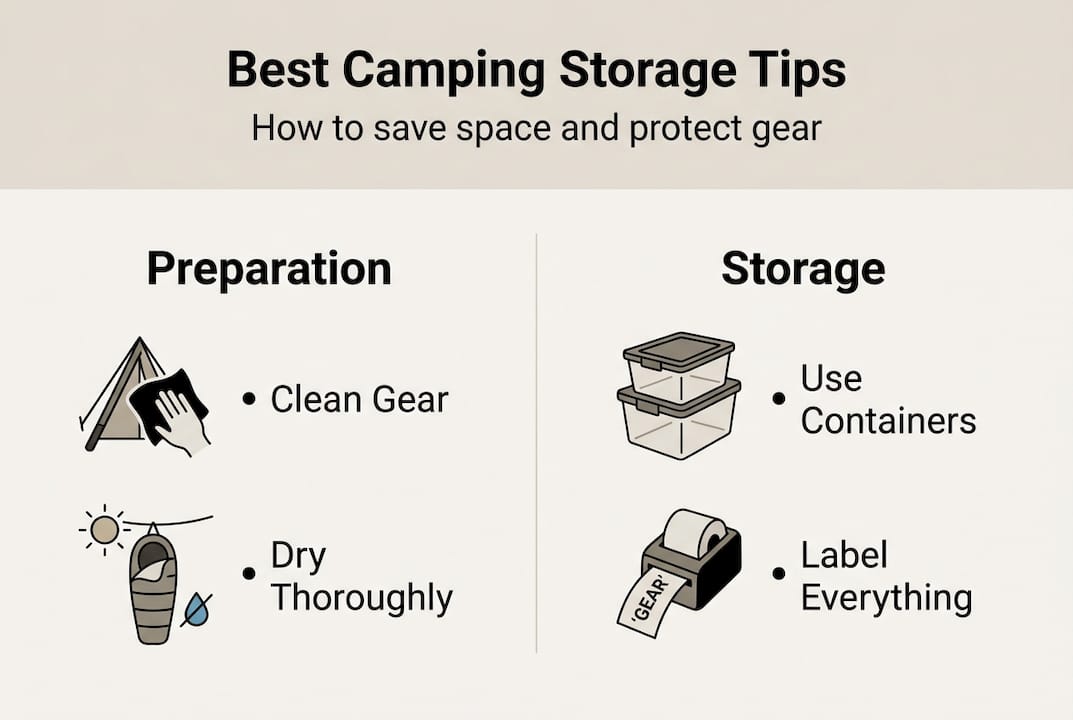
Before you stash your camping gear away, thorough preparation is essential. Skipping this step invites mold, rust, and unpleasant surprises on your next trip. Start by cleaning every piece of equipment thoroughly. Tents need to be wiped down to remove dirt, sap, and debris. Sleeping bags should be aired out and spot cleaned if needed. Cooking gear requires scrubbing to eliminate food residue that attracts pests.
Drying is equally critical. Cleaning and drying gear before storage prevents mold and extends lifespan significantly. Set up your tent in the backyard or garage and let it air dry completely. Hang sleeping bags over a railing or clothesline. Even small amounts of moisture trapped in fabric or crevices create perfect conditions for mildew growth.
Inspect each item carefully during the cleaning process. Look for tears in tent fabric, broken tent poles, malfunctioning zippers, or worn straps on backpacks. Small repairs now prevent major headaches later. Patch kit fixes take minutes but save you from discovering a ripped tent floor at the campsite. Replace missing stakes, repair broken buckles, and tighten loose screws on camping furniture.
Sort your gear strategically by type and usage frequency. Group similar items together: all cooking equipment in one area, sleeping gear in another, and tools separately. Within each category, separate frequently used items from seasonal or specialty gear. This sorting system makes retrieval effortless and helps you assess what you actually own. You might discover duplicate items or realize it’s time to upgrade worn pieces.
Pro Tip: Create a simple inventory list on your phone as you sort gear. Note the condition of each major item and when it might need replacement. This running record helps you plan purchases and prevents buying duplicates of items buried in storage.
Consider these preparation essentials:
- Remove all batteries from flashlights, lanterns, and electronic devices to prevent corrosion
- Empty and clean all water containers and hydration bladders thoroughly
- Shake out and vacuum sleeping pads and air mattresses before folding
- Wash and dry all clothing and towels completely before packing
- Remove perishable items, toiletries, and anything that could leak or expire
For comprehensive guidance on maintaining camping gear between trips, detailed cleaning protocols ensure your equipment stays in peak condition season after season.
Choosing the right storage solutions for your camping equipment
Selecting appropriate storage containers and systems dramatically impacts both space efficiency and gear protection. Different camping equipment requires different storage approaches based on size, fragility, and material composition. The right choices keep your gear organized, accessible, and protected from environmental damage.
Plastic bins with secure lids offer excellent protection against moisture, dust, and pests. Clear containers let you see contents at a glance, while opaque bins protect light sensitive items. Choose stackable designs to maximize vertical space in garages or basements. Bins work exceptionally well for cooking gear, tools, and smaller accessories that might otherwise scatter.
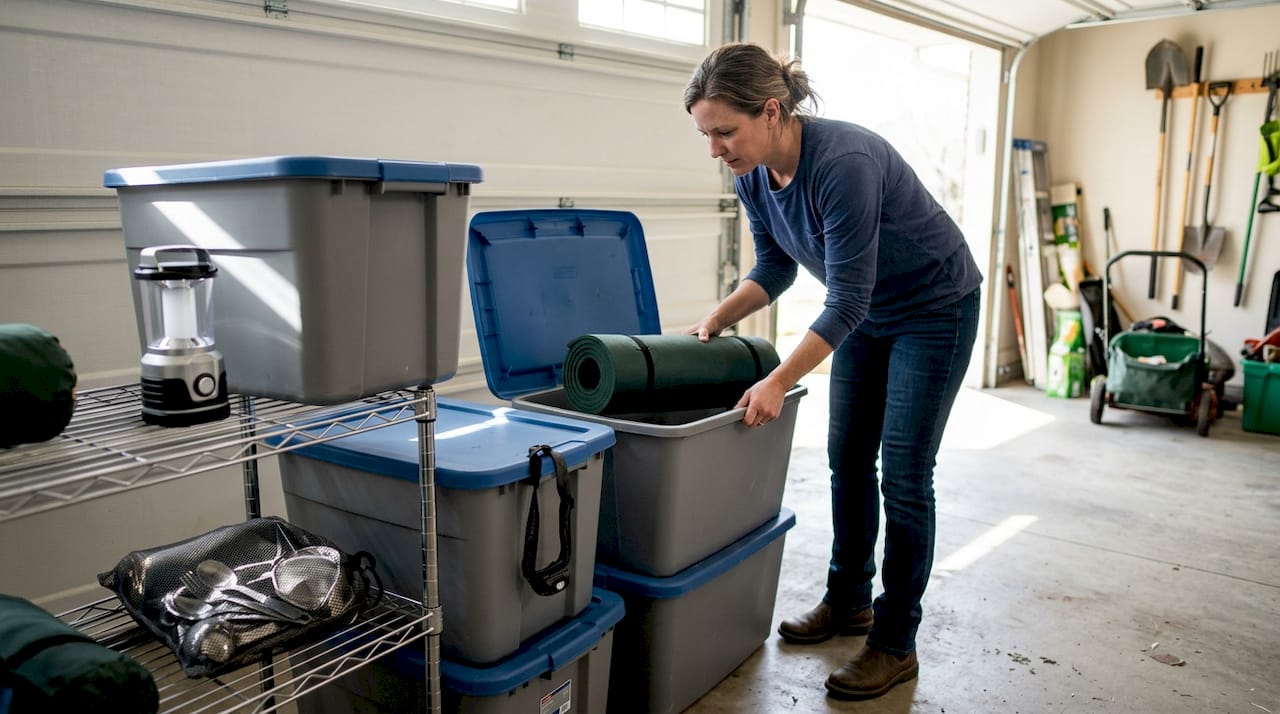
Soft storage bags provide flexibility for bulky items like sleeping bags and tents. Breathable fabric bags prevent moisture buildup better than sealed plastic for fabric gear. Compression sacks save significant space for sleeping bags and clothing but shouldn’t be used for long term storage, as constant compression damages insulation. Instead, store sleeping bags loosely in large cotton or mesh bags.
Shelving systems transform cluttered spaces into organized storage zones. Metal or heavy duty plastic shelving units support substantial weight and resist moisture better than wood. Adjustable shelves accommodate various container sizes and allow you to reconfigure as your gear collection changes. Wall mounted shelving keeps items off the floor, protecting against flooding and making floor space available for larger equipment.
| Storage Solution | Best For | Protection Level | Space Efficiency | Cost |
|---|---|---|---|---|
| Plastic bins with lids | Cooking gear, tools, accessories | High | Medium | Low to Medium |
| Breathable fabric bags | Sleeping bags, tents, clothing | Medium | High | Low |
| Metal shelving units | Heavy items, bins, organized storage | Medium | Very High | Medium |
| Wall hooks and hangers | Backpacks, chairs, lightweight items | Low | High | Very Low |
| Overhead racks | Seasonal gear, bulky items | Medium | Very High | Medium to High |
Using proper storage containers protects gear and improves organization substantially. Label every container clearly with contents and last use date. Use a label maker or permanent marker on tape for durability. Color coding by gear category creates instant visual organization: blue labels for sleeping gear, red for cooking equipment, green for tools and maintenance supplies.
Store fragile items where they won’t get crushed by heavier gear. Lanterns, camp stoves with glass components, and electronics need protective padding and secure placement. Keep frequently used items at eye level or in easily accessible locations. Seasonal gear can go on higher shelves or in less convenient spots.
Pro Tip: Invest in a few extra large bins specifically for pre packed camping kits. Load one bin with all essentials for a weekend trip so you can grab and go without repacking from scratch each time.
Consider these storage solution factors:
- Measure your available storage space before buying containers or shelving
- Choose containers that fit through doorways and into your vehicle for transport
- Prioritize moisture resistant materials in humid climates or damp storage areas
- Select clear or labeled containers to eliminate guessing games when searching for specific items
- Opt for stackable, modular systems that grow with your gear collection
For detailed strategies on organized camping gear storage, proven organization systems help outdoor enthusiasts maintain order and accessibility.
Organizing and storing camping equipment effectively at home
Once you’ve selected storage solutions, strategic placement and organization maximize both space and gear longevity. The location you choose significantly impacts how well your equipment survives storage periods. Temperature extremes, humidity, and pest access all affect gear condition over time.
Select a cool, dry storage location as your primary gear zone. Garages work well if temperature controlled, but avoid areas that experience extreme heat or freezing. Basements offer stable temperatures but watch for moisture issues. Spare closets provide excellent climate control but limited space. Avoid attics where summer heat can damage synthetic materials and adhesives in camping gear.
Maximize vertical space through strategic stacking and shelving. Place heavier bins on lower shelves for stability and easier lifting. Stack lighter containers on top, ensuring you can safely reach and remove items without toppling the stack. Leave a small gap between stacks and walls to promote air circulation and prevent moisture buildup.
Follow this organization sequence for optimal results:
- Install wall mounted shelving units or freestanding shelf systems first to establish your storage framework
- Place large, bulky items like coolers and camping furniture on the floor or bottom shelves in designated zones
- Store medium sized bins containing cooking gear, tools, and accessories on middle shelves for easy access
- Hang backpacks, sleeping bag storage sacks, and camp chairs on wall hooks to free up shelf and floor space
- Position frequently used items at eye level or in the most accessible locations near the storage area entrance
- Store seasonal or specialty gear on higher shelves or in less convenient spots you access infrequently
- Create a small staging area near your storage zone where you can lay out and pack gear before trips
Storing gear in dry environments prevents damage and extends gear life substantially. Use moisture absorbing products like silica gel packets or desiccant containers in enclosed bins, especially in humid climates. Check these regularly and replace when saturated.
Keep smaller essentials organized in clear, labeled bags or small bins within larger containers. Group items by function: first aid supplies together, fire starting materials in one bag, repair kits separate. This nested organization prevents small items from getting lost in large bins while maintaining easy access.
Rotate stored gear occasionally to check condition and prevent items from being forgotten. Every few months, open containers and inspect contents for moisture, pest activity, or developing problems. This practice also reminds you what gear you own and helps you plan for upcoming trips.
Pro Tip: Take photos of your organized storage system and keep them on your phone. When you’re packing for a trip, you’ll know exactly where each item lives and can quickly assess what you need to retrieve.
For comprehensive protection strategies, understanding waterproof camping gear storage principles ensures your equipment stays dry and functional between adventures.
Maintaining and inspecting stored camping gear for longevity
Proper storage is only half the equation for gear longevity. Regular maintenance and systematic inspections catch problems early, prevent deterioration, and ensure your equipment performs when you need it. Neglected gear develops issues that could have been easily prevented with periodic attention.
Schedule seasonal inspections at minimum twice yearly, ideally before and after your primary camping season. Spring inspections prepare gear for active use, while fall checks address any damage from summer adventures before long term storage. Mark these inspection dates on your calendar to establish a consistent routine.
During each inspection, examine fabric items carefully for tears, worn spots, or weakened seams. Check tent floors and rainflies for holes or delaminating waterproof coatings. Inspect sleeping bags for damaged baffles or separated stitching. Small fabric tears caught early can be patched easily, while ignored damage spreads and may require professional repair or replacement.
Test all mechanical components systematically. Zip and unzip every zipper completely to ensure smooth operation. Regular inspections help identify gear wear and prevent sudden damage during camping trips. Lubricate stiff zippers with zipper lubricant or beeswax. Check tent pole shock cords for elasticity and replace if stretched out. Verify that buckles, clips, and adjustment straps function properly.
Lubricate moving parts on camping furniture, multi tools, and equipment with mechanical components. Use appropriate lubricants for each application: silicone spray for tent zippers and pole joints, food grade lubricant for stove parts, and general purpose oil for tools. Wipe away excess to prevent dirt accumulation.
| Inspection Area | What to Check | Frequency | Action Items |
|---|---|---|---|
| Tent fabric and seams | Tears, holes, separated stitching | Before and after season | Patch holes, seal seams, apply waterproofing |
| Zippers and closures | Smooth operation, broken teeth | Every inspection | Lubricate, replace damaged zippers |
| Tent poles and stakes | Cracks, bent sections, shock cord tension | Before and after season | Replace damaged poles, re cord poles |
| Sleeping bags | Insulation clumping, torn baffles, zipper function | Twice yearly | Wash carefully, repair tears, replace zippers |
| Cooking equipment | Rust, damaged seals, clogged fuel lines | Before season | Clean thoroughly, replace worn parts |
| Backpacks and bags | Worn straps, broken buckles, torn fabric | Every inspection | Repair or replace damaged components |
Replace worn or outdated gear promptly when repairs aren’t practical or cost effective. Safety equipment like headlamps, first aid supplies, and water filters have limited lifespans. Check expiration dates on medications, batteries, and water treatment products. Replace these items before they fail in the field.
Maintain detailed records of major repairs, replacements, and gear purchases. Note when you bought each significant item and track its usage. This information helps you anticipate when gear might need replacement and budget accordingly. Many outdoor enthusiasts keep a simple spreadsheet or note on their phone with this tracking information.
Consider these maintenance best practices:
- Clean gear again before storage if you notice any dirt or debris during inspections
- Apply fresh waterproofing treatments to tents and rain gear as needed based on water bead tests
- Store batteries separately from devices and replace them annually even if unused
- Keep a small repair kit in your storage area with patches, seam sealer, and basic tools
- Document any recurring issues with specific gear items to inform future purchase decisions
For detailed maintenance protocols and preservation techniques, the complete camping gear maintenance guide provides step by step instructions for keeping every piece of equipment in optimal condition.
Discover smart camping storage solutions at Hazli Collection
Now that you understand effective camping equipment storage strategies, having the right gear makes implementation easier. Quality storage solutions and well designed camping equipment naturally organize better and last longer with proper care.
Hazli Collection specializes in durable outdoor and camping gear built for real world use by camping families and outdoor enthusiasts. From comfortable memory foam camping mattresses that store compactly to practical camping accessories designed with organization in mind, you’ll find products that enhance your outdoor experience. The site offers expert resources and maintenance tips to help you protect your investment and enjoy more successful camping adventures.

Explore the complete selection of camping gear and storage solutions at Hazli Collection to upgrade your outdoor equipment and streamline your camping preparation process.
Frequently asked questions
How do I store camping equipment to prevent mold and mildew?
Store all camping gear completely dry in breathable containers or bags that allow air circulation. Never pack away damp tents, sleeping bags, or clothing, as trapped moisture creates ideal conditions for mold growth. Use moisture absorbing products in storage areas and inspect gear periodically. For ongoing protection strategies, review proven techniques for maintaining camping gear between outdoor adventures.
What’s the best way to organize tent components during storage?
Keep tent fabric, poles, stakes, and rainfly together in a large, breathable storage bag clearly labeled with the tent model. Store poles in their original bag or a separate labeled container to prevent puncturing tent fabric. Keep the tent loosely folded rather than tightly compressed to preserve waterproof coatings and fabric integrity. Place the complete tent kit in a cool, dry location away from direct sunlight. Discover additional organization methods through comprehensive organized camping gear storage resources.
How often should I inspect stored camping gear?
Inspect your stored camping equipment at least twice yearly, ideally before your primary camping season begins and after it ends. Additional inspections are wise if you store gear in areas prone to temperature extremes, humidity, or pest activity. Check for moisture buildup, fabric damage, mechanical issues, and expired supplies during each inspection. Early detection prevents minor problems from becoming expensive replacements. Access detailed inspection protocols in the complete camping gear maintenance guide for systematic care routines.
Can I store camping gear in plastic bags long term?
Avoid storing fabric camping gear like tents and sleeping bags in sealed plastic bags for extended periods. Plastic traps moisture and prevents air circulation, creating conditions for mildew and unpleasant odors. Use breathable cotton or mesh storage bags instead for fabric items. Plastic bins with secure lids work well for hard goods, cooking equipment, and tools, but ensure items are completely dry before sealing. Add ventilation holes to bins if storing in humid environments.
Recommended
- How to Store Camping Gear for Organized Outdoor Adventures – Hazli Collection
- How to Maintain Camping Gear for Lasting Comfort and Durability – Hazli Collection
- Camping Gear Durability Tips: Keep Your Equipment Lasting Longer – Hazli Collection
- How to Store Camping Mattresses for Lasting Comfort – Hazli Collection