

By The Hazli Family — Peter & Louise · Reviewed June 2026
Quick answer: Maintain camping gear in five steps: stock a cleaning kit with mild detergent and soft brushes, inspect tents, zippers, and seams for wear before each trip, wash and air-dry every item completely, patch small tears or replace failing components, and store everything bone-dry in airtight containers in a cool spot.
Camping adventures bring the best memories, but muddy tents and damp sleeping bags can quickly turn excitement into frustration. Every American family and outdoor enthusiast knows how important it is to keep gear clean, dry, and ready for the next trip. By focusing on proper cleaning supplies, thorough inspections, and smart storage techniques, you protect your investment and make every journey more comfortable and safe. In this guide, you’ll find practical steps and gear care essentials to keep your equipment performing at its best all season long.
Table of Contents
- Step 1: Gather Essential Cleaning Supplies
- Step 2: Inspect Gear for Damage and Wear
- Step 3: Clean and Dry Each Item Thoroughly
- Step 4: Repair or Replace Worn Components
- Step 5: Store Gear Properly for Future Use
Quick Summary
| Important Insight | Actionable Takeaway |
|---|---|
| 1. Gather essential cleaning supplies | Ensure your cleaning kit contains mild detergents, scrub brushes, microfiber cloths, and protective gloves to effectively maintain your gear. |
| 2. Conduct thorough gear inspections | Regularly inspect your camping equipment for damage, focusing on zippers, seams, and fabric integrity to prevent safety hazards. |
| 3. Clean and dry equipment properly | Use appropriate cleaning methods and fully dry your gear to prevent moisture issues like mold and rust, extending its lifespan. |
| 4. Decide between repair or replacement | Evaluate damage carefully to determine if it’s more cost-effective to repair or replace gear, focusing on safety and performance. |
| 5. Store gear correctly for future use | Keep your gear in a clean, dry, and cool environment, using airtight containers to protect against moisture and pests. |
Step 1: Gather Essential Cleaning Supplies
Preparing the right cleaning supplies for your camping gear is crucial to maintaining its performance and longevity. Just like organizing camping gear with essential cleaning items, having a well-stocked cleaning kit will help you tackle dirt, grime, and potential damage after your outdoor adventures.
Your comprehensive cleaning kit should include:
- Mild detergent designed for outdoor equipment
- Soft-bristled scrub brushes in various sizes
- Microfiber cloths for gentle yet effective cleaning
- Specialized fabric cleaners
- Waterproofing spray
- Disinfectant wipes
- Soft sponges
- Protective gloves
When selecting cleaning products, prioritize gentle formulations that won’t damage technical fabrics or waterproof coatings. Focus on solutions specifically designed for outdoor gear, avoiding harsh chemicals that could compromise your equipment’s integrity.
Choose cleaning products that protect your gear’s performance while removing dirt and bacteria effectively.
Pro tip: Store your cleaning supplies in a dedicated waterproof container to keep them organized and easily accessible during camping trips.
Step 2: Inspect Gear for Damage and Wear
After gathering your cleaning supplies, the next critical step is thoroughly inspecting your camping equipment to identify potential issues before your next outdoor adventure. A comprehensive gear inspection can prevent unexpected failures and ensure your safety during camping trips.
Focus your inspection on these key areas:
- Tent fabric: Check for tears, holes, or thin spots
- Zippers: Test for smooth operation and look for missing teeth
- Seams: Examine for fraying, loose threads, or separation
- Sleeping bags: Inspect for rips, worn insulation, or zipper damage
- Cooking equipment: Look for rust, dents, or structural weaknesses
- Straps and fasteners: Check for wear, cracking, or stretching
When examining each piece of equipment, use good lighting and spread items out completely to spot even minor damage. Pay special attention to high-stress areas like tent corners, sleeping bag compression zones, and equipment connection points.
Thorough gear inspection is your first line of defense against potential equipment failure during outdoor adventures.
Pro tip: Take photos of any damage you discover to help track wear patterns and make informed replacement decisions.
Step 3: Clean and Dry Each Item Thoroughly
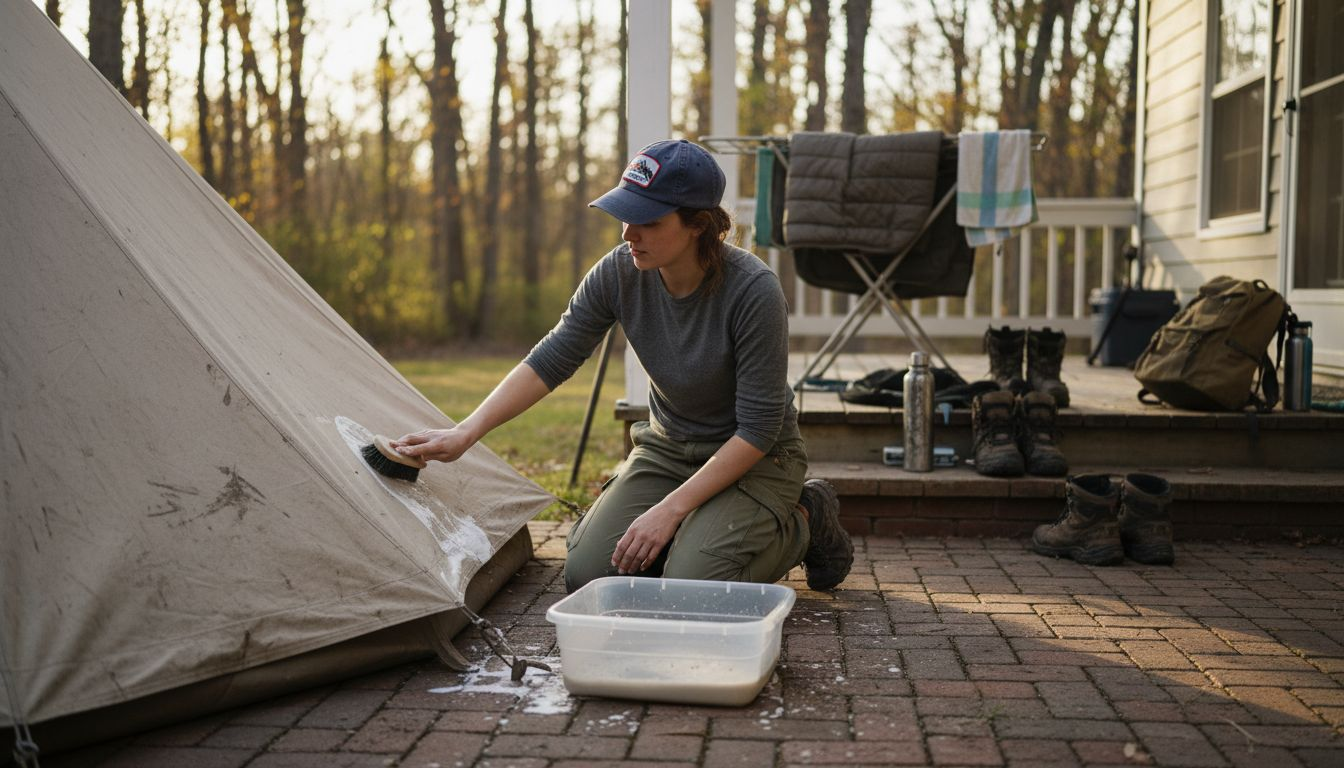
After inspecting your camping gear, the next crucial step is to thoroughly clean and dry each item to prevent damage and extend its lifespan. Proper cleaning and drying are essential for maintaining your equipment’s performance and preventing moisture-related issues like mold and rust.
Follow these detailed cleaning guidelines:
- Mild soap cleaning: Use gentle, gear-appropriate detergents
- Rinse thoroughly: Remove all soap residue completely
- Use soft brushes: Gently scrub without damaging fabric or materials
- Air dry completely: Choose shaded, well-ventilated areas
- Avoid direct sunlight: Prevent fabric and material degradation
- Separate items: Allow adequate airflow between gear pieces
For different types of gear, adjust your cleaning approach. Tent fabrics might require specialized cleaners, while sleeping bags need gentle hand washing. Metal equipment needs thorough drying to prevent rust, and technical fabrics demand careful handling to maintain their protective coatings.
Here’s a quick guide to common camping gear materials, their cleaning methods, and typical issues:
| Gear Material | Recommended Cleaning Method | Common Issues When Dirty |
|---|---|---|
| Synthetic Fabrics | Mild soap, gentle brush, air dry | Mold, loss of water resistance |
| Down Insulation | Gentle detergent, hand wash | Clumping, reduced warmth |
| Metal Components | Mild soap, thorough dry | Rust, corrosion |
| Plastic Hardware | Wipe with damp cloth | Cracking, buildup of grime |
| Waterproof Coating | Specialty cleaner, air dry | Peeling, loss of waterproofing |
Proper cleaning and complete drying are your gear’s best defense against premature wear and potential failure.
Pro tip: Invest in a portable drying rack specifically designed for outdoor gear to ensure optimal air circulation and faster drying times.
Step 4: Repair or Replace Worn Components
After thoroughly cleaning your camping gear, it’s time to address any damage by carefully evaluating repair options. Determining whether to repair or replace worn components is crucial for maintaining your gear’s safety, performance, and longevity.
Consider these key factors when assessing gear damage:
- Structural integrity: Check if repairs will compromise safety
- Repair complexity: Evaluate technical skill required
- Cost comparison: Compare repair expenses to replacement
- Material condition: Assess overall wear and potential future damage
- Performance impact: Determine if repairs maintain original functionality
- Specialized equipment: Consider professional repair for technical gear
For fabric items like tents and sleeping bags, small tears can often be patched using repair kits. Metal components might require careful rust removal and protective repainting. When repairs become too complex or expensive, replacement becomes the more practical solution.
Compare your next steps for dealing with damaged camping gear:
| Scenario | Best Approach | Long-Term Benefit |
|---|---|---|
| Minor tear in tent | Patch/repair | Extends gear life |
| Broken zipper | Replace part | Restores full functionality |
| Large hole in sleeping bag | Replace bag | Ensures warmth and safety |
| Light rust on cookware | Clean and coat | Prevents spreading corrosion |
Smart repair decisions balance cost, safety, and long-term gear performance.
Pro tip: Keep a basic repair kit with multi-purpose patches, strong thread, and waterproof tape for quick field repairs during camping trips.
Step 5: Store Gear Properly for Future Use
After repairing and cleaning your camping equipment, the final crucial step is storing items in clean, dry conditions. Proper storage protects your gear from moisture, pests, and environmental damage, ensuring it remains ready for your next outdoor adventure.
Follow these essential storage guidelines:
- Dry completely: Ensure zero moisture before storing
- Use airtight containers: Prevent dust and humidity infiltration
- Store in cool locations: Avoid direct sunlight and extreme temperatures
- Hang fabric items: Prevent material stress and shape distortion
- Separate metal components: Prevent corrosion and rust transfer
- Label storage containers: Track gear condition and last maintenance date
Organize your gear by type, keeping sleeping bags loosely packed in breathable storage sacks, and storing tents and tarps in cool, dry spaces. Avoid basement or garage storage areas prone to moisture and temperature fluctuations that could compromise your equipment’s integrity.
Consistent, thoughtful storage is your gear’s best protection against premature wear and degradation.
Pro tip: Invest in silica gel packets to absorb residual moisture and protect your gear during long-term storage.
Keep Your Camping Gear in Top Shape with Hazli Collection
Maintaining your camping gear for lasting comfort and durability is more than just cleaning it after every trip. The article highlights challenges like preventing mold, repairing tears, and properly storing equipment to avoid premature wear. These issues can leave you stressed and uncomfortable when you are ready to enjoy the outdoors. Hazli Collection understands these pain points and offers a range of premium outdoor and camping gear designed to make your adventures worry-free.

Discover high-quality memory foam mattresses and durable camping accessories that complement your gear maintenance efforts. With our thoughtfully designed products, you can experience enhanced comfort and reliability on every trip. Take control of your outdoor comfort today by exploring the Hazli Collection and learn how our collection fits perfectly into your camping lifestyle. Don’t wait for gear failure to interrupt your next trek. Visit Hazli Collection now and upgrade your outdoor experience.
Frequently Asked Questions
How can I organize my cleaning supplies for camping gear maintenance?
To efficiently maintain your camping gear, store cleaning supplies in a dedicated waterproof container. This organization allows you to easily access items like mild detergents, scrub brushes, and disinfectant wipes whenever needed.
What are the key areas to focus on when inspecting my camping gear for damage?
When inspecting your camping gear, check high-stress areas such as tent fabric, zippers, seams, and straps. Thoroughly examine each item under good lighting and aim to do this inspection at least once before each camping trip.
How should I clean different types of camping gear materials?
Use gear-appropriate cleaning methods for different materials; for example, use a mild soap with a gentle brush for synthetic fabrics and hand wash down insulation with gentle detergent. Rinse all items thoroughly and ensure they are completely dry before storage to prevent issues like mold or rust.
When should I repair or replace damaged camping gear?
Evaluate repair options when you find minor damages, such as small tears or rust spots. If the damage affects structural integrity or repair costs are too high, consider replacing the item to ensure safety and performance during your next camping adventure.
What storage practices should I follow for my camping gear?
Store your camping gear in cool, dry locations, ensuring items are completely dry before putting them away. Use airtight containers for added protection against dust and moisture, and be sure to label storage containers to monitor gear condition and maintenance dates.
How can proper gear maintenance extend the lifespan of my camping equipment?
Consistent cleaning, inspection, and careful storage of your camping gear can significantly extend its lifespan. By addressing minor damages promptly and using the right cleaning methods, you can reduce wear and tear by up to 30%.
Recommended
- 7 Examples of Durable Camping Equipment for Outdoor Comfort – Hazli Collection
- 8 Essential Tent Camping Must-Haves for Comfort and Safety – Hazli Collection
- 8 Must-Have Items for a Smart Summer Camping Packing List – Hazli Collection
- 7 Essential Tips for the Perfect Packing Checklist for Campers – Hazli Collection