

By The Hazli Family — Peter & Louise · Reviewed June 2026
Quick answer: An adventure travel mattress is a lightweight, durable sleeping surface built for outdoor use — typically 2–4 pounds, compressible, and weather-resistant. Foam models offer puncture-proof reliability, self-inflating designs balance comfort and packability, and air mattresses maximize firmness control. Prioritize thermal regulation, moisture resistance, and pack size over price or looks when choosing one.
Most American adventure travelers know that restless nights can ruin even the best outdoor trip. Exploring rugged landscapes demands energy, yet comfort often gets lost when sleeping on standard gear. With nearly 70 percent of outdoor enthusiasts ranking sleep quality as a top priority for camping, finding a memory foam mattress that combines durability, portability, and support becomes critical. This guide uncovers what sets truly reliable travel mattresses apart, helping American explorers choose options built for real-world adventure and lasting comfort.
Table of Contents
- What Defines An Adventure Travel Mattress
- Comparing Mattress Types For Outdoor Comfort
- Essential Features And Real-World Performance
- Durability, Portability, And Storage Explained
- Common Buying Mistakes And Smart Alternatives
Key Takeaways
| Point | Details |
|---|---|
| Adventure Travel Mattresses are Essential Gear | They are designed for comfort and performance in rugged outdoor environments, focusing on lightweight construction and portability. |
| Choose the Right Type of Mattress | Select between foam, self-inflating, and air mattresses based on durability, comfort, and ease of setup. |
| Evaluate Key Performance Features | Focus on thermal regulation, moisture resistance, and durability when selecting a mattress for outdoor adventures. |
| Avoid Common Buying Mistakes | Research material technologies and consider practical performance rather than just price or style when purchasing a mattress. |
What Defines an Adventure Travel Mattress
In the realm of outdoor exploration, an adventure travel mattress is far more than a simple sleeping surface. Specifically designed to support physical rest amid active adventuring, these specialized mattresses represent a critical piece of gear for travelers who demand performance and comfort in challenging environments.
The core characteristics that define an adventure travel mattress include lightweight construction, exceptional portability, and remarkable durability. Unlike traditional home mattresses, these travel-ready sleeping solutions must withstand diverse and rugged outdoor conditions while remaining compact enough to transport easily. Typical adventure travel mattresses weigh between 2-4 pounds and can compress into surprisingly small packages, making them ideal for backpackers, campers, and outdoor enthusiasts who prioritize mobility without sacrificing sleep quality.
Key features that distinguish adventure travel mattresses include advanced materials like high-density memory foam, water-resistant exteriors, and thermal insulation properties. These mattresses are engineered to provide reliable comfort across temperature variations and uneven terrain. They often incorporate innovative design elements such as:- Quick-inflation mechanisms- Compact folding or rolling capabilities- Moisture-wicking fabric surfaces- Integrated air chambers for customized firmness- Reinforced bottom layers to prevent punctures
Pro tip: When selecting an adventure travel mattress, prioritize weight, packability, and temperature range adaptability over pure comfort metrics.
Comparing Mattress Types for Outdoor Comfort
Camping and adventure travel enthusiasts face a critical decision when selecting the right sleeping surface, with multiple mattress types offering distinct advantages. Camping mattresses encompass foam, self-inflating, and air mattress categories, each presenting unique performance characteristics that cater to different outdoor sleeping requirements.
Foam Mattresses represent the most straightforward option for outdoor sleepers. These mattresses are incredibly durable, resistant to punctures, and provide consistent insulation regardless of terrain. They typically feature closed-cell or open-cell foam construction that offers reliable cushioning without complicated setup processes. While foam mattresses excel in reliability, they tend to be bulkier and less compressible compared to other mattress types.
Self-Inflating Mattresses strike an excellent balance between comfort and practicality. These hybrid designs combine foam insulation with air-filling mechanisms, allowing travelers to adjust firmness while maintaining moderate packability. They typically feature a built-in valve system that enables quick inflation and deflation, making them ideal for backpackers and campers who value convenience. Air mattresses, by contrast, provide maximum firmness customization but often require more manual effort to set up and are more susceptible to punctures.
A comprehensive comparison of mattress types reveals distinct trade-offs:
-
Foam Mattresses
- Pros: Ultra-durable, puncture-resistant, consistent insulation
- Cons: Bulky, less compressible
-
Self-Inflating Mattresses
- Pros: Balanced comfort, adjustable firmness, moderate packability
- Cons: Slightly heavier than pure air mattresses
-
Air Mattresses
- Pros: Maximum firmness control, lightweight
- Cons: Potential puncture risk, requires manual inflation
Pro tip: Always pack a lightweight repair kit compatible with your specific mattress type to address unexpected punctures or air leaks during outdoor adventures.
Essential Features and Real-World Performance
Adventure travel mattresses must withstand extreme conditions while delivering exceptional comfort, making their performance characteristics critically important. Portable mattresses undergo rigorous testing across varied outdoor conditions to evaluate thermal resistance, moisture protection, quick setup, and surface abrasion resilience, ensuring they meet the demanding requirements of outdoor enthusiasts.
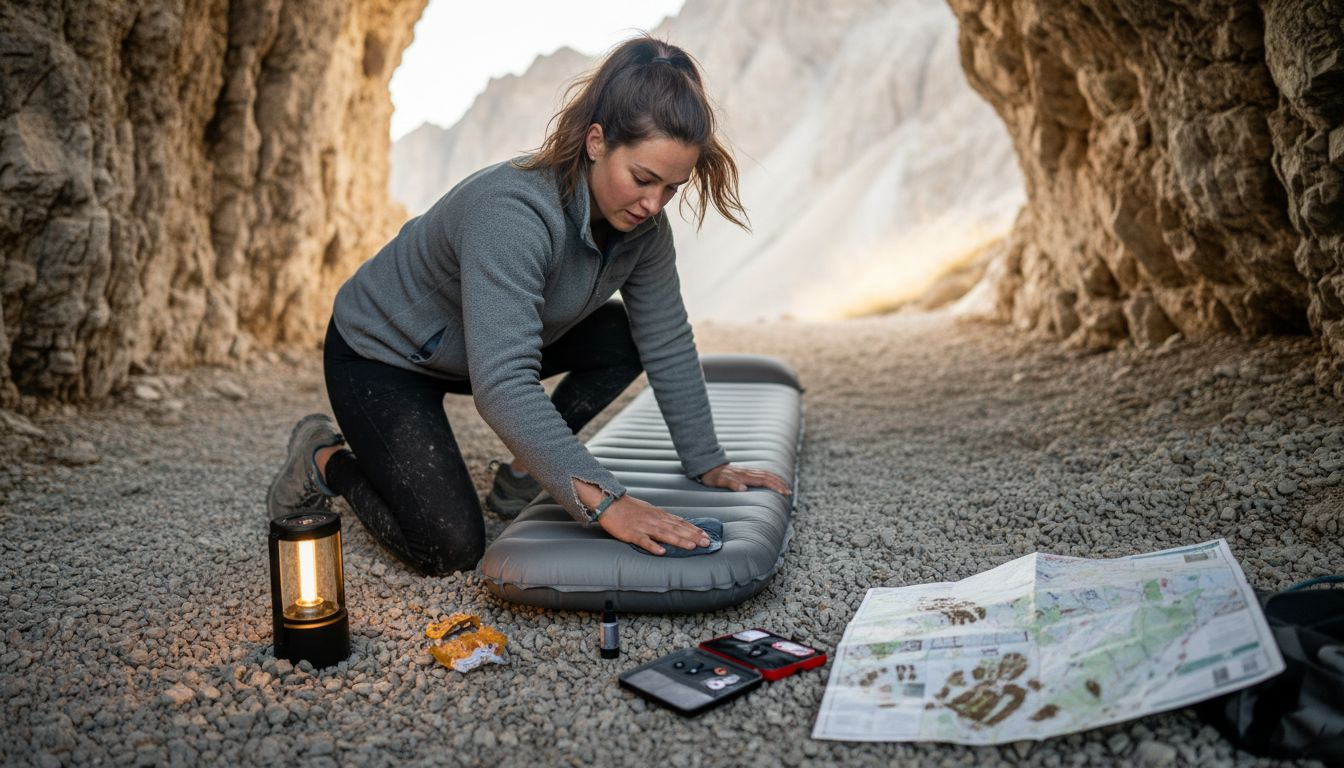
The key performance indicators for adventure travel mattresses extend far beyond basic comfort metrics. Advanced materials like high-resilience memory foam and specialized waterproof covers play a crucial role in enhancing real-world usability. These technological innovations address specific challenges encountered during outdoor expeditions, such as temperature fluctuations, moisture exposure, and uneven terrain. Thermal insulation, for instance, becomes paramount when camping in environments with significant temperature variations, while water-resistant surfaces prevent moisture absorption that could compromise mattress integrity.
Critical performance features that adventure travelers should evaluate include:
- Thermal Regulation: Ability to maintain consistent body temperature
- Moisture Resistance: Preventing water absorption and maintaining dry sleeping surfaces
- Durability: Resistance to punctures, tears, and environmental stress
- Compression Ratio: How efficiently the mattress can be packed and transported
- Setup Time: Ease and speed of inflation or deployment
Materials science has revolutionized portable mattress design, introducing lightweight yet robust fabrics that can withstand extreme conditions. High-density foam with closed-cell structures provides superior insulation, while advanced synthetic materials offer unprecedented levels of water and abrasion resistance. These technological advancements mean modern adventure travel mattresses can perform reliably across diverse environments, from humid tropical forests to arid mountain landscapes.
Pro tip: Always test your mattress’s performance characteristics in controlled environments before embarking on critical outdoor expeditions to understand its real-world limitations.
Here’s a comparison of how different environments impact mattress performance for adventure travelers:
| Environment Type | Key Mattress Challenges | Recommended Feature |
|---|---|---|
| High altitude | Cold temperatures, thin air | Enhanced thermal insulation |
| Humid rainforest | Moisture, mold risk | Waterproof cover |
| Rocky terrain | Abrasive surfaces, sharp rocks | Reinforced bottom layer |
| Arid desert | Temperature swings, sand | Quick setup, dust-resistant |
Durability, Portability, and Storage Explained
For adventure travelers, a mattress represents more than just a sleeping surface—it’s a critical piece of portable equipment that must balance multiple performance requirements. Modern portable mattresses prioritize intricate trade-offs between size, weight, and comfort through innovative design strategies, ensuring travelers can transport and utilize their sleeping gear effectively across diverse environments.
Durability emerges as a paramount consideration for outdoor sleep solutions. Advanced manufacturing techniques now incorporate high-tensile synthetic fabrics and reinforced construction methods that dramatically extend product lifespan. These materials resist punctures, tears, and environmental degradation, transforming portable mattresses from fragile accessories into robust travel companions capable of withstanding rough terrain, temperature fluctuations, and repeated compression.
Portability demands intelligent design compromises. Successful adventure travel mattresses integrate features like:
- Compact folding mechanisms
- Lightweight materials
- Integrated compression straps
- Quick-release air valves
- Minimal packed volume
Storage considerations go beyond simple size reduction. Many modern mattresses include specialized features such as water-resistant stuff sacks, integrated stuff straps, and modular design elements that allow travelers to protect their investment while maximizing packability. Removable, washable covers further enhance maintenance and longevity, addressing the practical challenges of maintaining gear during extended outdoor expeditions.
Pro tip: Invest in a dedicated compression sack that matches your mattress dimensions to maximize storage efficiency and protect your mattress from environmental damage during transport.
Common Buying Mistakes and Smart Alternatives
Adventure travelers frequently encounter pitfalls when selecting portable mattresses, often making uninformed purchasing decisions that compromise their outdoor sleeping experience. Buyers frequently neglect critical factors like functional needs, durability, and material quality in favor of superficial attributes like style or price, ultimately reducing the effectiveness of their sleeping gear.
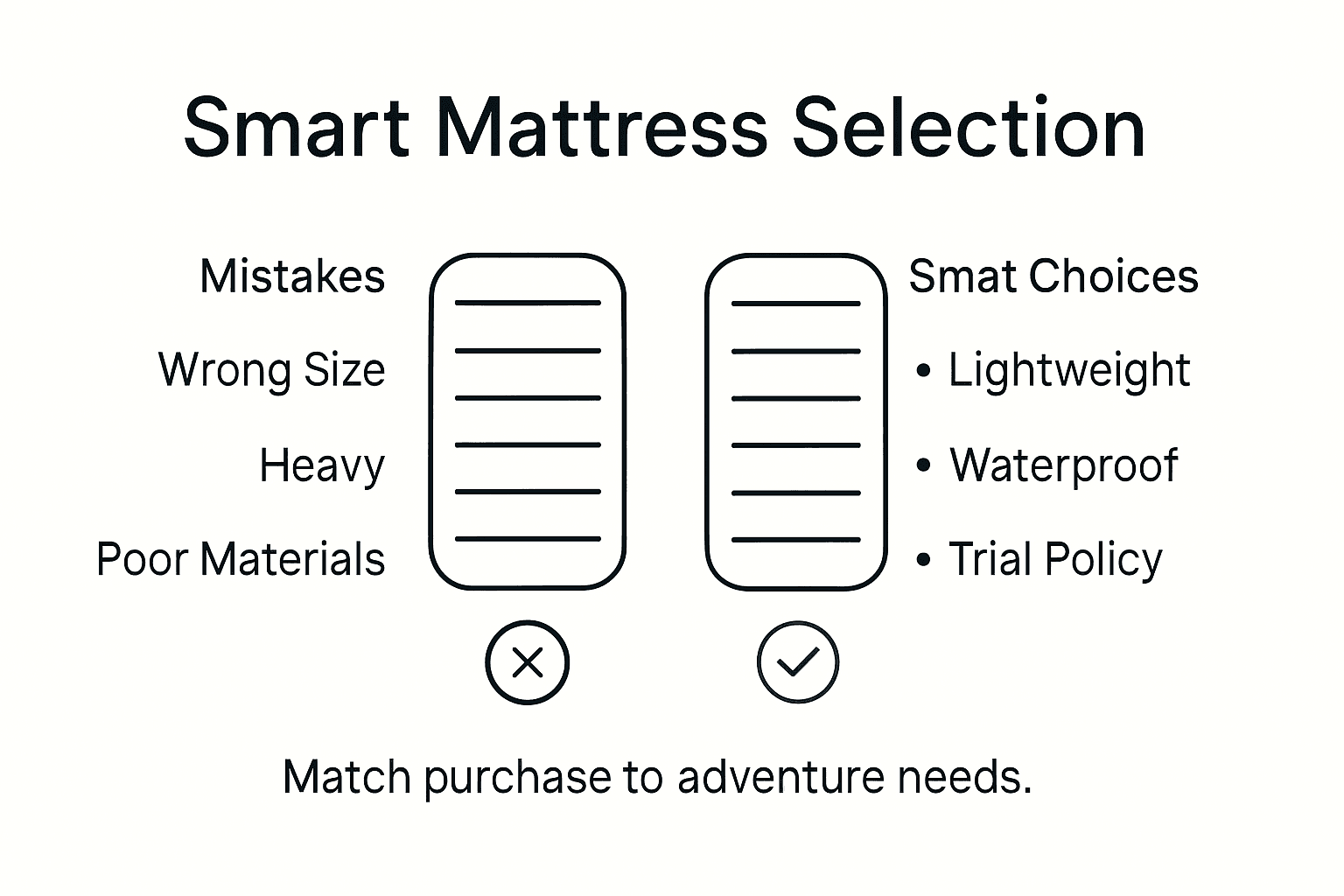
The most fundamental buying mistakes typically involve overlooking specific performance requirements. Many adventure travelers select mattresses without considering their unique terrain interactions, personal sleeping styles, or the precise environmental conditions they will encounter. This approach leads to purchasing equipment that fails to deliver adequate comfort, thermal regulation, or structural integrity when deployed in challenging outdoor settings.
Smart alternatives to traditional buying approaches include:
- Conducting thorough research on material technologies
- Testing mattresses in simulated outdoor conditions
- Prioritizing functional performance over aesthetic appeal
- Consulting experienced adventure travelers
- Requesting comprehensive product specification details
- Examining independent performance evaluations
Most purchasing errors stem from a lack of understanding about the specialized requirements of adventure travel mattresses. Buyers should recognize that these are not standard home sleeping surfaces but sophisticated pieces of technical equipment designed to perform under extreme conditions. Avoiding impulse purchases and seeking expert guidance can significantly improve mattress selection outcomes, ensuring that the chosen product meets the demanding standards of outdoor exploration.
This summary highlights common mistakes and smarter alternatives when choosing adventure travel mattresses:
| Common Mistake | Why It’s a Problem | Smart Alternative |
|---|---|---|
| Selecting by price alone | May sacrifice durability | Compare functional performance |
| Ignoring insulation | Uncomfortable in cold climates | Review temperature ratings |
| Overlooking pack size | Tough to transport | Test packability in store |
| Not reading reviews | Misses real-world feedback | Consult experienced travelers |
Pro tip: Always request a trial period or return policy when purchasing an adventure travel mattress to ensure it meets your specific performance requirements in real-world conditions.
Elevate Your Outdoor Sleep Experience with Hazli Collection
Finding the perfect adventure travel mattress means balancing durability, portability, and comfort for restful nights on the trail. If you have struggled with bulky foam pads that are hard to pack or air mattresses prone to punctures, Hazli Collection understands your need for reliable gear that performs in rugged environments. Our selection of high-quality memory foam mattresses is engineered to provide thermal regulation, moisture resistance, and easy packability so you can rest well no matter where your adventures take you.

Explore our Camping and Travel Products to discover mattresses and outdoor essentials designed with your toughest challenges in mind. Don’t let uncomfortable sleep hold you back. Visit Hazli Collection now and equip yourself with gear that combines innovation and durability for your next journey. Experience comfort on the go and upgrade your travels starting today!
Frequently Asked Questions
What is an adventure travel mattress?
An adventure travel mattress is a specialized sleeping surface designed for outdoor exploration, emphasizing lightweight construction, portability, and durability to provide comfortable rest in challenging environments.
How do foam mattresses compare to self-inflating and air mattresses for camping?
Foam mattresses are durable and puncture-resistant but bulkier. Self-inflating mattresses offer a balance of comfort and packability, while air mattresses allow for maximum firmness control but are more prone to punctures.
What key features should I look for in an adventure travel mattress?
Important features include thermal regulation, moisture resistance, durability, compression ratio for transport efficiency, and quick setup time for ease of use in outdoor settings.
How can I avoid common buying mistakes when selecting an adventure travel mattress?
To avoid pitfalls, prioritize functional performance over aesthetics, consider specific environmental needs, conduct thorough research on materials, and request product specifications to ensure the mattress meets your requirements.