

By The Hazli Family — Peter & Louise · Reviewed June 2026
Quick answer: To improve camp sleep: pick a flat, elevated site away from foot traffic; build a proper sleep system with an insulated pad or camping mattress, a correctly rated sleeping bag, and a real pillow; ventilate your tent to control condensation; block noise with earplugs; and test the full setup at home before your trip.
Did you know that almost 80 percent of campers say poor sleep impacts their enjoyment of outdoor trips? Finding restful sleep in the wilderness is more challenging than most expect. From waking up on rocky ground to tossing and turning from nighttime chill, the quality of your camp setup can decide how much energy you have for your adventures. Discover how a thoughtful approach can give you the comfort and relaxation you need for your best nights outdoors.
Table of Contents
- Step 1: Select The Ideal Campsite Location
- Step 2: Set Up A Comfortable Sleep System
- Step 3: Optimize Your Shelter’s Climate Control
- Step 4: Minimize Outdoor Noise And Distractions
- Step 5: Test And Adjust Your Camp Sleep Setup
Quick Summary
| Key Point | Explanation |
|---|---|
| 1. Choose a flat, level ground | Seek smooth surfaces to avoid discomfort from roots or rocks. |
| 2. Use a quality sleeping pad | A good pad provides cushioning and insulation for restful sleep. |
| 3. Maintain proper ventilation | Ensure airflow to regulate temperature and reduce condensation. |
| 4. Use earplugs for noise | Earplugs significantly block unwanted sounds for better sleep. |
| 5. Test equipment at home | Set up your sleep system indoors to identify adjustments needed before camping. |
Step 1: Select the Ideal Campsite Location
Choosing the perfect campsite can make or break your entire outdoor sleeping experience. The goal is to create a comfortable sleeping environment that allows you to rest and recharge after a day of adventure.
Start by finding a flat and level ground area that provides natural comfort. According to sleep research from Sleep Foundation, you want to avoid spots with excessive roots or rocks that could create uncomfortable sleeping conditions. Inspect the ground carefully and look for a smooth surface that will support your tent and sleeping gear.
Space matters significantly when selecting your campsite. Ensure you have enough room not just for your tent but for easy movement around your sleeping area. Look for a site that offers sufficient space to spread out your gear and move comfortably without feeling cramped.
Consider terrain and potential water accumulation carefully. During potential rainfall, you want to position your tent on slightly elevated ground to prevent water pooling underneath. Avoid low lying areas or spots that look like natural water collection points.
Pro Tip: Always carry a ground tarp or footprint to provide an extra layer of protection between your tent floor and the ground surface.
Sound and privacy are additional factors to consider. Position your tent away from high traffic areas or communal spaces to minimize noise disruptions. A quiet location will significantly improve your chances of getting quality sleep during your camping trip.
Here’s a summary of key campsite selection factors:
| Factor | Best Practice | Common Mistakes |
|---|---|---|
| Ground Surface | Choose flat and level ground | Sleeping on roots/rocks |
| Space | Ensure ample room for gear and movement | Cramped setup |
| Water Drainage | Position on elevated spot | Low spots that pool water |
| Noise & Privacy | Camp away from busy areas | Next to communal paths |
| Protection Layer | Use ground tarp or footprint | Tent floor directly on ground |
In your next step, you will focus on preparing your actual sleeping surface to maximize comfort and warmth.
Step 2: Set Up a Comfortable Sleep System
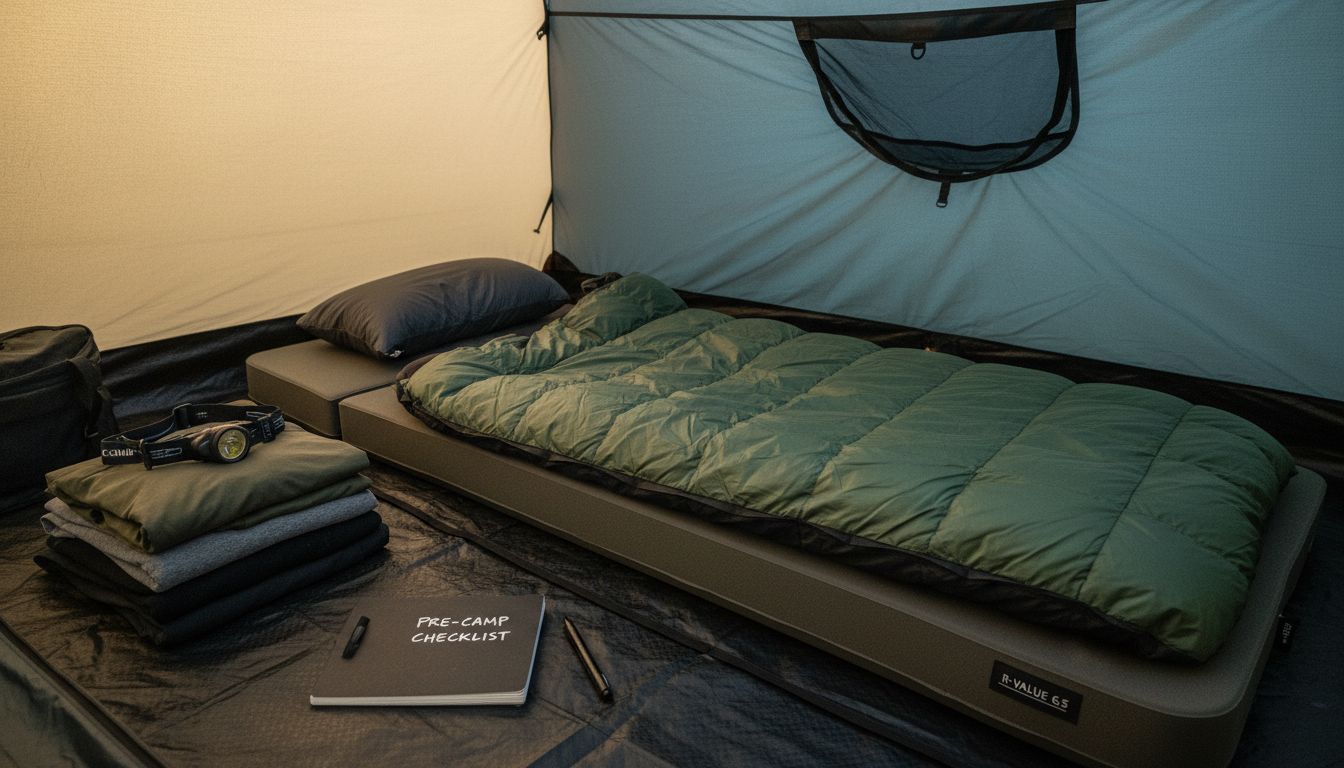
Creating a comfortable sleep system is crucial for enjoying restful nights while camping. Your goal is to design a sleeping setup that keeps you warm, supported, and comfortable in the outdoor environment.
Start by selecting a high-quality sleeping pad. According to research from REI, a sleeping pad provides essential cushioning and insulation from the ground. Look for a pad with an appropriate R-value that matches the expected temperatures of your camping location.
Your sleeping bag selection is equally important. Choose a bag rated for the specific climate and temperature range you will encounter. As research from Cloudline Apparel suggests, matching your sleeping bag to the expected conditions will help maintain consistent body warmth throughout the night.
Pro Tip: Pack lightweight clothing layers that can serve as additional insulation inside your sleeping bag if temperatures drop unexpectedly.
Do not overlook the importance of a good pillow. While some campers use a stuff sack filled with clothes, bringing a compact camping pillow can significantly improve your sleep quality. This small addition can make a remarkable difference in neck and head comfort.
Consider your sleepwear carefully. Opt for moisture wicking and breathable materials that help regulate your body temperature. Avoid cotton which tends to retain moisture and can make you feel cold.
In your next step, you will learn how to properly position and arrange your sleeping gear for maximum comfort and efficiency.
Step 3: Optimize Your Shelter’s Climate Control
Managing your tent’s internal environment is crucial for a comfortable and restful camping experience. Your primary goal is to create a stable temperature and control moisture to ensure you stay warm and dry throughout the night.
Properly managing ventilation is key to maintaining a comfortable tent climate. According to research from Wanderland Xperience, you should ensure adequate airflow by strategically opening vents or slightly unzipping tent doors. This simple technique helps reduce condensation and prevents moisture buildup inside your shelter.
Temperature regulation starts with your sleeping gear. Research from Adventure suggests selecting sleeping bags and pads that provide appropriate insulation for the expected temperatures. Consider layering your sleeping system with additional blankets or thermal liners to create adaptable warmth.
Pro Tip: Position your tent with the door slightly facing away from prevailing winds to minimize drafts while maintaining necessary ventilation.
Pay attention to the materials around you. Synthetic or moisture wicking sleeping bags and clothing will help regulate your body temperature more effectively than cotton. Avoid trapping moisture which can make you feel cold and uncomfortable.
Be mindful of your tent placement. Choose a spot that offers some natural wind protection while still allowing air circulation. Avoid low lying areas where cold air can settle and moisture might accumulate.
In your next step, you will learn techniques for arranging your sleeping gear to maximize comfort and warmth.
Step 4: Minimize Outdoor Noise and Distractions
Getting quality sleep in the outdoors requires strategic planning to block out unwanted sounds and disruptions. Your mission is to create a peaceful sleeping environment that allows for uninterrupted rest after a day of outdoor adventures.
According to research from Sleep Foundation, selecting the right campsite is your first line of defense against noise. Strategically choose a location away from high traffic camping areas and communal facilities. Look for spots slightly removed from main paths and gathering zones to reduce potential sound disturbances.
Earplugs are an essential tool in your noise reduction arsenal. As Adventure recommends, these small devices can dramatically improve your ability to block out unexpected sounds. Invest in comfortable silicone or foam earplugs designed specifically for sleeping that provide effective sound dampening without causing discomfort.
Pro Tip: Consider using a lightweight sleep mask alongside earplugs to create a more comprehensive sensory barrier against potential disruptions.
Be strategic about your tent placement.
Position your shelter near natural sound barriers like dense vegetation or rock formations that can help absorb ambient noise. Avoid setting up near potential noise sources such as streams with loud water flow or areas where other campers might gather late into the night.
Communicate with your camping group about maintaining quiet hours. Establishing mutual respect for sleep times can significantly reduce unnecessary noise and create a more restful environment for everyone.
In your next step, you will explore additional techniques for creating a tranquil sleeping space that promotes deep and restorative rest.
Step 5: Test and Adjust Your Camp Sleep Setup
Preparing for a successful camping trip means thoroughly testing your sleep system before heading into the wilderness. Your goal is to ensure every piece of gear works together seamlessly to provide maximum comfort and rest.
According to REI, setting up your entire sleep system at home before your trip is crucial. This allows you to identify potential issues and make necessary adjustments in a controlled environment. Lay out your sleeping pad, test your sleeping bag, and practice assembling your entire sleep setup just as you would at a campsite.
Research from Cloudline Apparel emphasizes the importance of comprehensive testing. Spend a night sleeping on your camping setup indoors to understand how different components interact and where potential discomfort might arise.
Pro Tip: Take detailed notes about any adjustments needed during your home test run to address before your actual camping trip.
Pay close attention to how your sleeping pad inflates and whether it provides adequate cushioning. Check the compatibility of your sleeping bag with the pad and assess overall comfort. Simulate various sleeping positions to ensure your setup supports your body effectively.
Consider the temperature rating of your sleeping bag and test its warmth in conditions similar to your expected camping environment. Practice packing and unpacking your gear to streamline your process and identify any potential challenges with setup and breakdown.
In your final step, you will learn how to make final refinements to create the perfect camping sleep experience.
Elevate Your Outdoor Sleep Comfort with Hazli Collection
Finding the perfect campsite and setting up a comfortable sleep system are essential steps for a restful night outdoors. The challenges of uneven ground, cold temperatures, and ambient noise can take a toll on your sleep quality. Hazli Collection understands these pain points and offers high-quality memory foam mattresses designed to bring home-like comfort to the wilderness. Our gear helps create a flat, cushioned surface that supports your body while providing essential insulation from cold or damp ground.

Why settle for discomfort on your next trip? Explore our selection at Hazli Collection to find durable, practical solutions for camping sleep. Whether you need a compact mattress or smart accessories to optimize your shelter’s climate control and reduce noise distractions, our products are crafted with outdoor enthusiasts in mind. Improving your camp sleep starts with the right gear. Visit Hazli Collection today and take the first step toward deeper, more refreshing sleep on every adventure.
Frequently Asked Questions
How can I choose the best campsite location to improve my camp sleep?
Selecting a well-suited campsite is crucial for a good night’s sleep. Look for flat, level ground away from high-traffic areas and potential water collection sites. Aim for a space that ensures comfort and privacy, allowing sufficient room for your gear and movement.
What sleeping gear is essential for optimizing outdoor comfort?
A quality sleeping system is key to better camp sleep. Invest in a sleeping pad with an appropriate R-value for insulation, a sleeping bag rated for the expected temperature, and consider using a camping pillow for head support. Testing these items ahead of time can help you ensure they work together seamlessly.
How do I create a climate-controlled environment within my tent?
To maintain comfort inside your tent, focus on managing temperature and ventilation. Open vents and slightly unzip the tent doors for airflow while avoiding cold drafts. Ensure you are using suitable sleeping gear that adapts to temperature changes, helping you stay warm and dry throughout the night.
What can I do to minimize outdoor noise while camping?
To block unwanted sounds, set up your tent away from high-traffic areas and use earplugs for better sound dampening. Position your tent near natural barriers, like trees, that absorb noise. Communicate with your camping group about maintaining quiet hours to create a calmer environment for everyone.
Why is testing my camp sleep setup at home important?
Testing your entire sleep system at home allows you to identify areas for improvement before hitting the trail. Set up your gear as you would in the field and sleep on your setup to pinpoint discomfort.
Make necessary adjustments based on your findings to enhance comfort during your camping trip.