

By The Hazli Family — Peter & Louise · Reviewed June 2026
Quick answer: Set up a campsite in five steps: gather essential gear (tent, sleep system, first aid, lighting), choose level, well-drained ground away from hazards, pitch your tent and lay out memory foam bedding, arrange separate cooking and relaxation zones at least 10 feet from tents, then run a final comfort and safety check before dark.
Every family can relate to the excitement and uncertainty of preparing for a weekend camping trip. Choosing the right gear and campsite is what turns the stress of packing into the joy of a memorable outdoor experience. This guide breaks down everything you need, from assembling the 10 essential categories of camping gear recommended by the Appalachian Mountain Club to practical tips for setting up a site that’s safe, organized, and comfortable for your next adventure in the United States.
Want a ready-made list? Build a personalized packing list in under a minute with our free camping checklist generator.
Table of Contents
- Step 1: Gather Essential Camping Gear And Supplies
- Step 2: Select And Prepare Your Campsite Location
- Step 3: Pitch Your Tent And Install Memory Foam Bedding
- Step 4: Arrange Cooking And Relaxation Areas
- Step 5: Test Campsite Comfort And Safety
Quick Summary
| Essential Insight | Detailed Explanation |
|---|---|
| 1. Assemble your essential camping gear | Gather core items like a tent, sleeping bag, and first aid kit to ensure comfort and safety while camping. |
| 2. Choose an appropriate campsite location | Select a site with level ground, natural shelter, and away from potential hazards for a safer camping experience. |
| 3. Set up your tent properly | Follow key steps for tent setup to provide stability and weather protection, ensuring a cozy sleeping environment. |
| 4. Design distinct cooking and relaxation zones | Organize designated areas for cooking, dining, and relaxing to promote safety and enhance social interactions at camp. |
| 5. Conduct thorough campsite safety checks | Evaluate ground quality and hazards to secure a safe and comfortable environment, preparing for any outdoor challenges. |
Step 1: Gather essential camping gear and supplies
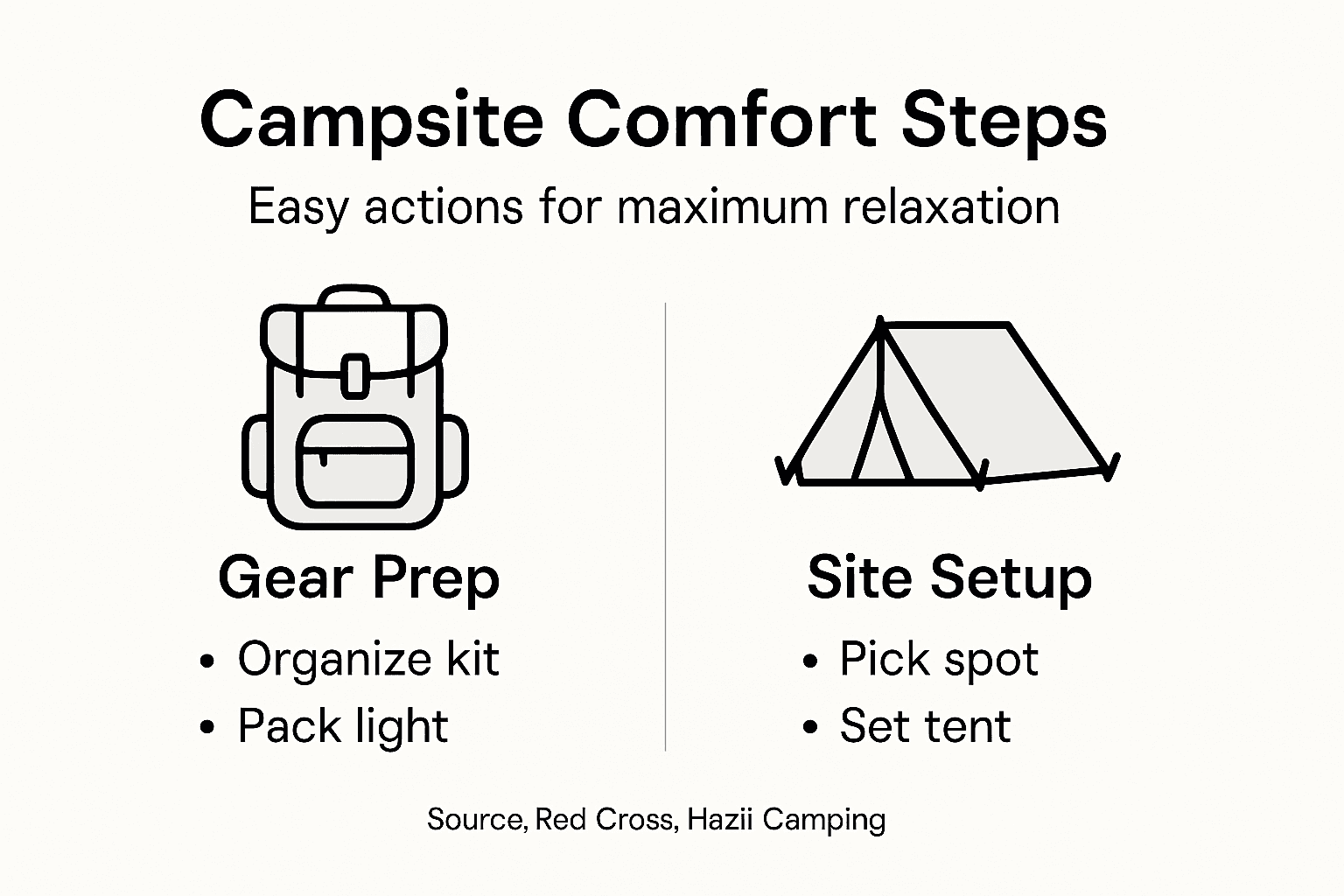
Preparing for a successful camping adventure starts with packing the right gear and supplies. Your equipment will determine your comfort, safety, and overall enjoyment in the great outdoors.
Start by assembling your core camping kit, which should include a reliable tent, sleeping bag, sleeping pad, and appropriate clothing layers. The Appalachian Mountain Club recommends focusing on 10 essential categories for a comprehensive camping preparation:
- Navigation tools: Maps, compass, GPS device
- Emergency shelter: Lightweight tarp or emergency bivvy
- Illumination: Headlamp, extra batteries
- First aid kit: Comprehensive medical supplies
- Firestarter: Waterproof matches, lighter, fire starter cubes
- Nutrition: High-energy snacks, lightweight meals
- Hydration: Water bottles, water filtration system
- Sun protection: Sunscreen, hat, sunglasses
- Clothing layers: Moisture-wicking base layers, insulating mid-layers
- Repair kit: Multi-tool, duct tape, basic repair supplies
A critical component of your camping kit is a well-stocked first aid kit. As recommended by the Red Cross, customize your kit based on your trip’s specifics, ensuring you have supplies for minor injuries and emergencies. Include items like adhesive bandages, antiseptic wipes, burn gel, and hand sanitizer.
Pack strategically, keeping weight and practicality in mind. Choose lightweight, multipurpose gear that can serve several functions and withstand outdoor conditions.
Pro tip: Pack your gear in clear, waterproof bags to keep items organized and protected from moisture, and always do a test pack at home to ensure everything fits and is easily accessible.
Step 2: Select and prepare your campsite location
Selecting the right campsite is crucial for a comfortable and safe outdoor experience. Your choice can make the difference between an enjoyable adventure and a challenging night in the wilderness.
When choosing a location, start by considering the fundamental site selection criteria recommended by national park guidelines. Look for a spot that offers a balance of comfort, safety, and natural beauty. Key considerations include:
- Ground surface: Seek level, dry ground with good drainage
- Natural protection: Look for areas sheltered from wind and potential weather changes
- Distance from hazards: Avoid low-lying areas prone to flooding
- Proximity to facilities: Consider access to water sources and restrooms
- Vegetation awareness: Check for potential dangers like dead trees or unstable branches
Careful site preparation is essential for a safe and comfortable camping experience. Campsite selection involves more than just finding a flat spot. Evaluate the surrounding environment for potential risks such as animal trails, insect breeding grounds, and natural terrain challenges. Avoid setting up camp in cold, damp valleys or areas with standing water.
Remember to follow local guidelines and obtain necessary permits. Some areas require advance reservations or have specific rules about campsite selection to protect both campers and the natural environment.
Pro tip: Arrive at your campsite with plenty of daylight remaining to thoroughly inspect the area and make informed setup decisions, giving you ample time to find the perfect spot before darkness falls.
Step 3: Pitch your tent and install memory foam bedding
Creating a comfortable campsite involves carefully setting up your shelter and sleeping area. This step will transform your outdoor space into a cozy retreat that protects you from the elements and ensures a restful night.
Proper tent setup is crucial for a stable and comfortable camping experience. Follow these key steps to pitch your tent effectively:
- Clear the ground of rocks, sticks, and debris
- Lay down a protective ground footprint
- Assemble tent poles carefully
- Attach tent body to poles
- Secure rain fly for additional weather protection
- Stake down corners and sides firmly
- Adjust tension to ensure stability
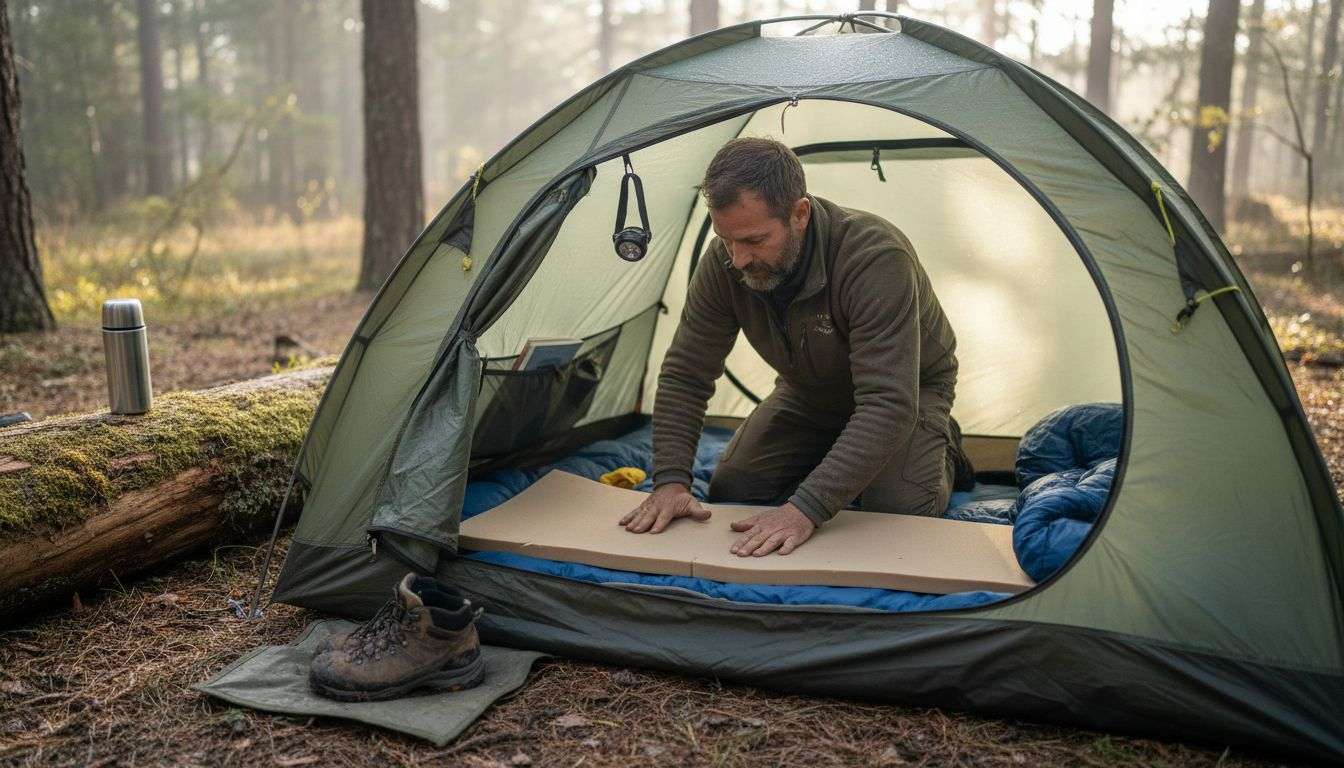
Once your tent is secure, focus on creating a comfortable sleeping environment. Memory foam provides exceptional body contouring and pressure relief for outdoor sleeping. The viscoelastic material adapts to your body shape, offering support and comfort that traditional camping mattresses can’t match.
For a quick comparison, here’s how memory foam bedding differs from traditional sleeping pads for camping:
| Criteria | Memory Foam Bedding | Traditional Sleeping Pad |
|---|---|---|
| Comfort Level | Highly supportive, contours to body | Basic support, less cushioning |
| Portability | Bulky, requires more space | Lightweight, easy to pack |
| Setup Time | Needs time to expand | Instantly ready, no wait |
| Temperature Regulation | Retains heat, warmer nights | Cooler, may require extra layers |
When installing your memory foam bedding, ensure you:
- Lay a protective ground cover first
- Unroll memory foam mattress or topper carefully
- Allow foam to expand fully
- Use sleeping bags or sheets for added comfort
- Position bedding to maximize interior tent space
Careful preparation of your tent and sleeping area will significantly enhance your camping experience, providing a comfortable and protected environment for rest and relaxation.
Pro tip: Practice setting up your tent at home before your trip to familiarize yourself with the process and identify any potential equipment issues in a stress-free environment.
Step 4: Arrange cooking and relaxation areas
Creating functional and comfortable outdoor living spaces is key to an enjoyable camping experience. Your campsite layout will determine how efficiently you cook, eat, and unwind after a day of outdoor adventures.
Designing an effective campground layout requires strategic zone planning, with careful consideration of safety, convenience, and social interaction. Establish distinct areas for different activities:
-
Cooking zone: - Place at least 10 feet from tents
- Set up on a stable, flat surface
- Keep cooking gear organized and accessible
-
Dining area:
- Position near cooking zone
- Use portable camping table or flat rock surface
- Ensure comfortable seating options
-
Relaxation space:
- Create a central gathering point
- Arrange chairs around a designated fire pit
- Leave room for movement and social interaction
Minimize environmental impact by choosing durable surfaces for your cooking and relaxation zones. Look for established tent pads, gravel areas, or compacted soil that can withstand foot traffic and cooking activities. Separate your food preparation area from sleeping quarters to reduce wildlife attraction and maintain a clean, safe campsite.
Safety Tips:
- Keep cooking equipment away from tent walls
- Store food in sealed containers
- Maintain a clean cooking area
- Have water and fire extinguisher nearby
Pro tip: Bring a lightweight tarp or pop-up canopy to create a versatile shade and rain protection area that can serve multiple functions in your campsite layout.
Step 5: Test campsite comfort and safety
The final stage of your campsite setup involves carefully verifying every aspect of your environment to ensure maximum comfort and protection. This critical step transforms your outdoor space from a random location into a safe and inviting home away from home.
Comprehensive campsite safety requires systematic evaluation, focusing on multiple key aspects:
Ground Quality Checks:
- Test surface levelness with sleeping pad
- Check for hidden rocks or roots
- Ensure proper drainage around tent area
- Verify ground is free from sharp objects
Safety Perimeter Assessment:
- Scan for dead or unstable trees
- Identify potential wildlife trails
- Check distance from water sources
- Evaluate wind exposure
- Look for natural windbreaks
Campsite selection involves analyzing environmental factors that impact your overall experience. Beyond physical terrain, consider wind direction, sun orientation, and potential weather changes that might affect your comfort.
Immediate Safety Actions:
Review these campsite testing steps for a safe and comfortable setup:
| Testing Area | What to Check | Importance |
|---|---|---|
| Ground Surface | Levelness, drainage, hidden objects | Prevents discomfort and injury |
| Perimeter | Hazardous trees, wildlife trails | Ensures safety from nature risks |
| Immediate Area | Debris clearance, exit routes | Allows quick response and movement |
| Gear Placement | First aid and communication access | Supports emergency readiness |
- Clear debris from campsite
- Remove potential hazard branches
- Mark emergency exit routes
- Set up first aid kit accessibly
- Establish communication zones with clear cell signal
A well-tested campsite is your first line of defense against unexpected outdoor challenges.
Pro tip: Always do a final walk-through of your campsite during daylight, using a critical eye to spot potential issues that might become problematic after dark.
Enhance Your Campsite Comfort with Expert Gear from Hazli Collection
Setting up the perfect campsite requires not just the right location and preparation but also reliable gear that ensures your comfort and safety. This article highlights the challenge of achieving a restful night’s sleep outdoors while managing weight, durability, and protection from the elements. If you want to avoid discomfort from traditional sleeping pads and elevate your camping experience with memory foam bedding that offers superior support and pressure relief, Hazli Collection is your trusted partner.

Discover high-quality memory foam mattresses and versatile outdoor equipment designed specifically for campers who value comfort and practicality. Shop now at Hazli Collection to get reliable products that simplify campsite setup and transform your outdoor rest. Don’t wait until your next trip—explore our selection of premium camping gear and experience the difference today. Visit our online store to browse customizable options and enjoy a seamless checkout supported by trusted payment methods.
Frequently Asked Questions
What essential gear should I pack for ultimate campsite comfort?
Start with a reliable tent, sleeping bag, and sleeping pad. Additionally, include navigation tools, a first aid kit, and appropriate clothing layers to enhance your comfort and safety in the wilderness.
How do I choose the best campsite location for comfort?
Select a site with level, dry ground that is sheltered from wind and away from hazards like dead trees. Arrive early to inspect your surroundings for any potential dangers and assess the natural beauty of the area.
What steps should I follow to properly pitch my tent?
Clear the ground of rocks and debris, lay down a protective footprint, and secure your tent effectively. Make sure to stake down the corners and adjust the tension to stabilize your shelter against weather conditions.
How can I create an effective cooking and relaxation area at my campsite?
Designate specific zones for cooking, dining, and relaxing, keeping cooking areas at least 10 feet away from sleeping tents. Organize your cooking gear and create a central gathering point for social activities, ensuring a comfortable and functional layout.
What should I check to ensure my campsite is safe and comfortable?
Perform ground quality checks for levelness and drainage, and assess the safety perimeter for dead trees or wildlife trails. Clear debris from your site and create marked emergency exit routes for added safety.
Why is it important to test my campsite setup before nightfall?
Testing your campsite during daylight allows you to identify potential hazards and ensure a comfortable sleeping environment. Conduct a final walk-through to make adjustments and ensure everything is secure before darkness falls.
Recommended
- 7 Camping Comfort Hacks for a Great Outdoor Experience – Hazli Collection
- Camp Bedding Organization Guide: Optimize Your Outdoor Comfort – Hazli Collection
- Master Camping Sleep System Workflow for Ultimate Comfort – Hazli Collection
- 8 Essential Tips for a Family Car Camping Checklist – Hazli Collection