

By The Hazli Family — Peter & Louise · Reviewed June 2026
Quick answer: A memory foam camping pad molds to your body and the terrain, smoothing out rocks and eliminating pressure points without inflation or puncture risk. Most run 2–4 inches thick with R-values around 2–4 for three-season warmth — pick 2-inch pads for backpacking and 3–4 inches for car camping comfort.
Every weekend camper knows the difference a restful night’s sleep can make on a family adventure. Uneven ground, cold temperatures, and flimsy sleeping pads often threaten the comfort you want after a full day outside. Memory foam camping pads are designed to deliver unmatched support and warmth by molding to both your body and the terrain, making every campsite feel just a little more like home. Explore how these pads combine durability, easy packability, and real comfort for practical outdoor living.
Table of Contents
- What Makes a Memory Foam Camping Pad
- Types and Thickness Options Explained
- Essential Comfort and Insulation Features
- Durability and Maintenance for Outdoor Use
- Comparing Alternatives: Air Vs Foam Pads
- Common Buying Mistakes to Avoid
Key Takeaways
| Point | Details |
|---|---|
| Memory Foam Advantages | Memory foam camping pads provide superior comfort and terrain adaptation, eliminating pressure points and enhancing support on uneven ground. |
| Choosing Thickness | Select pad thickness based on your camping style; lighter options are ideal for backpackers, while thicker pads offer maximum comfort for car campers. |
| Insulation Importance | Understanding R-value is crucial for thermal regulation; higher ratings indicate better heat retention for colder environments. |
| Maintenance Tips | Proper care can extend the lifespan of your pad; clean after use and store it in a cool, dry place to maintain durability. |
What Makes a Memory Foam Camping Pad
Memory foam camping pads represent a specialized outdoor sleeping solution designed to transform rugged terrain into a comfortable rest zone. These innovative sleep surfaces leverage advanced materials and engineering to provide campers with unprecedented comfort and support, regardless of ground conditions.
Unlike traditional sleeping options, memory foam camping pads offer unique characteristics that set them apart from standard outdoor bedding. Camping memory foam mattresses differ significantly from home versions through reduced weight, compressed packaging, and enhanced outdoor durability. Their key specifications typically include:
- Foam density between 2-4 lbs/ft³
- Thickness ranging from 2-4 inches
- Compression ratios allowing 80-90% size reduction when packed
- Open-cell foam construction for enhanced breathability
The magic of memory foam lies in its ability to adapt dynamically to your body and the surrounding terrain. These pads mold precisely to your physical contours, effectively filling gaps and neutralizing pressure points that typically cause discomfort on uneven ground. Body-contouring technology ensures that every sleeping surface becomes personalized and supportive.
One significant advantage of memory foam camping pads is their superior terrain adaptation. Unlike air mattresses, these pads have zero risk of punctures and remain stable and quiet while absorbing ground irregularities. Their inherent insulation properties provide warmth without requiring manual inflation, making them ideal for camping in challenging outdoor environments.
Pro tip: Always roll and compress your memory foam camping pad in its original storage bag to maintain its structural integrity and prevent unnecessary wear during transport.
Types and Thickness Options Explained
Memory foam camping pads come in a diverse range of thickness and design options, each tailored to meet specific outdoor sleeping requirements. Camping pad thickness plays a critical role in determining comfort, support, and overall sleeping experience during outdoor adventures.
Typical thickness options for memory foam camping pads include:
- 2-inch pads: Lightweight and compact, ideal for backpackers
- 3-inch pads: Balanced comfort and portability, suitable for most camping styles
- 4-inch pads: Maximum cushioning, perfect for car camping and base camps
- Hybrid pads: Combining memory foam with air chambers for adjustable firmness
The choice of pad thickness directly correlates with your specific camping style and physical needs. Backpackers prioritize lightweight options under 2 pounds, while car campers can invest in thicker, more luxurious pads that provide enhanced pressure relief and insulation. Side sleepers particularly benefit from pads offering greater thickness, as they help distribute body weight more evenly and reduce pressure on hips and shoulders.
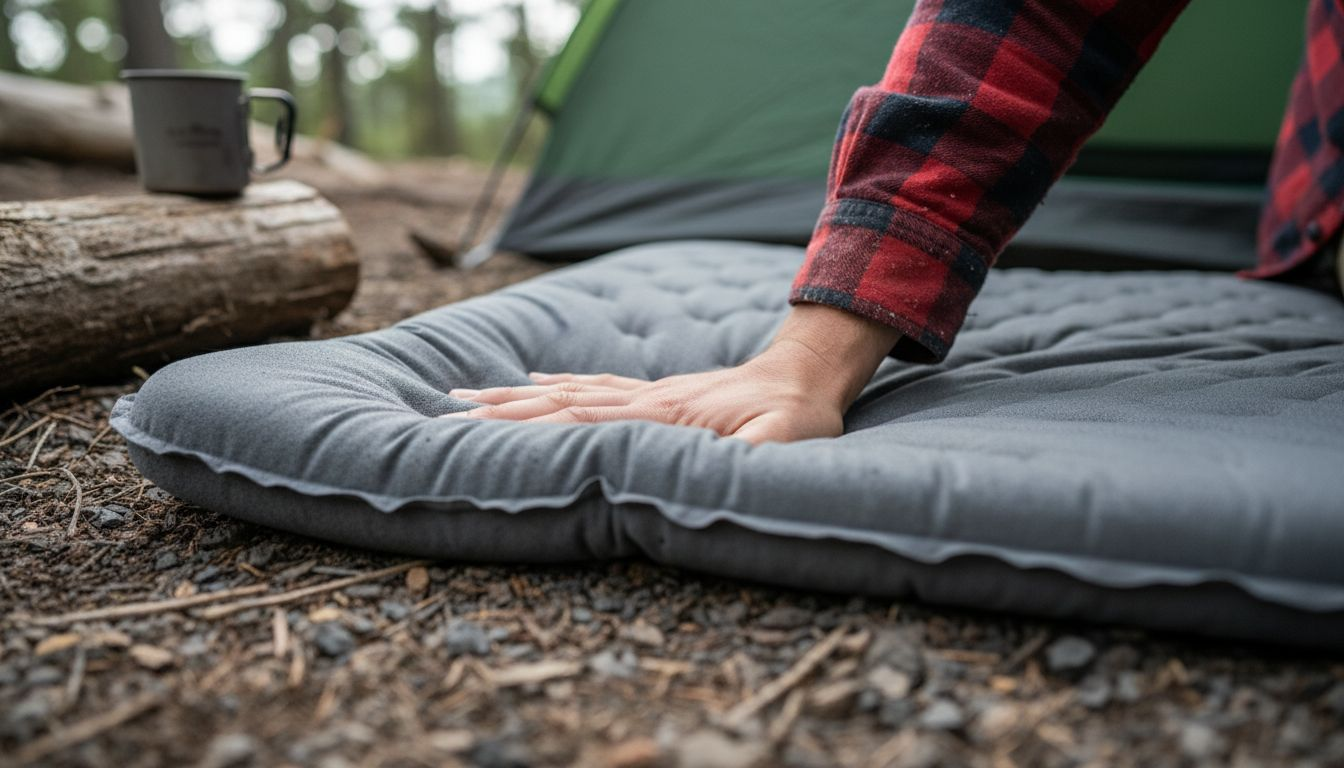
Here’s how different camping pad thickness options fit various camping styles and needs:
| Thickness Option | Best For | Weight Range | Comfort Level |
|---|---|---|---|
| 2-inch pad | Backpackers, minimal gear | Under 2 lbs | Moderate support |
| 3-inch pad | Versatile campers | 2-4 lbs | Balanced comfort |
| 4-inch pad | Car/base camp users | 4+ lbs | Maximum cushioning |
| Hybrid pad | Customizable firmness seekers | Varies | Adjustable support |
Thickness isn’t just about comfort - it’s about matching your sleeping pad to your specific outdoor lifestyle and physical requirements.
Understanding pad density is equally crucial when selecting a memory foam camping pad. Higher density foams (typically 3-4 lbs/ft³) offer superior durability and support, maintaining their shape and providing consistent cushioning across multiple camping trips. Lower density foams might be more affordable but tend to compress more quickly and provide less long-term performance.
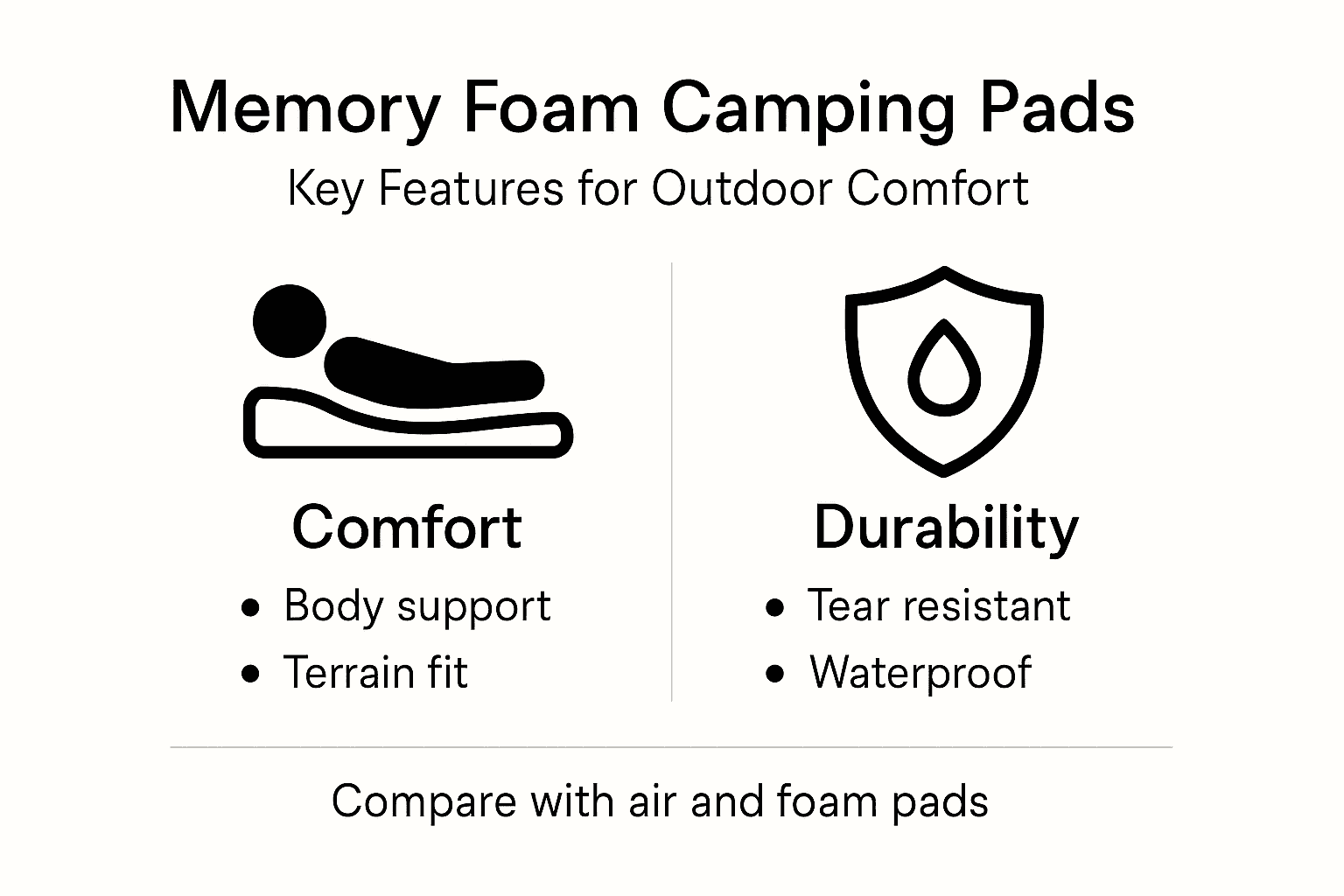
Pro tip: Always test your memory foam camping pad’s thickness and firmness at home before your trip to ensure it meets your specific comfort and support needs.
Essential Comfort and Insulation Features
Memory foam camping pads excel in providing unparalleled comfort and thermal regulation for outdoor sleeping environments. Camping mattress comfort features go far beyond simple cushioning, offering a sophisticated sleep solution that adapts to both body contours and varied terrain conditions.
Key comfort and insulation characteristics include:
- Body-contouring technology that eliminates pressure points
- Advanced heat retention capabilities
- Moisture-wicking surface materials
- Terrain-adaptive design
- Dense foam composition for stable support
The unique molecular structure of memory foam allows it to provide exceptional thermal insulation by trapping body heat effectively. This design prevents cold spots and maintains a consistent temperature throughout the night, which is crucial for comfortable outdoor sleeping. Unlike traditional sleeping pads, memory foam creates a microclimate that shields campers from ground temperature fluctuations.
Insulation isn’t just about warmth - it’s about creating a stable, comfortable environment that supports restful sleep in challenging outdoor conditions.
Understanding R-value becomes critical when evaluating insulation performance. Higher R-value ratings indicate superior heat retention, with professional-grade camping pads typically ranging between 2-4, making them suitable for three-season camping. Materials with moisture-resistant properties and breathable covers further enhance comfort by managing sweat and preventing dampness, ensuring campers remain dry and comfortable throughout their outdoor experience.
Pro tip: Store your memory foam camping pad in a cool, dry place and avoid direct sunlight to maintain its insulative properties and extend its overall lifespan.
Durability and Maintenance for Outdoor Use
Memory foam camping pads represent a significant investment in outdoor comfort, requiring strategic care to maximize their longevity and performance. Memory foam camping mattress durability depends on careful maintenance and thoughtful handling in various outdoor environments.
Key maintenance strategies include:
- Clean after each camping trip using mild soap
- Dry thoroughly before storage
- Avoid direct sunlight during extended periods
- Use protective covers when possible
- Store in cool, dry environments
- Roll instead of folding to prevent permanent creasing
The structural integrity of memory foam camping pads relies on protecting the material from moisture, extreme temperatures, and unnecessary mechanical stress. Well-maintained pads can potentially last up to a decade, making proper care crucial for long-term performance. Moisture management becomes particularly critical, as water exposure can compromise the foam’s cellular structure and lead to premature degradation.
Durability isn’t just about the product’s initial quality - it’s about how consistently and carefully you maintain your outdoor gear.
Understanding the specific environmental challenges your memory foam pad might encounter helps develop a proactive maintenance approach. Different camping environments - from humid forests to arid desert landscapes - present unique challenges that require tailored care strategies. Materials with water-resistant or waterproof properties provide an additional layer of protection against potential damage, extending the pad’s functional lifespan.
Pro tip: Invest in a breathable storage bag specifically designed for memory foam camping pads to protect against dust, moisture, and potential punctures during transport and storage.
Comparing Alternatives: Air vs Foam Pads
Camping sleep systems vary dramatically, with memory foam and air pads representing two distinct approaches to outdoor comfort. Camping mattress comparison reveals significant differences in performance, durability, and suitability for various outdoor environments.
Key comparative characteristics include:
-
Air Pads:
- Lightweight and highly packable
- Adjustable firmness
- Vulnerable to punctures
- Requires manual inflation
-
Memory Foam Pads:
- Consistent body support
- No inflation required
- Superior terrain adaptation
- Zero puncture risk
Air pads excel in weight reduction and packability, making them attractive for ultralight backpackers and minimalist travelers. However, they come with inherent risks such as potential punctures and inconsistent support, especially on uneven terrain. Memory foam pads, conversely, provide reliable cushioning and stable insulation without the complexity of inflation.
Not all sleeping solutions are created equal - your camping pad can make or break your outdoor sleeping experience.
The performance differences become most apparent in challenging environmental conditions. Terrain stability plays a crucial role in selecting the right pad. Memory foam maintains consistent support across rocky, uneven surfaces, while air pads can feel unstable and create pressure points. For cold weather camping, memory foam’s dense composition offers superior insulation compared to many air pad alternatives.
Quick reference: Memory foam vs. air pad suitability in different camping scenarios:
| Scenario | Memory Foam Pad | Air Pad |
|---|---|---|
| Rocky terrain | Optimal comfort, absorbs unevenness | May feel unstable |
| Cold weather | Superior heat retention | Limited insulation |
| Backpacking | Heavier but reliable | Ultralight, easy to carry |
| Quick setup | No inflation needed | Requires manual inflation |
Pro tip: Consider your specific camping environment and personal sleeping style when choosing between air and memory foam pads to ensure maximum comfort and performance.
Common Buying Mistakes to Avoid
Selecting the right memory foam camping pad requires careful consideration and strategic decision-making. Common camping pad purchasing errors can significantly impact your outdoor sleeping experience, potentially leading to discomfort and wasted investment.
Most frequent buying mistakes include:
- Ignoring foam density specifications
- Overlooking insulation ratings
- Neglecting personal sleeping style
- Prioritizing low cost over quality
- Failing to check pack size and weight
- Skipping moisture resistance verification
Buyers often make the critical error of selecting pads without thoroughly understanding their specific outdoor needs. Side sleepers require different pad characteristics compared to back sleepers, and backpackers need significantly lighter options than car campers. Weight and packability become crucial factors that directly influence overall trip comfort and mobility.
Not all memory foam camping pads are created equal - your selection can make or break your outdoor sleeping experience.
Understanding technical specifications goes beyond simple measurements. Temperature responsiveness, compression recovery time, and material durability play pivotal roles in determining a pad’s long-term performance. Cheaper options might seem attractive initially but can deteriorate quickly under challenging outdoor conditions, ultimately costing more in repeated replacements.
Pro tip: Always test your memory foam camping pad at home before your trip to ensure it meets your specific comfort and support requirements.
Experience Lasting Comfort with Memory Foam Camping Pads from Hazli Collection
Memory foam camping pads solve the biggest challenge of outdoor sleep comfort by delivering superior body-contouring support and reliable insulation no matter the terrain. If you have struggled with uneven ground, pressure points, or chilly nights on your camping trips, you are not alone. Our selection at Hazli Collection is designed to address these common pain points by offering high-density foams that maintain shape and warmth throughout your adventure.

Discover the difference of camping pads engineered for durability and tailored comfort. Whether you need lightweight pads for backpacking or thicker options for base camping, our intuitive online store makes it easy to find your perfect match. Act now to upgrade your outdoor sleep experience with trusted memory foam pads built to last. Browse the full collection and find the ideal camping mattress at Hazli Collection and start sleeping better under the stars today.
Frequently Asked Questions
What is a memory foam camping pad?
A memory foam camping pad is an outdoor sleeping solution designed to provide comfort and support by contouring to your body and adapting to uneven terrain, making it an ideal choice for camping.
How thick should a memory foam camping pad be?
Thickness options for memory foam camping pads usually range from 2 to 4 inches. A 2-inch pad is lightweight for backpacking, a 3-inch pad offers balanced comfort, while a 4-inch pad provides maximum cushioning for car camping.
What are the advantages of memory foam camping pads over air pads?
Memory foam camping pads offer consistent body support, superior terrain adaptation, zero risk of punctures, and do not require inflation, making them a more reliable option for varied outdoor conditions.
How can I maintain my memory foam camping pad?
To maintain your memory foam camping pad, clean it after each trip using mild soap, dry it thoroughly before storage, avoid prolonged exposure to sunlight, and store it in a cool, dry place to extend its lifespan.