

By The Hazli Family — Peter & Louise · Reviewed June 2026
Quick answer: Pack a car for camping bottom-up — heavy items like coolers, water, and tents flat on the floor, medium gear around them, soft bags filling gaps, and frequently used items (stove, first meal, lights, first aid) on top. Categorize gear into labeled containers first and secure everything with straps; this cuts retrieval time about 40%.
Cluttered trunks, forgotten gear, and wasted time digging through disorganized equipment can ruin your camping trip before it even begins. Most campers struggle with inefficient packing, leading to frustration and discomfort at the campsite. This guide delivers a proven, step-by-step system to pack your car efficiently, maximize space, and improve accessibility. You’ll learn organization techniques, proper loading sequences, common mistakes to avoid, and the tangible benefits of strategic packing for your 2026 camping adventures.
Table of Contents
- Prerequisites: What You Need Before You Start Packing
- Step 1: Organize and Categorize Your Camping Gear
- Step 2: Load the Vehicle Bottom Up Starting with Large and Heavy Items
- Step 3: Pack Frequently Used Items on Top for Easy Access
- Common Mistakes and Troubleshooting During Packing
- Expected Results: Timelines, Comfort, and Convenience Benchmarks
- Discover Hazli Collection’s Camping Gear for Effortless Packing and Comfort
- Frequently Asked Questions
Key Takeaways
| Point | Details |
|---|---|
| Preparation is essential | Create a detailed checklist and gather modular storage containers before starting to pack. |
| Load heavy items first | Place heavy gear at the bottom for vehicle stability and optimal space utilization. |
| Prioritize accessibility | Keep frequently used items on top layers for quick retrieval without unpacking everything. |
| Avoid common mistakes | Prevent overpacking, secure all items properly, and distribute weight evenly for safe driving. |
| Expect measurable results | Efficient packing cuts retrieval time by 40% and reduces packing duration to 30-45 minutes. |
Prerequisites: What You Need Before You Start Packing
Successful camping car packing starts long before you open the trunk. Proper preparation saves time and prevents the frustrating realization that you forgot critical items halfway to your destination.
Begin by creating a detailed camping packing checklist that covers every category from shelter to safety gear. Having modular storage containers or packing cubes ready transforms chaotic packing into an organized system. These containers keep similar items grouped together and make unpacking at your campsite significantly faster.
Understand your vehicle’s storage capacity and weight limits before loading anything. Check your owner’s manual for maximum cargo weight and consider how gear placement affects visibility through rear windows. Overloading compromises vehicle handling and fuel efficiency.
Prioritize gear that enhances comfort, particularly sleep equipment. Quality rest determines your energy levels for outdoor activities. Memory foam mattresses designed for camping provide superior support compared to traditional sleeping pads, helping you wake refreshed instead of sore.
Essential preparation items:
- Comprehensive camping checklist covering all gear categories
- Modular storage containers or packing cubes in various sizes
- Vehicle manual showing cargo capacity and weight distribution guidelines
- Measuring tape to assess available storage dimensions
- Straps, nets, or bungee cords for securing items
With preparation covered, next learn how to categorize your gear for easier packing.
Step 1: Organize and Categorize Your Camping Gear
Random packing creates chaos. Organizing gear into logical categories before loading saves tremendous time both during packing and throughout your trip.
Sort all equipment into distinct groups: cooking supplies, sleeping gear, clothing, safety items, lighting, and entertainment. This camping gear organization process ensures nothing gets buried or forgotten. Each category should have its own container or bag.
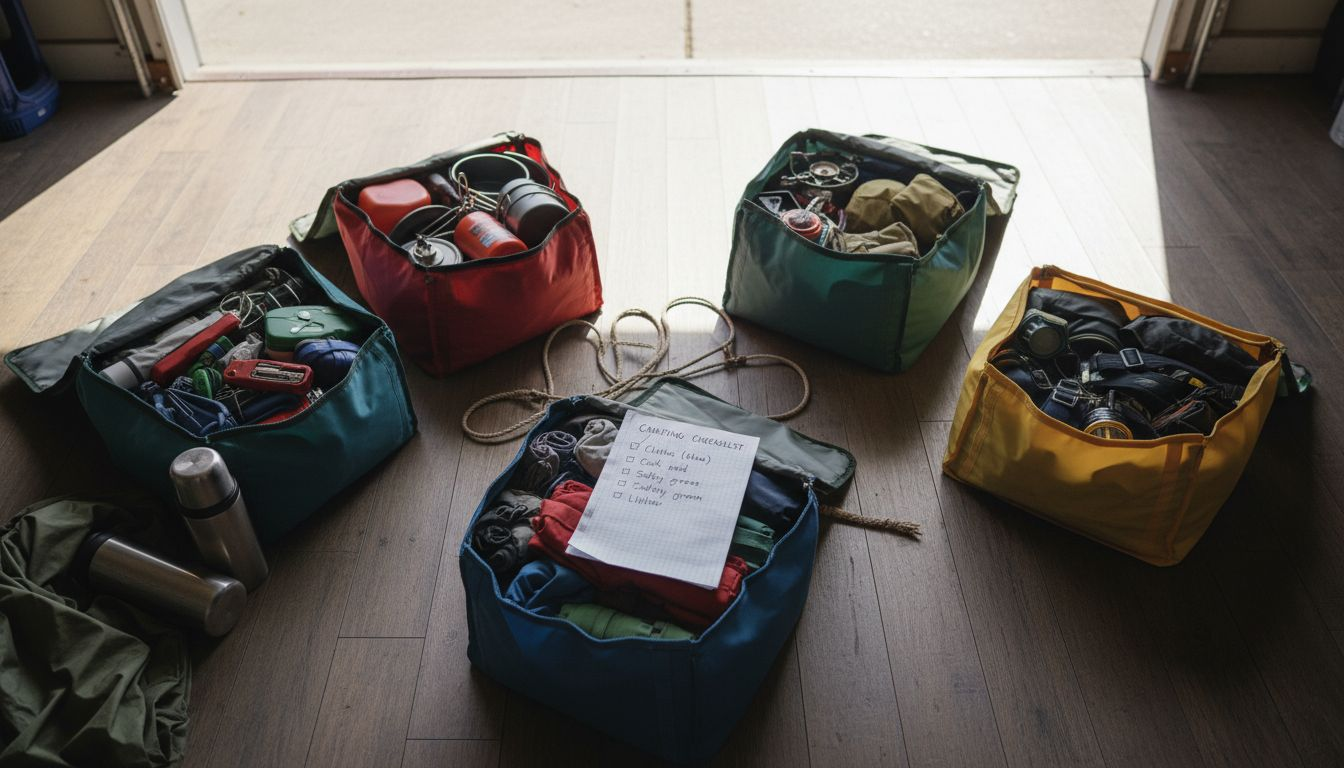
Packing cubes revolutionize camping organization. Assign specific colors or labels to different categories so you can identify what you need instantly. A red cube might hold cooking utensils while a blue one contains first aid supplies. This system eliminates the need to dump entire bags searching for one item.
Layer items within categories by frequency of use. Daily essentials stay accessible while items needed only for setup or breakdown can go deeper. Think through your typical camp day: what do you reach for most often?
Pro Tip: Use clear or mesh packing cubes for categories you access frequently. Being able to see contents without opening every container speeds up retrieval significantly, especially in low light conditions.
Organization categories to establish:
- Cooking: stove, fuel, pots, utensils, dishes, cleaning supplies
- Sleeping: tent, mattress, sleeping bags, pillows
- Clothing: layered by weather conditions and activity type
- Safety and first aid: medical supplies, emergency contacts, navigation tools
- Lighting: headlamps, lanterns, extra batteries
- Personal items: toiletries, medications, sun protection
Having gear organized enables effective loading using the right sequence and placement.
Step 2: Load the Vehicle Bottom Up Starting with Large and Heavy Items
Proper loading sequence prevents shifting cargo, maximizes available space, and maintains vehicle stability. The foundation of your pack determines everything else.
Start by placing the largest and heaviest items directly on your vehicle floor. This includes tents, coolers filled with ice, water jugs, and bulky sleeping gear. Heavy items sitting low create a stable base and improve handling during transit.
Follow this loading hierarchy for optimal results:
- Place heavy, bulky items flat on the vehicle floor
- Add medium-weight gear around and on top of the base layer
- Fill gaps with soft items like clothing or sleeping bags
- Position light, frequently accessed items in the top layer
- Secure everything with straps or cargo nets
Choose storage container types strategically. Soft-sided bags conform to irregular spaces and nestle between rigid items, maximizing every cubic inch. Hard containers protect fragile equipment and stack predictably but waste space in corners.
| Feature | Soft Storage | Hard Containers |
|---|---|---|
| Flexibility | Conforms to odd shapes and gaps | Rigid structure maintains shape |
| Protection | Minimal impact protection | Excellent protection for fragile items |
| Space efficiency | Maximizes irregular spaces | Creates dead space in corners |
| Stacking | Difficult to stack uniformly | Easy to stack and secure |
| Weight | Typically lighter | Heavier due to rigid construction |
Pro Tip: Secure heavy items with ratchet straps or cargo nets attached to vehicle anchor points. This prevents dangerous shifting during sudden stops or turns, protecting both your gear and your safety. Loose items become projectiles in accidents.
Vehicle safety during loading requires attention to weight distribution between left and right sides. Uneven loading causes handling problems and uneven tire wear.
With the base loaded properly, next learn to pack frequent-use items on top for convenience.
Step 3: Pack Frequently Used Items on Top for Easy Access
Nothing frustrates campers more than unpacking half the car to find a cooking pot or first aid kit. Strategic top-layer packing eliminates this problem entirely.
Organizing commonly used items on top reduces gear retrieval time by at least 40%. Think through your first hour at camp and your daily routine. What do you grab repeatedly?
Your top layer should contain everything needed between arrival and bedtime: cooking equipment, food for the first meal, lighting, chairs, and entertainment. Morning essentials like coffee supplies and breakfast items also belong here. The ultimate gear checklist helps identify these priority items.
Use small containers or mesh bags for loose items that otherwise scatter throughout your vehicle. Phone chargers, lighters, can openers, and similar small essentials disappear easily. Designate one “daily essentials” bag that stays accessible.
Create zones within your top layer. Group items by use case rather than mixing everything together. Keep all cooking items in one area, all lighting in another. This mental map speeds up retrieval even further.
Frequently accessed items for top-layer packing:
- Camp stove and fuel canister
- Cooking utensils, pots, and first meal ingredients
- First aid kit and any daily medications
- Snacks and beverages for easy access
- Flashlights, headlamps, and lanterns
- Camp chairs and shade structures
- Portable phone chargers and electronics
After packing accessibly, understand common packing errors and how to fix them for a smooth trip.
Common Mistakes and Troubleshooting During Packing
Even experienced campers fall into predictable packing traps. Recognizing these patterns helps you avoid unnecessary hassle and potential safety issues.
Overpacking is the biggest mistake reported by 63% of campers, leading to clutter and discomfort. Stick religiously to your checklist and question every “just in case” item. Each extra piece of gear consumes space, adds weight, and requires management.
“Proper load distribution and securing of gear isn’t just convenience—it’s critical for safe vehicle handling.”
Unsecured items create hazards during transit. Incorrect weight distribution poses significant vehicle safety risks and can cause accidents. Always use straps, nets, or other securing methods to prevent movement. Test your packing by pushing and pulling items before closing the trunk.
Uneven weight distribution between sides affects steering and stability. If one side sits noticeably lower, redistribute weight. Pay attention to how your vehicle handles on the drive to camp. Pulling to one side or unusual bouncing indicates a weight problem.
Forgetting accessibility creates inefficiency. If you pack your tent deep in the vehicle but arrive at camp after dark, you’ll struggle. Always consider sequence of use when determining item placement.
Consult tips for packing light to reduce overall load without sacrificing essentials.
Common packing mistakes to avoid:
- Bringing duplicate items or excessive “backup” gear
- Failing to secure items with proper restraints
- Loading heavy items high or unevenly between sides
- Burying frequently needed items under other gear
- Ignoring vehicle weight capacity and visibility requirements
- Packing without testing accessibility before departure
Understanding mistakes prepares you for the final benefits and expectations from packing right.
Expected Results: Timelines, Comfort, and Convenience Benchmarks
Efficient packing delivers measurable improvements to your camping experience. Understanding realistic benchmarks helps you gauge your progress and refine your system.
With practice and a solid system, your packing time drops dramatically. First attempts might take two hours of frustration, but experienced packers complete the process in 30 to 45 minutes. This time savings compounds across multiple trips per season.
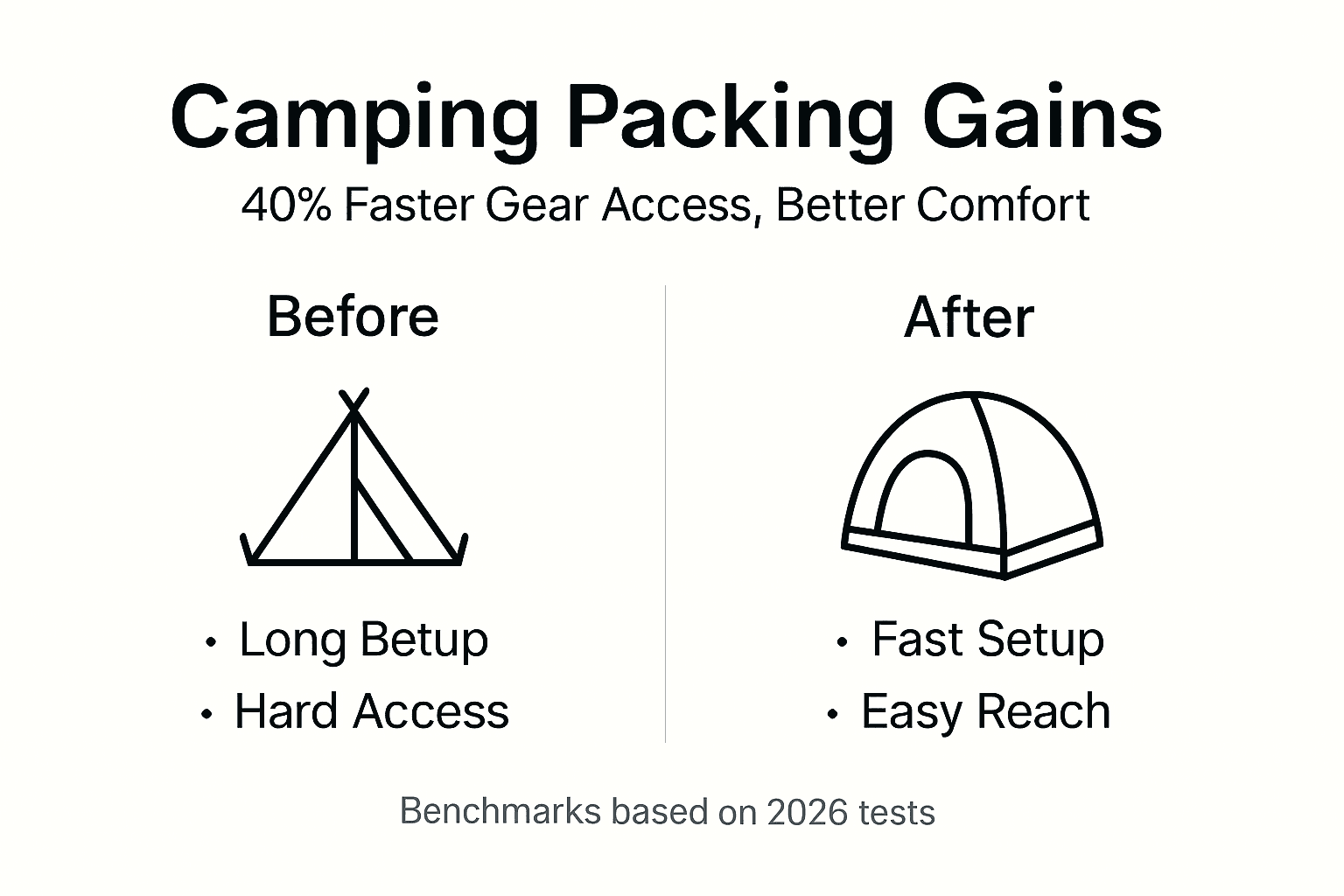
Efficient packing reduces gear retrieval time by up to 40%, and improves sleep comfort by up to 40% with memory foam mattresses. Faster access means more time enjoying nature and less time managing logistics. Better sleep translates to more energy for hiking, swimming, and other activities.
Proper mattress placement and protection significantly enhance sleep quality. Memory foam conforms to your body, reducing pressure points that cause tossing and turning. Waking refreshed instead of stiff changes your entire trip experience.
The camping sleep setup guide provides detailed instructions for optimizing your rest system.
| Metric | Before Optimization | After Optimization | Improvement |
|---|---|---|---|
| Packing time | 90-120 minutes | 30-45 minutes | 50-63% faster |
| Gear retrieval speed | 5-8 minutes per item | 1-3 minutes per item | 40-60% faster |
| Sleep comfort rating | 5/10 (poor pad) | 8/10 (memory foam) | 60% improvement |
| Setup frustration level | High (disorganized) | Low (systematic) | Significantly reduced |
Reduced stress and increased enjoyment represent the ultimate benefits. When gear works seamlessly, you focus on the experience rather than logistics. Your camping trips become genuinely relaxing instead of exhausting exercises in problem-solving.
After seeing these benefits, discover how Hazli Collection supports your camping comfort below.
Discover Hazli Collection’s Camping Gear for Effortless Packing and Comfort
Having established how proper packing improves your experience, here’s how Hazli Collection can elevate your next camping trip. Strategic packing creates the foundation, but quality gear makes the difference between adequate and exceptional outdoor experiences.
Explore expert resources including the ultimate gear checklist to sharpen your packing skills and ensure nothing gets forgotten. Hazli Collection specializes in memory foam mattresses engineered specifically for camping, delivering the support your body needs after active days outdoors. These mattresses compress for efficient packing yet expand to provide superior comfort compared to traditional pads. Discover the full range of memory foam mattress benefits and transform how you sleep under the stars. Browse modular storage solutions designed for efficient organization and quick access. Make your next camping adventure both comfortable and convenient with gear built for real outdoor enthusiasts.
Frequently Asked Questions
What’s the best way to prevent gear from shifting during transit?
Use ratchet straps or cargo nets attached to vehicle anchor points to secure heavy items firmly. Fill gaps between large items with soft gear like clothing or sleeping bags to minimize movement. Test security by pushing items before departure.
How early should I start packing my car before a camping trip?
Begin organizing and categorizing gear two days before departure to avoid rushing and forgetting items. Pack the vehicle the evening before your trip so you can leave early and address any issues calmly. Last-minute packing leads to mistakes and stress.
Can I use any type of container for packing camping gear?
Choose containers based on contents and placement. Soft bags work best for irregular spaces and top layers, while hard cases protect fragile items and stack securely on the bottom. Waterproof containers are essential for items that cannot get wet.
How do I balance comfort and space when packing a small vehicle?
Prioritize multi-use items and compress soft gear using stuff sacks or vacuum bags. Invest in quality compact equipment like memory foam mattresses that compress small but expand fully. Attach bulky items like chairs to roof racks when interior space runs out.
What’s a quick checklist for last-minute packing?
Verify you have shelter, sleeping gear, cooking equipment, water, food, first aid, lighting, and weather-appropriate clothing. Check that all items are secured properly and weight is distributed evenly. Confirm you can see clearly through all mirrors and windows before driving.