

By The Hazli Family — Peter & Louise · Reviewed June 2026
Quick answer: Travel with camping gear by assessing what your destination and trip length actually require, packing each item by weight and fragility, and securing heavy pieces low and centered in your vehicle with straps. Use compression sacks and stackable bins to save space, then test your full setup at home before departure.
Packing high quality camping gear can be the difference between a restless night and waking up ready for adventure, especially when traveling with a memory foam mattress. For the American camper, organizing gear for road trips or backcountry excursions means more than just fitting everything in the car. With over 60 percent of American campers reporting that comfort is their top priority, finding practical ways to transport and protect your mattress ensures every outdoor getaway is as relaxing as home.
Table of Contents
- Step 1: Assess Your Camping Gear and Trip Requirements
- Step 2: Select the Best Packing Method for Each Item
- Step 3: Organize and Secure Gear for Safe Transport
- Step 4: Optimize Vehicle or Luggage Space for Comfort
- Step 5: Test Setup and Make Final Adjustments
Quick Summary
| Key Insight | Explanation |
|---|---|
| 1. Assess Your Gear Before Trips | Evaluate your camping gear based on your destination, expected weather, and trip length to ensure you have the right equipment. |
| 2. Pack Methodically for Efficiency | Organize and categorize your gear based on usage frequency and fragility to maximize packing efficiency and accessibility. |
| 3. Ensure Safe Gear Transport | Distribute weight evenly and secure all equipment to avoid damage or accidents during travel to your camping location. |
| 4. Optimize Space for Comfort | Use vertical packing techniques and stackable containers to make the most of your vehicle or luggage space for a stress-free journey. |
| 5. Test Setup Before Departure | Conduct a practice run of your camping setup to troubleshoot issues and verify that all gear maintains functionality before your trip. |
Step 1: Assess Your Camping Gear and Trip Requirements
Before embarking on your outdoor adventure, you need a strategic approach to evaluating your camping gear and trip requirements. Comprehensive trip planning starts with understanding your specific camping goals and the unique demands of your destination.
Begin by defining the purpose of your trip. Are you planning a weekend wilderness trek, a family camping excursion, or a rugged backcountry expedition? Each scenario demands different gear and preparation strategies. Consider key factors like terrain type, expected weather conditions, trip duration, and available campsite amenities. Carefully inspect all your existing equipment for wear and tear, ensuring everything is functional and appropriate for your planned environment. Prioritize essential items like tents, sleeping bags, cooking supplies, and appropriate clothing layers that can adapt to potential temperature fluctuations.
Weather and location will significantly influence your gear selection. A mountain camping trip requires different preparations compared to a coastal or desert adventure. Create a detailed checklist that accounts for potential environmental challenges, including water filtration systems, appropriate shelter, and safety equipment. Research your destination thoroughly and check local regulations or permit requirements to avoid unexpected complications during your trip.
Here’s a helpful comparison of gear recommendations based on different camping environments:
| Environment | Key Gear Considerations | Typical Challenges |
|---|---|---|
| Mountain | Insulated sleeping bags, sturdy tents | Cold temps, sudden storms |
| Coastal | Waterproof shelters, sand stakes | Wind, humidity, salt exposure |
| Desert | Shade tarps, extra water storage | Heat, dehydration, sand storms |
| Forest/Wooded | Bug nets, rainproof clothing | Insects, rain, dense underbrush |
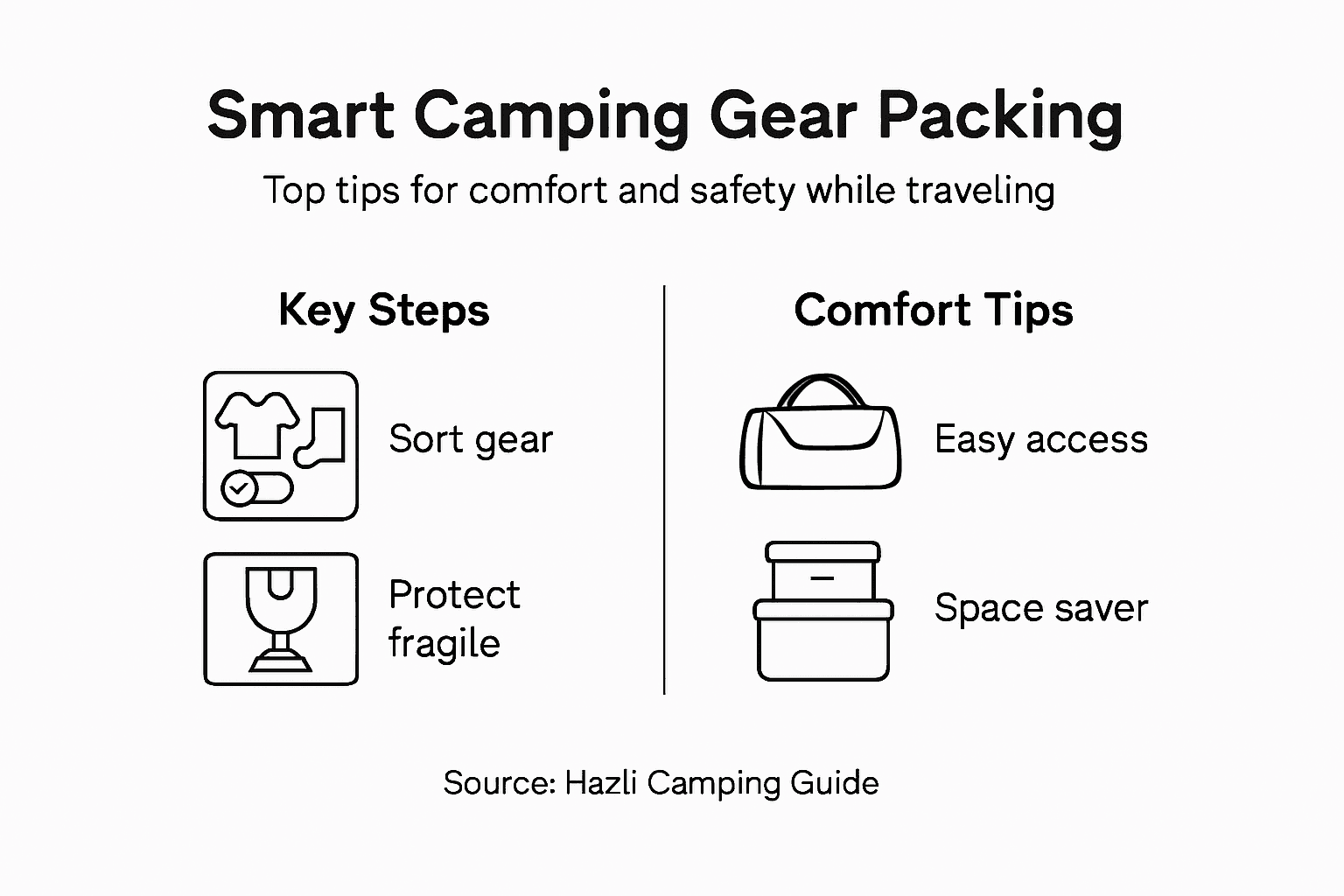
Pro tip: Always pack a lightweight emergency repair kit with multipurpose tools, extra cordage, and waterproof tape to handle unexpected gear issues during your camping journey.
Step 2: Select the Best Packing Method for Each Item
Choosing the right packing method for your camping gear is crucial for maximizing space, protecting your equipment, and ensuring easy access during your trip. Strategic gear organization begins with understanding the unique requirements of each item in your camping arsenal.
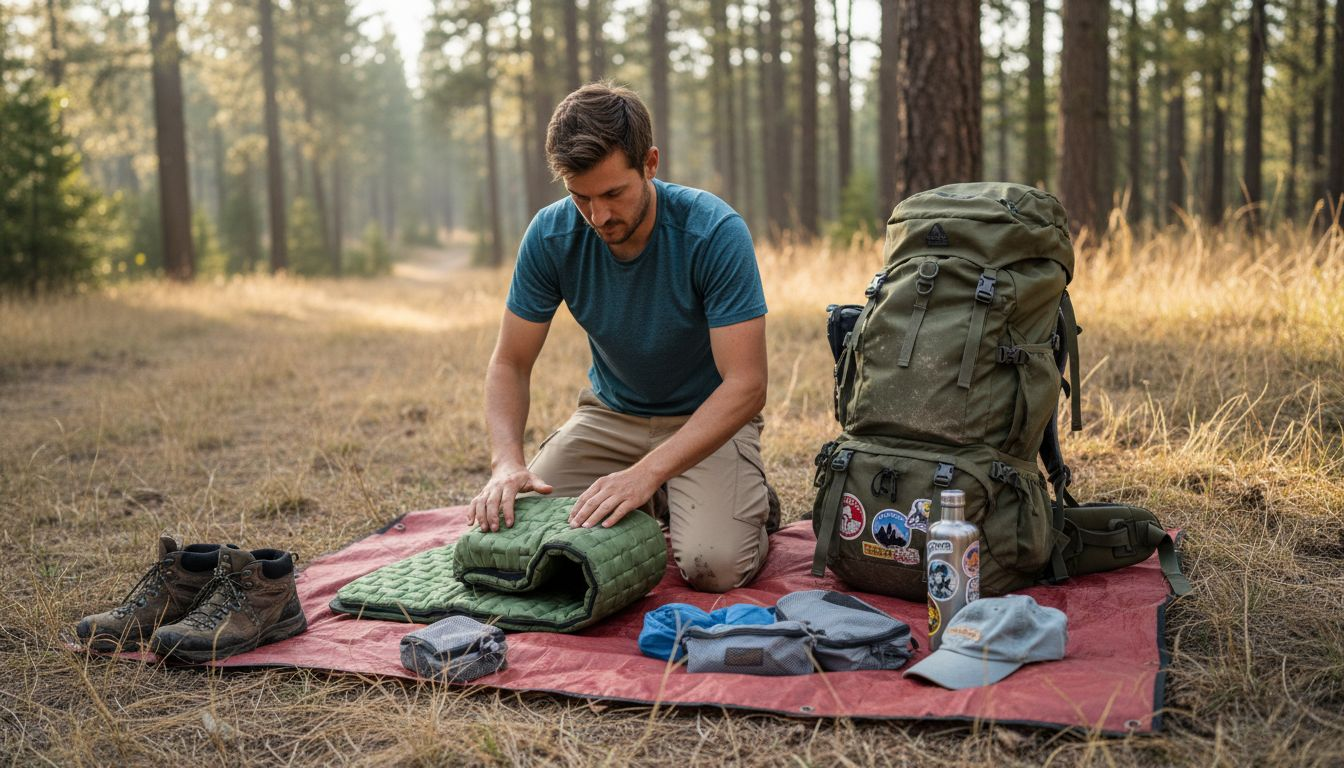
Start by categorizing your gear based on frequency of use and fragility. Heavier items like cooking equipment and tools should be placed at the bottom of your backpack or storage container to maintain balance and prevent crushing lighter items. Use compression sacks for bulky gear like sleeping bags and jackets to minimize space consumption. Consider using waterproof stuff sacks or sealed containers for electronics, first aid supplies, and clothing to protect them from moisture and potential damage. Roll your clothes instead of folding to reduce wrinkles and create more compact storage spaces.
Prioritize accessibility by creating designated zones within your pack or storage system. Keep frequently used items like water bottles, snacks, navigation tools, and rain gear in easily reachable external pockets or the top compartment of your backpack. Fragile or sensitive equipment should be wrapped in protective layers and positioned in the center of your pack where they are less likely to be bumped or jarred during transport. Label your containers or use color coded stuff sacks to quickly identify different categories of gear.
Pro tip: Invest in lightweight packing cubes or compression bags to maximize space efficiency and keep your camping gear meticulously organized throughout your adventure.
Step 3: Organize and Secure Gear for Safe Transport
Transporting your camping gear safely is as important as selecting the right equipment for your adventure. Vehicle load safety practices are critical to preventing potential accidents and protecting your valuable outdoor gear during transit.
Begin by evaluating the total weight and distribution of your camping equipment. Strategically place heavier items like coolers, tools, and cooking equipment at the bottom and center of your vehicle to maintain balance and prevent shifting during travel. Use high quality cargo straps, nets, or specialized tie downs to secure larger items firmly. Fragile equipment such as tents, sleeping bags, and electronics should be wrapped in protective padding and positioned where they will not be crushed or jostled. Create designated zones within your vehicle or trailer to keep items organized and easily accessible while minimizing potential damage from movement.
Pay special attention to potentially hazardous materials like fuel containers, propane tanks, or cooking gas. These items must be transported in approved containers, sealed tightly, and stored in well ventilated areas away from passenger spaces. Always check local regulations regarding transportation of camping equipment and ensure your load complies with highway safety standards. Regularly inspect your gear securing system during longer trips to confirm everything remains stable and properly positioned.
This table summarizes safe storage tips for common camping equipment:
| Gear Item | Best Packing Practice | Reason |
|---|---|---|
| Electronics | Use padded waterproof cases | Protects from shock/moisture |
| Fuel containers | Approved, ventilated storage area | Prevents leaks or hazards |
| Cooking tools | Bottom of pack/vehicle | Maintains balance and safety |
| First aid kit | Accessible outer pocket | Quick emergency access |
Pro tip: Invest in adjustable cargo restraints and non slip mats to create a more secure and organized transportation setup for your camping gear.
Step 4: Optimize Vehicle or Luggage Space for Comfort
Maximizing vehicle and luggage space requires strategic planning and thoughtful organization to ensure a comfortable and efficient camping trip. Vehicle loading strategies can help you create more room while maintaining vehicle balance and reducing overall travel stress.
Start by conducting a comprehensive inventory of your camping gear and categorizing items by weight, frequency of use, and fragility. Utilize vertical packing techniques by using stackable storage containers or compression bags that maximize vertical space in your vehicle or luggage. Place heavier items at the bottom and lighter items on top to maintain stability and prevent crushing delicate equipment. Consider investing in modular storage systems that can be easily reconfigured to accommodate different gear configurations and sizes.
Pay special attention to electronic devices and batteries. When traveling with camping gear that includes electronic equipment, follow specific battery transportation guidelines to ensure safety and compliance. Remove batteries from devices when possible, protect battery terminals, and store them in carry-on luggage to prevent potential damage. Use padded cases or custom-fit protective sleeves to shield sensitive electronics from shock and temperature variations during transport.
Pro tip: Create a digital or physical gear checklist with designated storage locations to streamline packing and ensure nothing gets left behind or misplaced.
Step 5: Test Setup and Make Final Adjustments
Before heading out on your camping adventure, conducting a comprehensive pre-trip gear evaluation ensures you are fully prepared and can address potential challenges before reaching your destination. A thorough test setup helps identify equipment issues and familiarize yourself with your gear in a controlled environment.
Start by assembling all your camping equipment exactly as you would at a campsite. Practice pitching your tent, setting up sleeping arrangements, and organizing your cooking area. Pay close attention to how each piece of equipment functions and check for any damage or missing components. Simulate realistic conditions by wearing the same clothing and using the same tools you would during your actual trip. This practice run allows you to troubleshoot potential problems like tent pole alignment, sleeping pad placement, or cooking equipment functionality before you are in a remote location.
Conduct a comprehensive inventory check, verifying that all essential items are present and in working order. Test electronic devices, check battery levels, and ensure your backup power sources are functional. Examine your first aid kit, tools, and emergency supplies to confirm everything is complete and accessible. Make notes about any adjustments or replacements needed, and address these before your departure to minimize potential complications during your camping experience.
Pro tip: Photograph your perfectly packed and set up gear as a visual reference and personal checklist for future trips.
Experience Maximum Comfort While Traveling with Your Camping Gear
Traveling with camping gear can be a challenge when trying to balance space, protection, and comfort. This article highlights the importance of strategic packing and gear organization to prevent damage and maximize convenience. If you want to enhance your outdoor adventures with reliable sleep solutions that adapt perfectly to any trip, focusing on comfort and durability is key.
Discover how investing in high-quality memory foam mattresses and tailored outdoor equipment from Hazli Collection can elevate your camping experience. Our products are designed to provide lasting comfort even after long days of travel and setup. Start organizing your gear smarter and sleep better by exploring our selection at Hazli Collection. Find the perfect solutions to keep your gear safe and your rest uninterrupted on every camping trip.
Frequently Asked Questions
How can I assess my camping gear for an upcoming trip?
To assess your camping gear, start by evaluating your specific trip requirements, such as the type of terrain and expected weather. Create a checklist that includes items like tents, sleeping bags, cooking supplies, and appropriate clothing, inspecting each for wear and tear to ensure everything is functional.
What is the best way to organize my camping gear for transport?
The best way to organize camping gear is to categorize items by weight, frequency of use, and fragility. Place heavier items at the bottom of your pack or vehicle, use compression bags for bulky gear, and keep frequently used items in easily accessible pockets.
How can I secure my camping gear while traveling?
Secure your camping gear by distributing weight evenly in your vehicle, placing heavier items in the center and bottom. Use high-quality cargo straps or nets to fasten larger items, ensuring that fragile gear is padded and stored securely to prevent damage during transit.
What should I do to maximize luggage space for comfort?
To maximize luggage space, utilize vertical packing techniques and invest in stackable storage containers. Keep heavier items at the bottom and lighter items on top to maintain stability, ensuring that your travel experience remains comfortable and organized.
How can I prepare my camping gear before leaving for a trip?
Prepare by conducting a pre-trip gear evaluation, assembling all equipment as you would at a campsite. Practice setting up tents and cooking areas, and check each item’s functionality to address any issues before departing, ensuring a smooth camping experience.
What are some tips for testing my camping equipment prior to a trip?
Test your camping equipment by simulating your camping setup at home. Perform a complete setup of your tent, sleeping arrangements, and cooking gear, checking for any damage and making notes of what needs to be replaced or adjusted before your trip.
Recommended
- 7 Camping Comfort Hacks for a Great Outdoor Experience – Hazli Collection
- 7 Essential Tips for the Perfect Packing Checklist for Campers – Hazli Collection
- 8 Must-Have Items for a Smart Summer Camping Packing List – Hazli Collection
- 8 Essential Tent Camping Must-Haves for Comfort and Safety – Hazli Collection