

By The Hazli Family — Peter & Louise · Reviewed June 2026
Quick answer: Outdoor-grade foam is polymeric foam engineered with base polymers and additives that resist moisture, UV radiation, and temperature swings — conditions that quickly degrade standard household foam. Common types include expanded polyethylene, reticulated foam, and closed-cell polyurethane, used in camping mattresses, sleeping pads, tent insulation, and protective gear padding.
Most standard foam breaks down quickly when exposed to rain, sun, or changing temperatures, but outdoor-grade foam stands apart for its remarkable resistance to moisture and UV rays. Whether you need reliable material for camping gear or durable padding for outdoor equipment, understanding how these specialized foams work makes a real difference. This guide unpacks the distinct features, types, and uses of outdoor-grade foam so you can make informed choices for lasting comfort and protection.
Table of Contents
- Outdoor-Grade Foam Explained and Defined
- Types of Outdoor-Grade Foam Materials
- Key Characteristics for Outdoor Use
- Applications in Camping and Outdoor Gear
- Comparing Outdoor-Grade Foam Alternatives
- Common Mistakes and Care Tips
Key Takeaways
| Point | Details |
|---|---|
| Outdoor-grade foam offers superior durability | Engineered to resist moisture, UV exposure, and temperature fluctuations, making it ideal for harsh outdoor conditions. |
| Key types include EPE and reticulated foam | These variants provide unique benefits such as mechanical strength and breathability, essential for outdoor gear. |
| Proper care is crucial for longevity | Regular cleaning and protecting from sunlight and harsh chemicals will maintain the structural integrity of foam materials. |
| Understanding material properties guides selection | Knowledge of each foam type’s characteristics ensures optimal performance in specific outdoor applications. |
Outdoor-Grade Foam Explained and Defined
Outdoor-grade foam represents a specialized category of polymeric materials engineered to withstand challenging environmental conditions. According to Wikipedia, these foams are strategically developed by selecting specific base polymers and targeted additives that enhance durability and environmental resistance.
Polymeric foam fundamentally differs from standard foam materials through its robust construction. These engineered materials are designed to combat multiple outdoor challenges such as moisture penetration, temperature fluctuations, and prolonged UV exposure. The core characteristic that distinguishes outdoor-grade foam is its ability to maintain structural integrity and performance under demanding conditions that would compromise traditional foam products.
Key characteristics of outdoor-grade foam include:
- Enhanced moisture resistance
- Superior UV protection
- Increased structural durability
- Temperature stability across wide ranges
- Resistance to environmental degradation
As highlighted by Wikipedia, closed-cell foam variants like PVC foamboard demonstrate remarkable resilience in outdoor applications. These materials excel in scenarios requiring lightweight yet rigid structures that can withstand wind, sunlight, and moisture exposure. Understanding the Role of Memory Foam Outdoors provides additional insights into how specialized foam technologies adapt to challenging external environments, making them invaluable for outdoor enthusiasts and professionals alike.
Types of Outdoor-Grade Foam Materials
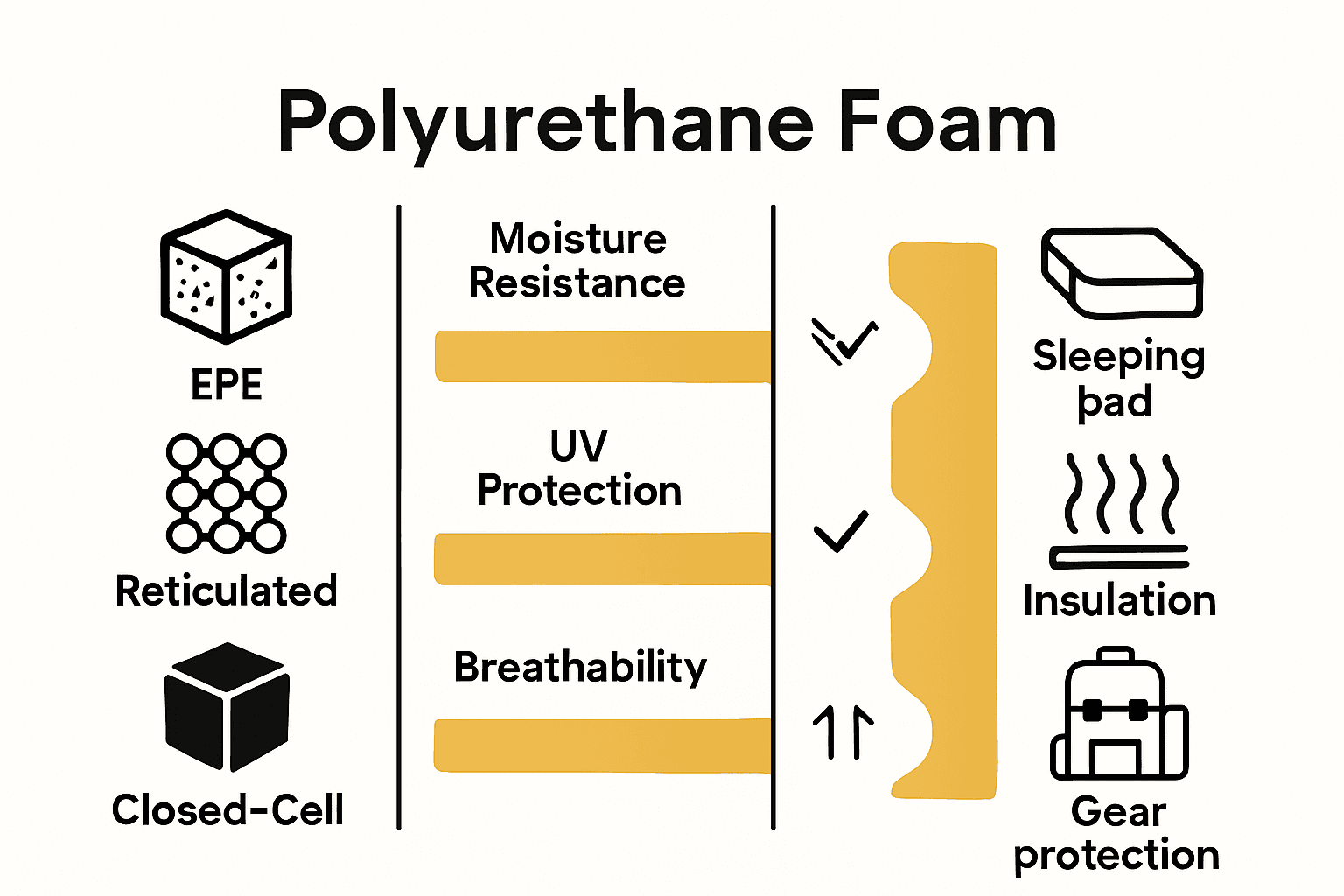
Outdoor-grade foam materials come in diverse compositions, each engineered to meet specific environmental challenges and performance requirements. Expanded polyethylene (EPE) stands out as a remarkable material in this category. According to Wikipedia, EPE is a closed-cell foam renowned for its exceptional moisture resistance and robust mechanical strength, making it an ideal choice for demanding outdoor applications.
Another critical type of outdoor foam is reticulated foam, which offers unique properties for specialized environments. Wikipedia describes this material as a highly porous, low-density substance particularly useful in scenarios requiring extensive surface area and significant air or liquid permeability. Its distinctive structure allows for excellent breathability and lightweight performance, crucial for outdoor gear and equipment.
Key types of outdoor-grade foam materials include:
- Expanded Polyethylene (EPE)
- Reticulated Foam
- Closed-cell Polyurethane
- Cross-linked Polyethylene (XLPE)
- Polyvinyl Chloride (PVC) Foam
For outdoor enthusiasts seeking practical insights into foam selection, Memory Foam vs Air Mattress Camping provides a comprehensive comparison of different foam technologies and their real-world performance. Understanding the nuanced characteristics of these materials ensures optimal comfort and durability in challenging outdoor environments.

Key Characteristics for Outdoor Use
Outdoor-grade foam materials must possess a unique set of characteristics to withstand challenging environmental conditions. According to Wikipedia, these materials require specific properties such as being lightweight, rigid, and highly resistant to moisture, wind, and sunlight. These fundamental attributes ensure durability and performance in diverse outdoor settings.
Moisture resistance stands as a critical characteristic for outdoor foam materials. Wikipedia highlights that expanded polyethylene (EPE) foam exemplifies exceptional moisture protection, which is crucial for maintaining structural integrity in humid, wet, or variable environmental conditions. This characteristic prevents degradation, mold growth, and material breakdown that can compromise outdoor equipment’s reliability.
Key characteristics for outdoor-grade foam include:
- Superior moisture resistance
- High mechanical strength
- UV radiation protection
- Temperature stability
- Lightweight construction
- Rapid drying capabilities
- Chemical resistance
- Minimal water absorption
For outdoor enthusiasts seeking practical guidance on selecting the right foam materials, Best Memory Foam Camp Beds offers comprehensive insights into matching foam characteristics with specific outdoor use requirements. Understanding these critical attributes ensures optimal performance and longevity of outdoor equipment across various environmental challenges.
Applications in Camping and Outdoor Gear
Foam technologies have revolutionized camping and outdoor gear, offering innovative solutions for comfort and functionality. According to Wikipedia, expanded polyethylene (EPE) foam is particularly valued in camping equipment due to its exceptional lightweight and moisture-resistant properties, making it an ideal material for various outdoor applications.
Reticulated foam represents another critical innovation in outdoor gear design. Wikipedia highlights its unique characteristics of high porosity and extensive surface area, which make it incredibly versatile for specialized outdoor equipment. This foam type excels in scenarios requiring breathability, quick drying, and minimal weight.
Key applications of outdoor-grade foam materials include:
- Sleeping pad cushioning
- Tent floor insulation
- Backpack padding
- Protective gear lining
- Insulation for outdoor clothing
- Emergency flotation devices
- Cooler and thermal container construction
- Protective cases for outdoor electronics
Outdoor enthusiasts looking to optimize their gear selection will find 8 Essential Tent Camping Must-Haves for Comfort and Safety an invaluable resource for understanding how advanced foam technologies can enhance camping experiences and equipment performance.
Comparing Outdoor-Grade Foam Alternatives
Comparing outdoor-grade foam alternatives reveals a complex landscape of specialized materials designed to meet diverse environmental challenges. According to Wikipedia, expanded polyethylene (EPE) foam stands out for its remarkable moisture resistance and mechanical strength, providing a robust solution for outdoor equipment that demands durability and protection.
Reticulated foam presents a fascinating alternative with its unique structural characteristics. Wikipedia highlights its exceptional high porosity and extensive surface area, making it particularly advantageous in applications requiring enhanced breathability and lightweight performance. This foam type excels where traditional materials might compromise functionality.
Key comparative characteristics of outdoor-grade foam alternatives include:
- Moisture resistance
- Weight and density
- Thermal insulation properties
- Mechanical strength
- Durability under environmental stress
- Breathability
- Cost-effectiveness
- Versatility across different applications
Outdoor enthusiasts seeking nuanced insights into foam selection can explore Essential Memory Foam Mattress Setup for Outdoor Comfort to understand how different foam alternatives perform in real-world camping and outdoor scenarios.
Common Mistakes and Care Tips
Maintaining outdoor-grade foam materials requires careful attention and strategic care to preserve their performance and longevity. According to Wikipedia, proper maintenance begins with regular cleaning to prevent buildup of dirt and debris, which can compromise the material’s structural integrity and functional capabilities.
Chemical exposure and environmental factors represent significant risks to outdoor foam materials. Wikipedia warns that expanded polyethylene (EPE) foam is particularly sensitive to prolonged direct sunlight and harsh chemical interactions, which can rapidly degrade its molecular structure and compromise its protective properties.
Common mistakes in outdoor foam care include:
- Leaving foam materials exposed to direct sunlight for extended periods
- Using aggressive chemical cleaners
- Storing foam in damp or non-ventilated spaces
- Failing to dry foam completely after moisture exposure
- Applying excessive mechanical stress
- Ignoring minor tears or structural damage
- Storing at extreme temperature ranges
- Neglecting regular inspection and maintenance
Outdoor gear enthusiasts seeking comprehensive guidance on equipment maintenance can explore Essential Outdoor Mattress Care Instructions to develop a robust understanding of proper foam material preservation techniques.
Choose the Right Outdoor-Grade Foam for Your Adventures
The challenge of finding foam that endures moisture, UV rays, and temperature changes is real for every outdoor enthusiast. This article showed how crucial properties like moisture resistance and durability are to keep your gear reliable and comfortable. If you want to avoid gear failure or sleepless nights caused by poor foam choices, understanding these tough standards is vital.
At Hazli Collection, we understand the importance of comfort that lasts through all weather conditions. Our premium memory foam mattresses and outdoor gear balance lightweight design with rugged performance to meet your exact outdoor needs. Whether you seek protection from damp ground or long-lasting cushioning, our curated selection supports your toughest adventures.
Discover how the right foam can transform your outdoor experience.
Explore durable and comfortable solutions today by visiting Hazli Collection’s home page. Take the first step toward guaranteed outdoor comfort now and never compromise on quality or performance.
Frequently Asked Questions
What are outdoor-grade foam materials?
Outdoor-grade foam materials are specialized polymeric foams designed to withstand environmental challenges such as moisture, UV exposure, and temperature fluctuations. They are engineered for durability and structural integrity in outdoor applications.
How does expanded polyethylene (EPE) compare to reticulated foam in outdoor use?
Expanded polyethylene (EPE) is known for its lightweight and moisture-resistant properties, making it ideal for camping gear. Reticulated foam, on the other hand, offers high porosity and breathability, which is beneficial in applications needing quick drying and lighter weight, such as in outdoor equipment.
What are the key characteristics to look for in outdoor foam materials?
Key characteristics to consider include moisture resistance, mechanical strength, UV protection, temperature stability, lightweight construction, rapid drying capabilities, and chemical resistance. These attributes ensure the foam performs well in various outdoor conditions.
What are common applications for outdoor-grade foam in camping gear?
Outdoor-grade foam is commonly used in sleeping pads, tent floor insulation, backpack padding, protective gear lining, insulation for outdoor clothing, emergency flotation devices, and cooler construction. These applications leverage the unique properties of outdoor-grade foam for enhanced performance and comfort.