

By The Hazli Family — Peter & Louise · Reviewed June 2026
Quick answer: To stay warm car camping, layer moisture-wicking base layers under insulating mid layers and a windproof shell, sleep in a bag rated 10–20°F below the forecast low on an insulated pad or memory foam mattress, run the engine only in short ventilated bursts, and fuel your body with warm drinks and high-calorie food.
Waking up in your car at 3 AM, teeth chattering and body shivering, ruins what should be an enjoyable outdoor adventure. Staying warm during cold weather car camping involves more than throwing on extra blankets. Your body loses heat through multiple mechanisms, and understanding how to prevent that loss through proper layering, insulation, safe vehicle heating, and nutrition transforms uncomfortable nights into cozy experiences you’ll want to repeat.
Table of Contents
- Understanding Cold Weather Challenges In Car Camping
- What You Need Before You Start: Essential Gear And Vehicle Prep
- Clothing And Layering Strategies For Warmth
- Sleeping Setup And Insulation Techniques
- Vehicle Heating And Ventilation Safety
- Hydration And Nutrition For Maintaining Body Heat
- Common Mistakes And Troubleshooting Cold Weather Car Camping
- Expected Results And Success Metrics For Staying Warm
- Gear Up For Your Cold Weather Car Camping Adventures
- Frequently Asked Questions About Staying Warm Car Camping
Key takeaways
| Point | Details |
|---|---|
| Layer strategically | Moisture wicking base layers, insulating mid layers, and windproof outer layers trap heat effectively. |
| Insulate your sleep setup | Sleeping bags rated 10 to 20°F below expected lows with insulated pads reduce overnight heat loss. |
| Use vehicle heating safely | Run engine intermittently with cracked windows and clear exhaust to prevent carbon monoxide buildup. |
| Fuel your body’s furnace | Stay hydrated with warm fluids and eat high calorie foods to maintain metabolic heat production. |
| Avoid common pitfalls | Never wear cotton, run engine unattended, or skip adequate insulation beneath your sleeping bag. |
Understanding cold weather challenges in car camping
Your body constantly generates heat through metabolism, but cold environments steal that warmth faster than you can produce it. Body heat escapes through four primary mechanisms: radiation where heat radiates away from your skin, convection when cold air flows across your body, conduction when you touch cold surfaces, and evaporation as moisture from sweat or breath leaves your skin.
Car camping in freezing temperatures increases your exposure to all four heat loss types simultaneously. Metal car surfaces conduct heat away from your body. Cold air infiltrates through door seals and windows. Your breath creates moisture that can dampen clothing and sleeping bags. Without proper countermeasures, these factors combine to create hypothermia risk, where your core body temperature drops below 95°F, or frostbite on exposed skin.
Successful cold weather camping requires blocking each heat loss pathway systematically:
- Trap warm air close to your skin with proper clothing layers
- Insulate yourself from cold surfaces using thick sleeping pads
- Control moisture through ventilation and material selection
- Generate internal heat through nutrition and hydration
Understanding these principles guides every decision from gear selection to sleeping position. The goal isn’t just survival but comfortable, restful sleep that lets you wake up refreshed and ready for adventure.
What you need before you start: essential gear and vehicle prep
Proper preparation separates comfortable cold camping from miserable nights. Start your checklist weeks before departure to identify gaps and make necessary purchases.
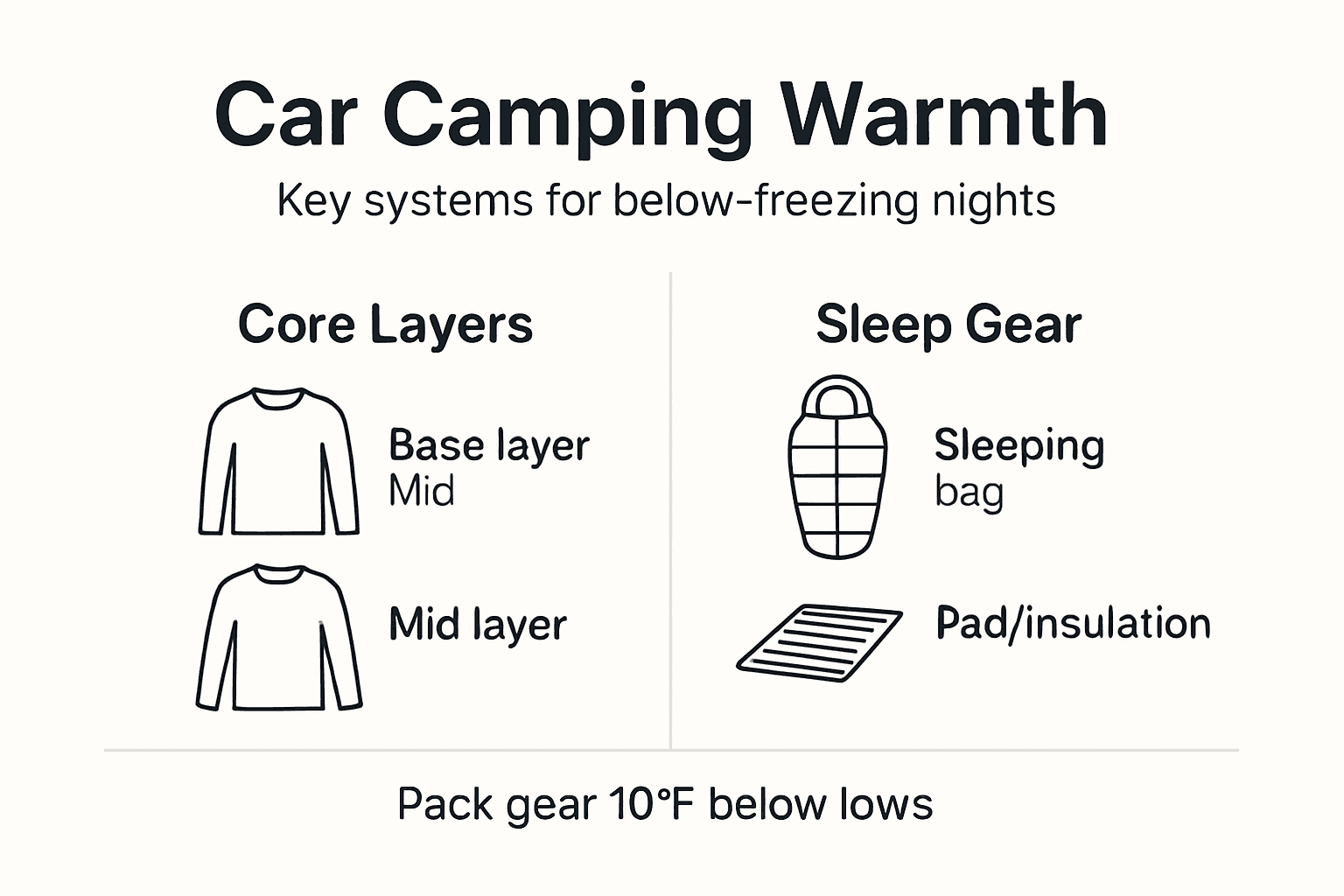
Your clothing system forms the foundation. Pack moisture wicking synthetic or merino wool base layers for next to skin wear. Add insulating mid layers like fleece pullovers or down jackets. Top with windproof, waterproof shells. Include warm hats, neck gaiters, insulated gloves, and wool socks. Avoid cotton entirely as it retains moisture.
Your sleep system determines overnight comfort. Select a sleeping bag rated at least 10°F below your expected low temperature. Pair it with an insulated sleeping pad rated R value 4.0 or higher, or use a memory foam mattress designed for camping. Keep extra wool blankets or emergency thermal blankets as backup layers.
Vehicle maintenance and emergency supplies prevent dangerous situations. Check your battery strength, tire pressure, and antifreeze levels. Keep your fuel tank at least half full to power intermittent heating and avoid fuel line freezing. Pack an emergency kit containing jumper cables, flashlight with extra batteries, first aid supplies, non perishable food, and extra blankets.
Create a pre trip winter camping checklist covering these categories:
| Category | Essential Items |
|---|---|
| Clothing | Base layers, mid layers, outer shells, accessories |
| Sleep System | Cold rated sleeping bag, insulated pad, extra blankets |
| Vehicle Prep | Half tank fuel minimum, battery check, tire inspection |
| Emergency Kit | Jumper cables, flashlight, first aid, backup food |
| Extras | Hand warmers, hot water bottle, camp stove |
Clothing and layering strategies for warmth
Most people pile on heavy coats and thick sweaters, then wonder why they wake up cold and clammy. Effective layering traps warm air pockets between thin, specialized fabrics that work together as an integrated system.
Start with a moisture wicking base layer against your skin. Synthetic fabrics or merino wool pull sweat away from your body, preventing evaporative cooling. This foundation keeps you dry even during active setup or hiking. Never wear cotton base layers because wet clothing increases heat loss up to 5 times compared to dry fabrics.
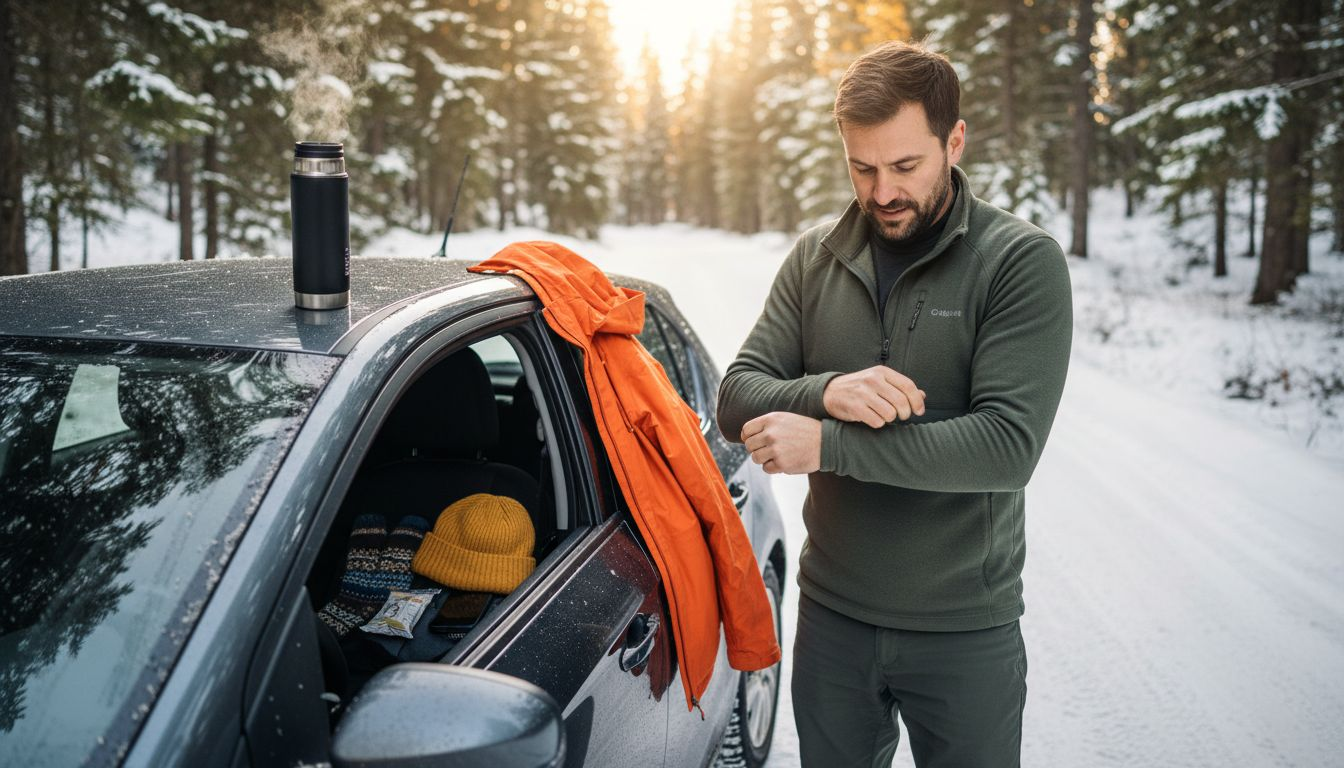
Add insulating mid layers that trap dead air spaces. Fleece, down, or synthetic puffy jackets create loft without weight. These materials maintain their insulating properties even with slight dampness. Wear one or two mid layers depending on temperature, and adjust as conditions change throughout the day.
Top your system with windproof, waterproof outer layers. Your shell blocks convective heat loss from wind and keeps precipitation from soaking inner layers. Quality outer layers include pit zips or vents for moisture management during activity.
Cover extremities where heat escapes fastest. Wear a warm beanie or balaclava since you lose significant heat through your head. Use a neck gaiter or scarf to protect your throat and face. Insulated gloves with waterproof shells keep hands functional. Wear thick wool or synthetic socks inside insulated boots.
Pro Tip: Remove a layer before you start sweating during setup or activity, then add it back immediately when you stop moving. This prevents moisture buildup that will chill you later when temperatures drop.
Adjust your layering strategy throughout the day as activity levels change. Shed layers during physical work, add them during rest. This dynamic approach maintains dry, warm comfort without overheating.
Sleeping setup and insulation techniques
Your sleeping system either keeps you cozy or leaves you shivering regardless of how well you layered your clothing. Cold car surfaces conduct heat away from your body all night unless you create proper insulation barriers.
Select sleeping bags rated 10 to 20°F below your expected overnight low. If forecasts predict 20°F, use a bag rated for 0 to 10°F. Manufacturers test bags under controlled conditions, but real world performance varies with individual metabolism, clothing worn, and pad insulation. Down bags offer superior warmth to weight ratios but lose insulation when damp. Synthetic bags maintain warmth when wet but weigh more and compress less.
Insulated sleeping pads matter as much as your bag. Ground and vehicle surfaces steal body heat through conduction faster than cold air. Use pads with R values of 4.0 or higher for winter camping. Stack a closed cell foam pad beneath an inflatable pad for maximum insulation. Memory foam mattresses designed for car camping provide excellent comfort and insulation when combined with a moisture barrier underneath.
Boost your sleep system with additional layers. Place a sleeping bag liner inside your bag for 5 to 15°F extra warmth. Drape wool blankets over your sleeping bag. Use emergency reflective blankets between your sleeping bag and any top covers to reflect radiated body heat back toward you.
Control moisture inside your vehicle to prevent dampness. Crack windows slightly for ventilation even in freezing weather. Condensation from your breath will otherwise saturate fabrics and sleeping bags, destroying their insulating properties. Wipe down windows in the morning to remove accumulated moisture.
Pro Tip: Place a closed cell foam pad or thick cardboard beneath your mattress or sleeping pad to create an additional moisture barrier and insulation layer between you and the cold car floor.
Compare insulation options for your sleeping setup:
| Sleep Component | Temperature Rating | Insulation Value |
|---|---|---|
| 3 season sleeping bag | 20 to 30°F | Adequate for mild cold only |
| Winter sleeping bag | 0 to 10°F | Suitable for most cold camping |
| Expedition sleeping bag | -10 to -20°F | Extreme cold conditions |
| Inflatable pad R-2 | Minimal | 3 season use only |
| Inflatable pad R-4+ | Good | Winter rated insulation |
| Memory foam + foam pad | Excellent | Superior comfort and warmth |
Vehicle heating and ventilation safety
Your car heater provides supplemental warmth but creates serious risks without proper precautions. Carbon monoxide poisoning kills silently, and fuel shortages strand campers in dangerous cold.
Run your engine intermittently rather than continuously. Turn on the heat for 10 minutes each hour, then shut off the engine. This conserves fuel and reduces carbon monoxide accumulation. Set alarms on your phone to wake for heating cycles if needed overnight.
Ensure adequate ventilation always. Crack two windows on opposite sides of your vehicle at least one inch to create cross flow. Fresh air dilutes any exhaust that might enter the cabin and removes moisture from your breath. Never seal your car completely even when the engine is off.
Inspect your exhaust system before each trip. Clear snow, ice, or debris from around your tailpipe and underneath your vehicle. Blocked exhaust forces deadly carbon monoxide back into the cabin through gaps in the body or ventilation system. Check exhaust clearance every time you turn on the engine.
Maintain fuel reserves above half full at all times. Running out of gas in freezing conditions becomes life threatening quickly. A half tank provides hours of intermittent heating plus reserve for emergencies or unexpected delays.
Never sleep with the engine running in enclosed spaces. Garages, covered parking structures, or heavy snow buildup around your vehicle all trap exhaust. If you must run the engine overnight, ensure you’re in an open area with clear airflow around the entire vehicle.
Follow these car camping safety practices every trip:
- Check exhaust clearance before starting engine
- Keep windows cracked regardless of outside temperature
- Set timed heating intervals rather than continuous operation
- Monitor fuel levels and refill before dropping below half
- Park in open areas away from snow drifts or enclosed spaces
- Keep a carbon monoxide detector in your vehicle
Hydration and nutrition for maintaining body heat
Your body generates heat through metabolic processes that require constant fuel and hydration. Skipping meals or letting yourself get dehydrated forces your system to work harder and produce less warmth.
Drink warm fluids throughout the day and before bed. Hot tea, cocoa, or soup provides immediate warmth and maintains hydration. Your body needs water to maintain blood circulation that distributes heat to extremities. Cold weather masks thirst signals, so drink on schedule even without feeling thirsty.
Avoid caffeine and alcohol despite their warming sensation. Caffeine acts as a diuretic that promotes dehydration and increases heat loss. Alcohol dilates blood vessels near your skin, creating false warmth while actually increasing core heat loss and hypothermia risk. Stick to herbal teas, hot water, or decaf beverages.
Eat high calorie, nutrient dense foods regularly. Proper nutrition supports metabolic heat production during cold exposure. Your body burns significantly more calories maintaining warmth in freezing conditions. Pack foods with healthy fats, proteins, and complex carbohydrates.
Time your eating strategically for warmth. Eat a substantial snack before bed to fuel overnight heat production. Keep simple snacks accessible inside your sleeping bag for middle of the night energy. Have breakfast ready to prepare quickly in the morning to jumpstart your metabolism.
Stock these warming foods and drinks for cold camping:
- Warm beverages: herbal tea, hot cocoa, bone broth, decaf coffee
- High calorie snacks: nuts, nut butter, cheese, dark chocolate, dried fruit
- Protein rich meals: jerky, canned fish, beans, dehydrated camping meals
- Complex carbs: oatmeal, whole grain crackers, energy bars
- Healthy fats: avocado, olive oil, coconut oil for cooking
Common mistakes and troubleshooting cold weather car camping
Even experienced campers make errors that compromise warmth and safety. Recognizing these pitfalls before your trip prevents uncomfortable or dangerous situations.
Wearing cotton clothing ranks as the most common mistake. Cotton absorbs and holds moisture from sweat or condensation, then conducts heat away from your body. Many cold injuries occur because campers wear cotton in conditions where synthetic or wool fabrics would keep them warm and dry. Replace all cotton items with technical fabrics.
Running your engine unattended or in enclosed spaces causes carbon monoxide poisoning. Never leave your car running while you sleep without proper ventilation and exhaust clearance. Set alarms for heating intervals where you wake, check conditions, run the heater briefly, then return to sleep.
Understimating insulation needs beneath your sleeping area leaves you cold all night. The ground or car floor pulls heat away faster than cold air. Always use properly rated sleeping pads or mattresses with additional foam layers underneath.
Ignoring early hypothermia symptoms allows dangerous progression. Shivering, confusion, slurred speech, numbness, and loss of coordination all indicate dropping core temperature. Warm up immediately by adding layers, drinking warm fluids, eating food, and using your heater. Don’t wait for symptoms to worsen.
Forgetting to manage moisture creates wet gear that loses insulating properties. Condensation from your breath, wet clothes from activity, or snow tracked inside all introduce moisture. Ventilate your vehicle, dry wet items before bed, and store damp gear separately from dry clothing.
Pro Tip: Create a pre trip checklist covering gear, clothing, food, fuel, and safety items. Review it before each camping trip to catch forgotten items or preparation steps that could compromise your warmth and safety.
Avoid these frequent car camping errors:
- Wearing cotton base layers or socks
- Running engine continuously overnight
- Insufficient insulation under sleeping bag
- Ignoring early cold stress symptoms
- Failing to ventilate vehicle properly
- Skipping meals or hydration
- Not checking weather forecasts before departure
Expected results and success metrics for staying warm
Knowing whether your cold weather strategies work helps you refine your approach and build confidence for future trips. Objective signs indicate effective warmth management.
Sleeping comfortably through the night without frequent shivering spells means your insulation and clothing layers match conditions. You should wake feeling rested rather than exhausted from fighting cold. Occasional light shivers are normal as your body adjusts, but constant shaking indicates insufficient warmth.
Maintaining dry skin and clothing throughout your trip shows proper moisture management. Your base layers should feel dry against your skin. Sleeping bags and blankets remain fluffy rather than damp and compressed. Effective ventilation prevents condensation buildup.
Using vehicle heating safely without issues confirms good technique. Your fuel lasts the entire trip with reserves remaining. No carbon monoxide detector alarms sound. You wake for heating intervals alert and comfortable rather than desperate and frozen.
Experiencing no cold stress symptoms validates your preparation. Your fingers and toes stay responsive and normally colored. Your thinking remains clear. You maintain energy and enthusiasm for activities. Your appetite stays normal or elevated.
Measure your cold camping success with these indicators:
- Sleeping 6 to 8 hours with minimal wake ups from cold
- Dry base layers and sleeping bag in the morning
- Warm extremities with normal color and sensation
- Clear thinking and normal coordination
- Fuel lasting entire trip with 25% or more remaining
- Enthusiasm for the experience rather than just enduring it
Gear up for your cold weather car camping adventures
Applying these warmth strategies requires proper equipment and preparation. Hazli Collection provides comprehensive resources to ensure you have everything needed for comfortable cold weather camping.

Our ultimate gear checklist covers clothing, sleep systems, safety equipment, and vehicle prep essentials. Review detailed guides on optimizing your camping sleep setup with proper insulation and mattress selection. Access proven winter camping checklist tips refined through years of cold weather experience. Start planning your next cozy cold weather adventure with confidence knowing you have the knowledge and gear to stay warm and safe.
Frequently asked questions about staying warm car camping
What is the best way to layer clothing for cold car camping?
Start with moisture wicking synthetic or merino wool base layers against your skin to keep dry. Add insulating mid layers like fleece or down that trap warm air. Finish with windproof, waterproof outer shells that block convection and precipitation. Adjust layers throughout the day as activity levels change to prevent sweating.
How can I safely use my car heater while sleeping during cold camping?
Run your engine intermittently for 10 minutes each hour rather than continuously. Keep at least two windows cracked one inch for ventilation and air exchange. Always ensure your exhaust pipe and undercarriage are clear of snow and debris before starting the engine. Follow these safe vehicle heating practices every time you camp in cold weather.
What foods help maintain body heat during cold camping?
Eat calorie dense foods high in protein and healthy fats like nuts, nut butter, cheese, and jerky. Consume complex carbohydrates such as oatmeal and whole grains for sustained energy. Drink warm herbal teas, hot cocoa, or broth regularly to maintain hydration and provide immediate warmth. Avoid caffeine and alcohol as they promote dehydration and increase heat loss despite their initial warming sensation.
How cold rated should my sleeping bag be for car camping?
Choose sleeping bags rated 10 to 20°F below your expected overnight low temperature. If weather forecasts predict 25°F lows, use a bag rated for 5 to 15°F. Pair your bag with an insulated sleeping pad rated R value 4.0 or higher to prevent heat loss through conduction from cold car surfaces.
What are the signs of hypothermia I should watch for while cold camping?
Early hypothermia symptoms include intense shivering, confusion, slurred speech, drowsiness, and loss of coordination. Your skin may appear pale or bluish. If you notice these signs, immediately add clothing layers, drink warm fluids, eat high calorie food, and use your vehicle heater. Never ignore cold stress symptoms as they worsen rapidly without intervention.
Can I use a regular sleeping pad for winter car camping?
Regular three season sleeping pads typically have R values below 3.0 and provide insufficient insulation for winter conditions. Use winter rated pads with R values of 4.0 or higher, or stack multiple pads together. Memory foam mattresses designed for camping offer excellent insulation when combined with a closed cell foam pad underneath as a moisture barrier.
Recommended
- How to Layer for Camping Sleep: Achieve Maximum Comfort Outdoors – Hazli Collection
- Outdoor Sleep Comfort Tips for Cozy Camping Nights – Hazli Collection
- 8 Essential Tips for the Ultimate Winter Camping Checklist – Hazli Collection
- How to Make My Camp Bed More Comfortable? 7 Smart Tips for Better Outd – Hazli Collection