

Quick answer: A self-inflating mattress is a camping sleep pad made of open-cell polyurethane foam sealed inside an airtight fabric shell. Opening the valve lets the compressed foam expand and draw in air, usually with a few breaths to finish. It sets up fairly quickly, adds a layer between you and the ground, and packs down for backpacking and car camping.
A good night’s sleep can make a big difference on a camping trip, which is why your sleeping gear matters. Self-inflating mattresses offer quick setup and real comfort with little effort. Here is how they work, and how they compare with other options.
Table of Contents
- What Is A Self-Inflating Mattress?
- Types And Construction Methods Explained
- How Self-Inflating Mattresses Work
- Benefits For Camping And Outdoor Use
- Common Issues And How To Avoid Them
- Comparing Self-Inflating Vs. Other Mattresses
Key Takeaways
| Point | Details |
|---|---|
| Self-Inflating Mechanism | Open-cell foam expands when the valve is opened and draws in air, so there is little or no pumping. |
| Construction Variations | Pads vary in thickness, foam, and fabric, from thin backpacking models to thick car camping ones. |
| Benefits for Users | They balance comfort and packability, with adjustable firmness and fairly quick setup. |
| Common Issues | Slow inflation in cold weather and punctures are the usual problems, and some simple care can help. |
What Is a Self-Inflating Mattress?
A self-inflating mattress is a sleeping pad that combines foam and air. The design first appeared in the early 1970s and is now a common type of camping gear.
It consists of an airtight fabric envelope filled with open-cell polyurethane foam. When the valve is opened, the foam begins to expand and draws air into the pad. This makes setup simple for campers and outdoor travelers.
The open-cell foam acts like a compressed sponge that wants to return to its original shape. As it expands, it pulls air in. You get a cushioned sleeping surface after a short wait, and you can add a few breaths for extra firmness.
Key components of a self-inflating mattress include:

- Airtight fabric exterior
- Open-cell polyurethane foam interior
- An inflation valve
- A design that rolls up for transport
Considering foam without the valve? See our guide on memory foam mattress setup for outdoor comfort.
Types and Construction Methods Explained
Self-inflating mattresses share the same basic idea, but construction varies.
Thin models, often around an inch thick, are made for backpacking. Thicker models, up to about 4 inches, are made for car camping. Some add cored-out foam to save weight, or extra layers meant to add warmth. Fabric also varies, with tougher fabrics usually adding weight.
Key construction characteristics include:
- Airtight fabric envelope
- Compressed open-cell foam core
- One or more valves
- Fabric thickness that affects durability and weight
How Self-Inflating Mattresses Work
The mechanism is simple. When the valve is opened, the compressed foam expands and draws in air. You can then add more air by mouth or with a pump sack for extra firmness.
The pad is stored compressed with its valve closed. At camp, open the valve and give the foam time to expand. It may need a little more help the first few times, or in the cold.
Key steps in the self-inflation process include:
- Unpack and unroll the mattress
- Open the inflation valve
- Allow the foam to expand
- Adjust firmness by adding air (optional)
- Close the valve when it feels right
To learn more about looking after your sleeping gear, check out our outdoor mattress care guide.
Benefits for Camping and Outdoor Use
Self-inflating mattresses are popular with hikers and campers for their mix of comfort and packability.
They put a layer of foam and air between you and the ground, which can help with cold ground and uneven terrain. Many carry a published insulation rating, so you can compare models for the conditions you expect.
They also need less setup than a large air mattress, pack down for transport, and let you adjust firmness. That makes them versatile for backpackers, car campers, and weekend trips.
Key benefits include:
- A balance of comfort and packability
- Little or no pumping
- A layer between you and the ground
- Adjustable firmness
- Compact storage
To explore more ways to improve your outdoor bed, check out our outdoor sleeping arrangement ideas.
Common Issues and How to Avoid Them
Self-inflating mattresses can have a few problems worth planning for, including slow inflation in cold conditions and moisture building up inside.
Punctures are another concern. Avoid sharp objects, use a ground cover, and carry a small repair kit.
Some simple care can help. Store the mattress unrolled with the valve open when you can, avoid breath inflation in freezing temperatures because of the moisture it adds, and inspect the mattress before each trip. Clean it after use and keep it in a cool, dry place.
Key strategies to prevent common issues:
- Use a ground cloth or protective layer
- Inspect the mattress for weak points before trips
- Limit breath inflation in very cold conditions
- Store the mattress unrolled with the valve open
- Keep it away from sharp objects and rough terrain
- Carry a repair kit for punctures
To learn more about looking after your outdoor gear, check out our camping gear maintenance guide.
Comparing Self-Inflating vs. Other Mattresses
Outdoor sleeping options vary widely. Self-inflating mattresses sit in the middle, balancing comfort and portability.
Large air mattresses usually need a pump and can feel cold, though they give a lot of sleeping area. Closed-cell foam pads are tough and cheap, but offer less cushioning. Self-inflating pads borrow from both foam and air.
Memory foam mattresses are another option if you drive to camp. They are heavier and bulkier, but have a bed-like feel with no valve or air to lose.
Key differences include:

- Less pumping than an air mattress
- More cushioning than a thin foam pad
- Lighter and more packable than memory foam
- Can puncture, unlike solid foam
- Less bed-like than memory foam
To explore more about choosing the right outdoor bed, check out our memory foam vs air mattress camping comparison.
Prefer No Valves at All? Try Memory Foam
If you drive to camp and want to skip valves and punctures, Hazli Collection’s memory foam camping mattresses are worth a look. There is no air inside. Just unroll one and give it time to expand. They are heavier than a self-inflating pad, so they suit car camping, not backpacking.
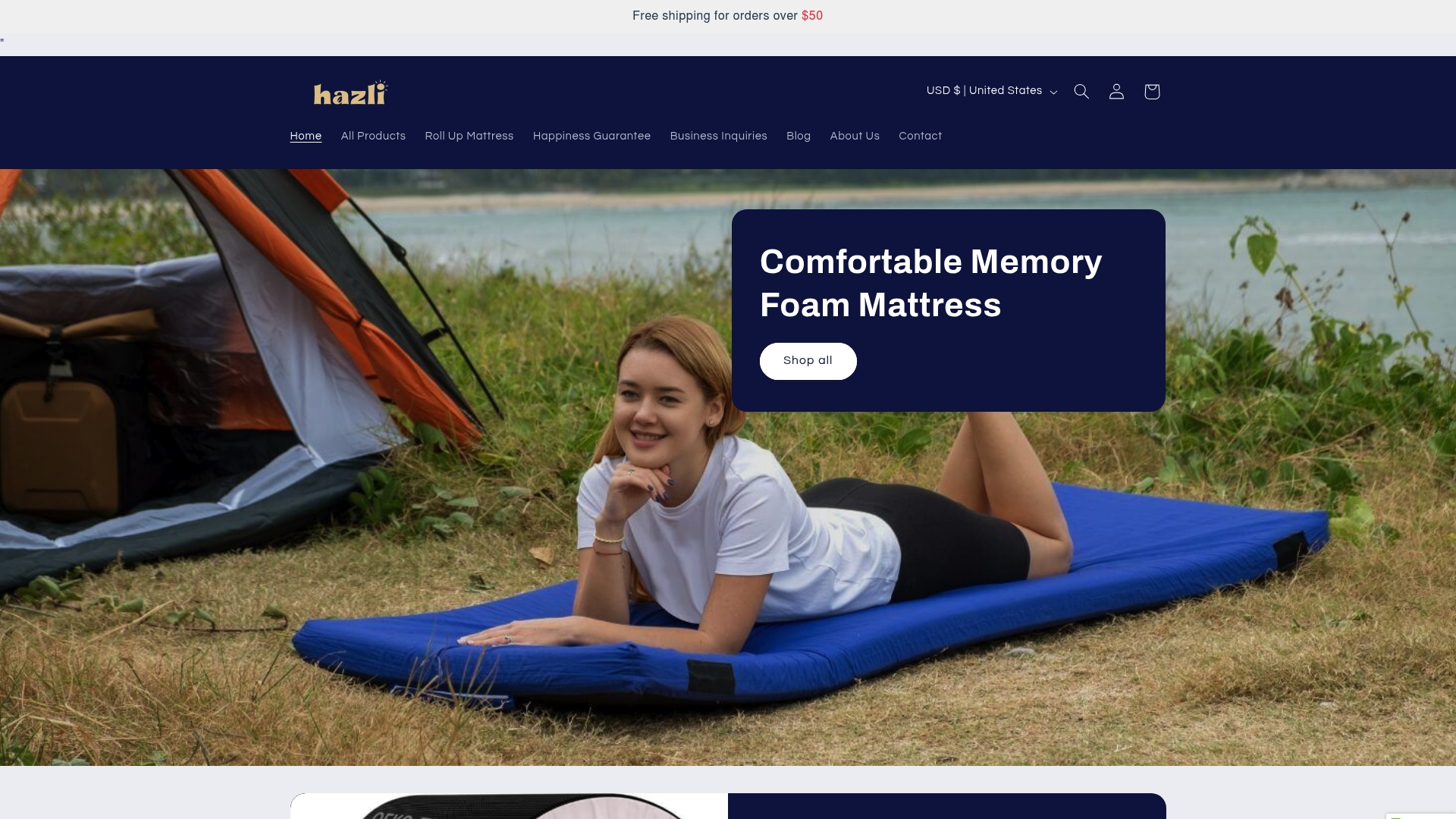
They have a waterproof cover, are CertiPUR-US and OEKO-TEX certified, and have earned a Best of Best Review award. Compare sizes at Hazli Collection.
Frequently Asked Questions
What is a self-inflating mattress and how does it work?
It combines open-cell polyurethane foam and an airtight fabric envelope. When the valve is opened, the foam expands and draws in air.
What are the benefits of using a self-inflating mattress for camping?
They offer convenience, adjustable firmness, fairly quick setup, and a layer between you and the ground.
How do I maintain and care for my self-inflating mattress?
Limit breath inflation in very cold conditions, use a ground cover, clean it after use, and store it unrolled with the valve open.
What are the differences between self-inflating mattresses and other types of sleeping pads?
They usually need less pumping than air mattresses and offer more cushioning than thin foam pads. They are lighter than memory foam mattresses, but can puncture.