

By The Hazli Family — Peter & Louise · Reviewed June 2026
Quick answer: A groundsheet is the protective layer between your tent and the ground. It blocks moisture rising from soil, shields the tent floor from rocks and sticks, adds insulation against cold ground, and keeps your sleeping area clean. Choose one slightly smaller than the tent footprint so rainwater cannot pool between the layers.
Setting up camp in the United States often means squaring off against unexpected rain, rocky landscapes, and uneven ground that can turn a peaceful family getaway into a rough night’s sleep. A groundsheet acts as a first line of defense, adding tent floor protection that shields against moisture, sharp debris, and cold surfaces while keeping your living space dry and comfortable. Discover practical ways to choose and use groundsheets for maximum durability, simple setup, and dependable comfort in every American outdoor adventure.
Table of Contents
- What A Groundsheet Does In Camping
- Popular Groundsheet Types And Materials
- Key Features For Outdoor Durability
- Practical Benefits For Camp Comfort
- Common Mistakes And How To Avoid Them
Key Takeaways
| Point | Details |
|---|---|
| Groundsheet Importance | Groundsheets provide essential protection for tents, acting as a barrier against moisture, sharp objects, and cold surfaces, enhancing camping comfort. |
| Material Selection | Choosing the right groundsheet material based on terrain and weather conditions is crucial for effective protection and durability. |
| Common Mistakes | Avoid oversized groundsheets and improper material choices to prevent issues like water pooling and damage to sensitive surfaces. |
| Regular Maintenance | Inspect and maintain your groundsheet before each outing to ensure optimal performance and longevity, replacing it if needed. |
What a Groundsheet Does in Camping
A groundsheet serves as a critical protective barrier for campers, creating a foundational layer of comfort and defense between your tent and the unpredictable outdoor terrain. Tent floor protection represents more than just a simple accessory - it’s an essential component that dramatically enhances your camping experience.
The primary functions of a groundsheet include multiple layers of protection and performance:
- Moisture barrier preventing ground dampness from penetrating tent floor
- Physical shield against sharp rocks, sticks, and uneven terrain
- Insulation layer reducing cold ground transfer
- Extra cushioning for improved sleeping comfort
- Extended tent floor durability by preventing direct ground contact
Terrain Defense is perhaps the most crucial role a groundsheet plays. Waterproof ground protection helps campers maintain a clean, dry living space by blocking moisture, mud, and debris from entering the tent’s interior. This barrier becomes especially important in environments with wet ground, rocky surfaces, or potentially damaging landscape conditions.
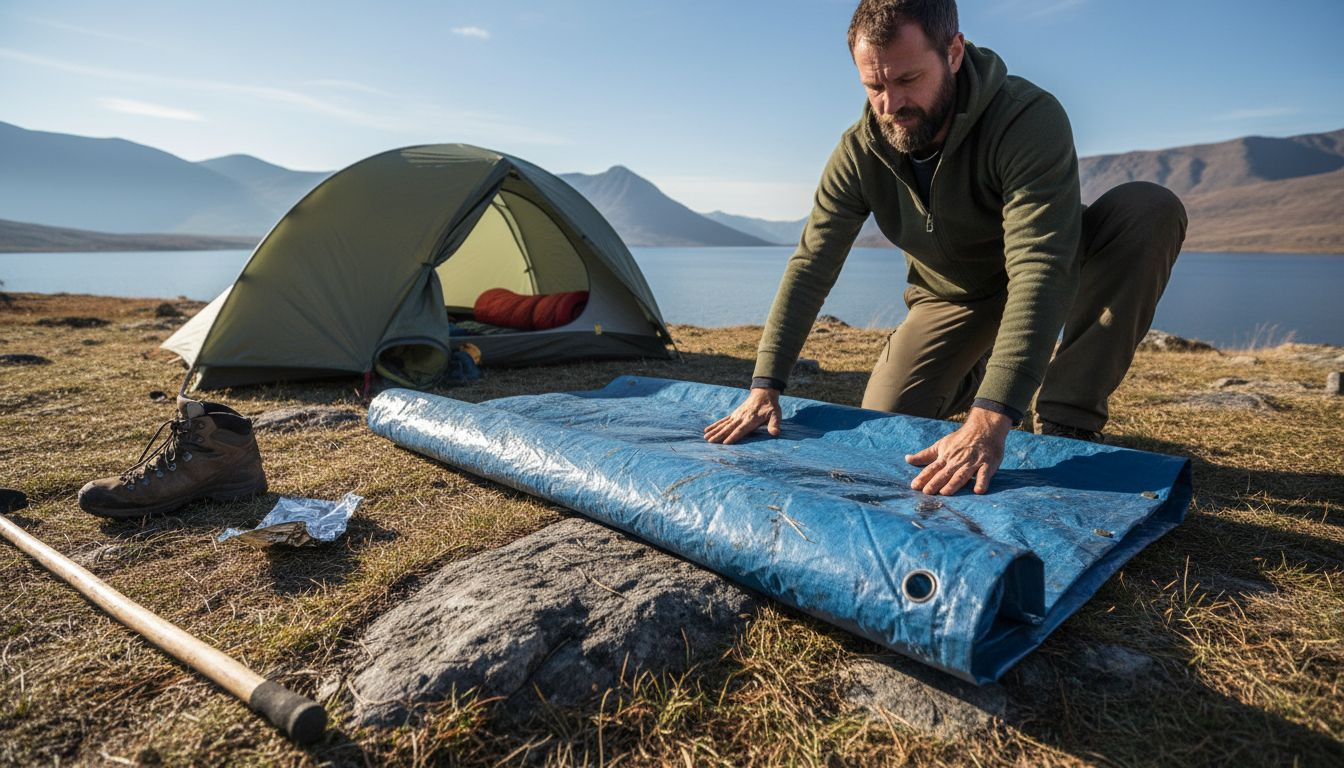
By creating a dedicated protective layer, groundsheets essentially serve as a first line of defense for your camping setup. They absorb initial environmental impacts, preventing direct wear on your tent’s base and ensuring your sleeping area remains intact and comfortable throughout your outdoor adventure.
Pro tip: Always choose a groundsheet slightly smaller than your tent’s footprint to prevent water collection and potential pooling around tent edges.
Popular Groundsheet Types and Materials
Groundsheets for camping encompass a diverse range of materials and designs, each tailored to specific outdoor environments and camping needs. Groundsheet material varieties offer campers multiple options for protecting their tent and ensuring comfort in different terrains.
The most common groundsheet materials include:
- Polyethylene: Budget-friendly and waterproof
- PVC-Coated Fabric: Heavy-duty and easy to clean
- Ripstop Polyester: Lightweight and highly durable
- Breathable Mesh: Ideal for grassy camping sites
- Foil-Backed Foam: Provides excellent thermal insulation
Synthetic Materials dominate the groundsheet market due to their exceptional performance characteristics. Waterproof ground protection materials are engineered to withstand harsh outdoor conditions, offering campers reliable defense against moisture, sharp terrain, and environmental challenges.
Groundsheet types vary significantly, ranging from sewn-in designs integrated directly with tent floors to separate standalone sheets that can be positioned independently. Solo campers might prefer lightweight, compact options, while family camping groups often require larger, more robust groundsheet solutions that provide comprehensive coverage and protection.
Here’s a comparison of popular groundsheet materials:
| Material | Weight Class | Ideal Camping Terrain | Durability Level |
|---|---|---|---|
| Polyethylene | Lightweight | Wet, muddy areas | Moderate |
| PVC-Coated Fabric | Heavy | Rocky, high-impact | High |
| Ripstop Polyester | Ultra-light | All-purpose | Very high |
| Breathable Mesh | Lightweight | Grassy, warm climates | Low |
| Foil-Backed Foam | Moderate | Cold environments | Moderate |
Pro tip: Consider your specific camping environment when selecting a groundsheet, matching material properties to anticipated terrain and weather conditions.
Key Features for Outdoor Durability
Durability in groundsheets represents a critical factor for campers seeking reliable outdoor protection. Groundsheet durability considerations encompass multiple technical and performance-based characteristics that determine a groundsheet’s long-term effectiveness in challenging environments.
Key durability features include:
- Ripstop Construction: Prevents tears from spreading
- High-Performance Waterproof Coatings: Blocks moisture penetration
- Abrasion-Resistant Synthetic Materials: Withstands rough terrain
- Puncture-Resistant Fabric: Protects against sharp ground objects
- UV-Resistant Treatments: Prevents material degradation from sunlight
Synthetic Materials play a pivotal role in groundsheet performance. Durable ground protection technologies are engineered to balance lightweight design with exceptional strength, ensuring campers can rely on their groundsheet across diverse outdoor conditions.
Weight and portability remain equally important alongside durability. Experienced campers understand that an ideal groundsheet must efficiently combine lightweight construction with robust material properties, allowing for easy transport without compromising protective capabilities. Modern groundsheet designs prioritize this delicate balance, offering compact solutions that provide comprehensive terrain defense.
Use this table to match durability features with practical benefits:
| Durability Feature | Outdoor Benefit | Example Scenario |
|---|---|---|
| Ripstop Construction | Prevents catastrophic tears | Hiking on brushy forest trails |
| Waterproof Coating | Blocks rain and moisture | Camping after heavy rainfall |
| UV-Resistant Treatment | Extends lifespan in sunlight | Desert camping in summer |
| Abrasion Resistance | Withstands frequent movement | Shifting the tent across rocky ground |
Pro tip: Inspect your groundsheet before each camping trip, checking for any existing wear or potential weak points to prevent unexpected failures during outdoor adventures.
Practical Benefits for Camp Comfort
Campers seek ultimate comfort in outdoor environments, and groundsheets play a pivotal role in transforming basic camping experiences. Groundsheet comfort strategies provide multiple layers of protection that directly enhance camping convenience and personal well-being.
Practical comfort benefits include:
- Temperature Regulation: Blocks cold ground transfer
- Moisture Protection: Prevents dampness from penetrating tent floor
- Surface Smoothing: Cushions against uneven, rocky terrain
- Cleanliness Maintenance: Creates barrier against dirt and debris
- Condensation Reduction: Minimizes internal tent moisture buildup
Camping Comfort Fundamentals extend beyond simple ground coverage. Outdoor sleeping space optimization involves strategic use of groundsheets to create a more livable, comfortable camping environment that protects both equipment and campers from environmental challenges.
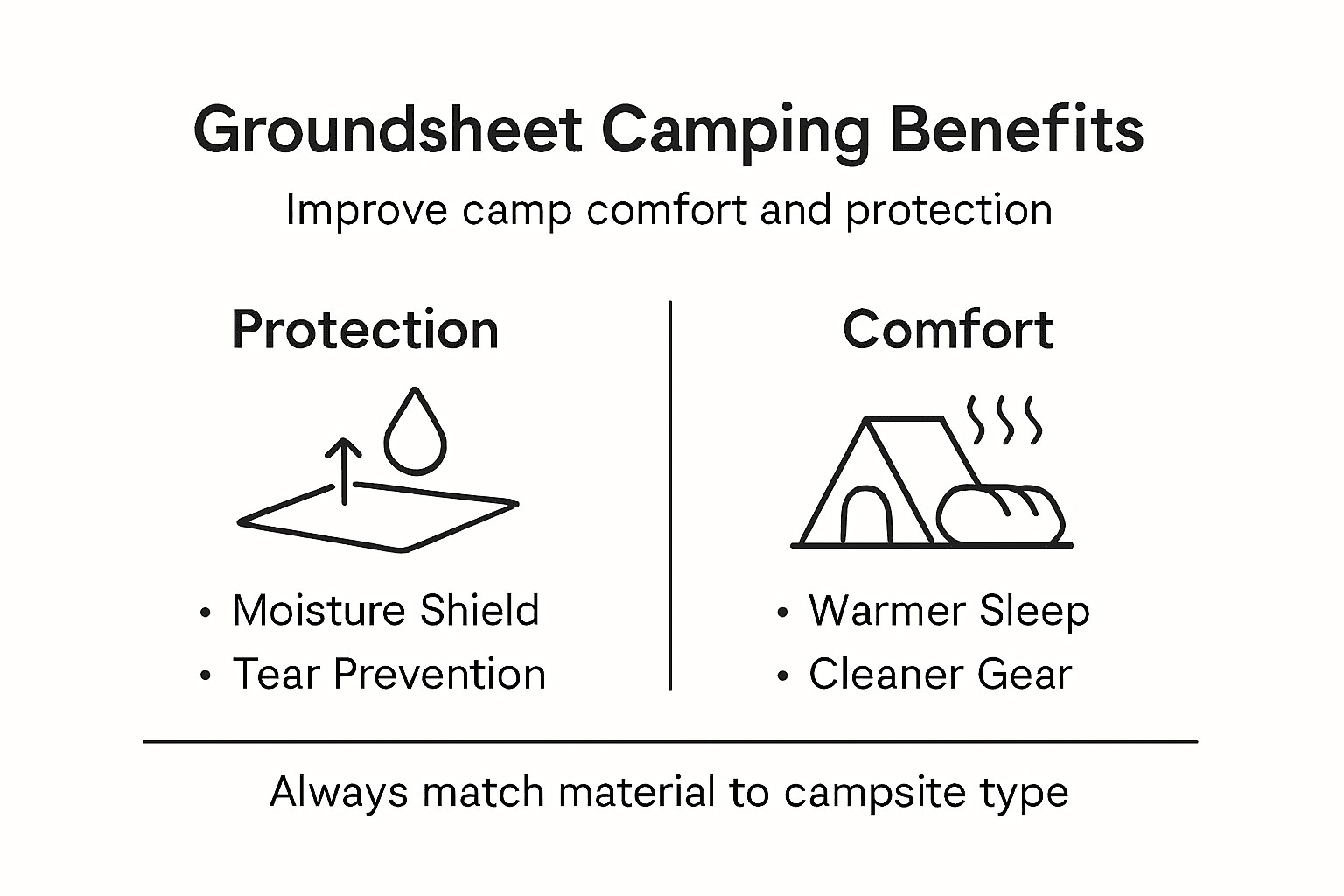
The psychological impact of a well-prepared camping space should not be underestimated. A quality groundsheet transforms rough, unpredictable terrain into a comfortable, secure sleeping area, allowing campers to relax and fully enjoy their outdoor experience. By providing a clean, dry, and cushioned surface, groundsheets turn potentially uncomfortable camping situations into opportunities for rest and rejuvenation.
Pro tip: Select a groundsheet slightly smaller than your tent’s footprint to prevent water accumulation and ensure optimal moisture management.
Common Mistakes and How to Avoid Them
Groundsheet usage involves several potential pitfalls that can compromise camping comfort and equipment longevity. Groundsheet placement strategies reveal critical errors campers frequently make when preparing their outdoor sleeping environments.
Common groundsheet mistakes include:
- Oversized Groundsheet: Creates water pooling zones
- Improper Terrain Selection: Using non-breathable materials on delicate surfaces
- Irregular Maintenance: Failing to clean and dry after use
- Incorrect Positioning: Extending beyond tent base
- Neglecting Material Compatibility: Choosing inappropriate fabric for specific environments
Groundsheet Performance depends on strategic implementation. Campsite groundsheet techniques emphasize the importance of understanding terrain requirements and selecting appropriate materials to prevent environmental damage and maintain equipment integrity.
Understanding these mistakes helps campers develop more sophisticated outdoor preparation skills. Professional campers recognize that groundsheet selection is not just about protection, but about creating a sustainable, comfortable camping experience that respects both equipment and environment. Thoughtful preparation can transform potential challenges into seamless outdoor adventures.
Pro tip: Always inspect your groundsheet for wear and damage before each camping trip, replacing it immediately if signs of degradation appear.
Enhance Your Camping Comfort with Quality Groundsheet and Sleep Solutions
The challenge of protecting your tent floor from moisture, rough terrain, and cold ground is real and can make or break your outdoor experience. As the article highlights, the right groundsheet serves as a crucial moisture barrier and insulation layer while preventing damage to your tent’s base. If you want to avoid common pitfalls like water pooling, wear, and discomfort, pairing your groundsheet with a high-quality memory foam mattress can truly elevate your camping comfort. This combination ensures you stay dry, rested, and relaxed no matter the environment.

Explore the expertly crafted camping gear at Hazli Collection where comfort meets durability. Our outdoor essentials are designed with your needs in mind, combining practical protection like durable groundsheets with premium memory foam mattresses built for restful sleep. Visit now to find reliable solutions that enhance your outdoor adventures and help you wake up refreshed and ready for what lies ahead. Do not wait until your next trip to upgrade your gear. Discover comfort and protection today at Hazli Collection and start camping with confidence.
Frequently Asked Questions
What is a groundsheet and why is it important for camping?
A groundsheet is a protective layer placed under a tent to shield it from moisture, sharp objects, and uneven terrain. It enhances comfort by providing insulation and cushioning while also extending the durability of the tent floor.
How do I choose the right groundsheet material for my camping needs?
Consider the terrain and weather conditions where you’ll be camping. Common materials include polyethylene for budget-friendliness, PVC-coated fabric for heavy-duty use, and breathable mesh for grassy areas. Match the material properties to your specific requirements for optimal performance.
What common mistakes should I avoid when using a groundsheet?
Avoid using an oversized groundsheet, as it can create water pooling zones. Ensure proper material selection for your camping environment, and regularly clean and maintain your groundsheet to prevent wear and damage.
How does a groundsheet enhance camping comfort?
A groundsheet enhances comfort by blocking cold ground transfer, providing a cushioned surface over rocky terrain, preventing moisture penetration, and creating a clean living space that reduces dirt and debris inside the tent.
Recommended
- 7 Outdoor Sleeping Arrangement Ideas for Ultimate Comfort – Hazli Collection
- 7 Camping Comfort Hacks for a Great Outdoor Experience – Hazli Collection
- 7 Essential Outdoor Sleep Solutions List for Comfort – Hazli Collection
- 7 Essential Camping Comfort Tips for a Restful Outdoor Stay – Hazli Collection