

Most American campers believe that tossing a sleeping bag on the ground is enough for a restful night outdoors, yet studies show that improper sleep setups cause discomfort for over 60 percent of outdoor families. Choosing the right outdoor sleep system matters as it directly affects recovery, safety, and enjoyment during every adventure. This guide explains what truly makes a sleep system effective and clears up common myths so you can make smart choices for durable comfort wherever you camp.
Table of Contents
- Outdoor Sleep Systems Defined And Common Myths
- Key Components And Materials Explained
- Types: Pads, Mattresses, Cots, Hammocks Compared
- How Insulation And Comfort Levels Work
- Choosing Based On Climate, Activity, And Users
- Common Mistakes And Troubleshooting Solutions
Key Takeaways
| Point | Details |
|---|---|
| Comprehensive Outdoor Sleep Systems | Effective outdoor sleep systems require strategic layering of components to ensure comfort, thermal regulation, and recovery in natural environments. |
| Understanding Insulation and Comfort | The choice of sleeping pads and bags based on R-values and temperature ratings is essential for maintaining optimal thermal regulation. |
| Testing Equipment Before Trips | Always test your outdoor sleep system components individually prior to expeditions to identify any performance or comfort issues. |
| Matching Systems to Conditions | Select outdoor sleep systems based on the specific environmental conditions and personal comfort preferences to ensure adequate rest. |
Outdoor sleep systems defined and common myths
An outdoor sleep system represents a comprehensive approach to achieving restful sleep in natural environments, integrating multiple components designed to support physical comfort and recovery. Unlike traditional indoor sleeping arrangements, these systems must account for variable terrain, temperature fluctuations, and limited resources while providing essential support for the human body.
Contrary to popular misconceptions, outdoor sleep systems are not simply about throwing a sleeping bag on the ground. They involve strategic layering of equipment and understanding sleep health fundamentals that enable proper rest in challenging conditions. These systems typically include specialized sleeping pads, temperature-appropriate sleeping bags, moisture-wicking base layers, and protective shelters that work together to create an optimal microenvironment for recuperation.
Common myths about outdoor sleeping often underestimate the complexity of creating a comfortable rest environment. Many campers mistakenly believe that any sleeping arrangement will suffice, overlooking critical factors like insulation, ground protection, and thermal regulation. In reality, a well-designed outdoor sleep system accounts for individual body types, anticipated weather conditions, and specific activity levels. Proper systems can dramatically improve recovery, reduce physical strain, and enhance overall outdoor experience by ensuring restorative sleep.
Pro tip: Always test your outdoor sleep system components individually before a major expedition to understand their performance and identify potential comfort or functionality issues.
Key components and materials explained
Outdoor sleep systems comprise several critical components designed to work together in creating a comprehensive sleeping environment that supports comfort, thermal regulation, and physical recovery. Sleeping pads form the foundational layer, providing crucial insulation and cushioning against uneven terrain. Sleeping pad technologies have evolved to include various materials and designs that address different outdoor sleeping challenges, from closed-cell foam options to sophisticated air-filled systems.
The primary materials used in outdoor sleep systems are engineered for specific performance characteristics. Insulation layers typically incorporate synthetic or down materials that trap heat effectively while managing moisture. Lightweight, compressible fabrics like ripstop nylon and specialized thermal reflective materials create protective shells that shield sleepers from environmental conditions. These materials are strategically chosen to balance critical factors such as weight, thermal efficiency, durability, and packability.
Key components of an effective outdoor sleep system include thermal barriers, cushioning elements, and protective layers that work synergetically. Healthy sleep fundamentals underscore the importance of creating a microclimate that supports body temperature regulation and pressure point management. This involves selecting sleeping pads with appropriate thickness, sleeping bags rated for specific temperature ranges, and base layers that wick moisture and provide additional thermal management.
Pro tip: Invest in a modular sleep system with interchangeable components that can be adapted to different environmental conditions and activity levels.
Types: pads, mattresses, cots, hammocks compared
Outdoor sleep systems offer diverse options, each with unique advantages tailored to specific camping environments and user preferences. Sleeping pad technologies have evolved to provide multiple solutions ranging from minimalist foam pads to sophisticated inflatable mattresses, ensuring campers can find the ideal sleeping surface for their needs.
Sleeping pads represent the most versatile category, typically divided into three primary types: closed-cell foam, self-inflating, and air pads. Closed-cell foam pads are lightweight, durable, and provide consistent insulation, making them ideal for backpackers and minimalist adventurers. Self-inflating pads combine foam and air chambers, offering enhanced comfort and thermal protection. Air pads represent the most advanced option, featuring sophisticated designs that maximize comfort while minimizing weight and packed volume.
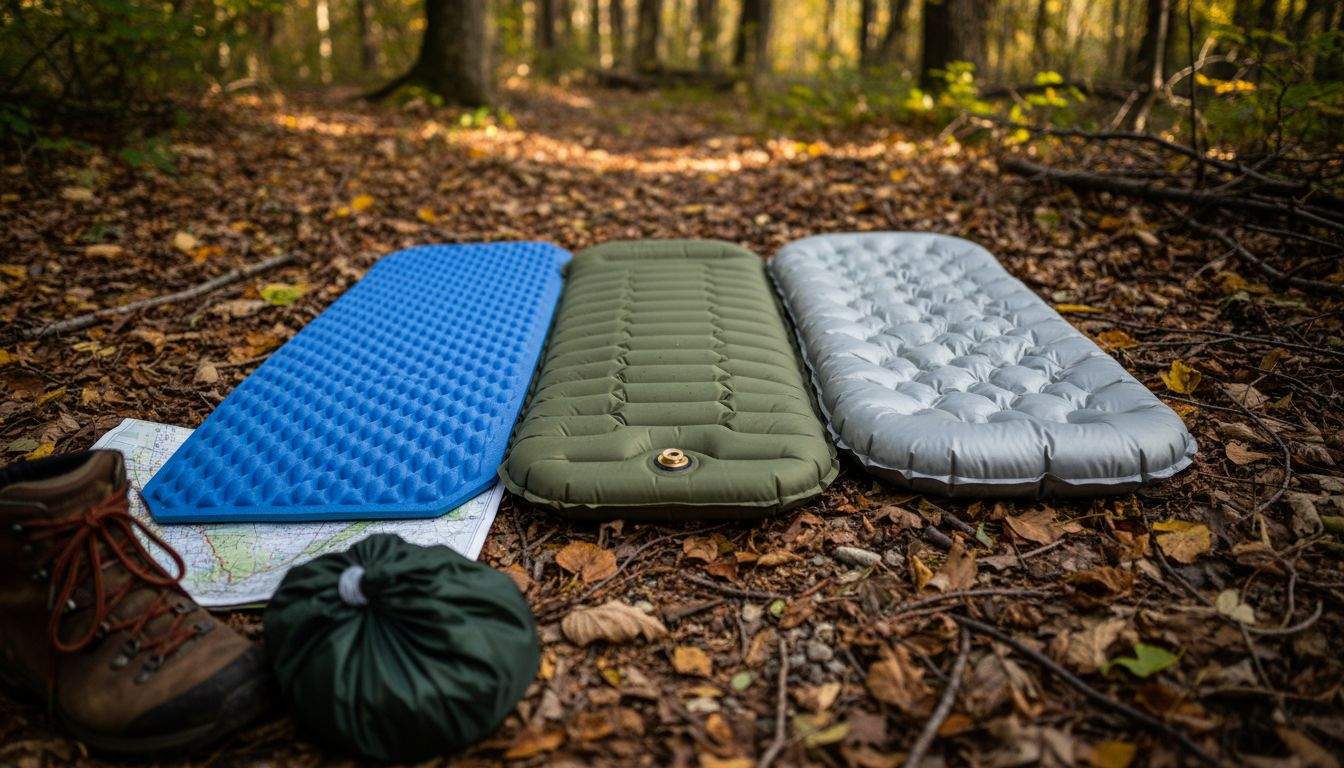
Camp bed configurations introduce elevated sleeping alternatives like cots and hammocks, which provide distinct advantages in challenging terrain. Cots raise sleepers off the ground, protecting against moisture, uneven surfaces, and ground-level temperature variations. Hammocks offer a unique suspended sleeping experience, particularly effective in warm climates and areas with potential ground obstacles. Each option presents trade-offs between comfort, weight, setup complexity, and environmental adaptability.
Here’s a quick comparison of common outdoor sleep surfaces and their features:
| Type | Main Advantage | Weight Range | Best For |
|---|---|---|---|
| Closed-cell Foam | Lightweight and durable | 8-18 oz | Minimalist backpacking |
| Self-inflating Pad | Comfort and insulation | 16-32 oz | Versatile camping setups |
| Air Pad | Compact and lightweight | 12-24 oz | Backpackers, low bulk |
| Cot | Raised from ground | 48-80 oz | Car camping, rough terrain |
| Hammock | Suspended sleep | 16-32 oz | Forest, warm climates |
Pro tip: Select your outdoor sleeping system based on your specific trip conditions, considering factors like terrain, temperature range, pack weight limitations, and personal comfort preferences.
How insulation and comfort levels work
Thermal insulation forms the critical foundation of effective outdoor sleep systems, determining how well a sleeping surface protects users from ground temperature and environmental conditions. Sleeping pad technologies rely on sophisticated mechanisms to prevent heat loss, primarily using trapped air pockets, specialized foam, and innovative material designs that create a barrier between the sleeper and cold surfaces.
The science of comfort in outdoor sleeping environments involves complex interactions between material properties, body heat retention, and pressure distribution. Different insulation materials offer varying performance characteristics, with some focusing on minimizing bulk while maximizing thermal efficiency. Advanced insulation technologies like aerogels represent cutting-edge solutions that provide exceptional warmth with minimal weight, allowing outdoor enthusiasts to reduce gear volume without compromising thermal protection.
Comfort levels are determined by multiple interconnected factors beyond simple thermal management. Pad thickness, surface texture, material flexibility, and weight distribution all contribute to the overall sleeping experience. Lightweight materials with high resilience can provide superior comfort by adapting to body contours while maintaining consistent insulation, ensuring that outdoor sleepers can achieve restful recovery regardless of terrain or environmental challenges.
Pro tip: Invest in a sleeping pad with an appropriate R-value rating that matches your expected environmental conditions to ensure optimal insulation and comfort.
Choosing based on climate, activity, and users
Selecting the right outdoor sleep system requires a nuanced understanding of how environmental conditions and personal needs intersect. Sleeping conditions in tents demand careful consideration of multiple factors, including temperature range, humidity levels, terrain type, and individual physical requirements.
Climate plays a pivotal role in sleep system selection, with temperature ratings and insulation properties becoming critical decision points. Mountainous regions with significant temperature drops require different sleeping gear compared to humid coastal environments. Lightweight backpackers might prioritize compact, versatile systems, while car campers can invest in more substantial, comfort-oriented solutions. Activity type significantly influences gear choices, with high-altitude trekkers needing extreme thermal protection and casual weekend campers requiring more flexible, multipurpose sleep systems.
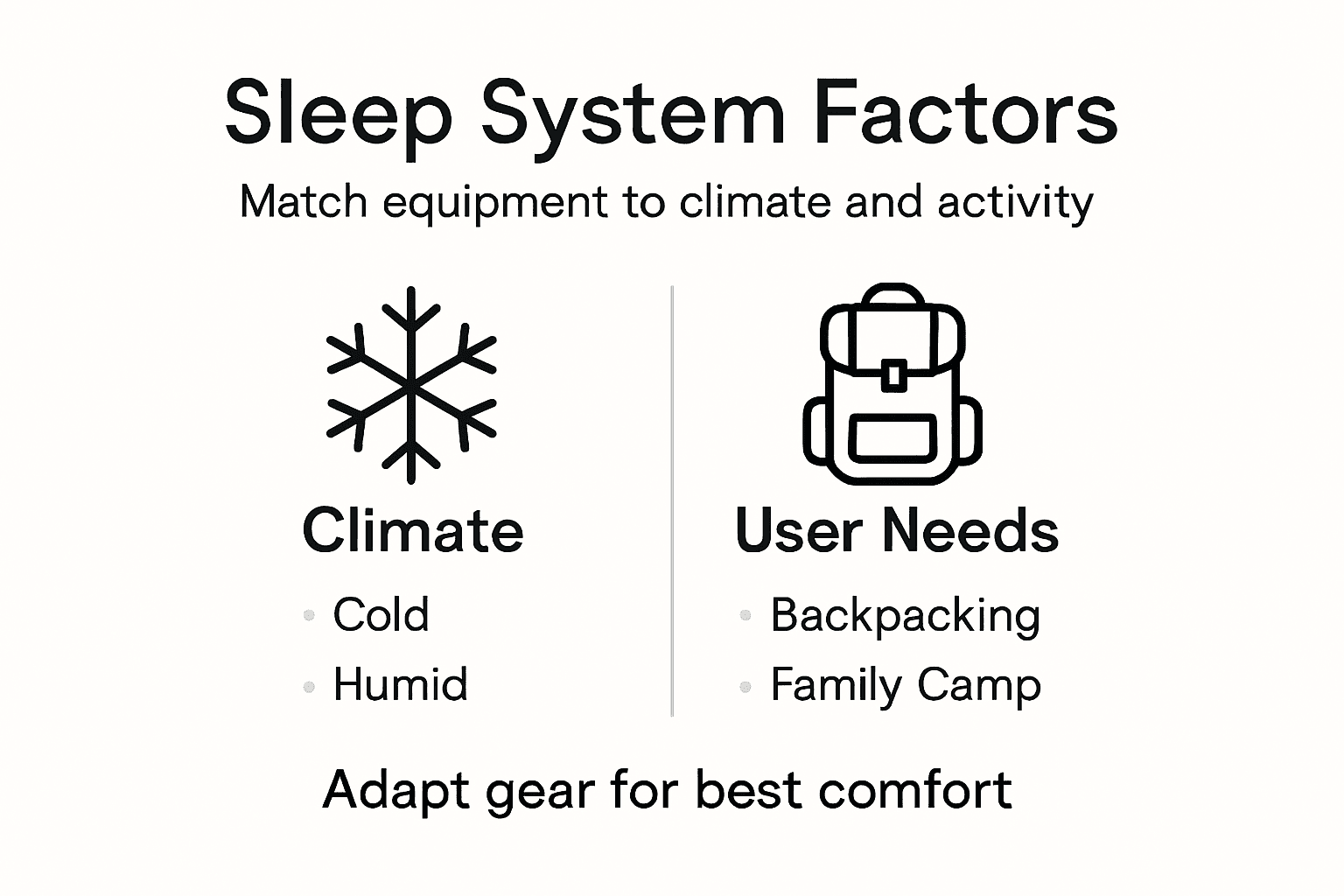
Humidity and sleep environment significantly impact comfort and rest quality. Different materials and designs help regulate body temperature and moisture, ensuring users remain comfortable across varying conditions. Breathable synthetic materials, strategic ventilation features, and adaptable insulation layers allow outdoor sleep systems to perform effectively in diverse environmental contexts, from arid deserts to humid forests.
Use this table to match sleep system choices with outdoor conditions:
| Condition | Recommended System | Key Material Feature |
|---|---|---|
| Cold mountains | Down bag, high R-value pad | Max insulation, windproof |
| Humid forests | Synthetic bag, hammock | Breathable, fast-drying |
| Rocky terrain | Foam pad, cot | Durable base, elevation |
| Lightweight hiking | Air pad, packable bag | Compressibility, low weight |
Pro tip: Layer your sleep system components to create adaptable thermal management, allowing you to add or remove insulation based on changing environmental conditions.
Common mistakes and troubleshooting solutions
Navigating outdoor sleep system challenges requires understanding common pitfalls and developing strategic solutions. Tent sleeping conditions reveal numerous potential errors that can compromise comfort and recovery, ranging from inadequate gear selection to improper campsite preparation.
One frequent mistake involves selecting sleeping equipment without considering specific environmental conditions. Campers often underestimate temperature variations, choosing sleeping bags or pads that lack appropriate insulation ratings. This oversight can lead to significant discomfort, with users experiencing cold spots or excessive sweating. Temperature-specific gear matching, including understanding R-value ratings for sleeping pads and temperature ratings for sleeping bags, becomes crucial for maintaining optimal thermal regulation.
Sleep system preparation strategies emphasize the importance of pre-trip gear testing and maintenance. Neglecting equipment checks before expeditions can result in unexpected failures, such as leaky air pads, malfunctioning zippers, or inadequate insulation. Experienced outdoor enthusiasts recommend conducting comprehensive gear assessments, including inflation valve inspections, seam integrity checks, and mock setup trials to identify potential issues before embarking on trips.
Pro tip: Create a pre-trip gear checklist that includes testing all sleep system components, checking for wear and tear, and ensuring you have appropriate repair kits for potential equipment failures.
Elevate Your Outdoor Sleep Experience with Hazli Collection
Achieving true comfort and restorative sleep outdoors depends on having the right sleep system tailored to your environment and needs. This article highlights the importance of thermal insulation, cushioning, and adaptable layers to optimize recovery on camping trips. If you have struggled with cold nights, discomfort from uneven terrain, or gear that does not meet your activity demands Hazli Collection offers premium memory foam mattresses and carefully selected outdoor sleep accessories designed to address these exact challenges. Our products blend durability with exceptional comfort to help you wake refreshed and ready for your adventures.

Discover how quality gear can transform your nights outdoors Explore the full range now at Hazli Collection where comfort meets practicality. Shop confidently knowing you can customize your outdoor sleep setup and enjoy a seamless purchasing journey supported by intuitive features. Don’t settle for restless nights or bulky poorly designed gear Take action today to upgrade your outdoor sleep system with Hazli Collection and experience the difference for yourself. Visit us now and prepare to sleep better wherever your travels take you.
Frequently Asked Questions
What is an outdoor sleep system?
An outdoor sleep system is a comprehensive setup designed for achieving restful sleep in natural environments, consisting of components like sleeping pads, sleeping bags, and protective shelters that work together for comfort and recovery.
How do I choose the right sleeping pad for my outdoor sleep system?
When selecting a sleeping pad, consider factors such as your weight, anticipated weather conditions, and the terrain you’ll be sleeping on. Look for pads with appropriate thickness and insulation ratings to match your needs.
What are the differences between sleeping pads, mattresses, cots, and hammocks?
Sleeping pads are lightweight and portable, ideal for backpacking. Mattresses offer more comfort but are bulkier. Cots elevate sleepers off the ground, protecting against moisture and cold, while hammocks provide a suspended sleeping experience, suitable for warm climates and uneven ground.
How can I improve thermal insulation in my outdoor sleep system?
To enhance thermal insulation, choose sleeping bags and pads with higher R-values for adequate warmth. Layer components strategically, utilizing moisture-wicking materials and thermal barriers to create a microclimate that efficiently regulates your body temperature.