

By The Hazli Family — Peter & Louise · Reviewed June 2026
Quick answer: Green camping equipment is outdoor gear designed to minimize environmental impact — backpacks and tents made from recycled materials, biodegradable utensils, solar-powered stoves and lanterns, and natural fabrics like hemp and organic cotton. Look for certifications such as bluesign, GOTS, or RDS, and prioritize durable, multipurpose items that match traditional gear in comfort and performance.
Finding truly sustainable camping gear can feel overwhelming, especially when comfort and respect for nature both matter. Eco-friendly camping is not about giving up enjoyment, but about making conscious choices that minimize environmental impact without sacrificing performance. American campers are discovering that using gear made from recycled materials, biodegradable utensils, and solar-powered lights offers a comfortable experience while supporting responsible outdoor habits. Explore smart ways to upgrade your camping essentials so you can enjoy nature and protect it on every trip.
Table of Contents
- Defining Green Camping Equipment And Myths
- Types Of Eco-Friendly Camping Gear
- Sustainable Materials And Key Features
- Responsible Use And Disposal Practices
- Comparing Green Equipment To Alternatives
- Avoiding Common Mistakes When Choosing Gear
Key Takeaways
| Point | Details |
|---|---|
| Green Camping Equipment Redefines Outdoor Comfort | Eco-friendly gear offers performance and comfort without the environmental cost, dispelling myths about sacrificing enjoyment. |
| Sustainable Materials Are Essential | Opt for camping gear made from recycled and natural materials to minimize ecological impacts and support durability. |
| Adopting Responsible Camping Practices | Responsible use includes waste management and protecting wildlife, emphasizing conscious choices while enjoying nature. |
| Research and Certification Matter | Always verify sustainability claims and prioritize equipment that showcases genuine eco-friendly certifications for informed choices. |
Defining Green Camping Equipment and Myths
Green camping equipment represents a thoughtful approach to outdoor experiences that prioritize environmental responsibility without compromising comfort. Unlike traditional misconceptions, eco-friendly camping gear isn’t about sacrificing enjoyment but making conscious choices that minimize ecological impact.
At its core, green camping equipment involves selecting products and practices that reduce environmental harm. This means choosing gear manufactured with sustainable materials, minimal waste production, and low carbon footprint. Eco-camping strategies emphasize selecting products with specific sustainability certifications and focusing on long-term durability.
Common myths about green camping often prevent outdoor enthusiasts from making more sustainable choices. Here are some prevalent misconceptions:
- Green camping equipment is always more expensive
- Sustainable gear performs worse than traditional equipment
- Eco-friendly products are less comfortable
- Green camping requires significant lifestyle changes
These myths couldn’t be further from the truth. Modern sustainable camping gear matches or exceeds traditional equipment in performance, comfort, and reliability. Eco-friendly camping techniques demonstrate that environmental consciousness and outdoor enjoyment are perfectly compatible.
Pro tip: When selecting green camping equipment, prioritize multipurpose items that reduce overall gear weight and minimize single-use purchases.
Types of Eco-Friendly Camping Gear
Eco-friendly camping gear represents a revolutionary approach to outdoor equipment that prioritizes environmental sustainability without compromising performance. Sustainable camping equipment encompasses a wide range of products designed to minimize ecological impact while providing reliable functionality for outdoor enthusiasts.
Eco-friendly camping gear can be categorized into several key types that address different aspects of environmental responsibility:
-
Recycled Material Gear
- Backpacks made from reclaimed plastic bottles
- Sleeping bags constructed with recycled polyester
- Tent fabrics created from regenerated materials
-
Low-Impact Cooking Equipment
- Solar-powered camping stoves
- Biodegradable utensils and cookware
- Portable water filtration systems that reduce plastic waste
-
Energy-Efficient Lighting
- Solar-charged lanterns
- Rechargeable LED headlamps
- Compact solar power banks
The innovation in green camping equipment goes beyond simple material choices. Modern sustainable gear focuses on durability, multipurpose design, and reduced carbon footprint. Manufacturers are increasingly using advanced technologies to create lightweight, long-lasting equipment that performs exceptionally well while minimizing environmental harm.

Here’s a summary of common eco-friendly camping gear categories and their environmental benefits:
| Gear Type | Main Purpose | Environmental Benefit |
|---|---|---|
| Recycled Material Gear | Provides core outdoor needs | Reduces landfill and plastic waste |
| Low-Impact Cooking Gear | Prepares food sustainably | Cuts down on resource consumption |
| Energy-Efficient Lighting | Illuminates campsites | Minimizes energy use and emissions |
Sustainable camping gear isn’t just about the product, but the entire lifecycle of outdoor equipment.
Beyond individual product choices, eco-friendly camping gear represents a holistic approach to outdoor experiences. These products are typically designed with circular economy principles, emphasizing recyclability, minimal waste, and long-term usability.
Pro tip: When selecting eco-friendly camping gear, prioritize multipurpose items with proven durability to reduce overall environmental impact and minimize future purchases.
Sustainable Materials and Key Features
Sustainable camping equipment represents a sophisticated approach to outdoor gear that prioritizes environmental responsibility without sacrificing performance. Eco-friendly materials are revolutionizing the camping industry, offering innovative solutions that reduce ecological impact while maintaining high-quality standards for outdoor enthusiasts.
Sustainable camping materials encompass a diverse range of innovative resources designed to minimize environmental footprint:
-
Recycled Synthetic Materials
- Polyester made from reclaimed plastic bottles
- Nylon derived from industrial waste streams
- Recycled synthetic insulation for sleeping bags and jackets
-
Natural and Organic Materials
- Organic cotton with reduced water consumption
- Hemp fabrics with minimal environmental processing
- Natural wool insulation with biodegradable properties
-
Innovative Eco-Friendly Certifications
- bluesign® certified materials
- Global Organic Textile Standard (GOTS)
- Responsible Down Standard (RDS)
Key features of sustainable camping gear go beyond material selection. Manufacturers are increasingly focusing on comprehensive environmental strategies that include repair services, take-back programs, and extended product lifecycles. These approaches ensure that camping equipment not only performs exceptionally but also contributes to broader conservation efforts.
Sustainable gear is about creating products that respect both the user and the environment.
The evolution of eco-friendly camping materials represents a significant shift in outdoor equipment design. Modern manufacturers are integrating circular economy principles, developing products that can be recycled, repaired, or responsibly disposed of at the end of their useful life.
Pro tip: Research manufacturers with transparent sustainability practices and look for gear with multiple eco-certifications to ensure genuine environmental commitment.
Responsible Use and Disposal Practices
Responsible camping goes far beyond selecting eco-friendly gear. Sustainable outdoor practices require a comprehensive approach that minimizes environmental impact and preserves natural landscapes for future generations. Campers play a critical role in protecting wilderness areas through mindful behaviors and intentional waste management.
Leave No Trace principles provide a foundational framework for responsible camping practices:
-
Waste Management
- Pack out all trash and personal waste
- Use biodegradable cleaning products
- Carry reusable containers and utensils
-
Campsite Conservation
- Stay on designated trails
- Minimize ground disturbance
- Use established campsites when possible
-
Wildlife Protection
- Maintain safe distances from animals
- Store food securely
- Avoid creating excessive noise
The essence of responsible camping involves making conscious choices that protect the environment. This means carefully selecting gear with minimal environmental impact, understanding proper disposal techniques, and actively participating in conservation efforts.
Responsible camping is not just about what you do, but what you choose not to do.
Modern eco-conscious campers are increasingly adopting circular economy approaches by renting equipment, sharing resources, and prioritizing gear repair over replacement. These strategies significantly reduce waste and promote a more sustainable outdoor experience.
Pro tip: Always carry a dedicated trash bag and commit to leaving your campsite cleaner than you found it, practicing the principles of responsible environmental stewardship.
Comparing Green Equipment to Alternatives
The landscape of camping gear is undergoing a transformative shift, with eco-friendly alternatives challenging traditional equipment paradigms. Green camping gear demonstrates that sustainability and performance are no longer mutually exclusive considerations for outdoor enthusiasts.
Key differences between traditional and green camping equipment emerge across several critical dimensions:
-
Material Composition
- Traditional: Petroleum-based plastics
- Green Alternatives: Recycled and biodegradable materials
- Impact: Reduced carbon footprint and waste generation
-
Manufacturing Process
- Traditional: High-energy consumption
- Green Alternatives: Lower emissions, sustainable production
- Impact: Minimized environmental degradation
-
Long-Term Cost Considerations
- Traditional: Lower upfront cost
- Green Alternatives: Higher initial investment, longer lifespan
- Impact: Better overall value and reduced replacement frequency
Modern green camping equipment challenges the perception that environmentally responsible gear compromises functionality. Advanced sustainable technologies now enable manufacturers to create products that match or exceed the performance of conventional alternatives.
Sustainability is not about sacrifice, but about smarter, more intelligent design.
The economic argument for green camping equipment continues to strengthen. While initial costs might be higher, the long-term benefits of durability, reduced environmental impact, and improved manufacturing practices make these alternatives increasingly attractive to conscious consumers.
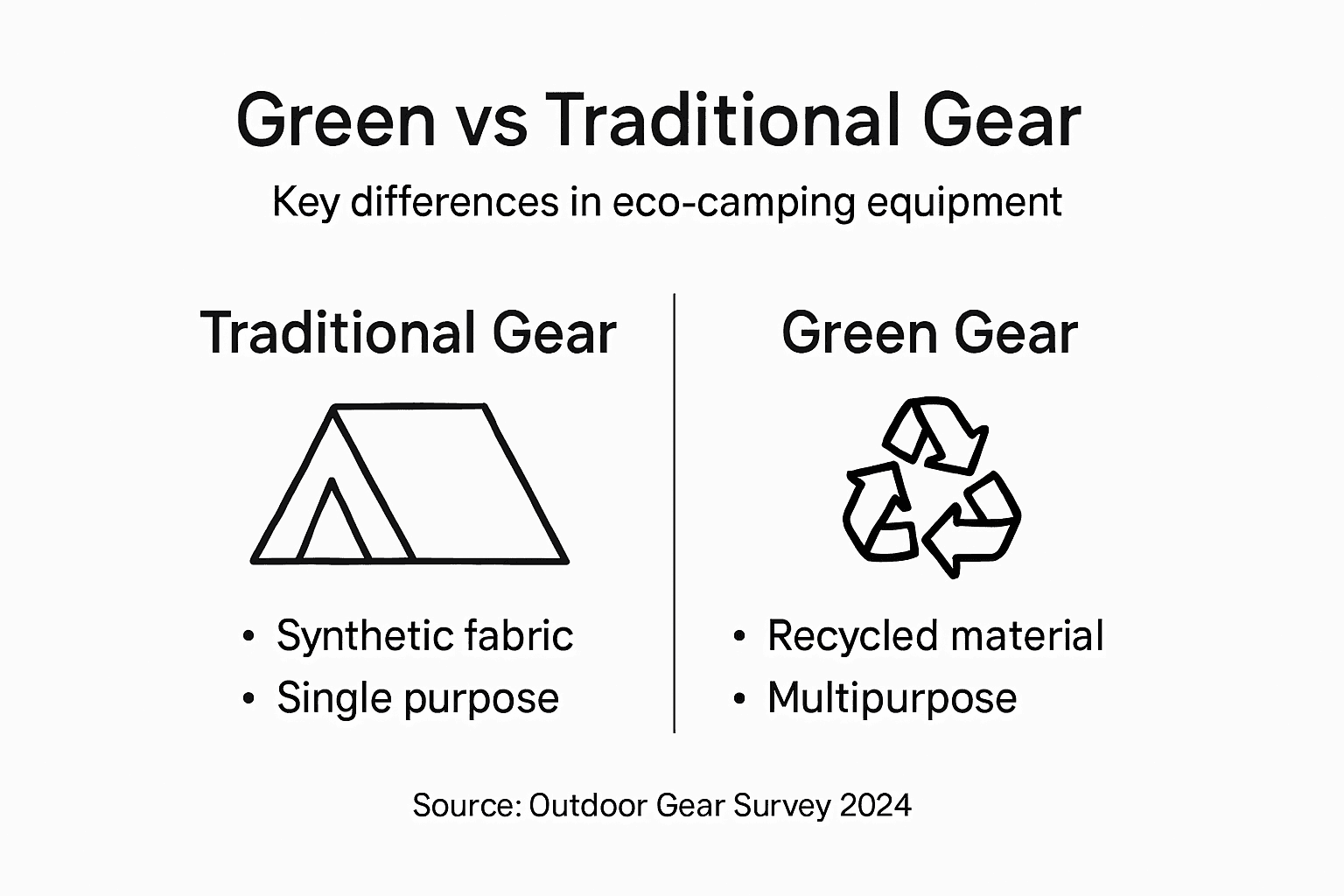
Compare the long-term value and environmental impact of traditional vs. green camping equipment:
| Attribute | Traditional Equipment | Green Camping Equipment |
|---|---|---|
| Initial Cost | Lower upfront investment | Higher, reflects sustainability |
| Durability | Prone to frequent replacement | Designed for extended lifespan |
| Waste Generation | Creates more landfill waste | Emphasizes reusability and recycling |
Pro tip: Compare the total lifecycle cost of green versus traditional gear, considering durability, replacement frequency, and environmental impact, not just the initial price tag.
Avoiding Common Mistakes When Choosing Gear
Choosing eco-friendly camping equipment requires more than good intentions. Green camping gear demands careful consideration to ensure that environmental consciousness translates into meaningful, practical choices for outdoor adventures.
Eco-camping gear selection involves avoiding several critical mistakes that can undermine sustainability efforts:
-
Packaging Pitfalls
- Ignoring excessive product packaging
- Purchasing items with non-recyclable materials
- Overlooking packaging’s environmental impact
-
Durability Misconceptions
- Choosing cheap, disposable equipment
- Prioritizing initial cost over long-term use
- Failing to research product lifespan
-
Certification Oversights
- Skipping environmental certification checks
- Assuming all green-labeled products are genuinely sustainable
- Neglecting to verify manufacturer claims
Environmental responsibility in camping gear selection goes beyond superficial green marketing. Conscious campers must critically evaluate products, understanding that true sustainability involves comprehensive considerations of manufacturing, materials, and lifecycle.
Sustainable gear is about making informed choices, not just following trends.
The most significant mistake campers make is treating eco-friendly equipment as a compromise. Modern sustainable gear can match or exceed traditional equipment in performance, durability, and overall value when selected thoughtfully.
Pro tip: Research manufacturer sustainability practices and prioritize multi-purpose gear that reduces overall environmental impact and minimizes unnecessary purchases.
Elevate Your Eco-Friendly Camping Comfort with Hazli Collection
Choosing the right green camping equipment means balancing sustainability, durability, and comfort. This article highlights the importance of responsible gear selection, emphasizing materials that minimize environmental impact while maintaining reliable performance. If you want to enhance your outdoor experience with eco-conscious options that do not sacrifice comfort, Hazli Collection offers a perfect solution.

Discover our high-quality memory foam mattresses and outdoor gear designed for durability and comfort without compromising your commitment to sustainable camping. Act now to invest in gear that supports responsible outdoor living and enjoy trusted reliability on every adventure. Visit Hazli Collection to explore how sustainable comfort meets practical innovation. Start building your eco-friendly camping setup today with green camping essentials that align perfectly with the principles described in this article.
Frequently Asked Questions
What is green camping equipment?
Green camping equipment refers to outdoor gear that prioritizes environmental sustainability by using eco-friendly materials, reducing waste, and minimizing carbon footprints while maintaining comfort and functionality for campers.
What are common myths about eco-friendly camping gear?
Common myths include the beliefs that green camping equipment is always more expensive, performs worse than traditional gear, is less comfortable, or requires significant lifestyle changes. In reality, modern sustainable gear often matches or exceeds the performance of conventional equipment.
How can I choose sustainable camping gear?
When selecting sustainable camping gear, prioritize products made from recycled or biodegradable materials, check for eco-certifications, and consider the durability and multipurpose features to reduce overall environmental impact.
Why is responsible disposal important for camping equipment?
Responsible disposal is crucial as it helps minimize landfill waste and environmental degradation. Campers should focus on proper waste management, such as packing out all trash and using biodegradable products, to protect natural landscapes for future generations.
Recommended
- 8 Essential Camping Sustainability Tips for Nature Lovers – Hazli Collection
- 7 Top Camping Gear Picks for 2025 Every Camper Should Know – Hazli Collection
- 7 Camping Comfort Hacks for a Great Outdoor Experience – Hazli Collection
- 7 Essential Tips for the Perfect Packing Checklist for Campers – Hazli Collection