

By The Hazli Family — Peter & Louise · Reviewed June 2026
Quick answer: Comfort layers are the top 1–4 inches of cushioning in a mattress. Their role is to conform to your body, distribute weight evenly, relieve pressure points, and regulate temperature so you sleep deeper. For camping, materials like memory foam, latex, and gel-infused foams keep that support consistent on cold, uneven ground.
Finding a truly comfortable mattress for camping frustrates many American families, especially when outdoor adventures call for quality sleep after long days. A remarkable 80 percent of campers report that mattress comfort directly influences their overall outdoor experience. Whether exploring National Parks or sleeping under desert skies, a supportive comfort layer can make all the difference. This guide breaks down the essential features, materials, and testing tips you need to evaluate memory foam mattresses for outdoor use.
Table of Contents
- Defining Comfort Layers In Mattresses
- Key Materials Used In Comfort Layers
- Types Of Comfort Layers For Camping
- How Comfort Layers Improve Sleep Quality
- Practical Impacts: Durability And Maintenance
- Common Mistakes When Choosing Comfort Layers
Key Takeaways
| Point | Details |
|---|---|
| Comfort Layers Enhance Sleep | Comfort layers in mattresses provide pressure relief, temperature regulation, and adaptive support, leading to improved sleep quality for outdoor enthusiasts. |
| Material Matters | High-performance materials such as memory foam, latex, and gel-infused foams are essential for optimal comfort and durability in outdoor settings. |
| Testing for Quality | When choosing a mattress, assess the responsiveness of the comfort layer by pressing down and observing its recovery speed to ensure superior performance. |
| Care and Maintenance Are Key | Regular maintenance, including proper storage and cleaning, is crucial to extend the lifespan of comfort layers and maintain their functional integrity. |
Defining Comfort Layers in Mattresses
Comfort layers are specialized cushioning materials integrated into mattress design to transform sleeping experiences, particularly for outdoor enthusiasts seeking portable comfort solutions. These critical mattress components typically form the top 1 to 4 inches of bedding and serve multiple sophisticated functions beyond basic padding.
At their core, comfort layers work by conforming to individual body shapes, distributing body weight evenly, and providing targeted pressure relief. Research indicates these layers are engineered to optimize sleep posture and subjective comfort by creating a responsive surface that adapts to different sleeping positions and body types. Unlike traditional mattress surfaces, modern comfort layers utilize advanced materials like memory foam, latex, and gel-infused foams that dynamically respond to body heat and weight distribution.
The primary characteristics of effective comfort layers include pressure point mitigation, temperature regulation, and adaptive support. Outdoor sleepers particularly benefit from comfort layers that can maintain performance across varied environmental conditions. These layers must balance softness for comfort with enough structural integrity to prevent excessive sinking, ensuring users experience consistent support whether camping in mountain terrain or setting up a tent on uneven ground.
Pro tip: When selecting an outdoor mattress, test the comfort layer’s responsiveness by pressing your hand into the surface and observing how quickly it returns to its original shape, which indicates superior material quality and durability.
Key Materials Used in Comfort Layers
Comfort layers are engineered using a diverse range of specialized materials, each selected for unique performance characteristics crucial to outdoor sleeping experiences. Modern mattress comfort layers incorporate advanced materials that dynamically respond to body mechanics and environmental conditions, ranging from memory foam to natural latex and synthetic composites.
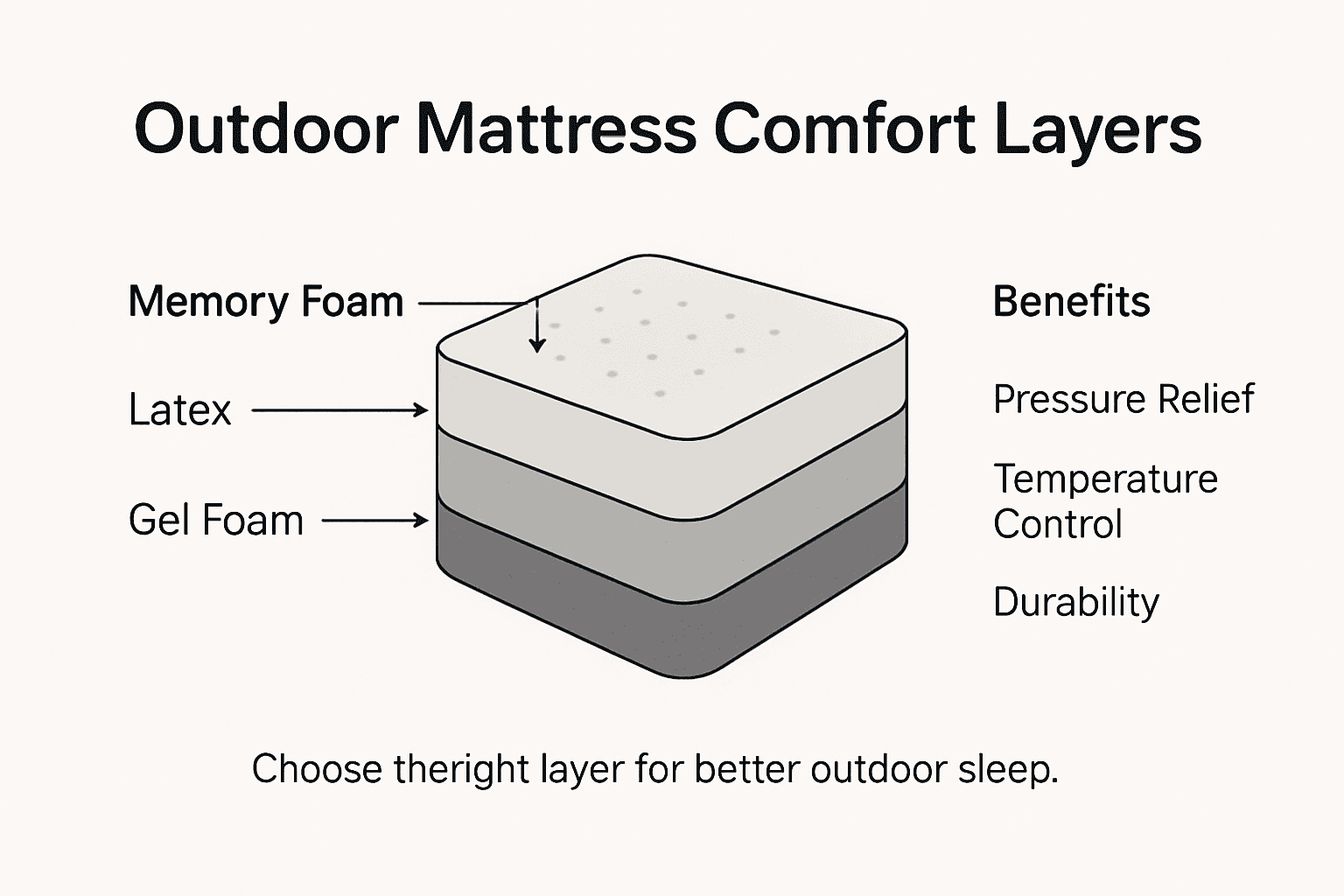
The primary materials used in comfort layers include memory foam, which offers exceptional body contouring and pressure distribution. Memory foam adapts to individual body shapes by responding to heat and weight, creating a personalized sleeping surface that minimizes pressure points. Another prominent material is latex foam, known for its responsive cushioning and superior breathability. Natural and synthetic latex provide excellent resilience, maintaining structural integrity while offering a bouncy, supportive feel that works exceptionally well in variable outdoor sleeping environments.
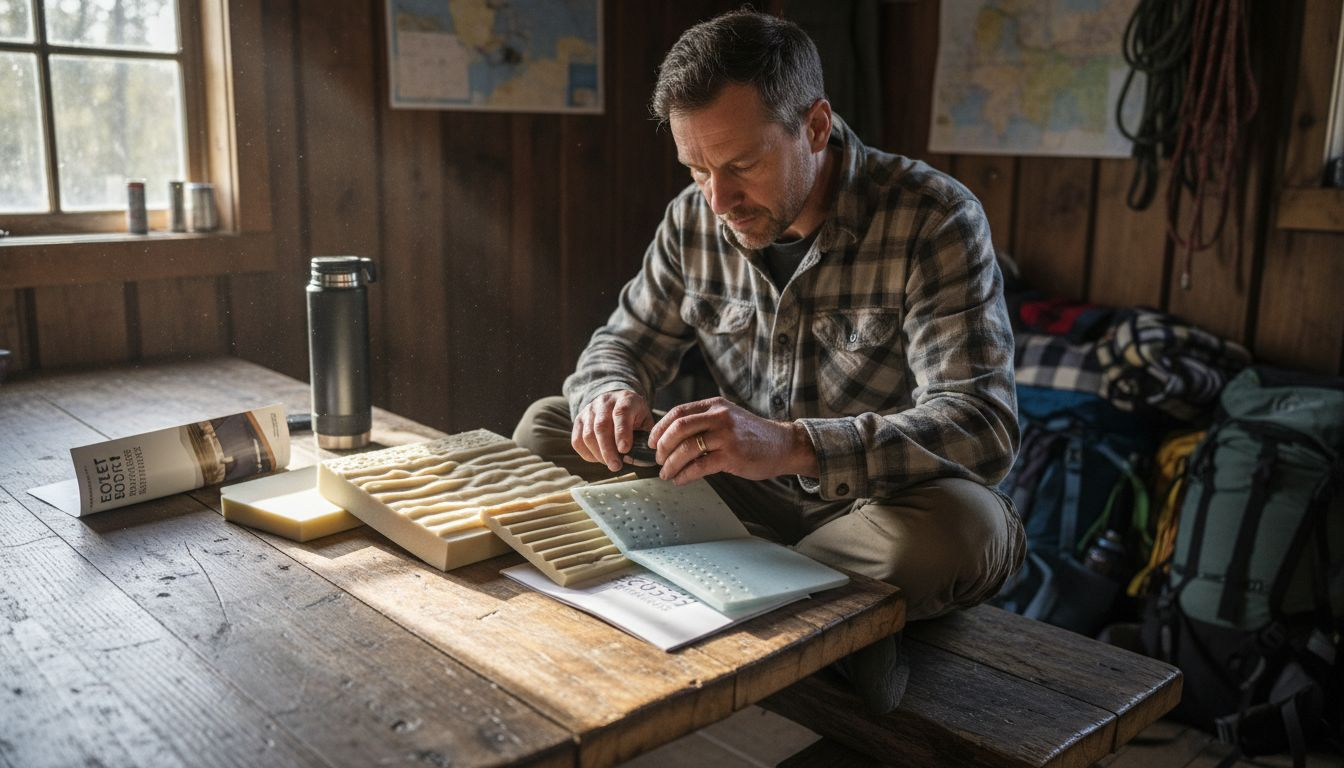
Polyurethane foam and gel-infused foams represent additional critical components in comfort layer construction. These materials contribute unique properties such as temperature regulation, durability, and adaptive support, making them ideal for outdoor mattresses that must perform across diverse terrains and climatic conditions. Gel-infused foams, in particular, enhance cooling properties, helping campers maintain comfortable body temperatures during nighttime rest.
Pro tip: When evaluating outdoor mattress comfort layers, press and release the surface to assess its responsiveness and recovery speed, which indicates the quality and durability of the material.
Here’s a comparison of common comfort layer materials and their performance characteristics:
| Material | Body Contouring | Temperature Regulation | Outdoor Durability |
|---|---|---|---|
| Memory Foam | Excellent, adapts closely | Moderate, may retain heat | Stable, resists compression |
| Latex | Responsive, resilient | High, remains cool | Very durable |
| Polyurethane Foam | Basic, less adaptive | Variable, depends on density | Prone to compression |
| Gel-Infused Foam | Good, adaptive | Superior, dissipates heat | Durable, moisture resistant |
Types of Comfort Layers for Camping
Camping mattress comfort layers represent a critical component in outdoor sleeping systems, offering specialized designs that address the unique challenges of sleeping in variable outdoor environments. These layers are engineered to provide cushioning, insulation, and support across diverse terrains, with each type offering distinct advantages for different camping scenarios and personal preferences.
The primary types of comfort layers include closed-cell foam, open-cell foam, and inflatable air chambers. Closed-cell foam provides exceptional durability and thermal insulation, making it ideal for cold ground and rugged camping conditions. Open-cell foam offers superior softness and compression, creating a more comfortable sleeping surface that adapts to uneven terrain. Inflatable air chambers represent a versatile option, allowing campers to adjust mattress firmness and thickness according to specific sleeping needs.
Each comfort layer type presents unique benefits for outdoor sleepers. Closed-cell foam excels in weight efficiency and moisture resistance, while open-cell foam provides enhanced pressure distribution. Hybrid designs combining multiple layer types have emerged, offering campers comprehensive comfort solutions that balance weight, packability, and performance across different environmental conditions.
Pro tip: When selecting a camping mattress, test the comfort layer’s thickness and responsiveness by simulating your typical sleeping position to ensure optimal support and comfort.
The following table summarizes how different camping comfort layer types meet key sleeper needs:
| Comfort Layer Type | Insulation & Warmth | Terrain Adaptability | Packability |
|---|---|---|---|
| Closed-Cell Foam | Excellent, traps heat | Moderate, firm feel | Highly portable, thin |
| Open-Cell Foam | Limited, breathable | High, adapts shape | Compresses easily, bulkier |
| Inflatable Air Chamber | Adjustable via air | Very high, customizable | Packs extremely small |
How Comfort Layers Improve Sleep Quality
Comfort layers play a critical role in transforming sleep quality, functioning as sophisticated biomechanical interfaces that optimize human rest across physical and physiological dimensions. By strategically distributing body weight, reducing pressure points, and supporting natural spinal alignment, these specialized layers create an environment that promotes deeper, more restorative sleep experiences.
The physiological mechanisms of comfort layers extend beyond simple cushioning. Pressure relief emerges as a fundamental aspect, with memory foam and advanced materials dynamically responding to individual body contours. Scientific studies demonstrate that memory foam comfort layers significantly improve objective sleep parameters, including sleep duration, efficiency, and subjective comfort ratings. These layers work by minimizing pressure points, allowing muscles to relax and reducing the frequency of nighttime awakenings that disrupt sleep continuity.
Temperature regulation represents another crucial dimension of comfort layer performance. Advanced materials like gel-infused foams and breathable composites help maintain optimal thermal environments, preventing overheating and excessive sweating. By creating a microclimate that supports consistent body temperature, comfort layers contribute to uninterrupted sleep cycles and enhanced overall sleep quality. This nuanced approach to thermal management is particularly important for outdoor sleeping environments, where temperature fluctuations can significantly impact rest.
Pro tip: When assessing a comfort layer, pay attention to its responsiveness and recovery time by applying gentle pressure and observing how quickly it returns to its original shape, which indicates superior material quality and potential sleep performance.
Practical Impacts: Durability and Maintenance
Long-term performance of comfort layers represents a critical consideration for outdoor enthusiasts seeking reliable sleeping solutions, with mechanical durability directly influencing the overall quality and longevity of camping mattresses. Comfort layers undergo significant stress during outdoor use, experiencing variable environmental conditions, uneven terrain, and repeated compression that can compromise their structural integrity.
Material compression emerges as a fundamental durability challenge, particularly for polyurethane foam comfort layers. Standardized durability testing protocols now assess mattress components through rigorous impact, static load, and long-term wear evaluations, providing consumers with more transparent insights into potential performance degradation. Polyurethane foam typically experiences initial compression that stabilizes over time, while advanced materials like memory foam and latex demonstrate more consistent long-term resilience.
Maintenance strategies play a pivotal role in preserving comfort layer performance. Regular rotation, careful cleaning, and protective storage can significantly extend a mattress’s functional lifespan. Outdoor mattresses require additional considerations, such as thorough drying after moisture exposure, careful cleaning to prevent material breakdown, and strategic storage that prevents unnecessary compression or environmental damage. Understanding material-specific maintenance requirements becomes crucial for campers seeking to maximize their investment and ensure consistent sleeping comfort across multiple outdoor adventures.
Pro tip: Store your camping mattress in a cool, dry area and use a protective cover to minimize dust accumulation and potential material degradation during off-season periods.
Common Mistakes When Choosing Comfort Layers
Selecting comfort layers for outdoor mattresses involves navigating complex considerations that extend far beyond simple softness preferences, with many consumers making critical errors that compromise their sleeping experience. Understanding these potential pitfalls becomes crucial for outdoor enthusiasts seeking optimal comfort and support during camping adventures.
One significant mistake involves choosing comfort layers without carefully evaluating individual sleep requirements. Many buyers rely excessively on marketing language rather than assessing their specific body mechanics and sleeping style, leading to mattresses that fail to provide proper support. Different body types and sleeping positions demand unique comfort layer characteristics - side sleepers require softer, more conforming layers, while back and stomach sleepers need firmer support to maintain proper spinal alignment.
Temperature regulation represents another frequently overlooked aspect of comfort layer selection. Outdoor environments present unique thermal challenges, making material breathability and heat dissipation critical factors. Consumers often neglect how different foam compositions interact with ambient temperatures, potentially resulting in uncomfortable sleeping conditions. Memory foam, for instance, can retain heat in warmer climates, while gel-infused or open-cell foams provide better temperature management for variable outdoor settings.
Pro tip: Before purchasing a comfort layer, simulate your typical sleeping position during product testing and pay attention to how the material responds to your body weight and temperature.
Experience Ultimate Outdoor Comfort with Hazli Collection
The article highlights the crucial role of comfort layers in mattresses for better sleep outdoors. If you struggle with finding a camping mattress that balances pressure relief, temperature regulation, and durability you are not alone. Many outdoor enthusiasts face these challenges when selecting the right mattress materials such as memory foam or latex. Hazli Collection specializes in high-quality memory foam mattresses designed specifically for camping and outdoor use, helping you achieve consistent support and unrivaled comfort no matter where your adventures take you.

Discover the difference a well-engineered comfort layer makes by exploring the Hazli Collection outdoor mattresses. With thoughtfully crafted products that respond to body shape and outdoor conditions, you can enjoy deep restorative sleep away from home. Visit Hazli Collection today to find your perfect camping mattress and enjoy durability, convenience, and comfort all in one place. Don’t wait — upgrade your outdoor sleep experience now for your next trip.
Frequently Asked Questions
What are comfort layers in mattresses?
Comfort layers are specialized cushioning materials that make up the top 1 to 4 inches of a mattress, designed to conform to body shapes, distribute weight, and provide targeted pressure relief, enhancing sleeping experiences, especially for outdoor enthusiasts.
How do comfort layers affect sleep quality when camping?
Comfort layers improve sleep quality by offering pressure relief, supporting natural spinal alignment, and helping to regulate temperature, resulting in deeper, more restorative sleep, even in variable outdoor environments.
What materials are commonly used in mattress comfort layers for outdoor sleeping?
Common materials include memory foam for body contouring, latex for breathability and resilience, polyurethane foam for basic cushioning, and gel-infused foams for enhanced temperature regulation, each contributing unique performance characteristics.
What should I consider when choosing a comfort layer for camping mattresses?
When selecting a comfort layer for camping, consider factors such as individual sleep preferences (softness vs. firmness), temperature regulation, material durability, and how well the layer adapts to uneven terrain, ensuring optimal support and comfort during rest.