

By The Hazli Family — Peter & Louise · Reviewed June 2026
Quick answer: Beginner backpackers should start with a properly fitted internal frame backpack, pack heavy items close to the spine, choose a moderate route with exit points, train for two months beforehand, set up camp on flat ground 200 feet from water, and do a final gear and safety check before heading home.
Every year, millions of American backpackers set out on trails across the country, yet nearly 40 percent report making gear mistakes that impact their trip. Choosing the right backpack and smart packing can mean the difference between a comfortable adventure and a painful struggle in the wilderness. This guide shows you how to plan, pack, and prepare like a pro so your next journey is safer, easier, and more enjoyable.
Table of Contents
- Step 1: Choose the Right Backpack and Essential Gear
- Step 2: Pack Smart for Comfort and Efficiency
- Step 3: Plan Your Route and Prepare Physically
- Step 4: Set Up a Comfortable Campsite
- Step 5: Review Gear and Check Safety Before Heading Home
Quick Summary
| Essential Insight | Explanation |
|---|---|
| 1. Choose the Right Backpack | Select an internal frame backpack for better weight distribution and stability based on your torso length for a comfortable fit. |
| 2. Pack Smartly for Efficiency | Organize your gear by packing heavy items close to your back and using waterproofing techniques to keep essentials safe and accessible. |
| 3. Plan Route and Train Physically | Match your hiking route to your skills and fitness level, while gradually building your endurance through local hikes and cardio exercises. |
| 4. Set Up an Eco-Friendly Campsite | Find a flat, durable area away from water sources and organize your gear to minimize environmental impact and enhance comfort. |
| 5. Conduct a Final Gear Check | Before leaving, review your gear and ensure the campsite is clean, taking care to pack out everything you brought in. |
Step 1: Choose the Right Backpack and Essential Gear
Picking the perfect backpack and packing the right gear can make or break your backpacking adventure. The goal is selecting equipment that balances comfort, weight, and functionality while meeting your specific outdoor needs.
Start by understanding backpack fit and design. An internal frame backpack provides better weight distribution and stability compared to external frame models. Measure your torso length and choose a pack that matches your body size precisely. Look for adjustable shoulder straps, padded hip belts, and multiple compartments to help organize your gear efficiently.
Here’s a comparison of backpack frame types with characteristics and typical use cases:
| Frame Type | Key Characteristics | Best For |
|---|---|---|
| Internal Frame | Close fit, better weight distribution | Rugged terrain, stability |
| External Frame | Heavier, good ventilation | Trail hiking, heavy loads |
| Frameless | Ultra-lightweight, minimal structure | Short trips, expert hikers |
When selecting essential gear, prioritize lightweight and multipurpose items. Pack a compact sleeping bag rated for expected temperature ranges, a lightweight tent, moisture-wicking clothing layers, and a reliable first aid kit. Use compression stuff sacks or waterproof bags to maximize space and protect your equipment from moisture. Organizing pack contents using plastic bags helps keep items dry and easily accessible.
Pro tip: Always test pack your gear at home before your trip to ensure everything fits comfortably and identify any potential weight distribution issues.
Step 2: Pack Smart for Comfort and Efficiency
Efficient packing is the secret weapon of successful backpackers. Your goal is to maximize space, minimize weight, and ensure everything you need is easily accessible and well-protected during your outdoor adventure.
Waterproofing your backpack and strategically organizing contents can dramatically improve your hiking experience. Start by lining your backpack with a waterproof cover or heavy duty plastic bags to protect gear from moisture. When loading your pack, follow a strategic weight distribution method: place heavy items like cooking gear and water close to your back and centered near your spine to maintain balance. Lighter items such as clothing and sleeping bags can be packed toward the top and outside compartments.
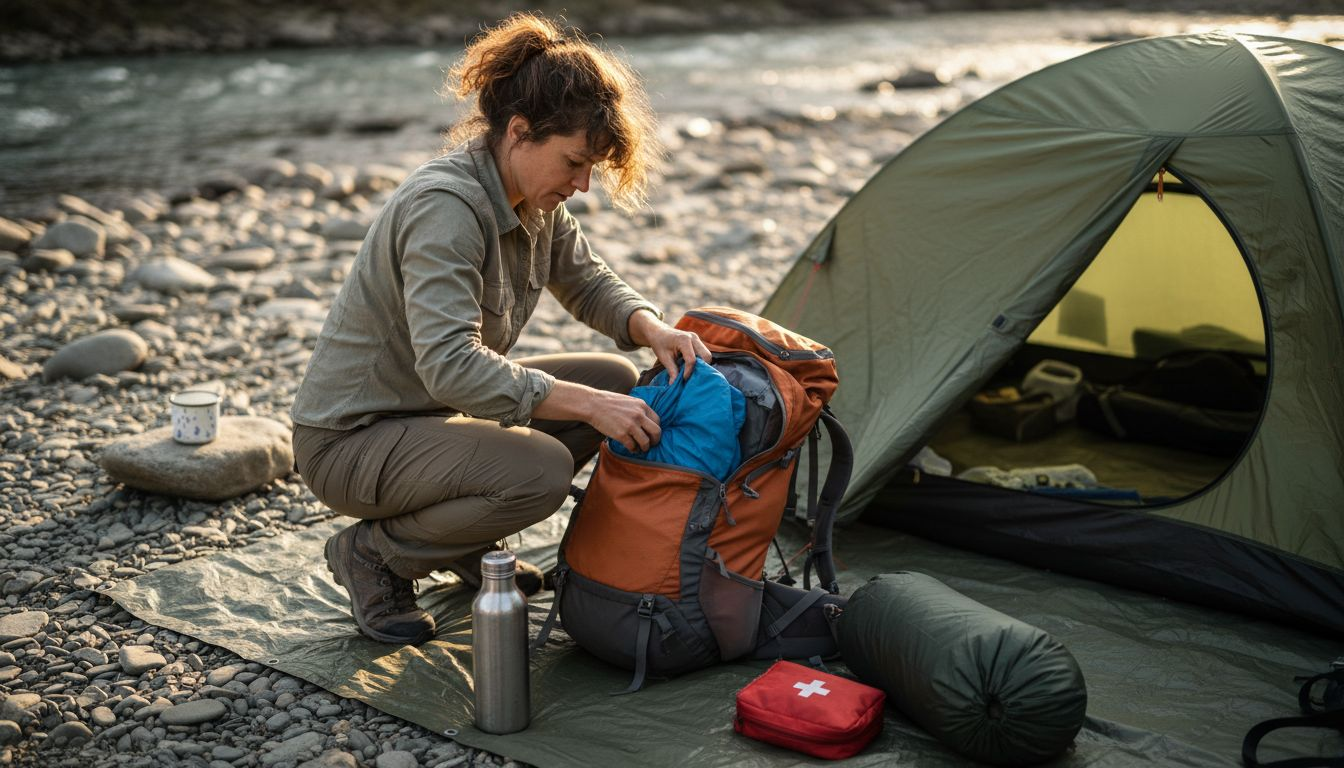
Utilize smart packing techniques like using packing cubes to organize clothing and maximize space efficiency. Roll your clothes instead of folding to reduce wrinkles and create more compact storage. Group similar items together and consider sharing communal gear like cooking utensils or first aid supplies among group members to lighten individual pack weights.
Pro tip: Always do a practice pack at home before your trip to test weight distribution and ensure all essential items fit comfortably within your backpack.
Step 3: Plan Your Route and Prepare Physically
Successful backpacking starts long before you hit the trail. Your preparation involves strategic route selection and building the physical endurance necessary to enjoy your outdoor adventure safely and confidently.
Selecting a route that matches your current skill and fitness level is crucial for an enjoyable experience. Consider factors like terrain difficulty, total distance, elevation changes, and seasonal conditions. For beginners, start with well marked trails in moderate terrain that offer multiple exit points. Research the specific trail characteristics thoroughly and be honest about your current physical capabilities.
Gradual physical training is essential for building backpacking endurance and preventing potential injuries. Begin with shorter local hikes carrying a lightweight pack, progressively increasing distance and pack weight. Incorporate cardiovascular exercises like walking, jogging, and cycling to improve overall stamina. Strength training focused on legs, core, and back muscles will help you manage heavier backpack loads and navigate challenging terrain more effectively.
Pro tip: Create a training schedule at least two months before your trip, incrementally increasing workout intensity and pack weight to simulate actual backpacking conditions.
Step 4: Set Up a Comfortable Campsite
Creating a comfortable and responsible campsite is an essential skill for any backpacker. Your campsite setup will determine the quality of your outdoor experience and your impact on the surrounding environment.
Selecting the right location is critical for a comfortable and safe campsite. Look for a flat, durable surface away from potential hazards like dead trees or rocky ground. Prioritize areas with natural wind protection while avoiding low points where water might collect during unexpected rain. Use lightweight sleeping pads to create a comfortable barrier between you and the ground, ensuring insulation and cushioning for a restful night.
Choosing a campsite that minimizes environmental impact requires careful consideration of your surroundings. Position your tent at least 200 feet from water sources to protect local ecosystems. Clear the ground of sharp objects and small rocks before setting up your tent. Utilize existing campsites when possible to reduce your ecological footprint. Arrange your gear systematically and keep your cooking area separate from your sleeping area to maintain organization and prevent wildlife attraction.
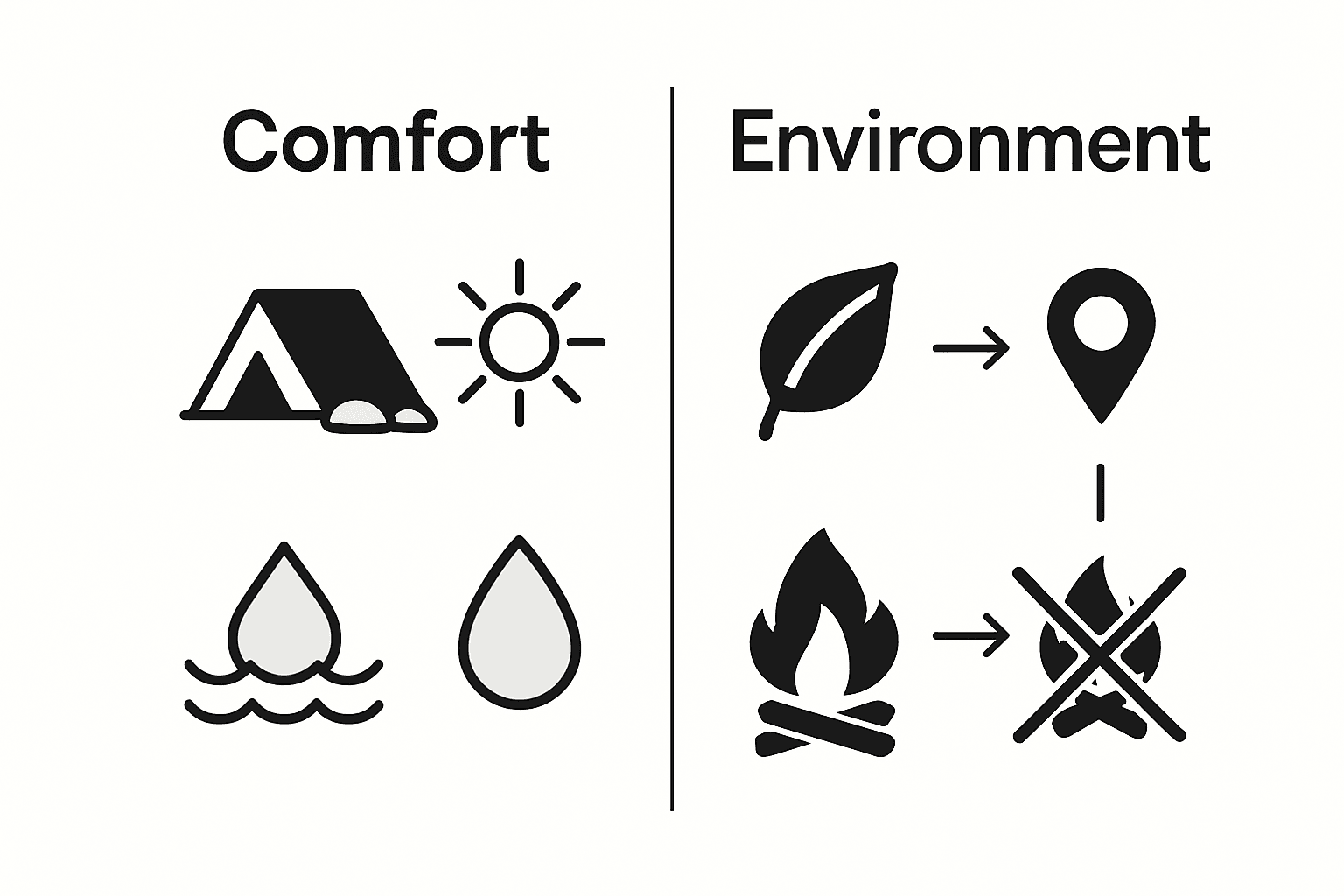
Here’s a summary of top campsite setup considerations for comfort and eco-friendly practices:
| Consideration | Comfort Impact | Environmental Benefit |
|---|---|---|
| Flat, durable site | Prevents discomfort and rolling | Reduces soil erosion |
| Distance from water | Avoids flooding hazards | Preserves water ecosystems |
| Organized gear zones | Easier access, restful sleep | Limits wildlife attraction |
Pro tip: Always do a final ground check before pitching your tent and pack a small ground tarp for extra protection against moisture and uneven terrain.
Step 5: Review Gear and Check Safety Before Heading Home
Before concluding your backpacking adventure, taking time to thoroughly review your gear and campsite ensures both personal safety and environmental responsibility. This final step is crucial for protecting yourself and preserving the natural landscape you have enjoyed.
Conducting a comprehensive gear check helps prevent lost equipment and potential future complications. Systematically go through each piece of equipment ensuring nothing is left behind and everything is in good working condition. Inspect your tent for any damage, check that your cooking equipment is clean and properly stored, and verify all personal items are accounted for. Pay special attention to vulnerable gear like tent poles, sleeping pad valves, and water filtration systems.
Ensuring campsite restoration follows strict environmental protection guidelines is a critical responsibility for every backpacker. Completely extinguish any campfire by drowning it with water and stirring the ashes to confirm no hot embers remain. Remove all traces of your presence including micro trash like food wrappers or small pieces of cord. Pack out everything you packed in and leave the site looking untouched. Walk through your campsite multiple times to ensure you have not overlooked any personal belongings or potential environmental disturbances.
Pro tip: Create a personal gear checklist before your trip and use it as a reference during both packing and final site breakdown to guarantee nothing is missed.
Enhance Your Backpacking Comfort with Hazli Collection
Embarking on your first backpacking adventure can challenge your physical endurance and comfort, especially when setting up a restful campsite or packing smart for efficiency. The article highlights the importance of selecting the right gear like lightweight tents, organizing your pack strategically, and ensuring a comfortable sleeping setup to avoid sore backs and discomfort after a long day on the trail. At Hazli Collection we understand these challenges and offer high-quality memory foam mattresses and outdoor sleep solutions designed to provide exceptional comfort and durability that perfectly complement your backpacking essentials.
Discover how our products can transform your night under the stars by providing superior cushioning and support that lighten the physical burden of outdoor resting. Don’t let discomfort undermine your adventure. Visit Hazli Collection today to explore camping gear that aligns with your goal of smart packing and restful campsites. Equip yourself now for the ultimate blend of practicality and comfort before your next trip.
Frequently Asked Questions
What should I consider when choosing a backpack for hiking?
Choosing a backpack involves considering fit, weight distribution, and design. Prioritize an internal frame pack for better stability and ensure it matches your torso length by measuring accurately. Check for adjustable straps and padded hip belts for extra comfort.
How can I pack my backpack for maximum comfort?
To maximize comfort, pack heavy items close to your back, centered near your spine, and place lighter items on top. Use packing cubes to organize your gear efficiently and roll your clothes to save space. This method not only provides balance but also makes accessing your essentials easier.
What steps should I take to prepare physically for a backpacking trip?
Start preparing at least two months in advance by gradually increasing your hiking distances and pack weight. Incorporate cardiovascular exercises like walking and cycling to enhance stamina, along with strength training for your legs, core, and back. Aim for a consistent workout schedule to build endurance over time.
How do I set up an eco-friendly campsite?
To set up an eco-friendly campsite, choose a durable area at least 200 feet from water sources. Clear sharp objects before pitching your tent and organize your gear to minimize wildlife attraction. Follow Leave No Trace principles by packing out everything you bring in and using existing campsites whenever possible.
What should I do before leaving my campsite?
Before leaving your campsite, conduct a thorough gear check to ensure you don’t leave anything behind. Make sure to extinguish any campfires completely and remove all waste, including small items like food wrappers. Walk through your campsite to guarantee it’s clean and every belonging is accounted for.
Recommended
- 7 Camping Comfort Hacks for a Great Outdoor Experience – Hazli Collection
- 8 Must-Have Items for a Smart Summer Camping Packing List – Hazli Collection
- Camp Bedding Organization Guide: Optimize Your Outdoor Comfort – Hazli Collection
- 7 Outdoor Sleeping Arrangement Ideas for Ultimate Comfort – Hazli Collection