

Over fifty million american families choose summer camping for their vacations each year. The appeal of wide-open spaces and star-filled nights draws people outdoors, but preparation is what turns these plans into safe and memorable adventures. Navigating gear choices, packing strategies, and campsite setup can feel overwhelming without the right approach. This guide explores the most important steps for organizing a healthy, fun, and stress-free summer camping experience that any american camper can enjoy.
Table of Contents
- What Summer Camping Preparation Involves
- Essential Gear For Summer Camping Trips
- Packing Strategies And Organization Tips
- Setting Up A Comfortable Campsite
- Safety, Health, And Environmental Precautions
- Common Summer Camping Mistakes To Avoid
Key Takeaways
| Point | Details |
|---|---|
| Comprehensive Preparation is Essential | Effective summer camping preparation involves strategic planning, from gear selection to understanding environmental conditions. |
| Appropriate Gear Selection | Choosing suitable equipment for varying temperatures and potential challenges is crucial for comfort and safety. |
| Smart Packing Strategies | Utilizing efficient packing methods helps maximize space and minimize weight, ensuring all essential items are accessible. |
| Safety and Environmental Awareness | Maintaining personal safety and respecting nature through responsible practices enhances the camping experience. |
What Summer Camping Preparation Involves
Summer camping requires strategic planning and comprehensive preparation to ensure a safe, comfortable, and enjoyable outdoor adventure. According to the National Park Service, successful camping hinges on anticipating potential challenges and preparing appropriately for varying conditions. This means going beyond basic packing and developing a holistic approach to outdoor readiness.
Effective summer camping preparation encompasses several critical components. First, gear selection becomes paramount - you’ll need equipment suitable for warm daytime temperatures and potentially cooler nighttime conditions. This includes lightweight, breathable clothing, appropriate sleeping systems, and protection against sun and insects. The Minnesota Department of Natural Resources recommends creating a comprehensive supply checklist that addresses multiple potential scenarios and environmental variables.
Key preparation elements include:
- Researching your specific camping destination
- Checking weather forecasts and potential environmental conditions
- Selecting appropriate camping gear and clothing
- Planning meal and water strategies
- Assembling emergency and first aid supplies
- Understanding local wildlife and terrain characteristics
Beyond physical preparation, mental readiness plays a crucial role in summer camping success. This involves understanding your personal comfort levels, physical limitations, and developing contingency plans for unexpected situations. Whether you’re a seasoned outdoor enthusiast or a first-time camper, thorough preparation transforms potential challenges into manageable experiences. 8 Essential Camping Comfort Hacks for a Great Outdoor Experience can provide additional insights into making your summer camping trip more enjoyable and stress-free.
Essential Gear for Summer Camping Trips
When preparing for summer camping adventures, selecting the right gear can make the difference between an uncomfortable experience and an unforgettable outdoor journey. The National Park Service emphasizes that appropriate equipment is crucial for handling varying outdoor conditions and ensuring personal safety and comfort.
The core of summer camping gear revolves around several essential categories. Shelter remains the most critical component, with lightweight tents or hammocks designed for summer ventilation and protection. Sleeping systems should include breathable sleeping bags or quilts suitable for warm nights, paired with compact sleeping pads that provide insulation and comfort. Clothing selections demand moisture-wicking fabrics that offer sun protection and quick-drying capabilities.
Your comprehensive summer camping gear checklist should include:
- Lightweight, waterproof tent or shelter
- Breathable sleeping bag or summer-weight quilt
- Compact sleeping pad
- Moisture-wicking clothing layers
- Reliable water filtration system
- Portable cooking equipment
- First aid kit
- Sun protection (hat, sunscreen, sunglasses)
- Lightweight cooking utensils
- Compact emergency communication device
As Ontario Parks recommends, strategic gear selection goes beyond simple item accumulation. Each piece of equipment should serve multiple potential purposes and contribute to your overall comfort and safety. For additional insights into selecting durable and versatile camping equipment, check out our guide on durable camping equipment for outdoor comfort.
Packing Strategies and Organization Tips
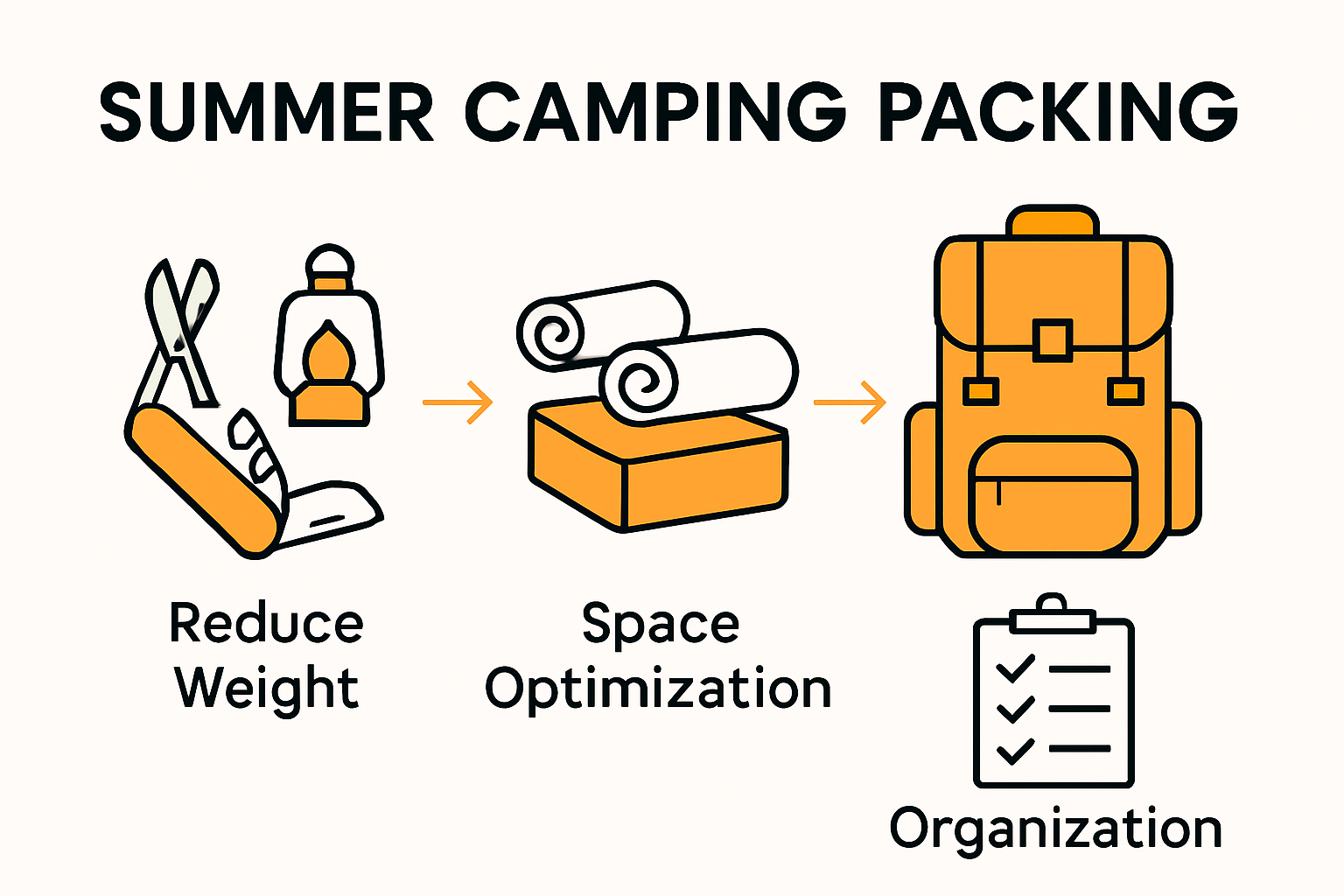
Effective summer camping preparation hinges on smart packing strategies that maximize space, minimize weight, and ensure you have everything needed for a comfortable outdoor experience. The National Park Service emphasizes the importance of strategic packing, recommending techniques that reduce environmental impact while maintaining comprehensive preparedness.
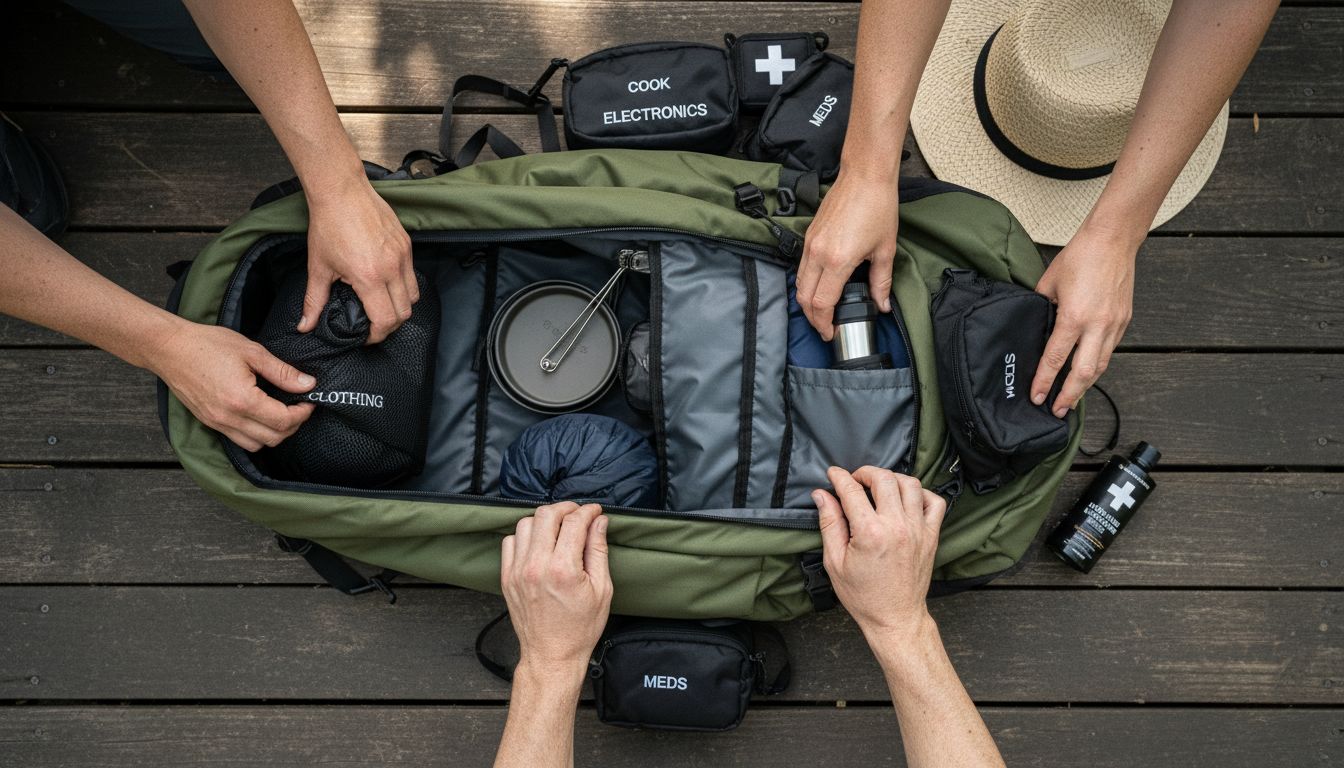
Organizational principles are crucial when preparing for a camping trip. This means categorizing your gear into logical groups and using strategic packing methods that make items easily accessible. Compression sacks, waterproof stuff bags, and modular storage solutions can help you maximize space and protect your equipment from moisture and dirt. Consider using color-coded bags or clear containers to quickly identify different categories of gear such as cooking equipment, personal items, emergency supplies, and clothing.
Key packing strategies include:
- Utilizing multi-purpose gear that reduces overall weight
- Rolling clothing instead of folding to minimize wrinkles and save space
- Packing items inside empty spaces within other gear
- Creating a master checklist to track all essential items
- Organizing items by frequency of use
- Using vacuum-sealed bags for compressible clothing
- Protecting sensitive equipment with padded, waterproof containers
As Minnesota Department of Natural Resources recommends, maintaining a consistent packing system between trips can significantly streamline your preparation process. By developing a repeatable approach to organizing and packing your camping gear, you’ll reduce stress and ensure you never forget critical items.
 For more detailed insights into efficient packing techniques, check out our guide on packing light camping gear.
Setting Up a Comfortable Campsite
Campsite setup is an art that balances comfort, safety, and environmental responsibility. The National Park Service emphasizes the critical importance of selecting the right location, recommending surfaces like rock, gravel, or dry grass that minimize ecological impact while providing a stable foundation for your camping experience.
When choosing your campsite, consider multiple factors beyond just ground surface. Terrain analysis becomes crucial - look for slightly elevated areas that provide natural drainage, avoiding low points where water might collect during unexpected summer rain. Wind direction, proximity to water sources, and natural shelter from trees or rock formations can significantly enhance your camping comfort. Protection from direct sunlight during peak hours and potential wind corridors will help create a more enjoyable outdoor living space.
Key campsite setup strategies include:
- Arriving early to scout the best possible location
- Using ground tarps under your tent for additional protection
- Creating distinct zones for sleeping, cooking, and storage
- Establishing a clear path between different camping areas
- Setting up wind breaks using natural landscape features
- Checking for potential hazards like dead branches overhead
- Ensuring level ground for sleeping areas
Minnesota Department of Natural Resources recommends setting up rain shelters and organizing your campsite methodically to maximize comfort and preparedness. Each element of your campsite should serve a specific purpose, from gear storage to meal preparation to relaxation zones. For more detailed guidance on creating the perfect outdoor sleeping environment, explore our camp bedding organization guide to optimize your outdoor comfort.
Safety, Health, and Environmental Precautions
Summer camping demands a proactive approach to safety, health, and environmental stewardship. The Wikipedia ‘Leave No Trace’ principles provide a comprehensive framework for responsible outdoor recreation, emphasizing the critical balance between personal safety and ecological preservation. Environmental awareness goes beyond simply enjoying nature - it requires understanding and actively protecting the ecosystems we explore.
Personal safety encompasses multiple dimensions during summer camping. This includes physical preparation, medical readiness, and situational awareness. A well-stocked first aid kit, knowledge of basic emergency procedures, and understanding potential local wildlife interactions become essential. The National Park Service recommends comprehensive emergency preparedness that extends beyond basic medical supplies to include communication devices, weather-appropriate clothing, and thorough trip planning.
Key safety and environmental precautions include:
- Carrying a comprehensive first aid kit
- Researching local wildlife and potential environmental hazards
- Packing emergency communication devices
- Understanding basic wilderness first aid techniques
- Practicing proper waste disposal methods
- Minimizing campsite impact
- Respecting wildlife habitats and maintaining safe distances
- Checking weather forecasts and potential environmental conditions
- Carrying sufficient water and hydration supplies
- Learning basic navigation and orientation skills
Responsible camping requires a holistic approach that balances personal comfort with environmental respect. By following established guidelines and maintaining situational awareness, campers can create memorable experiences while preserving natural landscapes for future generations. For additional insights into creating a safe and comfortable camping environment, explore our 7 essential camping comfort tips to enhance your outdoor experience.
Common Summer Camping Mistakes to Avoid
Camping preparation requires careful planning and strategic thinking to prevent common pitfalls that can transform an exciting outdoor adventure into a challenging experience. The National Park Service warns that many summer camping challenges stem from underestimating environmental variables and failing to prepare comprehensive emergency strategies.
Preparation mistakes can quickly derail an otherwise promising camping trip. Novice and experienced campers alike often fall into predictable traps that compromise comfort, safety, and overall enjoyment. Weather unpredictability, inadequate gear selection, and poor planning represent significant risk factors that can turn a relaxing outdoor experience into a stressful ordeal. Minnesota Department of Natural Resources emphasizes the critical importance of thorough pre-trip preparation and comprehensive gear checking.
Common summer camping mistakes to avoid include:
- Neglecting to check weather forecasts thoroughly
- Packing inappropriate or insufficient clothing layers
- Underestimating water and hydration requirements
- Failing to research local wildlife and potential hazards
- Overlooking basic first aid and emergency preparedness
- Choosing unsuitable camping locations
- Ignoring proper food storage and wildlife interaction protocols
- Bringing inadequate or inappropriate sleeping gear
- Underestimating cooking and meal preparation challenges
- Forgetting essential navigation and communication tools
For campers seeking to elevate their outdoor experiences and minimize potential challenges, understanding these common mistakes becomes crucial. Learning from others’ experiences can transform your camping approach from reactive to proactive. If you’re looking to enhance your camping skills and preparedness, our 10 essential adventure camping tips provide additional insights for outdoor enthusiasts.
Elevate Your Summer Camping Experience with the Right Gear
Preparing for summer camping means tackling challenges like unpredictable weather, staying comfortable through the night, and packing efficiently to avoid unnecessary bulk. The article highlights crucial elements like selecting breathable gear, setting up a comfortable campsite, and avoiding common mistakes that can turn your adventure into stress. If you want to conquer these pain points and enjoy your time outdoors to the fullest, choosing the right equipment is key.
Discover ultimate comfort and practical solutions at Hazli Collection where we specialize in high-quality memory foam mattresses and outdoor essentials designed to enhance your sleep and overall camping experience. Our Car Camping Essentials collection offers durable, lightweight gear made with the camper’s needs in mind. Whether you’re seeking gear that breathes well during warm nights or smart storage options to streamline packing, Hazli Collection supports your journey every step of the way.

Don’t let poor preparation hold you back this summer. Visit Hazli Collection now to find trusted camping gear that combines comfort, durability, and practicality. Act now to transform your outdoor adventures into relaxing, memorable experiences with gear that works as hard as you do.
Frequently Asked Questions
What should I include in my summer camping gear checklist?
Your summer camping gear checklist should include a lightweight, waterproof tent, a breathable sleeping bag or summer-weight quilt, a compact sleeping pad, moisture-wicking clothing layers, a reliable water filtration system, portable cooking equipment, a first aid kit, sun protection items (hat, sunscreen, sunglasses), lightweight cooking utensils, and a compact emergency communication device.
How can I effectively pack for a summer camping trip?
To effectively pack for a summer camping trip, use compression sacks and modular storage solutions to maximize space. Categorize your gear, roll clothing instead of folding, and pack items inside empty spaces within other gear. Create a master checklist and organize items by frequency of use to streamline your preparation process.
What are some essential campsite setup strategies?
Essential campsite setup strategies include scouting for a suitable location with stable ground and natural drainage, using tarps for additional protection under your tent, establishing distinct zones for sleeping, cooking, and storage, and setting up wind breaks using natural landscape features. Arriving early allows you to find the best possible site.
What common mistakes should I avoid when preparing for summer camping?
Common mistakes to avoid include neglecting to check weather forecasts, packing inappropriate or insufficient clothing layers, underestimating water and hydration needs, failing to research local wildlife, overlooking first aid supplies, and choosing unsuitable camping locations. Proper planning and preparation can help mitigate these issues.