

Every family preparing for a camping trip knows the difference that thoughtful setup makes when turning nature into a welcoming getaway. The choices you make while picking a campsite and organizing your gear have a direct impact on safety, comfort, and enjoyment in the outdoors. With practical steps like finding level ground free of debris, maintaining a safe distance from water sources, and following Leave No Trace principles, you can create a smooth and relaxing outdoor experience while protecting the beauty of the natural environment.
Table of Contents
- Step 1: Choose and Prepare Your Campsite
- Step 2: Set Up Your Tent and Sleeping Area
- Step 3: Arrange Outdoor Living and Cooking Spaces
- Step 4: Organize Gear for Comfort and Convenience
- Step 5: Check and Secure Your Camping Setup
Quick Summary
| Key Point | Explanation |
|---|---|
| 1. Choose a Level Campsite | Find flat, debris-free ground for safety and comfort. Ensure proper distance from water and trails to protect wildlife. |
| 2. Set Up Tent Properly | Securely pitch your tent on stable ground, using a footprint for protection. Ensure tent stakes are correctly angled for stability. |
| 3. Organize Cooking Area Well | Create a safe cooking space away from tents. Use tables for convenience and maintain hygiene by separating raw and cooked foods. |
| 4. Use Smart Gear Storage | Organize gear into categories using waterproof containers for easy access. Store frequently used items at the top for convenience. |
| 5. Conduct a Safety Check | Review campsite layout to ensure safety from hazards and verify equipment placement. Keep emergency items organized and accessible. |
Step 1: Choose and Prepare Your Campsite
Selecting the right campsite is crucial for ensuring a comfortable and safe outdoor experience. Your goal is to find a location that provides protection, comfort, and minimal environmental impact while maximizing your enjoyment of nature.
When searching for an ideal campsite, prioritize finding level ground free of debris like rocks and branches. Look for a spot with natural protection from wind and potential rainfall. Maintain a safe distance of at least 200 feet from water sources and hiking trails to protect local wildlife and ensure your personal safety. Avoid low areas prone to flooding and potential insect breeding grounds.
Carefully assess the surrounding terrain and consider weather conditions. Check for stable ground that can support your tent and camping equipment. Remove any sharp objects or uneven surfaces before setting up your site. Scan the area for potential hazards like dead tree branches overhead or unstable ground that could compromise your camping setup.
Here’s a quick comparison of common campsite ground types and their impact on camping comfort and safety:
| Ground Type | Comfort Level | Safety Risks | Best Use Scenario |
|---|---|---|---|
| Grass | Soft and comfortable | Can hold moisture | Ideal for dry-weather camping |
| Sand | Cushioned surface | Can shift under weight | Beachside or desert camping |
| Gravel | Less comfortable | Risk of puncturing gear | Heavy rain or drainage areas |
| Bare Soil | Varies by terrain | Erosion in wet weather | Quick overnight setups |
Pro Tip: Always carry a compact ground tarp or extra groundsheet to provide an additional barrier between your tent floor and potentially damp or uneven terrain.
Step 2: Set Up Your Tent and Sleeping Area
Creating a comfortable and secure sleeping area is the next crucial step in your camping adventure. Your goal is to establish a safe and protected space that will serve as your home base during outdoor explorations.
Begin by selecting an ideal spot for tent pitching that meets key safety criteria. Lay out a protective ground footprint to shield your tent from moisture and sharp objects. Carefully assemble your tent poles and attach them to the tent body, ensuring they are securely connected and properly aligned. Attach the rain fly with attention to proper door positioning, which helps maximize ventilation and weather protection.
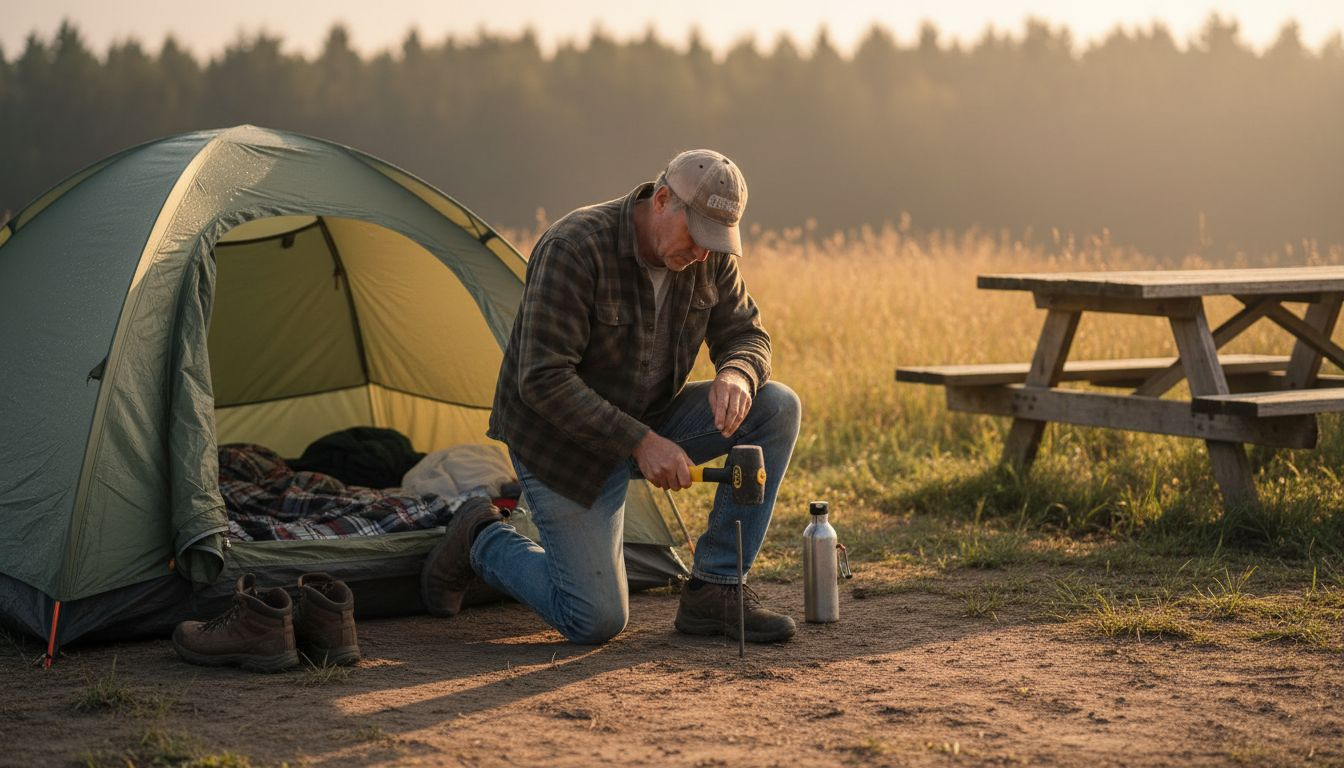
Stake your tent securely by driving tent stakes at a 45-degree angle into the ground for maximum stability. Pull the tent fabric taut and evenly distribute tension to prevent water pooling and reduce wind vulnerability. Check that your sleeping area is level and free from sharp rocks or uneven terrain. Position sleeping bags and pads to provide maximum comfort, and consider using additional ground padding for extra insulation and cushioning.
Pro Tip: Practice your tent setup at home before your camping trip to familiarize yourself with the process and identify any potential equipment issues in a controlled environment.
Step 3: Arrange Outdoor Living and Cooking Spaces
Designing an efficient and safe outdoor living area is essential for a comfortable camping experience. Your goal is to create a functional cooking and gathering space that maximizes convenience while maintaining safety and environmental responsibility.
Begin by selecting an appropriate cooking location that provides a stable surface and is positioned away from your tent and any flammable materials. Set up your cooking equipment carefully, ensuring proper ventilation and a clear workspace. Organize your cooking tools and ingredients for easy access, using portable tables or designated surfaces to keep your cooking area clean and efficient. Pay special attention to food safety by keeping raw and cooked foods separate and maintaining proper hygiene standards.
Establish a communal area near your cooking space where everyone can gather comfortably. Create a designated trash management zone and keep cleaning supplies readily available. Arrange seating options that provide comfort and encourage social interaction while maintaining a safe distance from cooking areas. Use compact and lightweight furniture that can be easily set up and packed away, maximizing your campsite’s functionality and preserving the natural environment.
Pro Tip: Pack ingredients in clear, sealable containers and pre measure dry ingredients at home to simplify meal preparation and minimize waste during your camping trip.
Step 4: Organize Gear for Comfort and Convenience
Effective gear organization transforms a basic camping trip into a smooth and enjoyable outdoor adventure. Your primary objective is to create a systematic approach to storing and accessing equipment that maximizes space and minimizes frustration.
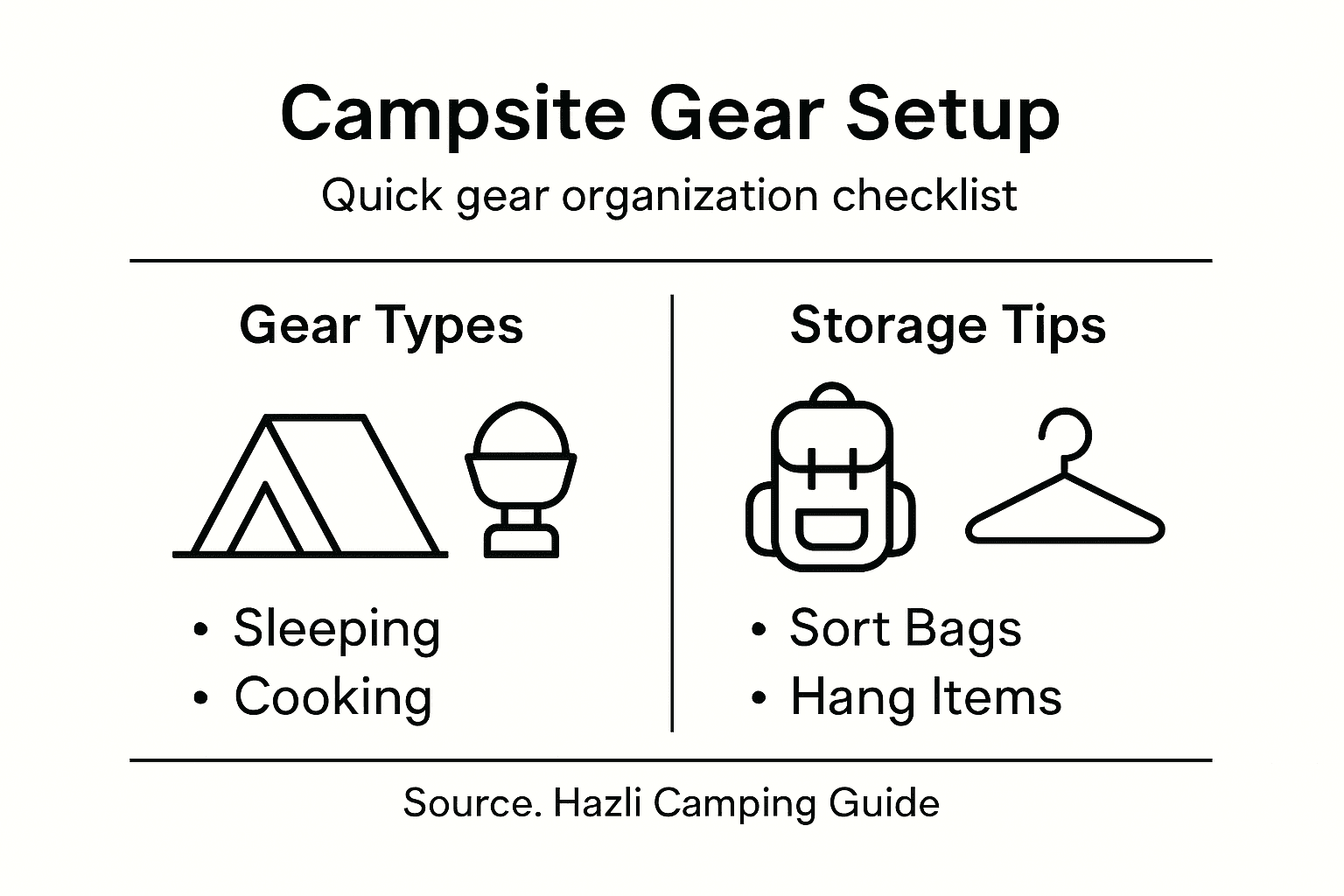
Start by strategically organizing camping equipment into clearly defined categories such as sleeping gear, cooking supplies, safety items, and personal accessories. Use waterproof storage containers with clear labels to protect your items from moisture and make them easily identifiable. Pack items based on frequency of use, keeping essential gear like headlamps, first aid kits, and multi-tools in easily accessible compartments. Consider using compression sacks for sleeping bags and clothing to reduce volume and create more space in your storage areas.
Create a designated area for each type of equipment within your campsite. Set up a dedicated cooking station with all necessary utensils and supplies within arm’s reach. Establish a separate zone for personal items and another for communal gear. Keep wet and dry items separated to maintain organization and prevent moisture from spreading. Use hanging organizers or portable shelves to maximize vertical space and keep your living area clean and functional.
For streamlined gear organization, see which solution fits different levels of camping experience:
| Storage Method | Best For | Pros | Cons |
|---|---|---|---|
| Compression Sacks | Backpack campers | Reduces volume, lightweight | Items may wrinkle |
| Color-Coded Bags | Family/group camping | Fast sorting, easy access | Requires prior labeling |
| Waterproof Containers | All-weather trips | Protects against rain | Adds extra bulk |
| Hanging Organizers | Car/long-term camps | Saves ground space | Needs nearby sturdy anchor |
Pro Tip: Invest in color coded storage bags or tags to quickly identify and sort different types of camping gear for faster setup and more efficient packing.
Step 5: Check and Secure Your Camping Setup
Finalizing your campsite requires a thorough review of your entire setup to ensure safety, comfort, and environmental responsibility. Your mission is to perform a comprehensive inspection that prevents potential issues and protects both your equipment and the surrounding natural environment.
Begin by carefully reviewing campsite boundaries and regulations to confirm that all equipment, tents, and vehicles are within designated areas. Check that tent stakes are securely anchored and rainfly is properly tensioned to withstand potential wind or unexpected weather changes. Inspect the ground around your campsite for potential hazards such as sharp rocks, unstable branches, or uneven terrain that could cause tripping or equipment damage.
Conduct a systematic safety check of your entire campsite. Verify that cooking areas are situated a safe distance from tents and have appropriate fire safety measures in place. Ensure all flammable materials are stored securely and away from potential ignition sources. Double check that food is properly sealed and stored to prevent wildlife attraction. Create a clear path for emergency exit and keep first aid supplies and essential safety equipment easily accessible.
Pro Tip: Walk through your entire campsite during daylight and again at night to identify potential safety issues from different perspectives and lighting conditions.
Elevate Your Camping Comfort with Hazli Collection Gear
Setting up a comfortable campsite means tackling challenges like finding the perfect tent spot, organizing gear efficiently, and ensuring restful sleep outdoors. This article highlights vital steps such as choosing level ground, securing your tent properly, and optimizing your outdoor living space—all crucial for a safe and enjoyable adventure. If you struggle with uncomfortable sleeping surfaces or inefficient camping setups, Hazli Collection offers high-quality memory foam mattresses and outdoor equipment designed for ultimate comfort and durability.
Discover gear that transforms your campsite into a cozy retreat. From mattress options that provide superior support on uneven terrain to smart storage solutions that keep your essentials organized, Hazli Collection makes camping easier and more restful. Ready to improve your outdoor experience? Visit Hazli Collection to browse our selection, learn more about creating the perfect campsite, and shop with confidence today. Start your next camping trip with comfort and convenience at your fingertips.
Frequently Asked Questions
How do I choose the best campsite for my needs?
Choosing the best campsite involves looking for level ground free of debris, shelter from the wind, and a safe distance from water sources, usually at least 200 feet away. Assess the terrain and remove any sharp objects or hazards before setting up.
What is the first step in setting up a tent?
The first step in setting up your tent is to select an ideal spot that is flat and free from sharp rocks. Lay out a ground footprint and carefully assemble your tent, ensuring all poles are secure and properly aligned for safety and comfort.
How can I create an efficient outdoor cooking space?
To create an efficient outdoor cooking space, choose a location away from your tent and flammable materials, ensuring it has a stable surface for your cooking equipment. Organize your cooking tools and ingredients in a designated area for easy access during meal preparation.
What are the best methods for organizing camping gear?
The best methods for organizing camping gear include categorizing items into groups like cooking supplies, sleeping gear, and personal accessories. Use waterproof storage containers with clear labels to keep everything accessible and organized, especially for frequently used items like first aid kits and headlamps.
How do I ensure my camping setup is secure and safe?
To ensure your camping setup is secure and safe, perform a comprehensive inspection of your campsite to check for potential hazards such as sharp rocks or unstable terrain. Verify that your tent is staked down properly and that cooking areas are safely distanced from sleeping quarters.
What should I do to prepare for unexpected weather?
To prepare for unexpected weather, make sure to properly tension your tent’s rain fly and ensure it is securely anchored. Always have a backup ground tarp on hand to protect against moisture and keep a close check on weather forecasts leading up to your camping trip.
Recommended
- 7 Camping Comfort Hacks for a Great Outdoor Experience – Hazli Collection
- Camp Bedding Organization Guide: Optimize Your Outdoor Comfort – Hazli Collection
- How to Improve Camp Sleep Naturally for Outdoor Comfort – Hazli Collection
- 8 Essential Tent Camping Must-Haves for Comfort and Safety – Hazli Collection