

Finding the right campsite for your American family can be the difference between restless nights and the perfect outdoor getaway. With comfort and safety at stake, choosing your campground and gear is more than just the next step—it shapes every moment under the stars. This guide offers practical strategies for assessing campsite features, selecting top-rated gear, and setting up a sleep area that rivals home quality, so your family can relax and enjoy every adventure.
Table of Contents
- Step 1: Assess Campsite Needs And Preferences
- Step 2: Select Top-Rated Comfort Camping Gear
- Step 3: Set Up A Cozy Memory Foam Sleep Area
- Step 4: Optimize Tent Insulation And Ventilation
- Step 5: Test Gear For Maximum Comfort And Durability
Quick Summary
| Key Point | Explanation |
|---|---|
| 1. Assess campsite needs carefully | Evaluate elevation, water proximity, and natural protection to enhance comfort and safety. |
| 2. Choose high-quality gear | Select camping equipment that balances comfort and practical functionality for outdoor environments. |
| 3. Create a cozy sleep area | Utilize memory foam and insulating layers for a comfortable night’s sleep while camping. |
| 4. Optimize tent ventilation | Ensure proper airflow with breathable fabrics and mesh panels to maintain a comfortable interior climate. |
| 5. Test gear thoroughly | Conduct detailed gear testing to identify weaknesses and ensure everything functions as intended before the trip. |
Step 1: Assess campsite needs and preferences
Selecting the right campsite is crucial for transforming your family’s outdoor adventure from merely adequate to absolutely extraordinary. Your campsite choice will impact comfort, safety, and overall enjoyment, making careful assessment critical before setting up your temporary wilderness home.
When evaluating potential camping locations, start by understanding key criteria that determine an ideal site. Selecting a campsite requires strategic planning, which involves multiple considerations beyond just scenic beauty. Key factors include:
- Ground elevation for proper drainage
- Proximity to water sources
- Natural protection from wind and extreme elements
- Distance from animal trails
- Level terrain for tent setup
- Accessibility to facilities
Prioritize sites with natural advantages like high ground that prevents water accumulation during unexpected rain, and areas offering some wind protection. Avoid locations near dead trees or potential insect breeding grounds that could compromise your family’s comfort and safety.
Here’s how different campsite types support family comfort and safety:
| Campsite Type | Comfort Benefits | Safety Considerations |
|---|---|---|
| Wooded Area | Provides wind protection | Watch for falling branches |
| Near Water | Easy water access | Risk of insects or flooding |
| Open Meadow | Good sunlight and visibility | Less shelter from elements |
| Elevated Location | Reduces water pooling | Potential exposure to winds |
Strategic campsite selection is the foundation of a successful camping experience.
Consider seasonal variations and local campground regulations when making your selection. Some campgrounds require advance reservations, while others operate on a first-come, first-served basis. Research local guidelines, understand facility amenities, and verify any specific restrictions before finalizing your location.
Pro tip: Always carry a topographical map and compass as backup navigation tools, even if you plan to use digital resources.
Step 2: Select top-rated comfort camping gear
Choosing the right camping gear is more than just picking random equipment—it’s about creating a comfortable and enjoyable outdoor experience that keeps your family happy and relaxed. Understanding how to select top-rated comfort camping gear will transform your wilderness adventure from basic survival to luxurious exploration.
When evaluating camping gear, focus on critical comfort factors. Selecting high-quality camping equipment involves examining materials, durability, weight, and specific features that enhance your outdoor experience. Consider these essential gear categories:
- Sleeping bags with appropriate temperature ratings
- Portable hammocks offering lightweight comfort
- Insulation materials that provide warmth
- Breathable fabrics for temperature regulation
- Compact design for easy transportation
- Weight capacity and durability
Prioritize gear that balances functionality with comfort. Modern camping equipment has evolved to provide lightweight, compact solutions without sacrificing performance. Look for sleeping bags with features like draft tubes, soft linings, and adaptable temperature ranges that can accommodate varying weather conditions.
Comfort isn’t a luxury in camping—it’s a strategic necessity for enjoying outdoor experiences.
Remember that your gear should match your specific camping environment. A sleeping bag perfect for mountain camping might differ significantly from one ideal for summer beach camping. Research regional conditions and choose equipment that provides versatile performance.
Pro tip: Always test your camping gear at home before the trip to ensure proper fit and functionality.
Step 3: Set up a cozy memory foam sleep area
Transforming your camping sleep setup from uncomfortable to luxurious requires strategic planning and the right equipment. Creating a cozy memory foam sleep area will ensure your family experiences restful nights even in the wilderness, turning your outdoor adventure into a comfortable retreat.
Camping sleep systems involve more than just throwing down a sleeping bag. Proper setup requires careful consideration of ground conditions, insulation, and comfort layers. Consider these critical elements for your memory foam sleep area:
- Flat ground selection for mattress placement
- Waterproof ground cloth underneath memory foam
- Insulating layer between ground and mattress
- Temperature-appropriate sleeping bag
- Additional blankets for customized warmth
- Compact pillow for neck support
Memory foam mattresses designed for camping provide exceptional body contouring and pressure relief. Look for lightweight, compact models that offer superior support while being easy to transport. The key is finding a balance between comfort and practicality—your sleep surface should provide cushioning without adding excessive bulk to your camping gear.
A well-designed sleep area can transform your entire camping experience from survival to genuine relaxation.
Position your memory foam mattress in a way that maximizes comfort and protection. Ensure the area is free from rocks, sticks, and uneven terrain. Layer your sleeping system strategically, starting with a waterproof ground cloth, then the memory foam mattress, followed by your sleeping bag and additional blankets.
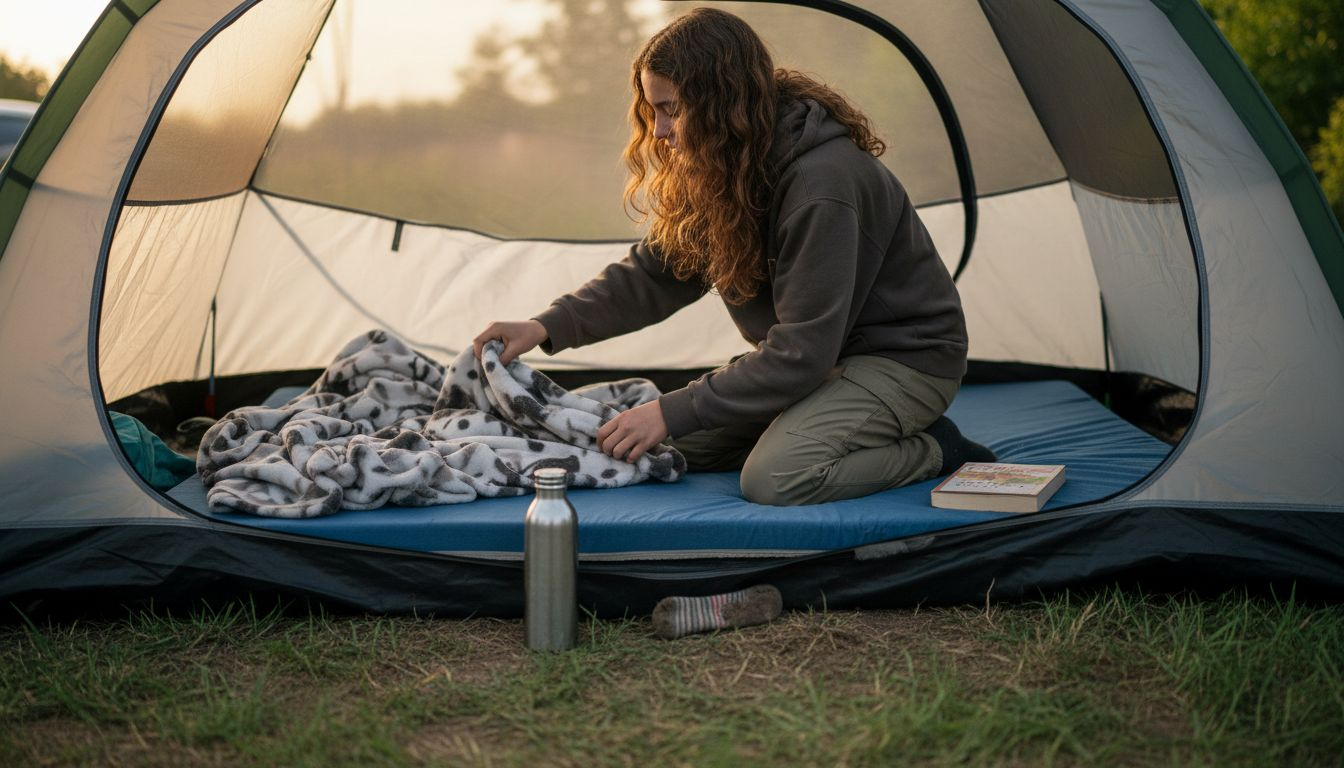
Pro tip: Preheat your sleeping bag with a warm water bottle before bedtime to create an instantly cozy sleeping environment.
Step 4: Optimize tent insulation and ventilation
Mastering tent insulation and ventilation is the key to creating a comfortable camping environment that protects your family from changing weather conditions. Understanding how to balance temperature and airflow will transform your outdoor sleeping experience from potentially miserable to genuinely enjoyable.
Tent ventilation strategies are critical for maintaining a comfortable interior climate. Proper air circulation prevents moisture buildup and regulates temperature, ensuring your family stays dry and comfortable. Consider these essential ventilation and insulation techniques:
- Breathable tent fabric for moisture management
- Adjustable rain fly with strategic venting
- Ground cloth for additional insulation
- Mesh window panels to promote airflow
- Guyline tension for optimal tent structure
- Strategic door positioning for cross-ventilation
Choose tent designs that incorporate multiple ventilation points. Modern camping tents often feature built-in mesh panels, adjustable rain flies, and zippered windows that allow you to control airflow dynamically. The goal is creating a microclimate that remains comfortable regardless of external temperature fluctuations.
Smart ventilation turns your tent from a simple shelter into a comfortable home away from home.
Position your tent thoughtfully, considering wind direction and natural barriers. Use guylines to create slight gaps between the tent body and rain fly, which promotes air circulation and reduces condensation. Layer insulating materials strategically to maintain internal temperature stability.
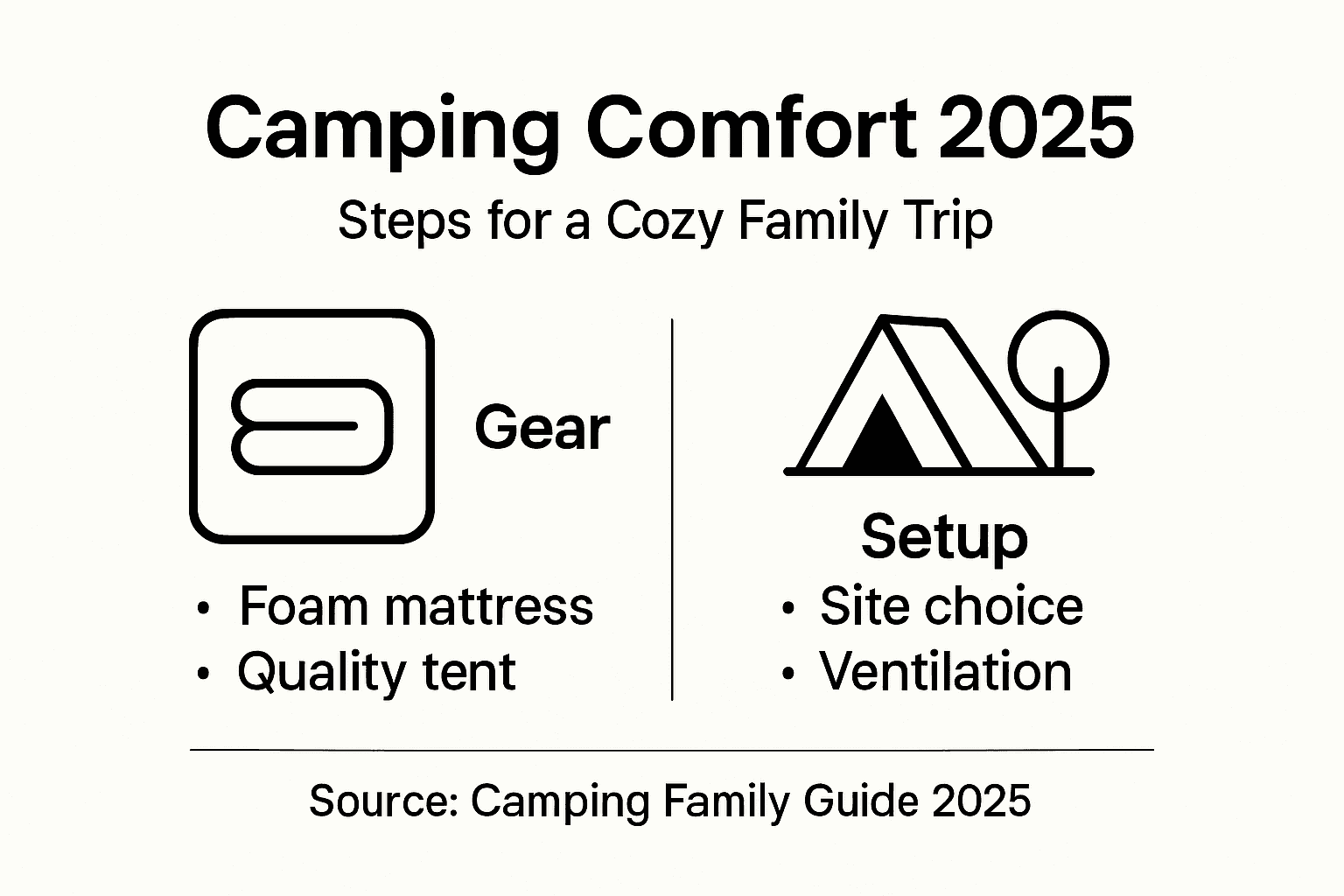
Pro tip: Pack a small battery-powered fan to enhance air circulation during stagnant weather conditions.
Step 5: Test gear for maximum comfort and durability
Ensuring your camping gear performs flawlessly before heading into the wilderness can mean the difference between an epic family adventure and a potential disaster. Comprehensive gear testing allows you to identify and resolve potential equipment issues before they become critical problems during your outdoor experience.
Your gear testing strategy should cover multiple critical aspects of performance and reliability. Consider evaluating these key elements:
- Material strength and resistance to wear
- Waterproofing capabilities
- Temperature performance in various conditions
- Structural integrity under stress
- Comfort and ergonomic design
- Functionality of moving parts
Approach testing systematically by simulating actual camping conditions in a controlled environment. This means setting up tents in your backyard, testing sleeping bags in different temperature ranges, and checking the performance of cooking equipment under simulated outdoor conditions. Modern design principles emphasize not just initial performance but long-term durability and consistent functionality.
Rigorous testing transforms potential equipment failures into preventable challenges.
Pay special attention to high-stress components like tent poles, zipper mechanisms, and seam reinforcements. Look for signs of potential weakness or wear that could compromise your gear’s performance during an actual camping trip. Understanding your equipment’s limitations helps you make informed decisions about repairs, replacements, or additional protective measures.
Summary of common gear testing mistakes and their consequences:
| Mistake | Common Issue Found | Practical Consequence |
|---|---|---|
| Skipping waterproof test | Leaky tent floor | Wet gear and poor sleep |
| Ignoring weight limits | Broken hammock or cot | Unexpected equipment failure |
| Not simulating cold weather | Underperforming sleeping bag | Nighttime discomfort or risk |
Pro tip: Create a detailed gear checklist and document each item’s performance during testing to track potential issues over time.
Elevate Your Family Camping Comfort with Hazli Collection
The article highlights essential steps to create a cozy and safe camping experience, focusing on challenges like selecting the perfect campsite, optimizing sleep areas with memory foam, and ensuring proper tent ventilation. If you are aiming to transform your outdoor adventure into a restful retreat, Hazli Collection offers premium outdoor gear designed to meet those exact needs. From lightweight memory foam mattresses that provide exceptional pressure relief on uneven ground to durable, breathable camping accessories, you can solve common pain points like discomfort, moisture buildup, and equipment reliability.
Discover how our carefully curated products align with your goals of comfort, safety, and practicality at every step of your camping journey. Act now to explore our high-quality sleep solutions and gear that are built for real family adventures. Visit Hazli Collection to shop with confidence and elevate your next camping trip. Don’t wait let your family experience outdoor comfort like never before by checking out our camping gear and memory foam sleep solutions today.
Frequently Asked Questions
What factors should I consider when selecting a campsite for my family?
Choosing a campsite involves assessing ground elevation, proximity to water sources, natural protection from wind, and accessibility to facilities. Begin by prioritizing sites with level terrain and proper drainage to enhance your family’s comfort and safety.
How can I ensure that my camping gear provides maximum comfort?
Focus on selecting high-quality camping gear that features appropriate materials, durability, and weight capacity. Test your gear at home to confirm that it meets your needs and maintains comfort, especially for items like sleeping bags and mattresses.
What steps can I take to create a cozy sleep area while camping?
To set up a cozy sleep area, lay a waterproof ground cloth, use a memory foam mattress, and include extra blankets for warmth. Arrange your sleep system carefully to provide cushioning without excess bulk, ensuring a more comfortable night’s sleep.
How can I improve insulation and ventilation in my tent?
Maximize insulation and ventilation by using breathable tent fabrics, mesh panels, and adjustable rain flies. Position your tent to take advantage of cross-ventilation and ensure there are openings for fresh air while minimizing moisture buildup.
What common mistakes should I avoid when testing my camping gear?
Avoid skipping waterproof tests and not simulating cold weather conditions, as these could lead to unpleasant surprises during your trip. Thoroughly check all components of your gear, like zippers and seams, and document your findings to ensure everything is in working order before you go camping.
How can I prepare for weather changes while camping?
Stay prepared by monitoring weather forecasts and packing versatile gear that can handle a range of conditions, such as waterproof clothing and temperature-rated sleeping bags. Adjust your campsite selection based on weather conditions, positioning your tent for optimal stability and comfort.
Recommended
- 8 Essential Tips for Camping with Children – Hazli Collection
- 8 Essential Tips for a Family Car Camping Checklist – Hazli Collection
- 7 Must-Know Family Camping Safety Checklist Tips – Hazli Collection
- 7 Essential Items for a Family Car Camping Check List – Hazli Collection
- TrailMaster Challenger 200 4-Seater UTV Side-by-Side – GoKarts USA®